As the Triangle’s entrepreneurial ecosystem matures, more businesses are started
READ MORE
Measuring Tech in the Triangle
A News & Observer analysis of local economic indicators for the region’s tech economy.
Expand All

Venture capital back to normal levels in the Triangle after Epic’s monumental raise
When it comes to NC’s tech talent, the Triangle’s educated workforce is a draw
Startups are breaking records in NC. But are younger companies being ignored?
As the Triangle’s entrepreneurial ecosystem matures, more businesses are started
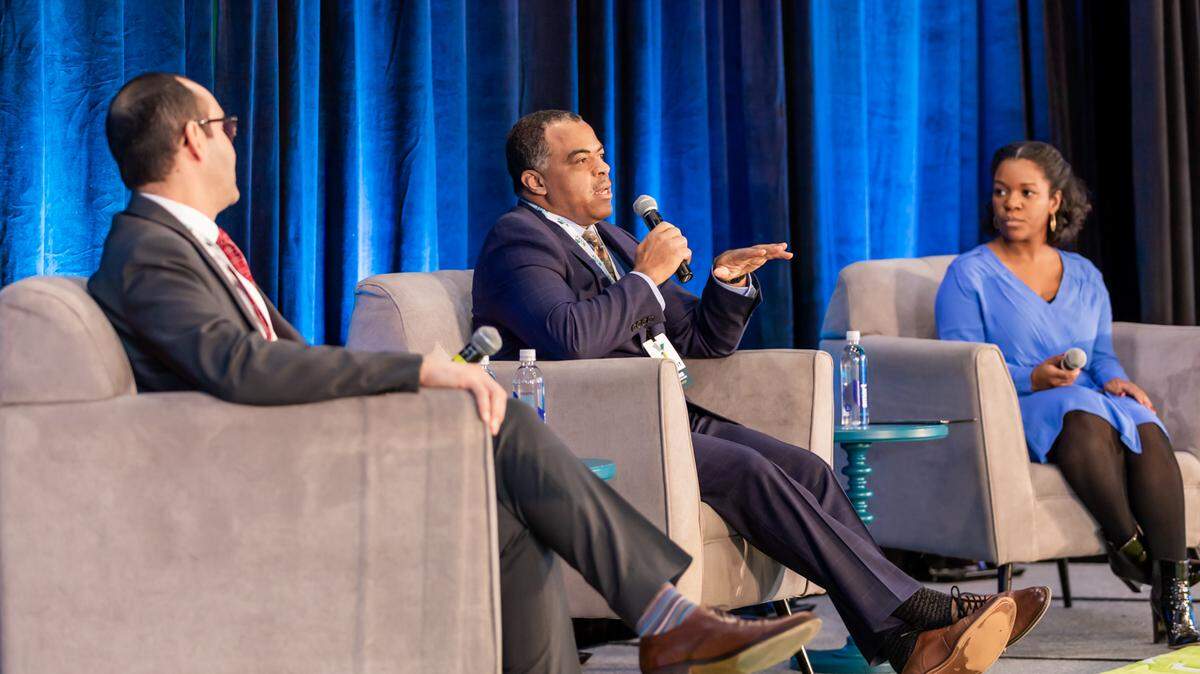
Triangle tech scene lags behind when it comes to representing the area’s diversity
New business applications hit record highs across North Carolina at the beginning of this year.
In the first quarter of 2019, there were 29,560 new business applications in North Carolina, the highest number of quarterly applications since the Census Bureau began tracking it in 2004. The Census Bureau counts new business applications as requests for an employer identification number from the Internal Revenue Service.
While numbers for local business creation can be spotty, new data from the University of North Carolina’s Kenan Institute of Private Enterprise shows that most new firm creation in the state is concentrated in urban counties like Mecklenburg and Wake.
In 2018, the Kenan Institute found that Wake County had the third-highest ratio of new firm registration per 1,000 residents for counties in North Carolina, with 7.12 firms registered per 1,000 residents. Wake only trailed Mecklenburg (7.67 per 1,000) and Dare (8.23), a small county on the coast with a large tourism economy. The average for the state was 4.4.
Maryann Feldman, a research director at the Kenan Institute, said the Triangle’s high ratio is a result of the influence of the universities here and decades-long investment in entrepreneurial infrastructure that’s continuing to pay dividends.
“I feel there is momentum growing,” Vickie Gibbs, executive director of the Entrepreneurship Center at UNC’s Kenan-Flagler Business School, said of the Triangle’s growth.
Just a decade ago, there weren’t many innovative startups outside of Research Triangle Park, Gibbs said. Now there are thriving and connected entrepreneurial ecosystems all over the Triangle, especially in Raleigh and Durham, she said.
“What you have seen is those individual cities have really grown up in the past five or so years,” she said.
This story is part of a News & Observer reporting project aimed at monitoring the health of the Triangle’s tech ecosystem. In a survey sent to dozens of people in the local tech industry, the N&O asked what measuring points matter the most for the ongoing success of the region. We’ve be reporting on individual indicators in recent weeks, then we will revisit all of them regularly going forward.
One indicator was the rate of new companies being formed in the Triangle, a critical part of making sure the economy remains dynamic. While most startups are destined to fail or remain small, some do go on to become large and influential, shaping the local economy of the future.
And it appears that North Carolina startups are growing stronger. Last year, the percentage of startups still active after one year in North Carolina was at its highest level in more than a decade, according to the Kauffman Foundation, which tracks entrepreneurial activity across the country.
Additionally, the percentage of new entrepreneurs who started a business by choice instead of necessity is at an all-time high since Kauffman began tracking that.
To be sure, these numbers are cyclical in nature. They rise as the economy does well and decrease when it doesn’t. The numbers went up, for example, during the dot-com bubble of the late 1990s, then dropped off when that bubble burst in 2001. The pattern was the same during the housing bubble of the mid-2000s followed by the onset of the Great Recession in 2008.
“When you have those macro-level events, they affect momentum,” Gibbs said. “And anytime one of those things happen, we have a new baseline and then it is a matter of how do we grow from there.”
Explosion of resources
At HQ Raleigh, a nexus of entrepreneurial activity in Raleigh, the number of companies there has sharply increased in recent years. In 2017, 158 companies — most of them young, tech-focused startups — had operations at the co-working hub. Two years later, there were 327 companies, a 107% increase, according to Jessica Porta, director of HQ Raleigh.
The number of individual coworking members there also increased from 2017 to 2019, growing from 26 to 101, a 288% increase.
The rise of HQ Raleigh, which has expanded to several locations around the city, is a story that can be seen all over the Triangle, where coworking spaces have been fueled by local entrepreneurs and companies from out of state looking to find talent in North Carolina.
“When we opened back in 2011, there were no other similar entrepreneurial coworking spaces in Raleigh,” Porta said. “Now there are at least seven in Raleigh alone only about eight years later. I think that is another major indicator that we have a healthy entrepreneurial ecosystem.”
Coworking hubs have become important entrepreneurial incubators across the country in recent years, as they provide cheap and flexible rent for growing companies as well as a sense of community. In the Triangle, the number of coworking hubs with hundreds of startups has proliferated from the American Underground in Durham to the Frontier in Research Triangle Park to the Loading Dock in Raleigh. The national coworking company WeWork also has three locations in the Triangle, though that company’s future is unclear.
“There is a very strong correlation between the success and long-term growth of a company and the type of resources and relationships they have access to,” said Christopher Gergen, CEO of Forward Cities, a foundation that consults on how to build innovative economies.
Gergen, who helped started HQ Raleigh, said these new communities of startups have aided each other by proximity.
“The kind of energy that is available and apparent is exponentially more than it was 10 years ago,” Gergen added. “The richness of the programmatic support and the relationships that they can tap into efficiently definitely contributes to their ability to put better businesses together.”
Additionally, nonprofits like CED and NC IDEA have now been around for decades as important connectors to resources for startups. And there are now several generations of entrepreneurs in the Triangle who can be examples of how to build a company and invest in young companies.
Porta said the sheer amount of resources here is likely contributing to an increase in survival rates among startups. “There are loads of programs for [startups]” compared to the beginning of the decade, she said. “You can go to a meet-up every night.”
Cities are getting involved, too. Durham now gives startups a chance to work directly with city and county data and Chapel Hill worked with UNC to create its own startup incubator called Launch Chapel Hill.
The city of Raleigh launched a series of grants this year, giving $25,000 to each of five organizations trying to improve entrepreneurship in the city, including a nonprofit helping veterans start businesses and another that connects entrepreneurs with local high school students.
“Entrepreneurship helps to create wealth and independence,” said Veronica Creech, economic development manager for Raleigh. “We want to invest in areas that stimulate entrepreneurship so that it is enjoyed by more people.”
But without the universities as a backbone, the current boom of entrepreneurship might not have happened. For decades, the universities have steadily spun out their own companies — mainly in the life science space — and attracted talent and money to the region.
Between 2013 and 2015, Duke University, UNC and N.C. State University collectively created 28 new startups on average per year, most of which stayed in the Triangle, according to the N.C. Commerce Department. North Carolina ranks seventh among states in the number of university startups created.
More importantly perhaps, Porta said, was the creation of entrepreneurial programs at nearly every Triangle university this decade. Increasingly, universities are turning out students more ready to bring startup ideas to the real world, she said.
“Students are starting more companies and they are just more seasoned” when they leave school, she said.
Room to improve
But while the Triangle has the resources to support a thriving entrepreneurial ecosystem, Gergen believes there is still plenty of room for improvement.
He said the Triangle needs to work together more seamlessly as a metro region, rather than a collection of independent cities that have their own trajectories, and the universities and private companies need to work together more closely.
But the biggest area for improvement, he said, is making the area’s resources more equitably distributed.
“As we think about the growth of entrepreneurship in our region, we have to ask, ‘Is it being equally participated in?’” he said. “I can tell you now, it is not, especially among people of color and women. There needs to be a big focus to build as equitably as we can.
“If we don’t ... it will hamper our growth as a region and exacerbate some of our economic challenges.”
This story was produced with financial support from a coalition of partners led by Innovate Raleigh as part of an independent journalism fellowship program. The N&O maintains full editorial control of the work. Learn more; go to bit.ly/newsinnovate
This story was originally published November 22, 2019 at 6:00 AM with the headline "As the Triangle’s entrepreneurial ecosystem matures, more businesses are started."