On anniversary of ‘trail-blazing’ NC judge taking oath, know this: She was no feminist
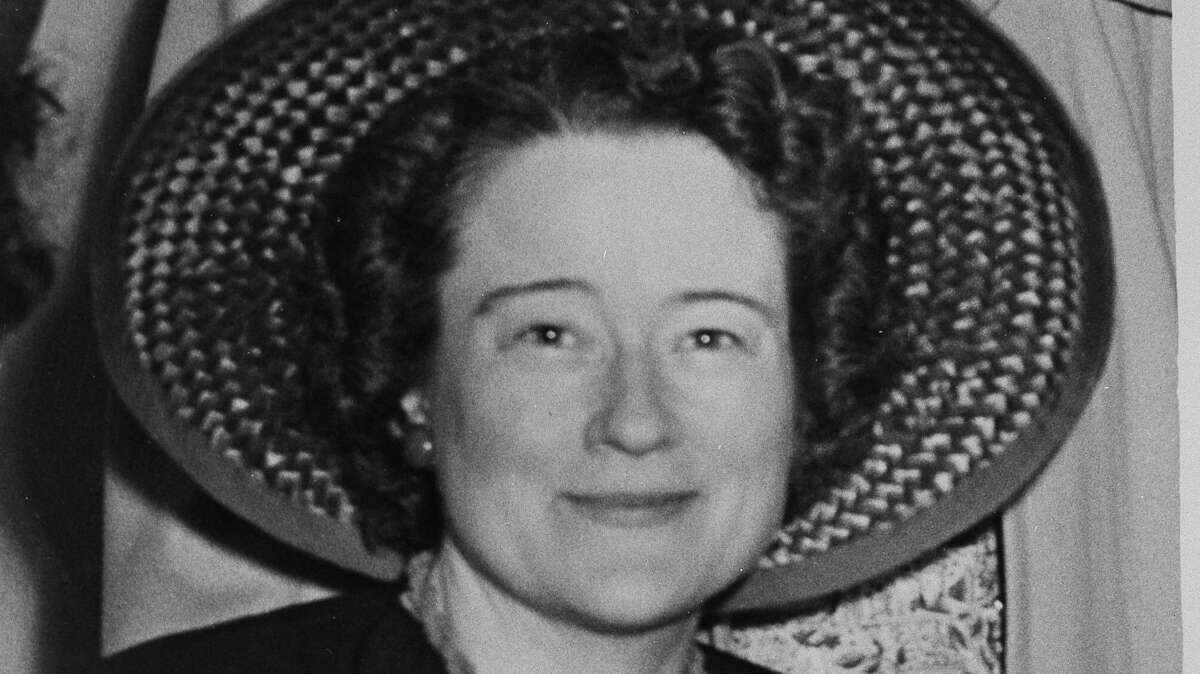
In the middle of the 20th century, Susie Sharp was a woman of firsts.
She became the first woman appointed as a superior court judge in North Carolina and, later, the first woman to serve on the state supreme court.
She was also the first woman to become chief justice when she took her oath of office 45 years ago on Jan. 2, 1975, according to the N.C. Department of Natural and Cultural Resources.
But she rejected the notion of feminism, according to historians and newspapers that reported on her.
“I think women have something unique to offer simply because they are women, though I think this women’s angle has been greatly overemphasized,” she said in 1981, according to an obituary published in the Greensboro News & Record.
Sharp died at age 88 on March 1, 1996.
Not a feminist
The “trail-blazing judge,” as the New York Times described her at the time of her death, received 74 percent of the popular vote “to become the first woman Chief Justice in the nation to be popularly elected,” according to the N.C. DNCR.
Sharp led North Carolina’s highest court until reaching the mandatory retirement age of 72 in 1979, the Times reported.
“I broke the ice,” she said the year she retired, according to the News & Record. “I hope I made it a little easier for women who want to be lawyers and judges. But no one else can have the fun, the pleasure and the shock of being first.”
As a vocal opponent of the Equal Rights Amendment, she was something of an oxymoron.
The ERA, which prohibited gender discrimination, was passed by Congress in 1972 as the 27th amendment to the U.S. Constitution, according to the Encyclopedia of North Carolina.
It then went to the states for ratification, where it met resistance “from conservative women who feared that civil society would fall into chaos if the amendment passed,” the encyclopedia states.
U.S. Democratic senator Sam J. Ervin Jr. of North Carolina was among those who opposed it, and Sharp — “a highly respected Democrat” — publicly backed him, according to the encyclopedia.
“The trouble comes when a woman tries to be too many things at one time: a wife, a mother, a career woman, a femme fatale… A woman has to draw up a blueprint,” Sharp said, according to the North Carolina History Project. “She has got to budget her life.”
Today, 38 states have ratified the ERA. North Carolina is not one of them.
The only woman in the room
Sharp went to law school at the University of North Carolina, where she was reportedly the only woman in a class of 60 men.
Then-Gov. Kerr Scott appointed her to the Superior Court in 1949.
But Sharp faced scrutiny from those who thought the appointment “inappropriate” — including one reporter who suggested it would be wrong for her to preside over a rape trial, the News & Record reported.
“There could never have been a rape in the first instance without a woman present,” Sharp said, according to the newspaper. “And I think it would be eminently fitting that a woman should preside at the payoff.”
In another instance, an attorney told her courtroom, “Gentlemen of the jury, the presence of sweet womanhood in this courtroom today rarefies the atmosphere,” according to the N.C. DNCR.
She also discovered during her tenure that the judge’s bathroom in Morganton “had only a sink and a urinal,” the state agency found.
Sharp — who once said “you can’t serve two masters and serve them well,” according to the News & Record — never married.
‘It takes both a man and a woman’
Despite her rejection of feminist ideals, feminists “championed” Sharp, the News & Record reported. Many hoped she might one day be appointed to the appeals court or the U.S. Supreme Court.
TIME Magazine named Sharp one of its women of the year after she became chief justice in 1975.
At the time, only 7 percent of U.S. lawyers were women, TIME reported.
But Sharp maintained being a woman had little to do with it, according to the newspaper.
“You know it takes both a man and a woman to make a good home,” she said, the News & Record reported. “And by the same token, it takes both a man and a woman in this time to make adequate government.”
This story was originally published January 2, 2020 at 7:08 PM.