North Carolina keeps poultry farm locations secret. We mapped them anyway.
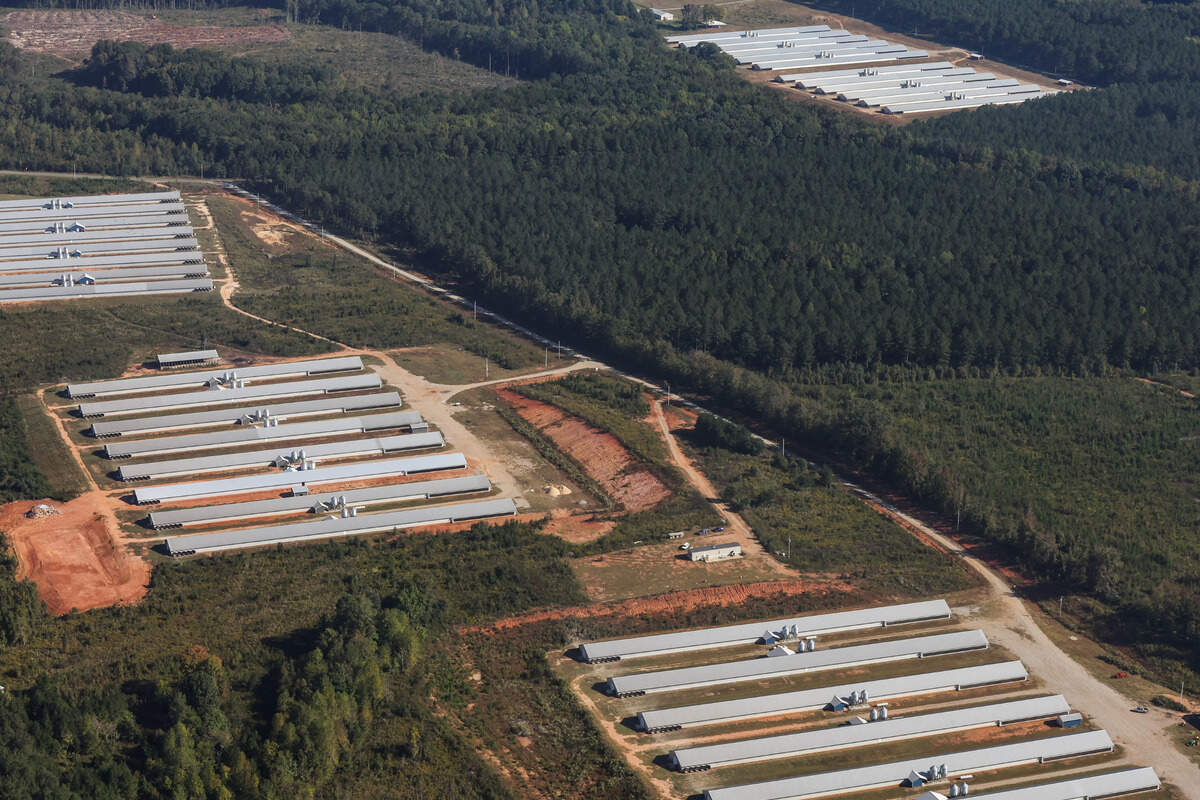
From 2,000 feet in the air, poultry barns are easy to see.
Even when they’re miles away, their tin roofs shine like a mirage — glimmering among green pine forests, hayfields and pastures.
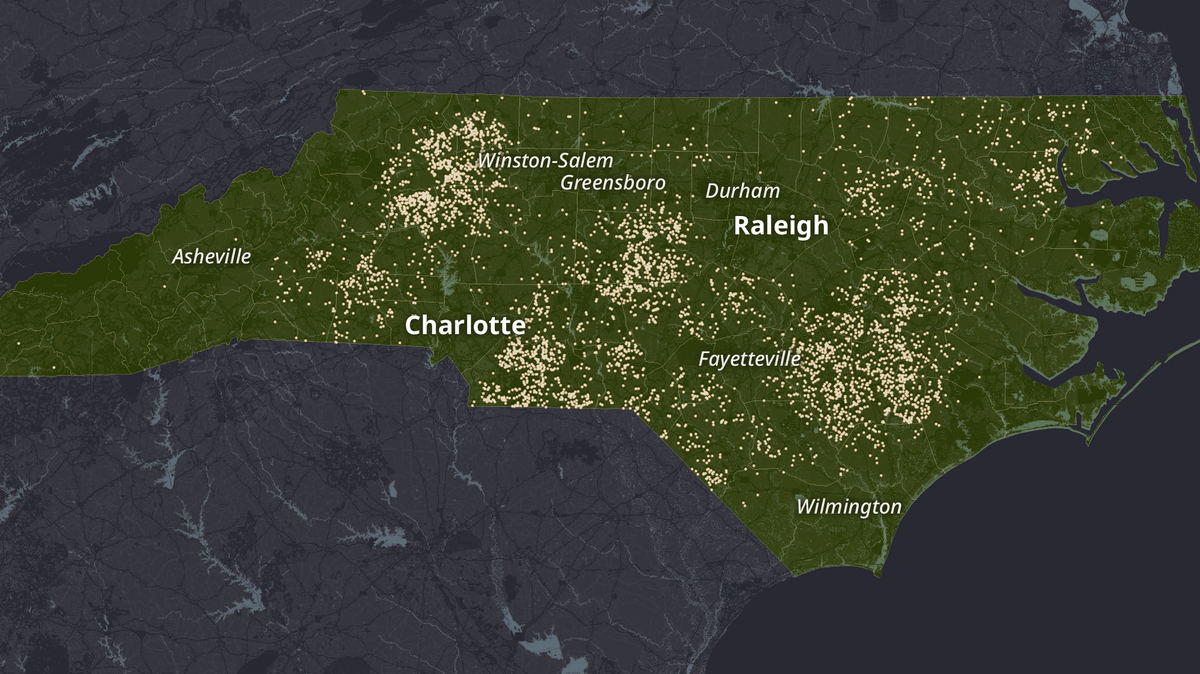
As massive as these industrial farms can be, state officials disclose little information about dry-litter poultry farms, the roughly 4,700 farms responsible for raising more than 99% of the state’s billion birds, according to state agricultural data. Unlike other states, such as neighboring South Carolina and Virginia, North Carolina doesn’t make public the locations of poultry farms.
The farms’ locations, their waste management plans and where the poultry waste ends up are not public. Neighbors aren’t told when a farm is proposed nearby and complaints about farms are shielded unless state environmental officials find a violation.
To investigate the impacts of the poultry industry, now spread across most of the state, The Charlotte Observer and The Raleigh News & Observer first had to learn where these farms are located.
Analysts at Environmental Working Group, a Washington, D.C.-based nonprofit, have mapped these farms for six years by scouring satellite images. For many years, members of Waterkeeper Alliance, another nonprofit, assisted by photographing the farms from the air during flights with volunteer pilots.
“We have a better idea of where the poultry facilities are than the state does,” said Larry Baldwin, N.C. CAFO coordinator for the WaterKeeper Alliance.
EWG’s latest dataset includes some 4,800 poultry operations in the state, which the group provided to the newspapers.
The environmental group also shared its file with Stanford University researchers who used machine learning to create their own map of poultry barns. That group wrote computer code to identify the barns’ long, slender outline, finding what looked, at first, like 27,000 individual barns.
They also shared their data with the newspapers.
Building what is likely the most accurate map of this state’s poultry farms yet published required merging those datasets with another map, one with some 5.4 million records on every parcel of land in North Carolina. North Carolina OneMap, created by the N.C. Geographic Information Coordinating Council, includes the names of people who own each parcel and a land use description.
Combining the EWG file to the parcel map eliminated about 200 farms, barns on opposites sides of woods or lakes that appeared to be separate farms but stand on the same land parcel.
If both EWG and Stanford data said a particular parcel housed a poultry farm, it’s included in the new map. Confirming thousands of other locations took more steps.
We retained parcels where a landowner’s name was associated with poultry operations, such as Butterball, Tyson Farms or Prestage Farms or where records indicated that chickens or turkeys were raised on the land.
Then it was time to check satellite images by eye. We plotted the remaining 8,859 locations — a combination of farms and barns — and added a grid filled with 15-square-mile sections over the state.
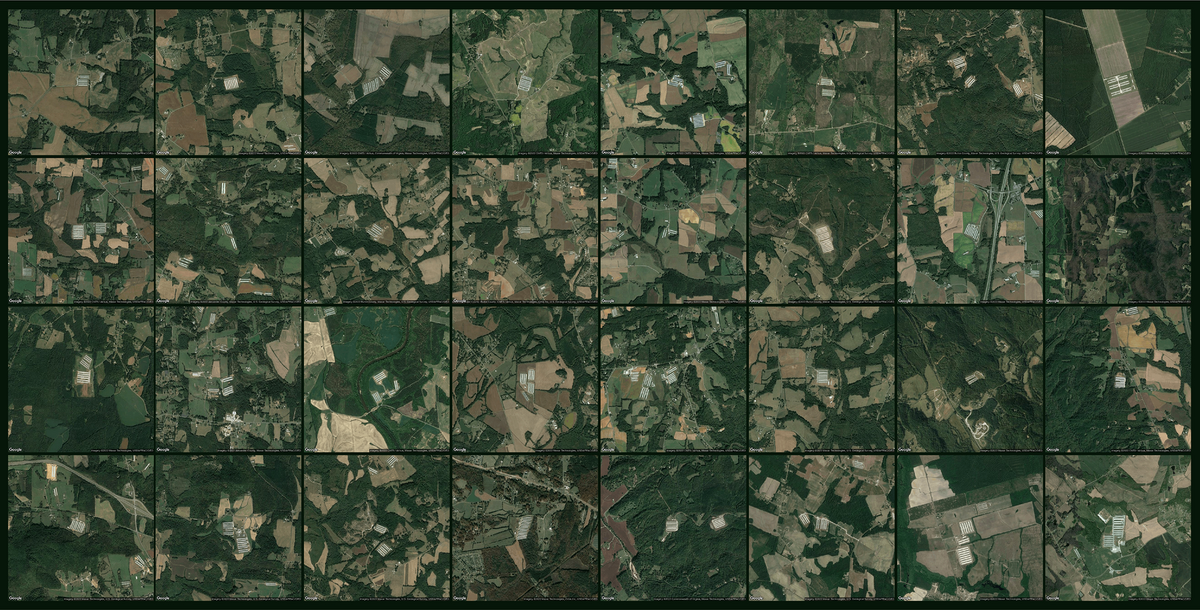
We examined square after square, eliminating about 300 farms where barns were taken down or were in such disrepair that they no longer appeared in operation. We also eliminated greenhouses, bridges, hog barns and other structures that Stanford’s computers mistakenly labeled as poultry barns.
Ultimately the newspapers counted and plotted 4,679 poultry farms in 79 North Carolina counties. That opened the door to analysis.
Merging maps to gain insight
The map allowed reporters to identify neighborhoods now teeming with farms. One Anson County home, for instance, sits within a mile of some 50 barns.
Mapping the locations also allowed us to count how many barns stand in floodplains, and how many people in the state live within a half mile of a farm, which some research says may pose health risks. To calculate that, reporters added block-level census data to the map and drew a radius around each farm.
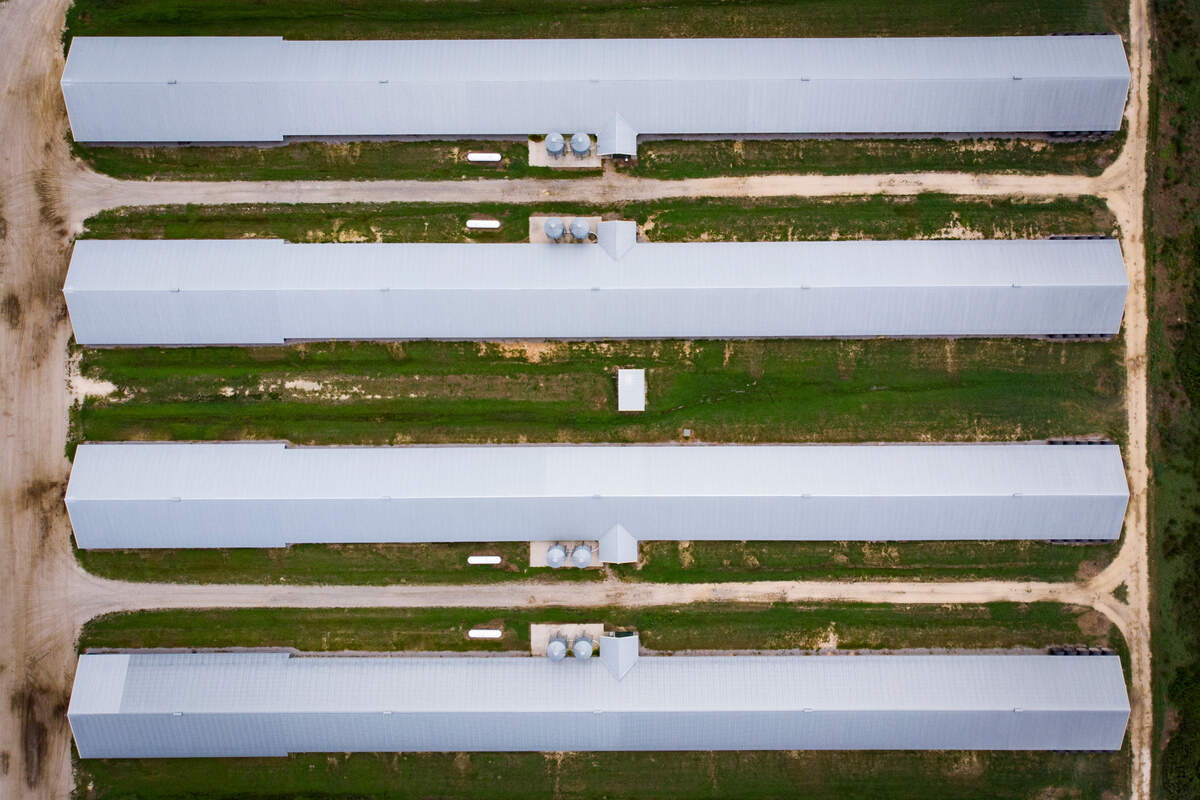
Accurate mapping of poultry farms could help scientists and state officials measure poultry’s potential effects on the state’s waterways, said Will Hendrick, Environmental Justice Policy deputy director for the North Carolina Conservation Network.
“Our environmental and public health regulators cannot protect North Carolinians from harms of which they’re ignorant,” Hendrick said.
Stanford’s researchers used 2016 satellite images from the U.S. Department of Agriculture’s National Agricultural Imagery Program. EWG’s analysis used images from 2020.
Every expert interviewed by the newspapers said more farms have been built since then.
Read more stories from the “Big Poultry” project at newsobserver.com, charlotteobserver.com or heraldsun.com.
This story was originally published December 5, 2022 at 6:00 AM.