
A front-row seat to North Carolina’s juvenile sentencing reform
During the early 1990s, Rep. Marcia Morey was working as an assistant district attorney in Durham County.
Since then, she’s watched the pendulum swing both ways on juvenile sentencing in North Carolina.
Crime was rising in the 1990s, and violent crimes committed by minors made headlines, she said. Morey recalled helping prosecute the case of Gregory Gibson, a Black 13-year-old who bludgeoned a 90-year-old woman to death in Durham in 1992.
State law mandated then that Gibson remain in the juvenile justice system. Gibson was sent to a training school until he was 18, but within two years of his release, was charged with another murder.
The case prompted legislators to sign a law reducing the minimum age a child could be charged as an adult from 14 to 13.
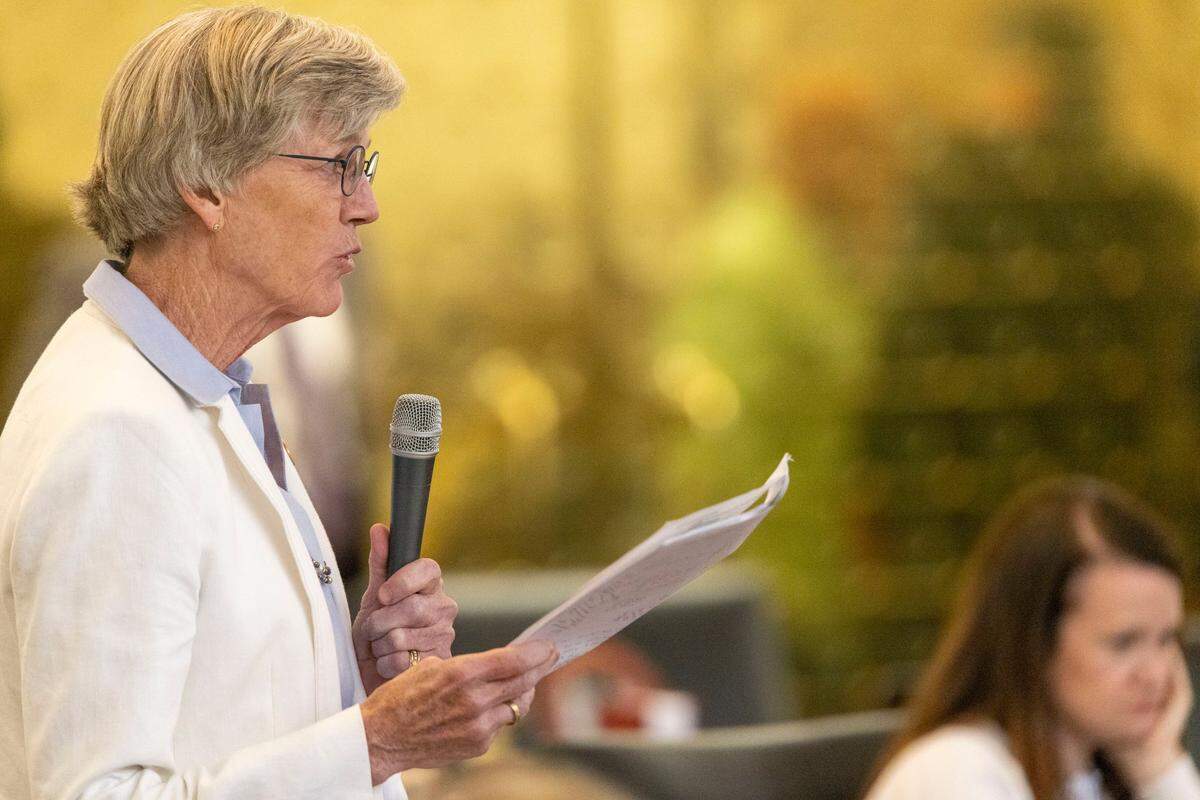
Morey said the Gibson case prompted North Carolina’s then-governor, Jim Hunt, to reform the juvenile code, establishing the Governor’s Commission on Juvenile Crime and Justice in 1997, for which Morey became the executive director.
It didn’t go exactly as planned.
“At first it was, ‘Let’s crack down on these punks and thugs,’” Morey said. “But I had Gov. Hunt go to a courtroom and watch juvenile proceedings for about three hours in Charlotte, and he came away with a totally different impression than these horrible murderers he was reading about.”
The bipartisan commission came up with a series of recommendations which were passed by legislators the following year in the Juvenile Justice Reform Act of 1998. Later, in the 10 years leading up to 2012, juvenile crime declined by more than double the national average in North Carolina, in part as a result of those reforms, The News & Observer reported.
In North Carolina, the number of children younger than 16 charged with violent crimes dropped by almost 37% from 2002 to 2012.
Morey served as a district court judge in North Carolina for 18 years before joining the General Assembly in 2017. That’s the year that “raise-the-age” legislation passed, making North Carolina the final state to end the practice of automatically charging 16- and 17-year-olds as adults..
“We weren’t treating our kids fairly, and they would have a stigma on them if they were 16 or 17,” Morey said. “Even for misdemeanor shoplifting, they would have an adult record, whereas all the kids in the other states surrounding us would have a juvenile confidential record.”
Though “raise the age” wasn’t applied retroactively, at least one district attorney has taken steps anyway.
In 2021, Durham County District Attorney Satana Deberry moved to clear the records of approximately 660 people convicted of misdemeanors when they were 16 and 17 years old, expunging more than 3,000 charges. Deberry’s office planned to file approximately 8,000 more petitions concerning misdemeanor cases dating to 1979, according to the DA’s office 2021 annual report.
Seeking a different approach
After police murdered George Floyd by Minneapolis in 2020, leading to the establishment of the NC Task Force for Racial Equity in Criminal Justice, Morey and other task force members started looking for other ways to remedy the state’s harsh treatment of children, especially children of color.
“We were the only state, once again, that had the youngest age of juvenile jurisdiction — 6-, 7-, 8-year-olds could be put into a juvenile court on a petition,” said Morey. “In my experience as a judge, 6-year-olds have no concept of what’s happening in the courtroom, or 7-year-olds or 8-year-olds, and they don’t have criminal culpability.”
In a list of recommendations released in December 2020, the racial-equity task force pushed that the age of children eligible to enter the juvenile court system be raised to 12. After pushback from the North Carolina Conference of District Attorneys, it was raised to 10, with the condition that 8- and 9-year-olds could be brought into juvenile court if charged with a serious violent offense.
Also on the list was creating an advisory board at the Governor’s Clemency Office to review juvenile sentences. That was established in 2021 with Morey named one of four members. The state’s Juvenile Sentence Review Board’s recommendations have led to the release of five people so far.
In 2021, Morey and others, including Republican state House representatives, sponsored legislation to end life without parole for minor-aged defendants in the state. Despite being sponsored by a bipartisan group of lawmakers, the bill didn’t make it out of committee.
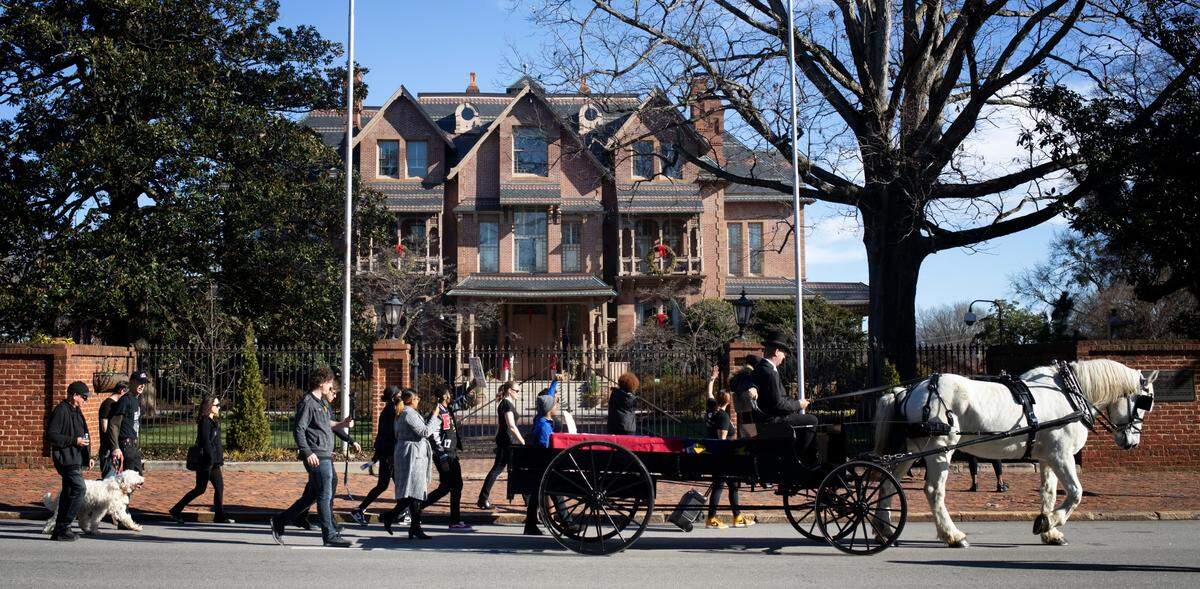
Opponents of the bill have said the current system of judging a minor’s eligibility for parole at the time of conviction is working, N.C. Health News has reported.
“On behalf of the families of [victims of juvenile crime], how are you going to tell them now that those defendants should be eligible for parole after 25 years?” Chuck Spahos, NC Conference of District Attorneys member, said during a 2021 House committee meeting, the news organization reported.
But the debate isn’t over.
“We have people under the age of 18 that we’re saying, ‘You know, the worst act that they ever did should deny them ever leaving behind bars and a prison cell,” Morey said. “I think there is redemption. I think there is mercy with justice. I think we have all the safeguards possible not to release anyone who would be a threat or danger to the public.”
(This story was produced in partnership with the Garrison Project, an independent, nonpartisan organization addressing the crisis of mass incarceration and policing.)
This story was originally published February 1, 2023 at 5:55 AM with the headline "A front-row seat to North Carolina’s juvenile sentencing reform."