
Historic shipwreck off NC’s Outer Banks seen in detail for first time since 1862
One of the nation’s most famous wartime shipwrecks is apparently still defending itself on the seafloor off Cape Hatteras, North Carolina, researchers say.
New high-solution sonar images captured by aerospace giant Northrop Grumman have revealed the ironclad USS Monitor retains significant details, despite sitting more than 160 years on the seabed.
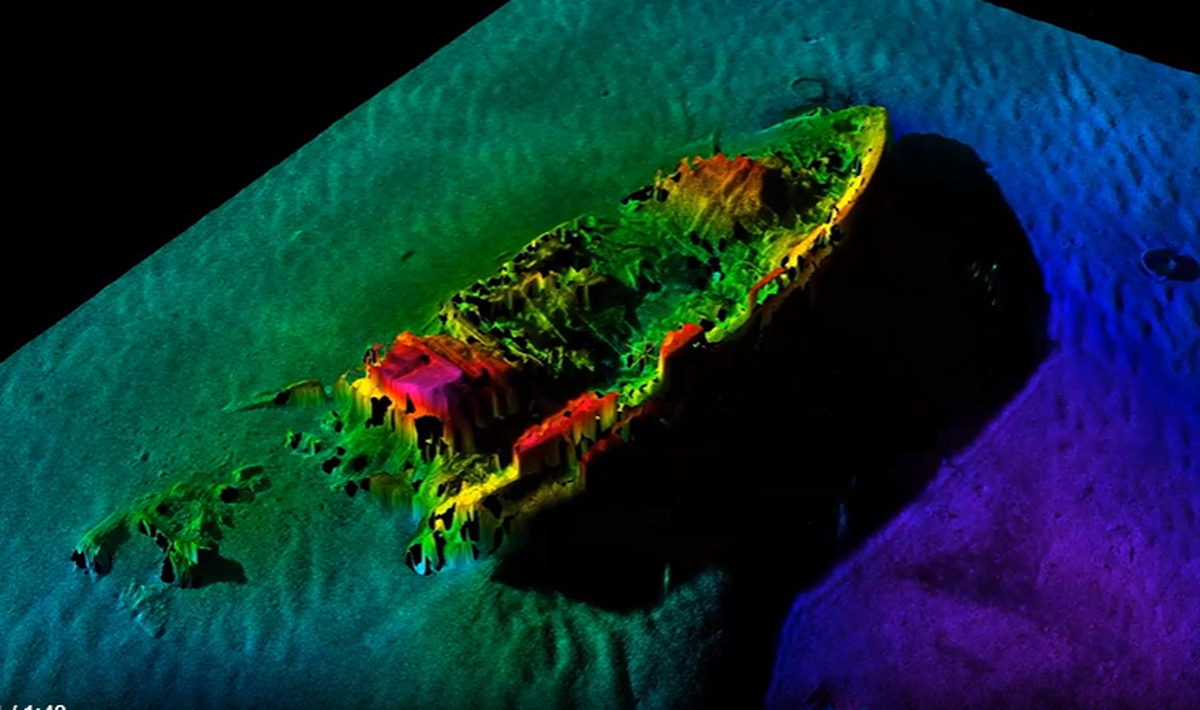
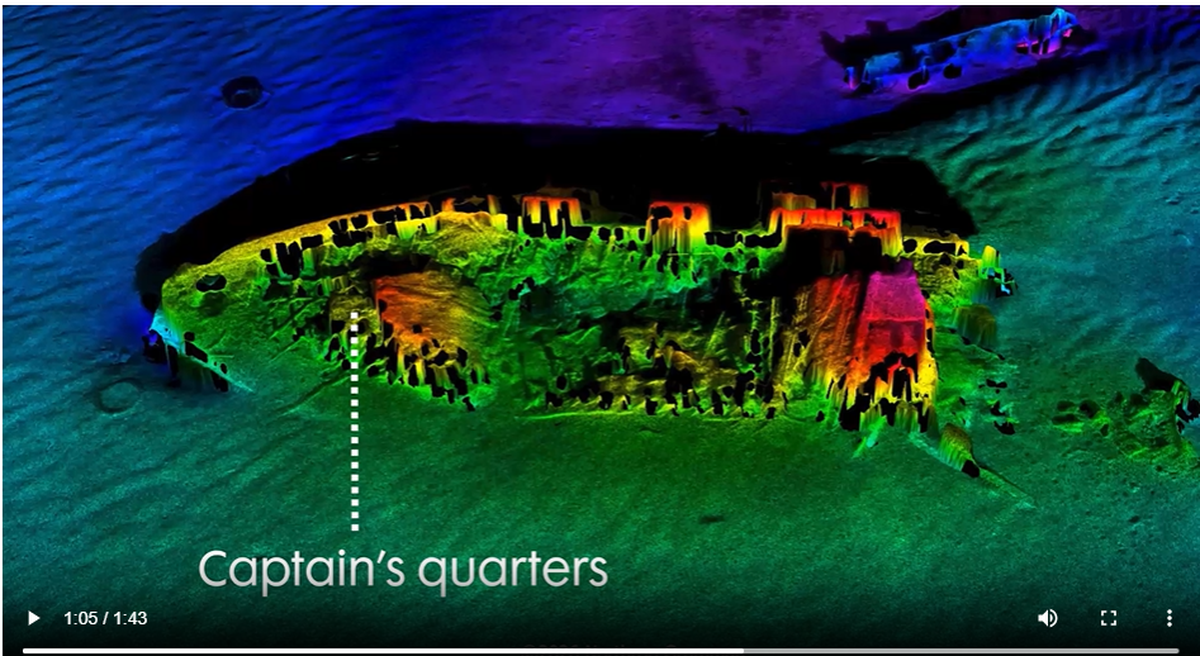
This includes remnants of the captain’s quarters, anchor well, keel and boilers.
“What excited me the most was seeing in what good condition the shipwreck was in after so many years,” Monitor Marine Sanctuary Resource Protection Coordinator Tane Renata Casserley told the Charlotte Observer.
“The same armorbelt that was built to withstand the fire of the enemy is now withstanding the ravages of the sea. This new sonar data produces results with near-photographic resolution and extreme three-dimensional accuracy.”
Efforts to document the Union’s first ironclad have been made repeatedly since it was discovered in 1973, resting 16 miles off Cape Hatteras along the Outer Banks.
The latest attempt, launched in September, involved Northrop Grumman testing new “micro synthetic aperture sonar” ( µSAS) to create high-resolution images and a 3D model of the wreck.
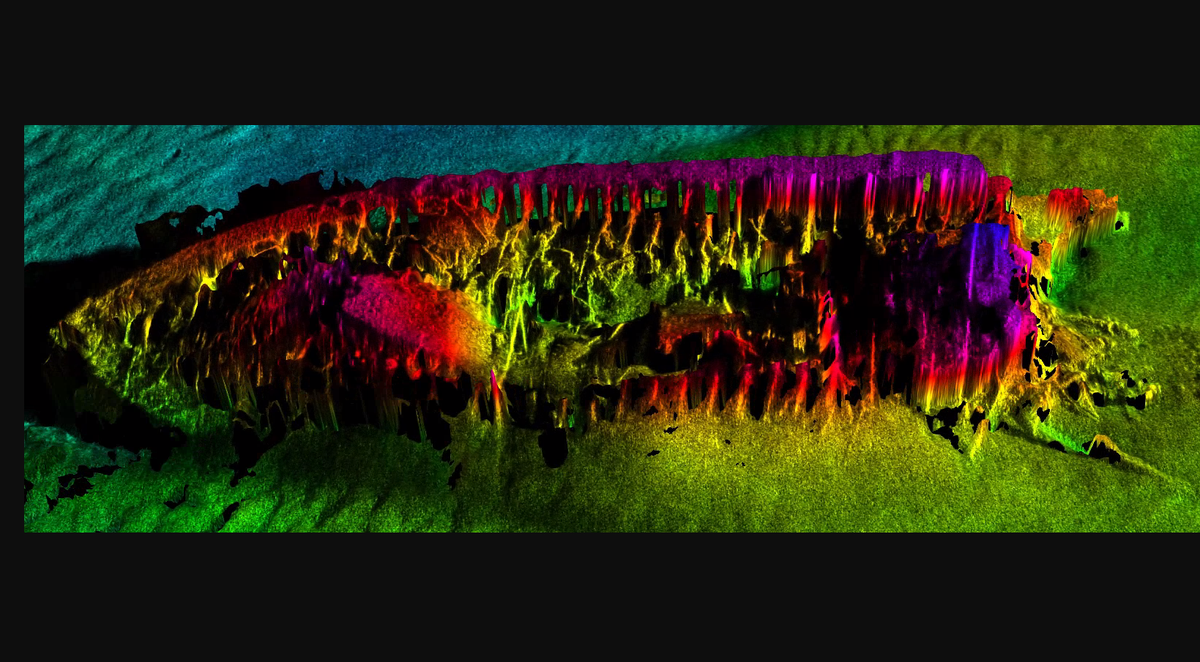
“Our advanced ... sensor technology gives us a clear, detailed look at the USS Monitor for the first time since 1862 — capturing the ship’s hull, interior, and surrounding debris through murky water,” Northrop Grumman sonar architect Kevin Gallagher said in a news release.
“One of the big things that jumped out at me was that we were able to see some of the underlying ship structure and cross member support components. ... I thought the sonar might have trouble seeing details of the wreck because of the heavy fouling and sedimentation build up. However, despite these challenges we were able to see quite a bit of the ship details.”
Largely missing in the images is the stern, which historians suspect was extensively damaged by a U.S. Navy depth charge during World War II.
The stern was the targeted for major artifact recoveries from 1998 to 2002, including the removal of the engine, propeller, and turret for preservation at The Mariners’ Museum and Park in Newport News, Virginia.
Why it’s important
Even 240 feet underwater, the USS Monitor is considered “a national shrine” and is listed on the National Register of Historic Places.
It is also surrounded by the first-ever NOAA Marine Sanctuary, created in 1975 specifically to protect the wreck.
The Monitor was built to counter ironclad technology being developed by the Confederate Navy, and it included a rotating gun turret and impregnable battery, NOAA historians say.
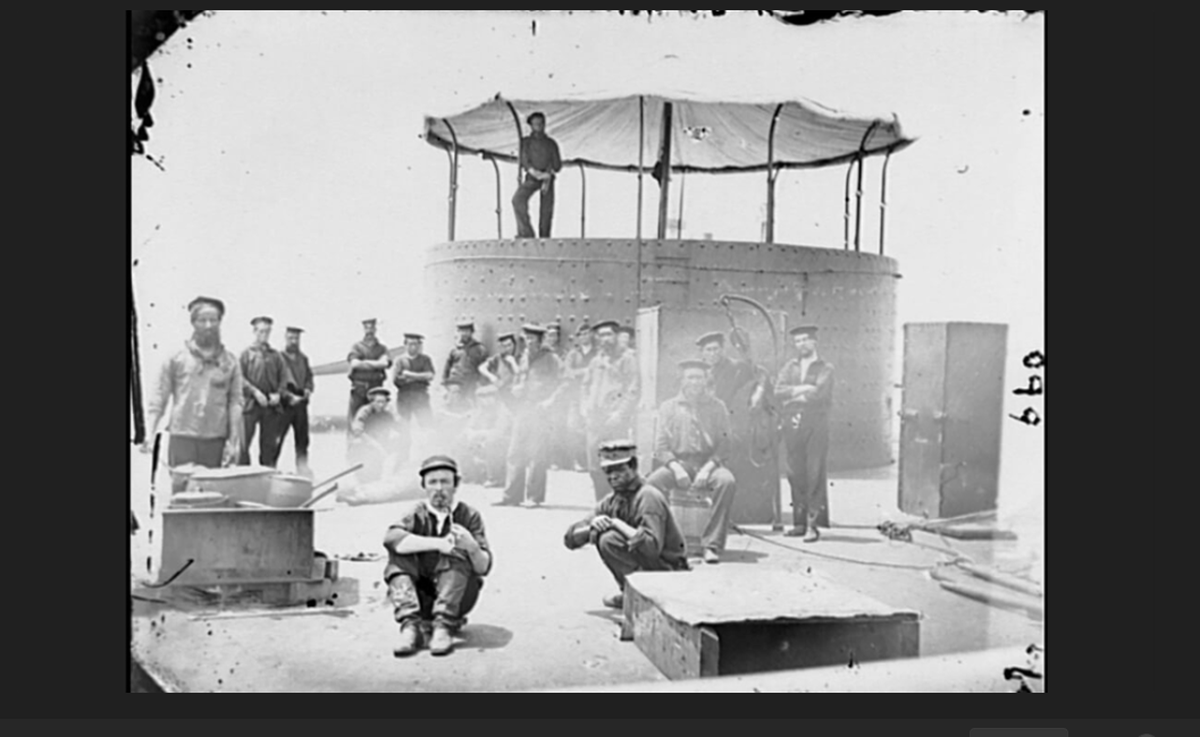
The ship’s first battle at the port city of Hampton Roads, Virginia, proved to be a draw, “with neither ship inflicting serious damage,” NOAA says. However, military historians say one outcome was clear: The era of the wooden warship had come to an end.
Preservationists have spent the past 50 years monitoring the wreck’s speed of deterioration, and the new sonar images have given them something to celebrate, Casserley says.
“It will provide the sanctuary with a valuable baseline for future monitoring,” he said. “The high-res images really let us see the integrity of the hull and armor belt in hyper-accuracy so we can track changes over time.”
How USS Monitor sank
In end, the Union’s cutting edge technology proved no match for the forces of nature.
On New Year’s Eve of 1862, Monitor was headed south off Cape Hatteras when a storm struck.
“With each pitch and roll, shock waves ravaged the crew and the hull of the little ship. Leaks developed, flooding the engine and reducing steam pressure needed for propulsion. The crew tried using pumps and even bailing with buckets, but the distress was too great,” the marine sanctuary reports.
“The turret was the only escape hatch from the ship, and as the men attempted to dash across the deck, many of them were swept into the unknown by the treacherous waves. In the end, Monitor sank beneath the waves and 16 of the brave men on board never met the year of 1863.”
Monitor hit the seafloor upside down, with its prized turret separated from the hull and wedged under the stern.
The remains of two sailors were recovered when scientists recovered the turret for preservation in 2002, NOAA says. They were buried with full military honors at Arlington National Cemetery.
This story was originally published March 10, 2026 at 6:54 AM.