
Sprawling rock hidden in North Carolina woods began as trapped magma, experts say
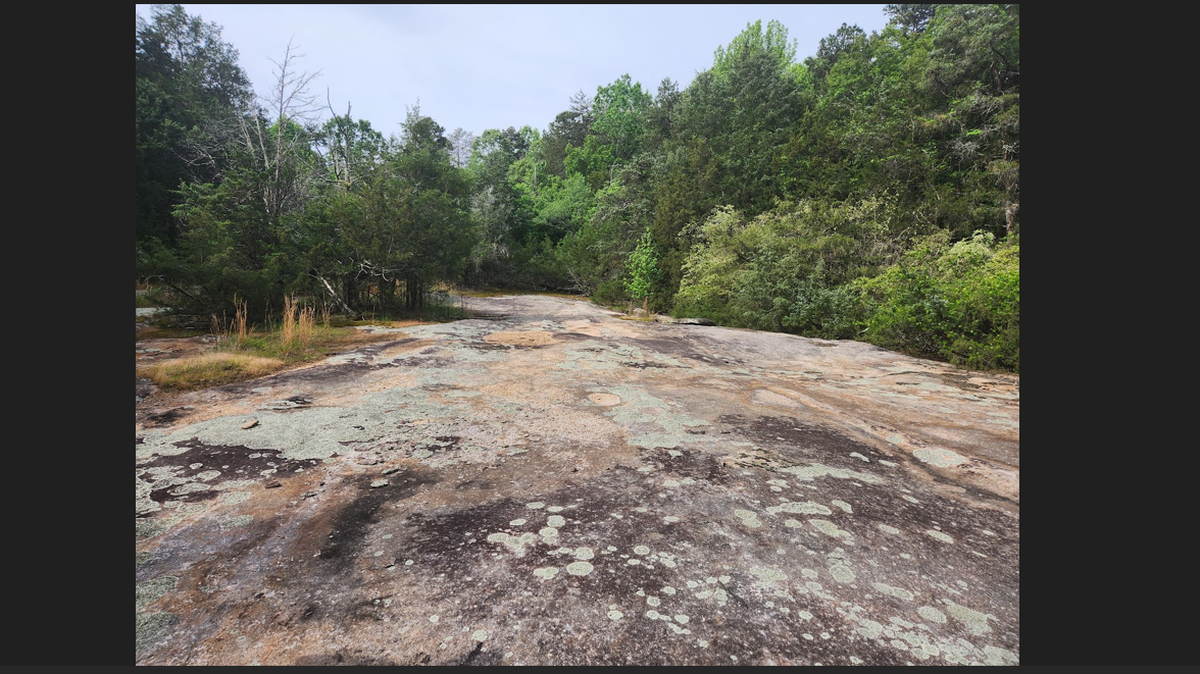
Rocks cracking apart due to global warming remains an unpredictable geologic event, but one of the rare places where it can happen is at the heart of a 150-acre preserve in Lincoln County, North Carolina.
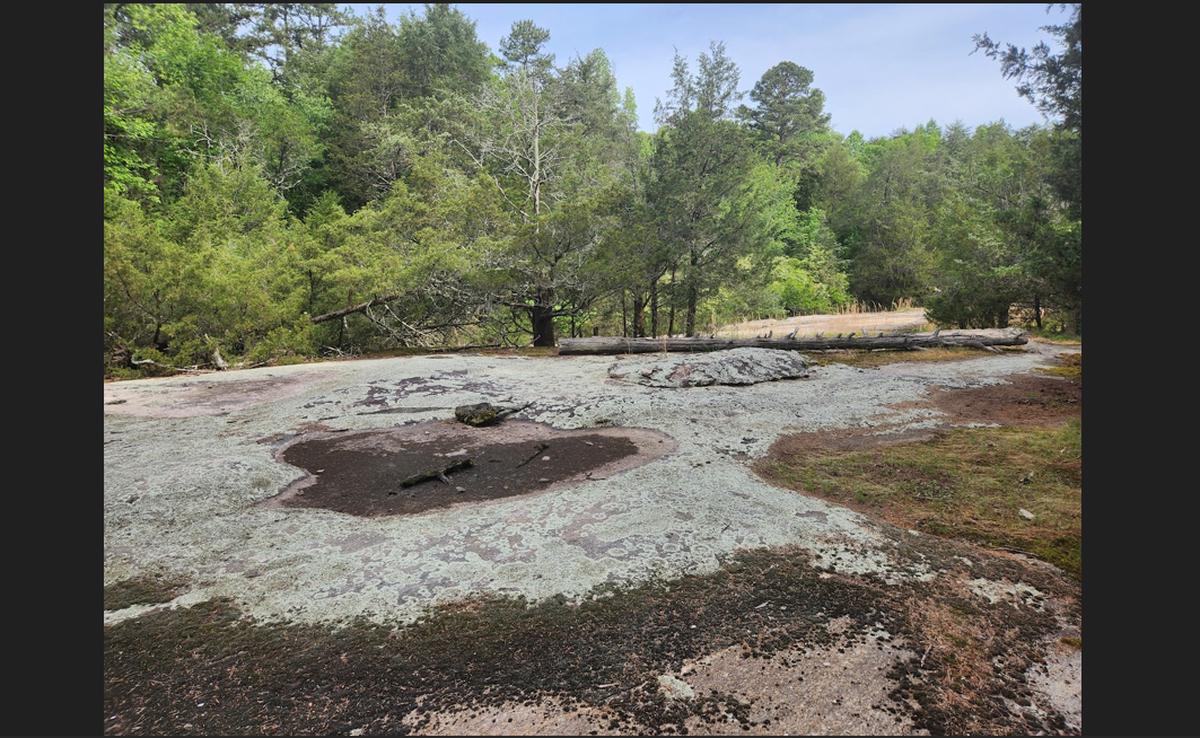
Known locally as the Beth Haven Flatrock, the granite outcrop represents what was once the volatile underside of the Charlotte region.
The rock is between 250 million to 350 million years old, and formed when a magma intrusion got trapped under a large mountain range that rivaled the Himalayas, geologists say.
Those “gigantic” peaks have long since crumbled, resulting in the emergence of a sprawling scab of granite that covers one-third of an acre.
Such granitic flatrocks and domes are famous for hosting rare plant life, but scientists have become equally intrigued by the fact extreme heat can cause them to expand, crack and peel apart.
These “exfoliation events” have actually been caught on video in other parts of the country, and they are every bit as strange as they sound. This includes the sound of cracking, rising dust and popping rocks.
Not a traditional park
The Beth Haven Flatrock and surrounding 150-acres were acquired March 31 in a deal brokered by the Foothills Conservancy of North Carolina, Catawba Lands Conservancy, and The Conservation Fund, according to a news release.
The site is about a 45-minute drive north from Charlotte and will never serve as a traditional park, due to concerns for rare plants growing on the rock.
“Rock domes, with their onion-skin layers of exfoliation sheets, are among the most captivating landforms on earth,” noted the 2018 study “Thermal influences on spontaneous rock dome exfoliation.”
“Long recognized as integral in shaping domes, the exact mechanism(s) by which exfoliation occurs remains enigmatic, mainly due to the lack of direct observations of natural events. In August 2014, during the hottest days of summer, a granitic dome in California, USA, spontaneously exfoliated; witnesses observed extensive cracking, including a ... 17,636-pound ... sheet popping into the air.”
Among the scientists who participated in the 2018 study is Martha Cary (Missy) Eppes of UNC Charlotte’s Department of Earth, Environmental and Geographical Sciences.
She visited the Beth Haven Flatrock in April, and says she found detached sheets of rock that could be attributed to exfoliation cracking.
“There have not been enough of these events to know how to precisely predict them, but it is our hypothesis that extreme temperatures will cause more such events,” Eppes told The Charlotte Observer.
“The reason is that once you expose a rock to a certain temperature, it will crack in response to that temperature, but the next time you heat it up, it will not crack again until you exceed the previous temperature. This is called stress memory. It is a commonly documented phenomenon in rock and in fracture mechanics generally.”
That means the rock must continue to experience increasingly higher temperatures to crack.
Visitors to Beth Haven Flatrock are unlikely to witness such an event, but that’s not to say something won’t be going on below the surface on extremely hot days. Flatrocks tend to be hotter than the surrounding area, and can reach temperatures of nearly 160 degrees, Eppes says.
“If we deployed instrumentation that could listen for very small cracking, there’s a good chance that you could ‘hear’ those crack events with that special instrumentation,” she said.
A ‘geological island’
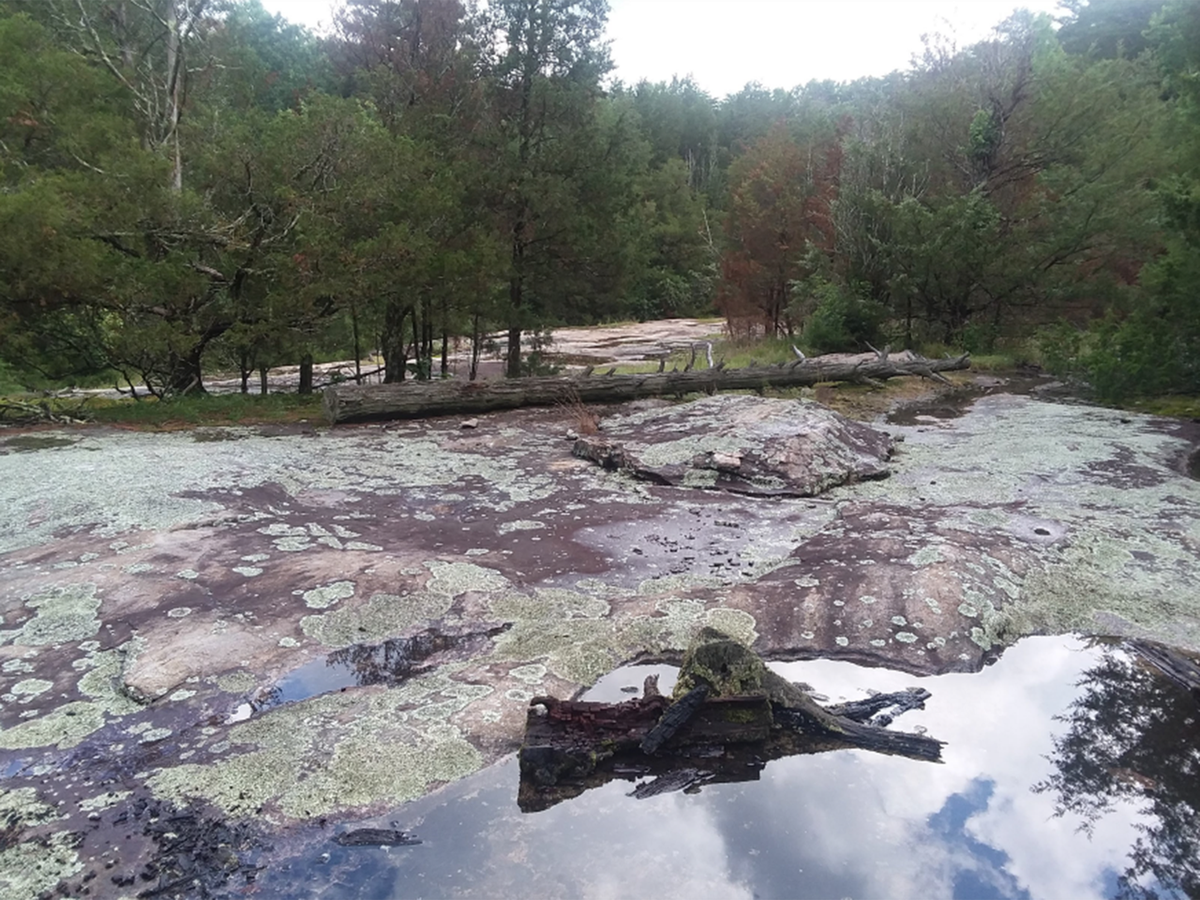
It’s estimated there are at least 30 granitic flatrocks in North Carolina, but they “look incredibly different” from the Beth Haven Flatrock due to heavy foot traffic, researchers say.
“The pristine nature of the Lincoln County site really impressed me. It made me (realize) that the other sites I have been to have been completely scrubbed clean of vegetation in many ways,” Eppes says.
“It also impressed me because it was this small little ecological and geological island hidden away in a very typical southern Piedmont forest.”
The site had been missed by state flatrock surveys, making the Foothills Conservancy announcement a revelation to researchers.
In many instances, such magma intrusions take the shape of prominent domes – like Stone Mountain in Georgia. But the Lincoln County site is “sitting almost level with the surrounding landscape,” according to Land Conservancy Director Will Ruark of the Catawba Lands Conservancy.
“It’s not an overlook with long-distance views. You’re surrounded by trees with some open sky, and what really stands out is the contrast between the bare rock and the forest around it,” Ruark told The Charlotte Observer.
“You don’t typically come across something like this in Lincoln County, so it really does feel like a small, self-contained natural world within a larger landscape. ... The flatrock is not something you can see from the public road. Once you’re there, it feels pretty removed. When you step onto the rock, everything changes.”
Preservationists sought to protect the site because it sits in the path of fast spreading development around Lake Norman. The resulting deal means the 150 acres “is protected in perpetuity by a conservation easement,” officials said.
Access will now be limited to research efforts and guided visits, Ruark said.
This story was originally published May 17, 2026 at 6:53 AM.