
Mysterious cause of dolphin’s death found lodged behind its skull, NC experts say
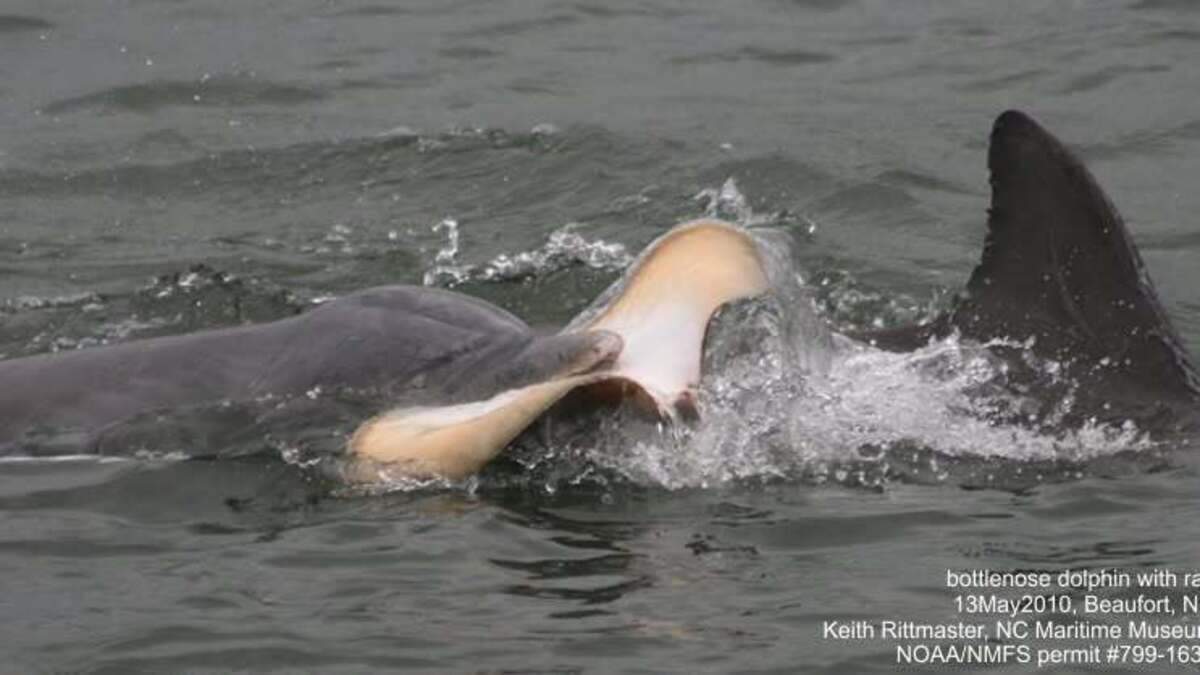
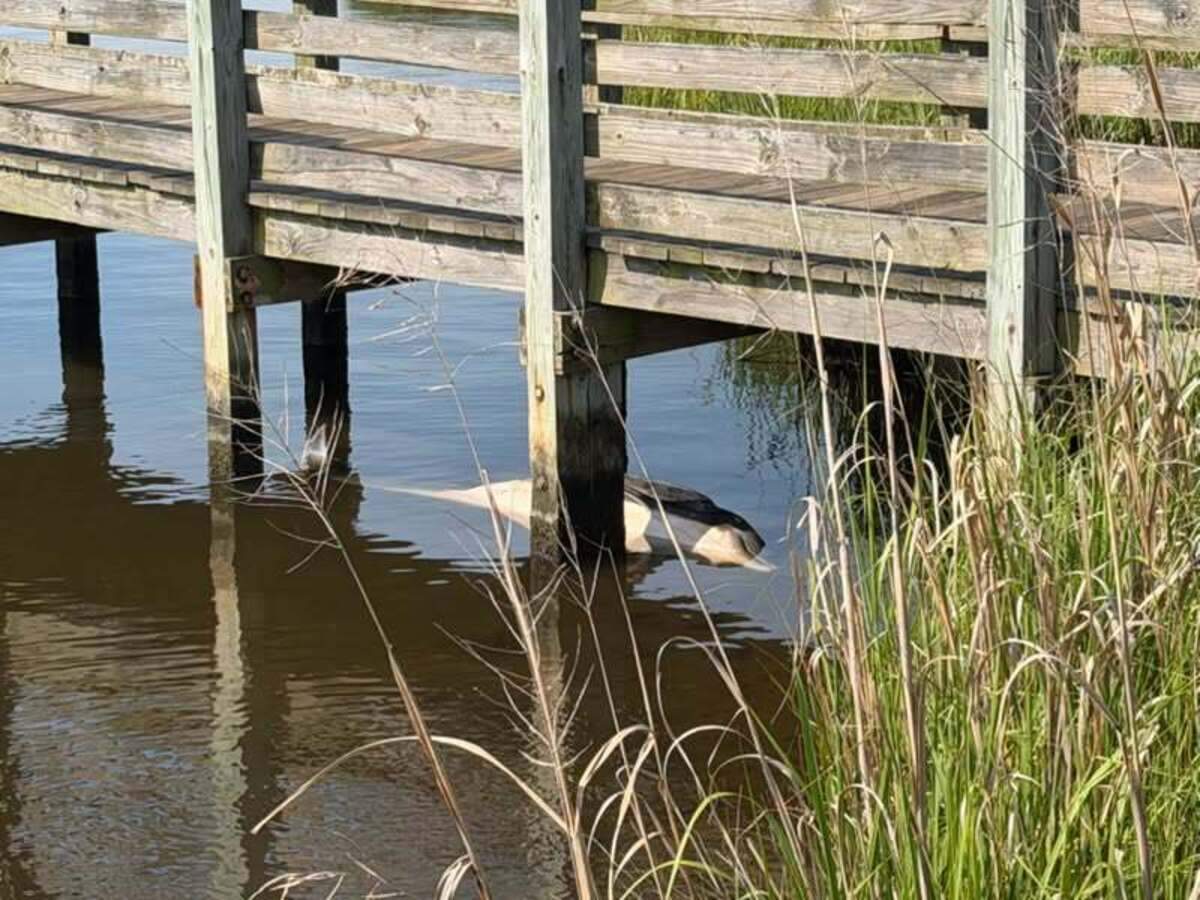
A seemingly healthy bottlenose dolphin was found dead in one of North Carolina’s coastal bays, and the quest for answers led to a grisly find in the lab.
“During the exam, they discovered a stingray spine lodged behind the dolphin’s skull,” the N.C. Aquarium at Pine Knoll Shores wrote in a June 24 social media post.
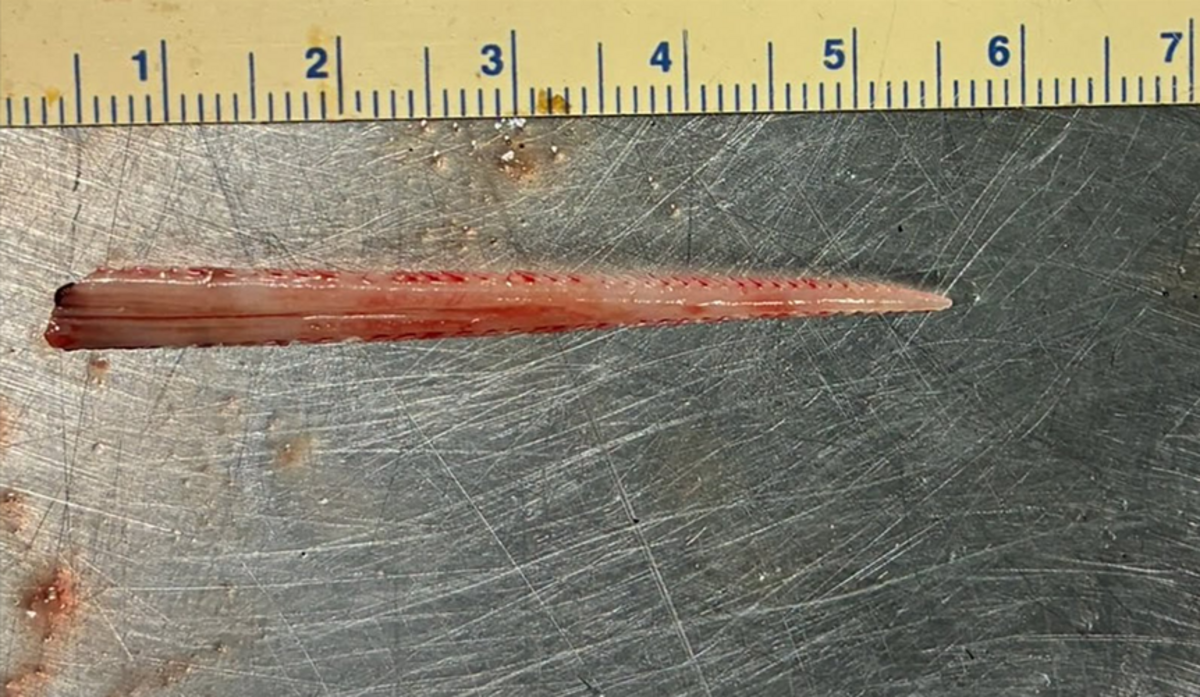
“Stingrays use their venomous tail spines to defend against predators. They can whip their tails around and drive the serrated barb into the animal that is attempting to eat them and release venom into the threatening animal. Bottlenose dolphins eat stingrays ... so, do they ever get stung? Yes!”
A photo of the barb shows it was nearly six inches long and pointed like an ice pick. However, it may be the resulting infection that ultimately killed the dolphin, experts said.
The adult female was found June 6, floating in Wilson Bay near Jacksonville, the aquarium said. The carcass was examined by the N.C. Aquarium Marine Mammal Stranding Team and students with the N.C. State University Center for Marine Sciences and Technology.
“Determining the cause of death is a difficult task with marine mammal strandings. Often there are multiple factors involved in the strandings and deaths of these long-lived apex predators,” N.C. Marine Mammal Stranding Coordinator Victoria G. Thayer said in an email.
“In this case, the infection surrounding the stingray spine at the base of the skull likely contributed to the reason this animal stranded. The tissue layers surrounding the brain (meninges) were congested in the area of the stingray spine. We also found several lesions in the left lung and several reactive lymph nodes during the necropsy, suggesting a widespread infection.”
A similar case of a dolphin killed by a stingray spine was reported in 2024, off Kiawah Island in South Carolina. A nearly 3-inch barb was found lodged in the dolphin’s right lung, the Lowcountry Marine Mammal Network reported in a Facebook post.
The most common species of stingray in North Carolina waters is the Atlantic stingray, which can tolerate the brackish waters of sounds and coastal rivers, the aquarium reports.
Stingray venom is not fatal to humans, but it “causes intense pain,” according to Poison.org.
“Although they are generally shy, they may strike when unintentionally stepped on,” the site says. “Because the puncture is often deep and considered dirty, there is high risk of infection.”
Jacksonville is about a 120-mile drive southeast from downtown Raleigh.