
More students are bringing guns to school in NC. How do we keep kids safe?
It’s happening with startling frequency.
Students — the vast majority of whom are not old enough to purchase a firearm in North Carolina — are bringing guns to school, whether to show off or wield them in a dispute with a peer.
In Charlotte-Mecklenburg Schools, 23 guns have been found since the school year began — a 10-year high. Similar instances have occurred in Wake County and across the state.
A dispute between two students led to gunfire at a Wilmington high school in late August, leaving one student injured. Just two days later, a 15-year-old was shot and killed by a fellow student at Mount Tabor High School in Winston-Salem.
Now, parents and children are left wondering whether school is a safe place to be anymore, and school leaders are left wondering how to stop it.
They’ve proposed (and later reversed) solutions like clear backpacks, which aren’t really that effective. They’re debating the merits of metal detectors and wands, which work better but are controversial and expensive.
But school safety can’t be achieved through physical security measures alone. In many cases, these incidents arise when normal disputes among teenagers are resolved in all the wrong ways — instead of throwing a punch, they’re pulling a gun.
Addressing it will require investments in behavioral and mental health resources that the state has yet to make. School support staff, such as school psychologists, are trained in prevention and mediation. They can help identify at-risk students and potentially violent situations, but North Carolina doesn’t have nearly enough of them, and the funding to hire more is tied up in the Leandro plan. At Mount Tabor High School, for example, the school psychologist serves four different schools in the district, including Mount Tabor. That’s a population of roughly 4,000 students — far too large a responsibility for one school official.
Still, the burden isn’t shared by schools alone. The number of weapons on school campuses has increased substantially since before the pandemic partly because the number of weapons in the community has increased, too. Gun sales surged in 2020, fueled by a record number of first-time gun buyers. And studies have shown that more than half of U.S. gun owners do not safely store their guns, making it far too easy for children to get their hands on them.
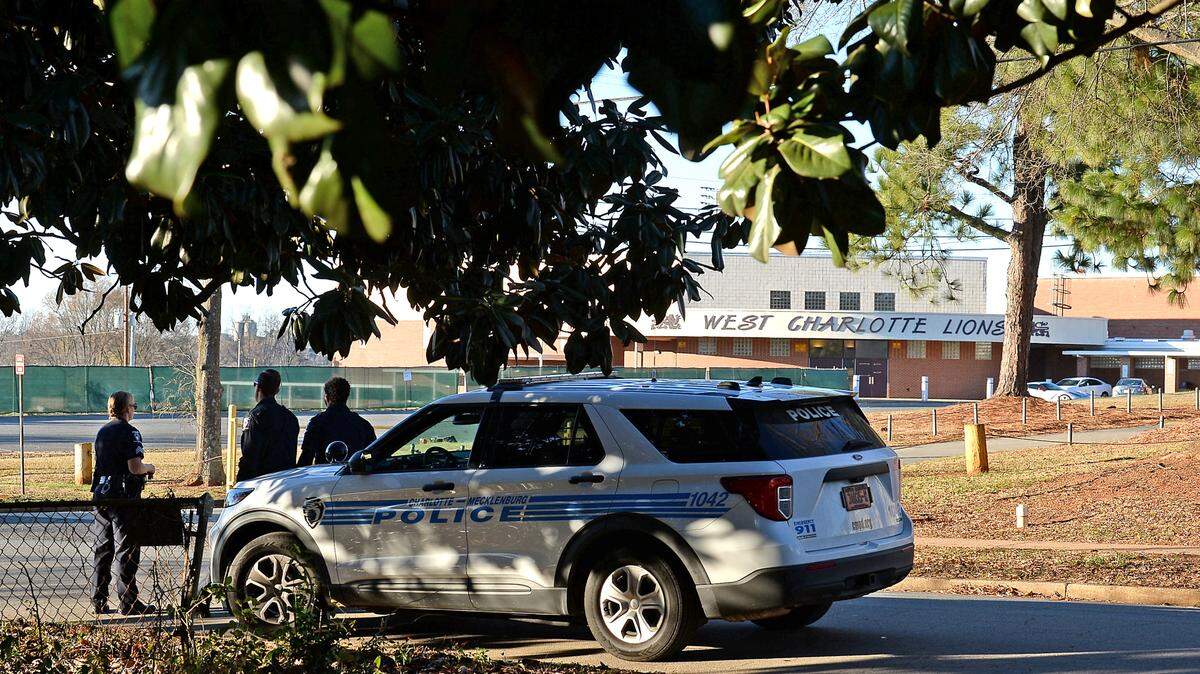
“I’ve heard kids tell me they can get a gun in 20 minutes if they wanted to get a gun,” Charlotte-Mecklenburg Police Chief Johnny Jennings said at a press conference after a student fired a gun outside West Charlotte High School Monday.
Of the guns that end up on school grounds, three out of four come from the home of a friend or family member, Shannon Klug, a volunteer with North Carolina Moms Demand Action, told the Editorial Board. Only seven of the guns found at CMS schools this year were reported stolen.
“If kids can find where we’ve hidden the Christmas presents, they can find a gun,” Klug said.
Klug is the North Carolina lead for a campaign called Be SMART, which raises awareness about gun storage as a critical public health measure that can save children’s lives. The idea behind it is simple. Guns should be secured properly — locked, unloaded and kept separate from the ammunition. Conversations surrounding gun safety should be normalized — when your child goes to play at a friend’s house, ask about firearms the same way you might ask about allergies or pets.
“It’s up to us. It’s up to the parents and the adults and the caregivers to recognize that we have a role to play. We need to secure our weapons, and we need to be having these conversations with each other,” Klug said.
Gun violence and gun access are community problems. They demand prompt solutions at schools, including more state funding immediately for school psychologists. But our communities must also play a role — and urgently so.
BEHIND THE STORY
MOREWhat is the Editorial Board?
The Charlotte Observer and Raleigh News & Observer editorial boards combined in 2019 to provide fuller and more diverse North Carolina opinion content to our readers. The editorial board operates independently from the newsrooms in Charlotte and Raleigh and does not influence the work of the reporting and editing staffs. The combined board is led by N.C. Opinion Editor Peter St. Onge, who is joined in Raleigh by deputy Opinion editor Ned Barnett and in Charlotte by deputy Opinion editor Paige Masten. Board members also include Observer editor Rana Cash and News & Observer editor Nicole Stockdale. For questions about the board or our editorials, email pstonge@charlotteobserver.com.