
UNC Chancellor: Our challenges and mistakes will make us better
In response to “Dialogue, not silence, will heal the breach at UNC” (May 3):
The 6,000 students gathered for graduation at Kenan Stadium in Chapel Hill this Sunday have been through a lot during the last four years.
The usual gauntlet of being 19 years old while trying to learn physics and philosophy and become a productive adult is challenging enough. But these college graduates have also dealt with COVID lockdowns, an economic rollercoaster, and almost two years of making sacrifices in their personal lives and academic plans for the sake of public health.
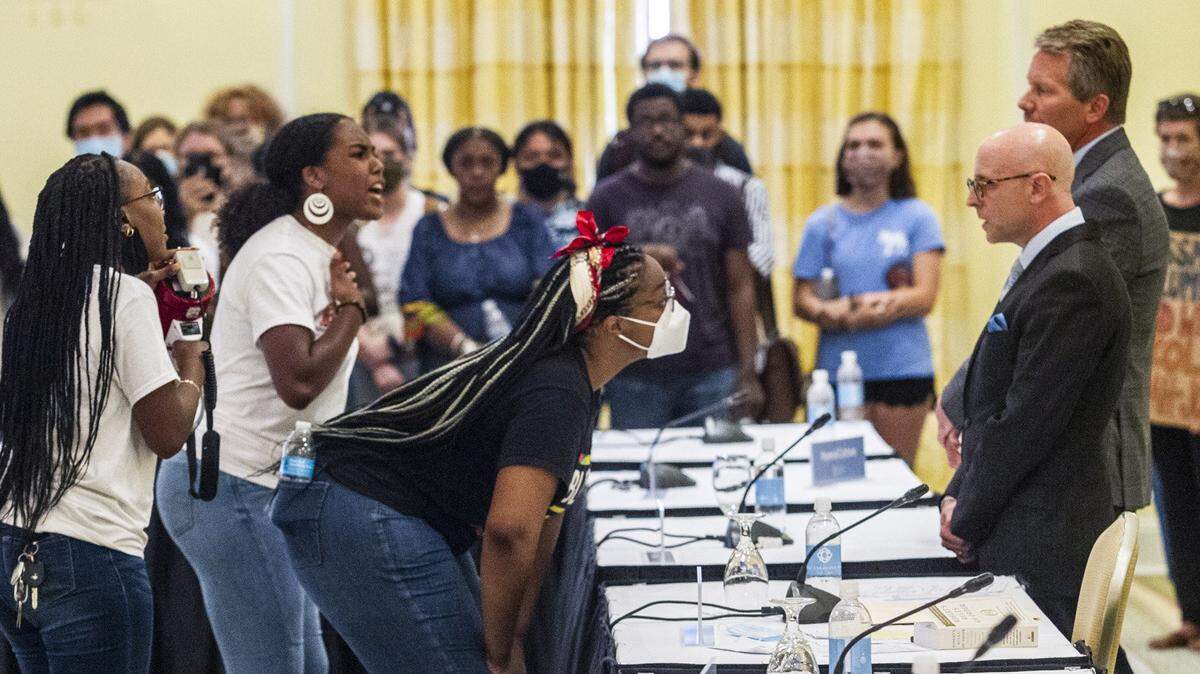
They’ve navigated a brave new world of online agitation that challenged the mental health of young people and the civic health of our society. And they’ve done it on a campus that serves as a prominent stage for controversy far more often than any of us would like.
Through it all, they’ve stayed focused and remembered the goals that brought them to Carolina in the first place. They’ve been helped along by thousands of world-class faculty and staff who worked through the darkest days of the pandemic to provide a meaningful education to the sons and daughters of North Carolina and beyond, and to uphold the mission of public higher education at a time when it’s often in question.
I have been a professor at UNC-Chapel Hill for 27 years, and I don’t think I’ve ever sent off a graduating class with greater admiration or hope. I’ve never been more proud of the colleagues I work alongside each day.
We ask an almost impossible thing of public higher education, to both serve society and challenge it at the same time. Every day, the scholars who work at Carolina have to provide trusted advice on everything from water quality to foreign policy to cutting-edge medical breakthroughs, making sure our campus is a ready toolbox for tackling the big problems that the policymakers, business leaders, and the citizens of North Carolina bring to us.
At the same time, we are one of the few spaces in American public life where people of deep and genuine difference — in background, temperament, politics and worldview — have to find ways of working and learning together. It’s our responsibility and our constitutional mandate, to explore controversial subjects and invite challenging questions without stifling debate or limiting dissent.
We don’t always get the balance right. And even when we do, the result can be chaotic and uncomfortable, especially for the vast majority of students and faculty who are trying to focus on their work and make a contribution in their chosen fields. Every fall, I start the graduate class I co-teach by sharing a favorite quote from Clark Kerr, the legendary leader of the University of California. “The university is so many things to so many different people that it must, of necessity, be partially at war with itself,” Kerr wrote.
There is no question that the University has been through hard moments in its recent history, and that leaders like me could have handled some of them better. We’re still learning how to be a fair and humane institution in a divisive time, and I get advice every day from faculty and staff, from alumni, from lawmakers, students and strangers about how to do it better. They care about the place, and I’m grateful. I wouldn’t want it any other way.
The belief that we can be better — that we can make progress, that we aren’t defined by our worst moments but by the way we learn from them — is what I want for the young people collecting their diplomas and celebrating with their families today.. It’s what I cherish most in this University, which has endured for two unquiet centuries because it was created out of confidence in a better future.
Education has never been an easy thing. But it is always worth the struggle.