
NC has the money to make public schools better. Reverse the decline.
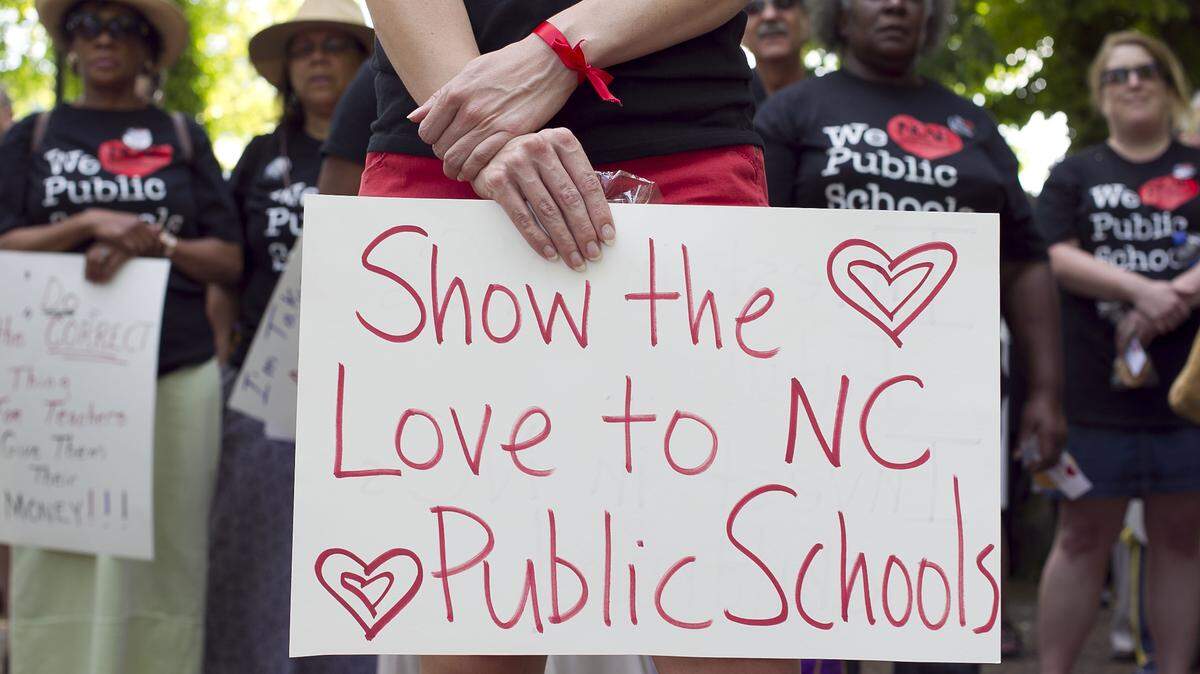
The last two years have taken a heavy toll. Children are traumatized, in many instances poorly cared for with working parents away. Teachers have confronted heavy loads as they struggle to deal with kids who faced trauma and serious learning loss.
Schools across North Carolina once again face a teacher shortage. Last year, many veteran teachers left. Less experienced ones are now being tested by fire and need the support of veterans.
In Charlotte, we’re seeing literacy and math proficiency scores at less than 10% in many high-poverty schools. Think about that — 1 in 10 kids proficient in reading and math by the end of third grade. How can it be?
How did North Carolina get here?
Certainly, the pandemic played a role. But there is more. Starting in 2010, funding at the state level began to shift, not in a positive direction. In 2008-09 we were in the grip of a recession and it was all the state could do to maintain pay and personnel.
Regrettably, as we began to pull out economically, the state did not direct improving revenues toward schools. As “discretionary” cuts were passed down from the legislature to local districts, school systems had no choice but to cut services. Many wrap-around services, particularly those that benefit Title I schools (and poor kids), were pared back. That includes school psychologists, social workers, school nurses, even curriculum specialists, like literacy coaches. Professional development virtually ground to a halt — the primary tool used to invest in teachers’ growth.
No responsible company would treat its people this way. One has to question the priorities of the N.C. legislature. We elect our representatives to guide our state responsibly — not cheaply.

The state funds approximately two-thirds of every dollar in North Carolina that is spent on K-12 public education. Counties contribute roughly 30%, and the federal government is a small factor. Many counties also have a small tax base so the pressure on them is even more intense, especially given the level of poverty across the state.
Here are the givens: Teacher pay lags; challenging teaching conditions are exacerbated by inadequate services for kids in-need; professional development is all but gone; and staffing shortages put added pressure on remaining staff.
All of this makes closing the learning gap virtually insurmountable. Teachers are worn out, inadequately paid, and not treated well from any reasonable assessment of working conditions. What happens? They leave.
If we can’t attract talent to the classroom, how will we turn around the state of education in our state?
There is a good argument that much of the system is broken. There are still good schools out there, but Title I schools with kids in poverty, where the need is arguably greatest, are falling frighteningly behind.
What became of the concept of funding in accordance with need? We must ask ourselves, are these “our” community’s kids? Does our community, our state, have some responsibility to these kids (including some 5,000 in CMS who qualify as homeless)?
The N.C. Constitution mandates the state to provide “a sound, basic education” to every child in the state. We are far from that reality.
When people say this isn’t about money, it is. It’s also about our values. Further, it’s good business to invest in our future workforce. Where will our state be when kids graduate (or fail to) and are inadequately prepared to earn a living wage?
This will catch up with us. It’s time to tap our state’s $6 billion in rainy day reserves. We could use 10% annually to begin meeting our kids’ needs. Hold the K-12 system accountable in the process, but give it a chance.
How can this change? Pay attention to the legislature. See where their priorities lie. Is it in tax cuts at the expense of our kids — amid an economic recovery? We change the status quo by investing more in our children — all of our children and the profession charged with teaching them.
I say to voters, use your vote wisely. Do you want change, or more of the same? Send the legislature a signal on how you’d like N.C. revenues spent.