‘They weren’t even on the university’s radar’: NC State, chancellor grapple with suicides | Opinion
READ MORE
Confronting a campus crisis
The deaths of five NC State students sound the alarm for mental health care and suicide prevention. Is the university doing enough?
Expand All
North Carolina State University was hit with another tragedy this weekend when a student was found dead in a residence hall on Saturday. Campus police are investigating the death as a suicide.
This marks the eighth student death this academic year — of those, five have been determined to be suicides. It is the most death Randy Woodson has seen during his tenure as chancellor, he told me Monday, but NC State is not the first UNC System school to deal with this kind of tragedy.
Last academic year, UNC-Chapel Hill had three suicides and one attempt occur back-to-back. Appalachian State University had nine students die in four months during the 2014-15 academic year, some of which were considered suicides. The national suicide rate increased in 2021 after two years of decline, with notable increases among young people of color. More than one in five North Carolina high school students have seriously considered suicide according to the 2021 Youth Risk Behavior Survey; teenage girls and LGBTQ students are reportedly at a higher risk.
Woodson has been in touch with Governor Roy Cooper during this period of mourning. They spoke Monday, the same day Cooper announced $7.7 million of new funding for the UNC System to address the mental health needs of college students. This is an important influx of cash, as all student health is supported through student fees. NC State already put some of its annual budget toward mental health services.
“We’ve actually contributed, through the university, over twice as much as we received from the students,” Woodson tells me. “We’ve made it a priority financially.”
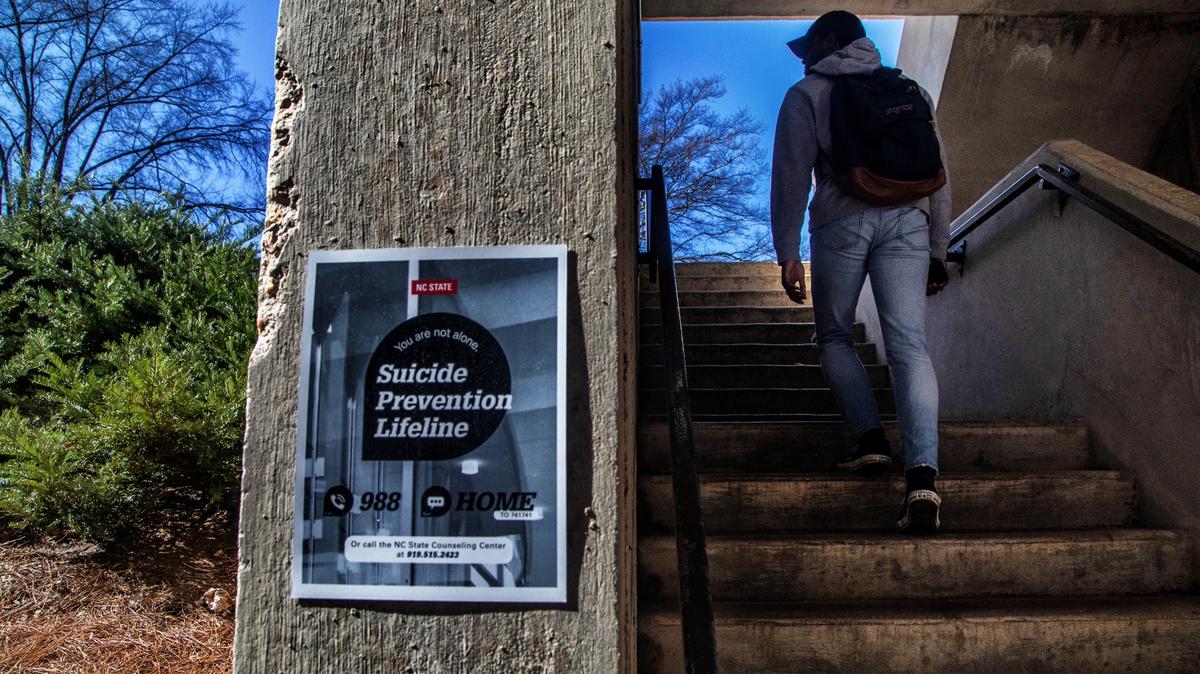
Cooper’s grant is promising. It shows that some elected officials understand the need for more robust mental health services. But almost $8 million disappears quickly when spread across 17 schools with their own individual needs and cultures. Addressing the hopelessness some students feel also will take more than therapy dog visits, university counseling services and wellness days. It is more than an issue of funding.
We don’t know the cause of any of NC State’s suicides, but we must move away from a culture that tells young people that their worth comes from accomplishments, romantic love or appearance. We must understand that there will never be a “one-size-fits-all” checklist for symptoms of suicidal ideation, and we need to understand the limits of community support when suicide is oftentimes private and isolating. Several of the students who died this academic year, Woodson tells me, never sought counseling services and were never referred to the CARES program, where other students and faculty can alert the university to people in their lives who are struggling.
“As we’ve learned this year in particular, suicide is often a very personal and private matter with a student,” Woodson told me. “Several of the cases this semester — they weren’t even on the university’s radar screen.”
That isn’t to say these programs don’t work. There are countless others who have benefited from the CARES program, the university’s wellness days and on-campus counseling. There are students who chose not to go through with a suicide plan because of a caring resident advisor or professor, all of whom receive crisis training at the university. Unfortunately, not everyone knows how to ask for help.
For the UNC System to really tackle the rise in suicides, there need to be changes big and small at every school within the system. The system currently offers after-hours counseling hotlines at each university, but the program could be improved by extending those hours to include times the counseling offices are open, and making sure all students are aware of the hotlines. They could also reformat initiatives like the CARES program to emphasize that students can flag themselves, too.
Students would also benefit from more available psychiatric services on-campus, instead of sending them off campus or limiting the number of sessions they can have at the university. Currently, some schools offer this, or are participating in pilot programs, but not all have bought in. If a student has survived an attempt, there could also be services for navigating conversations with professors about difficulty completing coursework, and more information on how withdrawing from school for their mental health could affect their career goals, graduation dates and scholarships.
Being a young person is harder than ever before. To look at suicide as the crisis it is, the university system must be willing to put time, money and effort into addressing both the root of the problem and its symptoms.
This story was originally published February 15, 2023 at 1:30 PM with the headline "‘They weren’t even on the university’s radar’: NC State, chancellor grapple with suicides | Opinion."