The youngest Democrat on the statewide ballot could add needed diversity to NC courts | Opinion
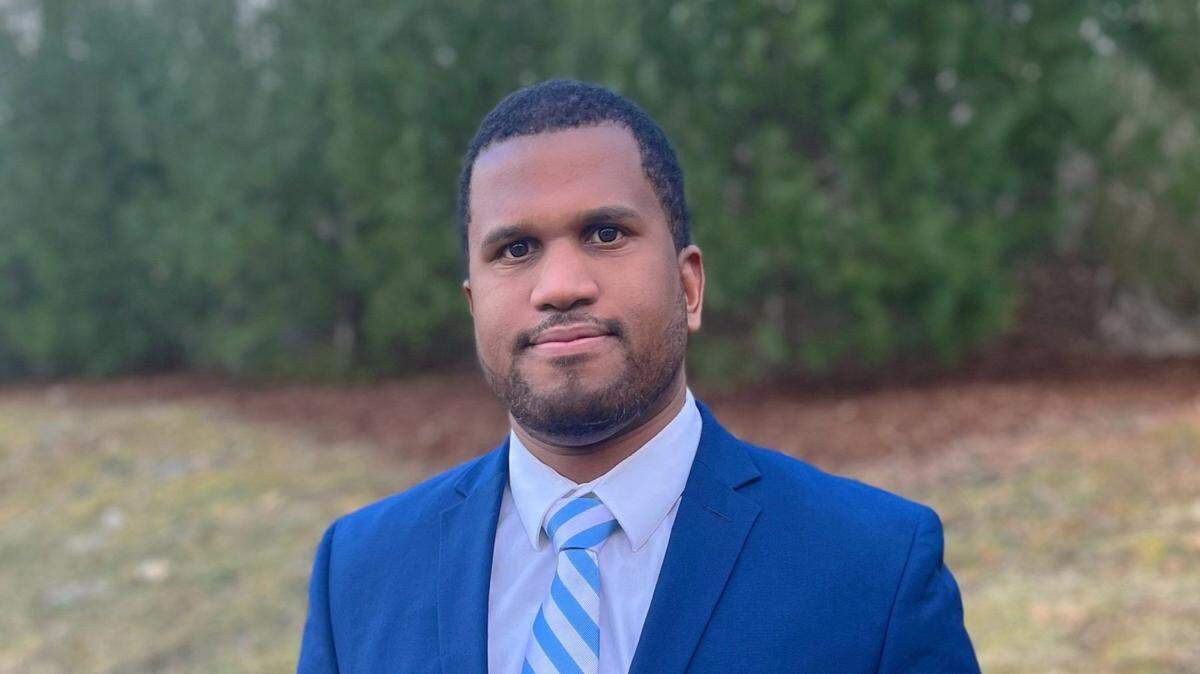
The youngest statewide candidate on the Democratic ticket in North Carolina could bring plenty of diversity to a court that sorely needs it.
Martin Moore, a 36-year-old lawyer and former public defender, is running for one of three seats on the Court of Appeals. Moore, currently a member of the Buncombe County Board of Commissioners, will face Republican Chris Freeman, a friend of Senate leader Phil Berger and his son, N.C. Supreme Court Justice Phil Berger Jr., in November’s general election.
Currently, there are just two judges of color on the Court of Appeals, despite the fact that racial and ethnic minorities comprise around 40% of North Carolina’s population. That lack of diversity is especially concerning when you consider the fact that Black and brown people are disproportionately criminalized and sent through the criminal justice system, but are less likely to encounter a judge that looks like them. Black North Carolinians deserve to see themselves reflected in the judiciary, Moore said.
At 36, Moore would also be the youngest judge currently sitting on the bench. That’s not quite the youngest Court of Appeals judge North Carolina has had — Mark Martin was 31 — but it still brings a fresh perspective.
“What’s at stake and what role the courts play in our lives has changed,” Moore said. “Me bringing a younger perspective, I think, will bring something important to the court, and will allow me to bring a different lens when we’re hearing some of these cases on all types of issues.”
Moore said his experience as a public defender also influences the kind of judge he would be. The work helped him understand what the average person might face when they interact with the justice system in North Carolina, whether it’s for the first time or the fifth.
These days, though, judges can’t just be judges — they have to be politicians, too. Since 2018, North Carolina has elected its judges through partisan elections. In 2022, Democrats lost every statewide judicial race, including two Supreme Court races and four Court of Appeals races. Currently, Democrats hold just four of the 15 seats on the Court of Appeals. But Moore has experience winning tough races. In 2022, he was the only Democrat in the state to flip a GOP-held county commission seat, winning in a district southwest of Asheville.
Judicial races, especially those for lower courts have historically been overlooked by voters — but Moore has noticed voters taking more interest in them this election cycle.
“It’s a very interesting time in our country right now, and folks are paying more attention to who is sitting on the bench and making decisions, because the courts have been on display,” Moore said. “People are asking more nuanced questions.”
While the Court of Appeals doesn’t attract nearly as much attention as the Supreme Court, it’s still important. The Court of Appeals is the state’s intermediate appellate court, which means it hears cases that have already been heard and ruled on in a lower court. If a party in a case believes that the trial court decided their case wrongly or unfairly, they can appeal the case and a panel of three Court of Appeals judges will hear it. Recently, the Court of Appeals has decided cases on issues like Gov. Roy Cooper’s COVID-19 rules and Confederate monuments.
Moore, who would also become the only member on the court from western North Carolina if elected, hopes that he can help the makeup of the judiciary better reflect the state it serves, but he believes that his candidacy itself is important, too.
“People aren’t traditionally used to seeing young Black candidates run in a statewide race, much less a statewide judicial race,” Moore said. “I think it has a positive impact when people can see themselves in the people they’re voting for.”