Tight NC Supreme Court race feeds vote counting conspiracies. Here are the facts | Opinion
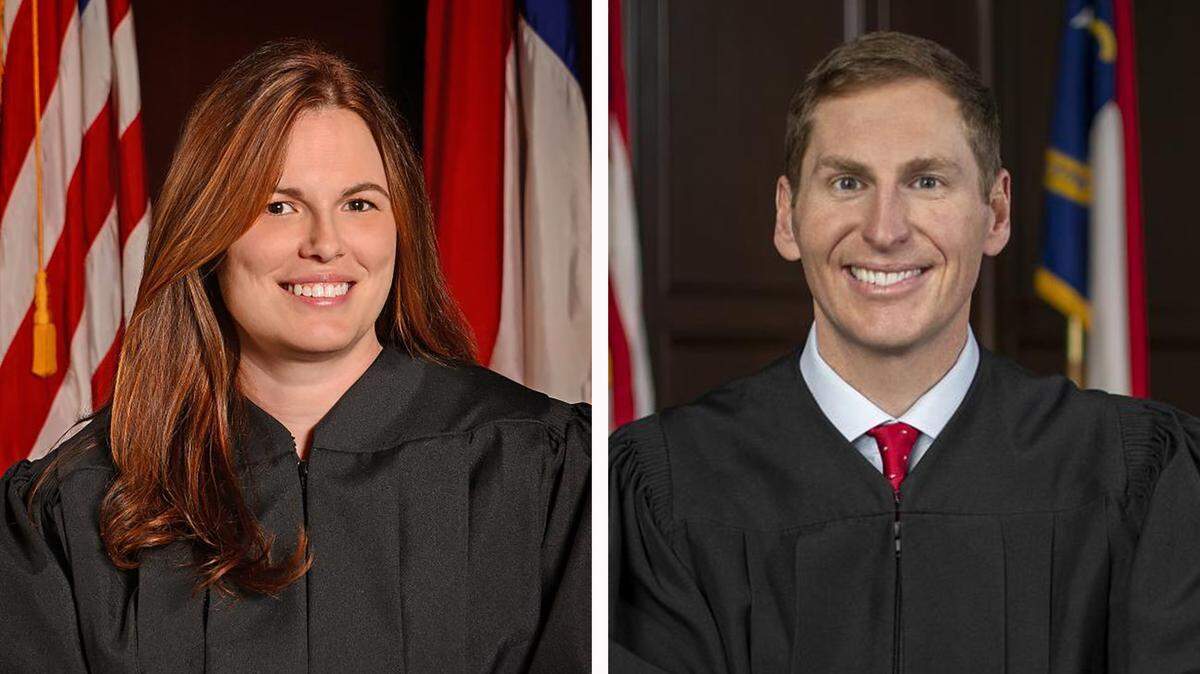
As ballots continue to be counted in the incredibly close North Carolina Supreme Court race, Democrat Allison Riggs has taken a narrow lead after trailing Republican Jefferson Griffin since Election Day. As of Tuesday morning, Riggs’ lead had grown to more than 600 votes, though Griffin is expected to request a recount.
Unfortunately, some are taking this opportunity to cast doubt on the results and accuse Democrats of stealing the election.
“THIS is what stealing an Election looks like,” one conservative account wrote on X, formerly Twitter. “STOP THE STEAL.” The post has been viewed more than 3.2 million times.
“This is called cheating!” another user posted.
“Why is this allowed ?” asked another.
Yes, it’s taking a while to get the final election results. But that doesn’t mean there’s anything nefarious going on.
This kind of thing happens every election. It’s part of what’s called the canvass, an official process for certifying election results that ensures that every eligible vote gets counted and the ineligible votes don’t. Most of the time, it doesn’t catch anyone’s attention because the margin isn’t thin enough for those outstanding votes to make a difference.
Those outstanding ballots are primarily absentee ballots that arrived by Election Day and provisional ballots cast when people have problems at their polling places due to voter ID, a change of address or other causes. During this 10-day period, voters with a “curable defect” on their absentee ballot must also be given the opportunity to cure their ballot.
This isn’t an affront to democracy — it’s democracy in action. Democracy is making sure every eligible vote is counted, and it can take time to determine whether some votes are eligible.
In the days after Election Day, former NCGOP executive director Dallas Woodhouse accused Riggs of being an “election denier” for waiting to concede until all voters were counted.
Let’s be clear: Election denial is what happens when you refuse to accept the outcome of an election when you have lost, or when it is no longer mathematically possible for you to win. Waiting for every vote to be counted — especially in close races in which many votes remain uncounted — is not election denial.
This race was always too close to call. Griffin may have been leading in the vote count after Election Day, but he was never declared the winner of the election, so that win is not being “stolen” from him.
It’s also worth noting that the reason many ballots were counted after Election Day is due in part to a law passed last year by Republican lawmakers. That law says that absentee ballots that arrive on Election Day cannot be counted on Election Day, but should instead be counted during the canvassing period.
Does it raise questions in people’s minds when the outcome of an election is not known for nearly two weeks? Maybe. It probably also doesn’t help that some counties have needed more than the normal 10 days to finish counting all votes.
But instead of pointing fingers and peddling conspiracies, North Carolina should turn this into something constructive. Should the process be changed so that it doesn’t take two weeks to find out who won an election? Do election officials need more resources or support to make their work easier? Maybe, and that’s a conversation that could be worth having. There may be ways to change state law to make the process more efficient, and lawmakers and election officials should explore that together.
But efficiency should not come at the expense of democracy. Every vote must be counted, no matter how long it takes.
This story was originally published November 18, 2024 at 12:42 PM.