NC Republicans’ 8 veto overrides, ranked from bad to worse | Opinion
Last November, North Carolina Democrats celebrated the fact that they had retained control of the governor’s mansion and kept Republicans from an outright supermajority in the legislature.
But that victory seems like it might have been short-lived. Republican lawmakers began voting Tuesday to override bills that Gov. Josh Stein has vetoed this year — and they did so with the help of several Democratic lawmakers. So far, Republicans have successfully overridden eight of Stein’s vetoes. That’s more than half of all bills Stein has vetoed since taking office.
Here are the eight bills ranked, from bad to worse:
8. House Bill 402
This bill is known as the REINS Act, and it’s designed to target what Republicans call “regulatory overreach.” It would require the General Assembly to directly vote on any proposed regulation that would have an economic cost of $20 million or more over five years. Opponents of the bill argue that important regulations could be slowed down or blocked by politics. Ironically enough, the bill is intended to cut down on red tape, but it just sounds like it would create more of it.
7. House Bill 549
This bill would expand the investigative powers of the state auditor — a Republican — and allow him to access records of any state agency or group that receives public money. That’s a seriously broad power that would allow the auditor nearly unfettered access to the records of any private entity that receives grants or subsidies. Stein said when he vetoed the “intrusive” bill that he worried it would undermine efforts to recruit businesses to the state.
6. Senate Bill 416
The so-called Personal Privacy Protection Act is a bill that would restrict the public disclosure of donors to nonprofits, including those involved in political advocacy. That means that the public would be unable to know who is financing groups with big political influence — increasing the prevalence of dark money in our elections and shielding it from public scrutiny.
5. Senate Bill 254
This bill would take authority over charter schools away from the state superintendent and State Board of Education and shift it toward the Charter School Review Board, an entity whose members are largely appointed by Republican lawmakers. That would further reduce accountability for charter schools despite the fact that they are publicly funded.
4. Senate Bill 266
This bill, also known as The Power Bill Reduction Act, would repeal a requirement that would require Duke Energy to reduce its carbon emissions by 70% by 2030. That requirement was put in place just four years ago through bipartisan legislation that made North Carolina one of just two states in the Southeast to codify emissions reduction requirements into state law — so it’s disappointing that lawmakers are walking back that commitment now. But it also allows Duke Energy to change how it sets its rates — something that both Duke and the bill’s supporters say will lower costs for customers. But a study released Monday said that energy bills could grow by as much as $23 billion in the next 25 years with the changes. That hurts both customers and the climate.
3. House Bill 193
Under this bill, private schools will now be able to authorize teachers, parents or volunteers to carry guns on campus and act as security guards, rather than hiring professional security. But those volunteers would not be subject to the same training as law enforcement, school resource officers or professional security guards. Allowing more guns in schools — especially in untrained hands — just seems like a bad idea.
2. House Bill 318
This bill tightens previous legislation that requires county sheriffs to cooperate with federal immigration enforcement. It further spells out requirements and timelines for notifying ICE, and it requires sheriffs to hold detainees for 48 hours after they would otherwise be released, which some say is unconstitutional. It also expands the list of charges that would require an ICE notification to include all felonies, certain misdemeanors and drunk driving. Before, it was only required for violent crimes and misdemeanors. That’s consistent with the Trump administration’s move to start detaining immigrants even when they have not committed violent crimes — and it’s concerning.
1. House Bill 805
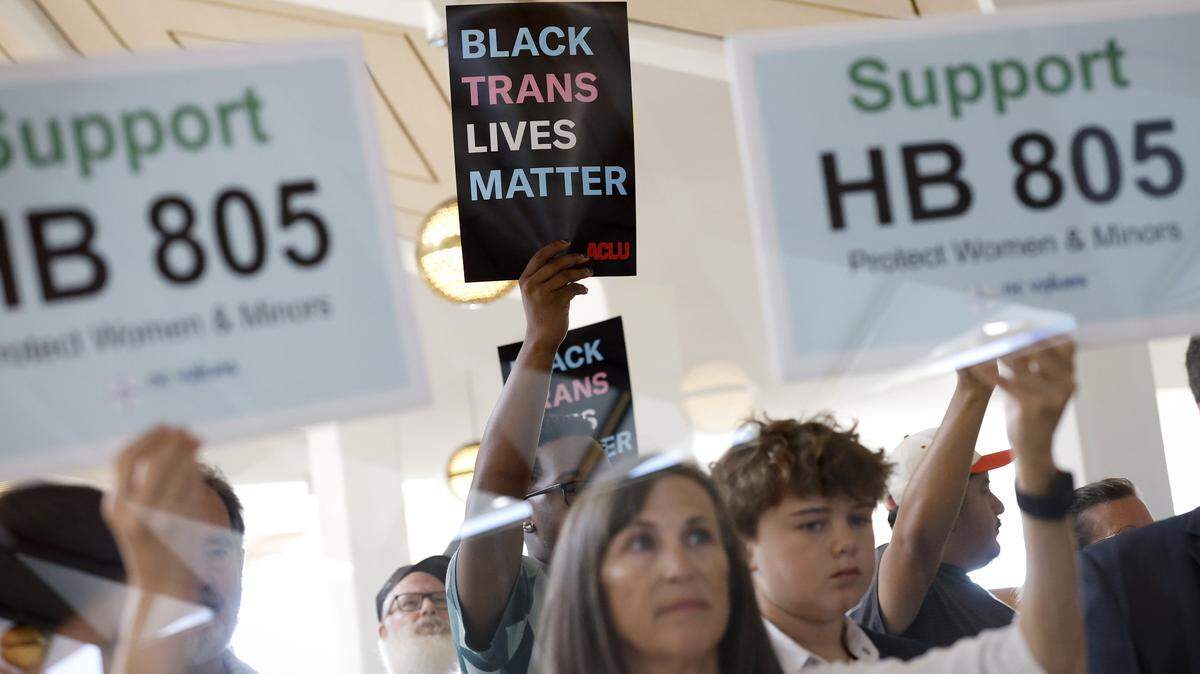
The worst of the veto overrides is House Bill 805, which was originally a bill to create protections for people with explicit content of themselves posted on pornography websites. That version of the bill passed the House unanimously in May, because it was good legislation that helped people. But over in the Senate, Republican lawmakers turned into a catch-all bill for culture war issues. Several provisions target transgender people, including a provision that defines “male” and “female” as corresponding solely to biological sex, and one that would allow lawsuits against medical providers over gender transition procedures. It also requires schools to create a searchable database for library books and allow parents to make lists of which ones their children can’t read. It turns a good bill that helps the vulnerable into one that harms them.