Mecklenburg County will vote on a new transit plan. Is it really better than nothing? | Opinion
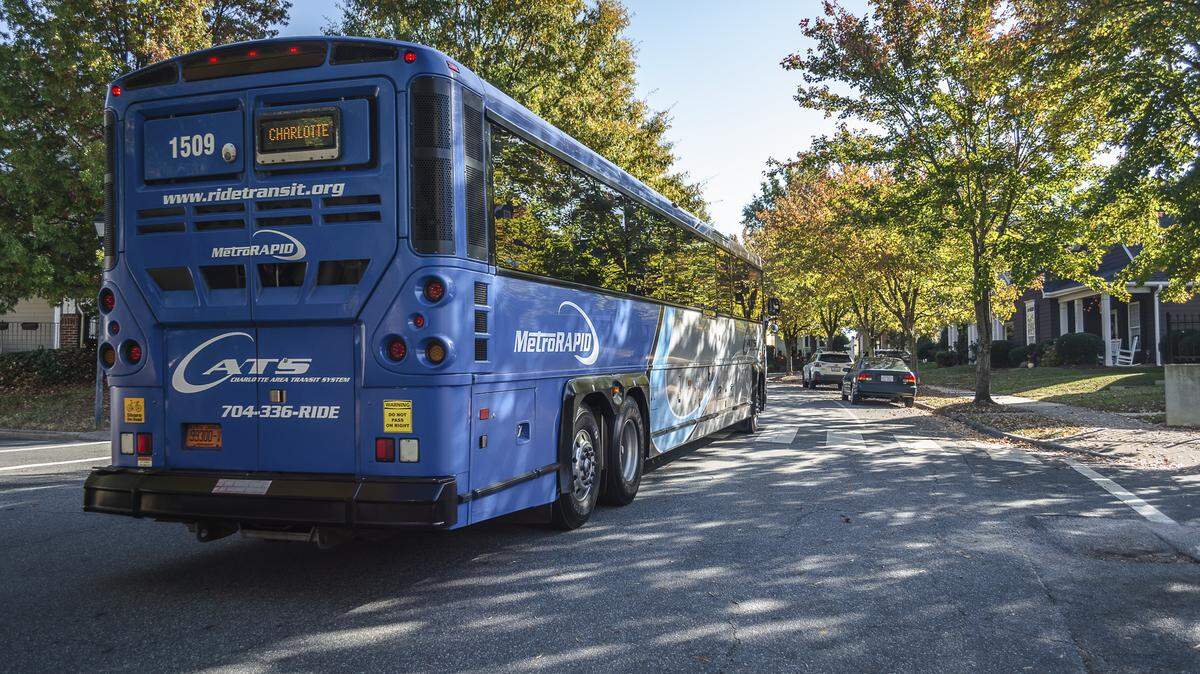
Supporters of Mecklenburg County’s upcoming sales tax referendum that would fund a regional transit overhaul have argued a similar point: The plan may be flawed, but it’s better than nothing.
But that’s not an argument that resonates with everyone, including Mecklenburg County Commissioner Susan Rodriguez-McDowell, who was the sole “no” vote Wednesday when commissioners voted to officially place the referendum on November’s ballot. To her, the plan in its current form is a non-starter, because the plan doesn’t include the truly “transformative” projects the region truly needs, such as the entirety of the Silver Line.
That’s because the North Carolina General Assembly has mandated how the revenue generated by the sales tax increase can be spent: 40% on rail projects, 40% on road projects and 20% on bus improvements. That 40% to roads is a “poison pill,” Rodriguez-McDowell said.
“I think a whole penny is a huge jump. And if a large part of that isn’t achieving your goals, which is mass transit, then why go for that whole penny? That doesn’t make sense to me,” Rodriguez-McDowell told me.
Rodriguez-McDowell worries the transit tax will eventually result in leaders overpromising and underdelivering. She’s seen what’s happened in cities like Austin, where leaders have already had to walk back parts of a $7 billion public transit plan that voters approved with a property tax increase in 2020. Initial plans included 27 miles of light rail, but the project has since been scaled back to fewer than 10 miles due to cost increases. Frustrated over broken promises, voters even attempted to block further collection of the tax through a class-action lawsuit, though it was dismissed by a judge. Atlanta has suffered a similar fate — a transit plan meant to be funded through a voter-approved sales tax has shrunk dramatically.
Braxton Winston, former at-large member of Charlotte City Council, also opposes the referendum. He believes multiple things can be true: the region sorely needs transit improvements, but this is not the way to do it.
“This has been a very manicured process to get us to this place, to create a path of least resistance, I’d say,” Winston said. “And you do that by kind of putting people into a corner, and saying, ‘Hey, you can stay in this bad situation, or you can choose something else that isn’t going to be what you need, but it’s going to be a little better than where you’re at right now.’”
Winston called it a maximum investment for minimal return. When conversations about the transit plan first began, the goal was to build a regional transit network that would benefit everyone who moves through Mecklenburg County, not just those who live in it. But leaders never really got the regional buy-in they needed, and the legislature mandated a “roads first” approach that limited the plan’s potential.
“What was returned was still that maximum tax, but the regional solution was abandoned,” Winston said. “They’re no longer talking about a transformational regional approach. They’re talking about increasing headway.”
So will it pass? As Rodriguez-McDowell noted, the campaign is not a “fair fight.” The Charlotte Regional Business Alliance has planned a $3 million advertising campaign to support the sales tax referendum — a number that the opposition could never counter. Supporters who spoke ahead of Wednesday’s vote wielded matching T-shirts, signs and pins.
“$3 million for one campaign in Mecklenburg County is an obscene amount of money,” Winston said. “It shows that they don’t have a good product, that they have to spend a lot of money putting makeup on this pig to sell to folks, especially when you don’t have an organized effort against it.”
If the referendum does pass, though, city and county leaders will still have a lot of work to do. Even some of the plan’s supporters acknowledge that the details may have to be amended later, or that steps will need to be taken to ensure equity and prevent displacement.
It’s not fair — or reasonable — to expect people to blindly trust that it will all work out. Why not just try to get it right the first time around, and address their concerns now?
“At the end, I hope I’m completely wrong,” Winston said. “Because the city, this community, this region, deserves transit and transportation options commensurate with the size, growth and direction we are going.”
Deputy Opinion Editor Paige Masten can be reached at (704) 358-5027 or pmasten@charlotteobserver.com.