
It’s time to dust off Charlotte’s teen curfew | Opinion
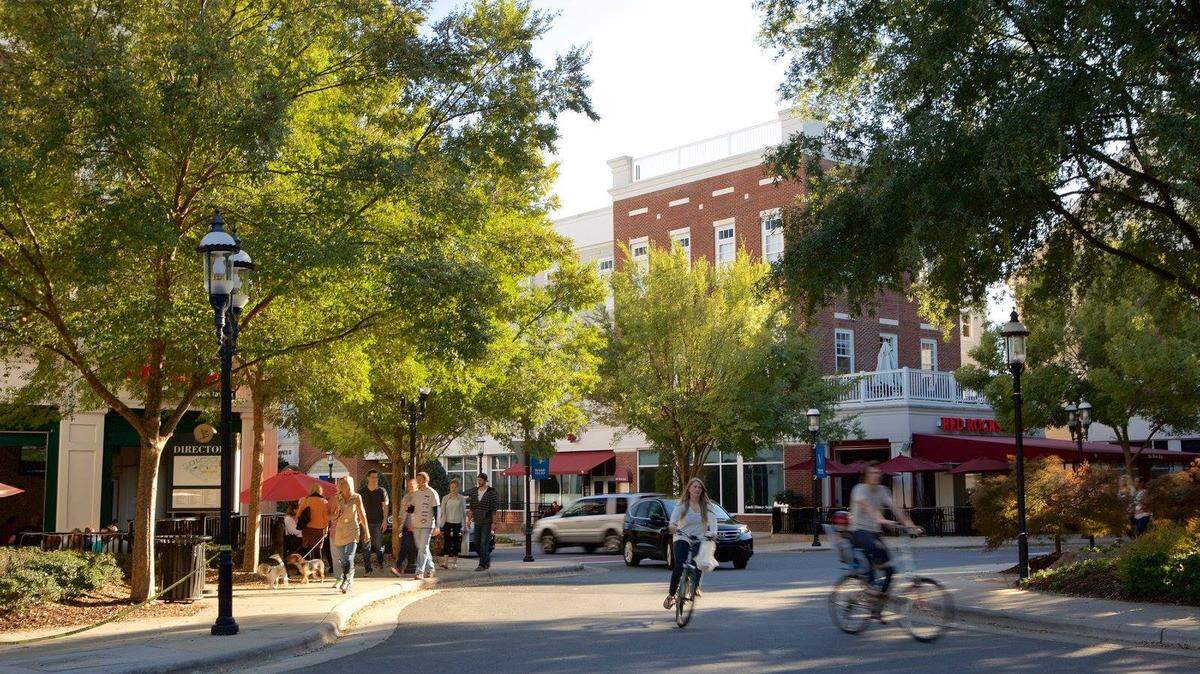
A spot can become a teen hangout fast. A few kids show up, then more, then the cars start circling and the noise rises. Before long, a place built for dinner, shopping, or a casual night out is dealing with a rowdy crowd.
I’m not talking about Birkdale Village, which implemented a teen curfew last week to deal with just such a problem. I’m talking about Charlotte in the mid-1990s.
Back then, the names were different and social media didn’t exist, but the civic problem was the same. Young teens out late, in numbers, unsupervised and causing trouble.
Back in the 90s, Charlotte looked for a solution and found one. We just stopped using it. Now that the problem is drifting across city lines, it might be time to dust off the curfew once more.
A McCrory-era answer
In his last year as a Charlotte City Council member, Pat McCrory pushed through a new Youth Protection Ordinance that restricted children aged 15 or younger from being in public places after 11 p.m.
If officers found them out during curfew hours, they’d load them into patrol cars, drive them home, and sometimes hand a citation to the parent at the door. The officer overseeing the effort even picked up a nickname: “Captain Curfew.”
The council initially only approved a trial run in mid-1995, but the test was so successful and broadly popular that it was made permanent.
Police picked up 428 kids in the first year, and in roughly 100 of those cases, the curfew violation came alongside something more serious, like car theft, weapon possession, or drug paraphernalia.
While civil rights activists initially feared that the crackdown would target black youth, the data did not bear that out. The demographics of teens picked up were diverse, and the biggest hotspot was the Arboretum shopping center in suburban southeast Charlotte.
The Charlotte-Mecklenburg Police Department also used the tool less as a punitive measure and more as an early intervention. It gave officers the chance to talk to families and understand the dynamics at play that resulted in the children being out late unsupervised. Legal citations were available, but rarely used.
Once McCrory became mayor, the teen curfew became a central piece of his broader public-safety approach. Not to pretend teenagers are criminals, but to give the city a lawful way to intervene before a night turns into something worse, and to put the responsibility back where it belongs: with parents.
“It’s been a success,” McCrory told the Observer in 1996. “It also clarifies to parents it’s their responsibility to take care of their children.”
Dusting off the ordinance
Over time, curfew enforcement fell out of favor, though the ordinance is still on the books.
Charlotte has revived it from time to time when leaders felt conditions demanded it. In 2004, the Observer reported police were renewing emphasis on the citywide curfew amid a surge in auto theft and an increase in suspects under 16, noting citations had dropped sharply from the early days.
It seems like we might be headed that way again.
Birkdale Village’s new restrictions came after viral TikTok videos showed a large crowd of high-school age kids causing a ruckus over Valentine’s Day weekend. At one point, a few of the kids jumped on top of someone’s car to dance on the roof.
Of course, Birkdale Village is in Huntersville, a town that doesn’t have a broader youth curfew. The town council should consider one.
But here in Charlotte, we do. And now the problem is drifting our way. WBTV reports that now that Birkdale is unfriendly territory, large groups of teenagers have started gathering at Camp North End.
The answer isn’t to outsource public order to shopping centers and mixed-use developments. Private property rules can protect one property. They can’t set a consistent standard across a city. When the scene moves, the rule doesn’t follow. Charlotte’s rule can.
It’s to enforce the curfew that Charlotte already passed — and already proved can work.
There’s a lot of fashionable talk right now about “third places,” as if the absence of teen hangouts explains everything. But a city doesn’t owe minors an unsupervised nightlife. We should be comfortable drawing a bright line after a certain hour, because the stakes change and the adults in charge have responsibilities.
Teenagers do not need a public place to be late at night other than home.
Charlotte already solved the late-night teen problem once. The solution is still sitting there, waiting to be enforced.
Contributing columnist Andrew Dunn is the publisher of the Longleaf Politics newsletter, which offers thoughtful analysis of North Carolina politics and policy from a conservative perspective. He can be reached at andrew@longleafpol.com.