
Trump made Michael Whatley. Now he’s dooming him | Opinion
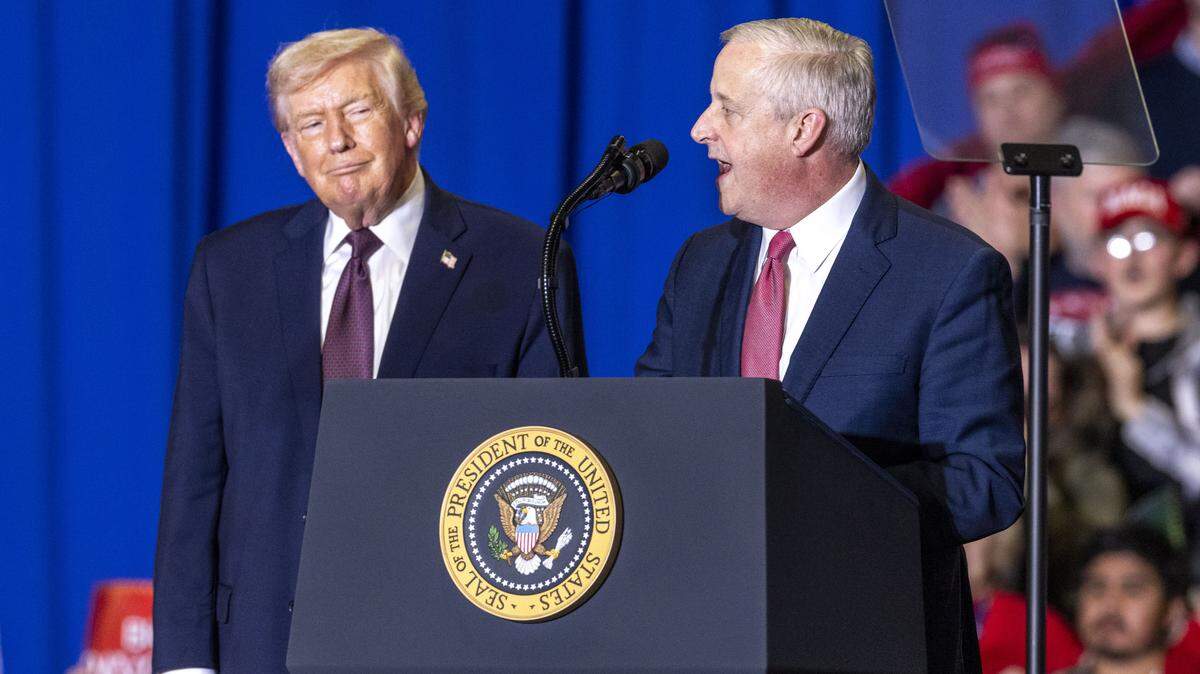
Party chairmen don’t typically make great candidates. Their job is to sell the party, not themselves. They are attack dogs, not show horses. They are cleaners and fixers, not headliners.
The only successful one in North Carolina history I can think of is Jim Holshouser, elected governor in 1972. He spent six years before that crisscrossing the state as N.C. Republican Party chairman, meeting people everywhere from Boone to Wilson and making plenty of friends in the process.
Michael Whatley did much the same thing. He rose from state party chairman to head of the Republican National Committee, then became the Republican nominee for U.S. Senate.
But Holshouser had the one thing Whatley desperately needs.
A wave.
Holshouser ran during President Richard Nixon’s landslide re-election year, when Nixon captured just under 70% of the vote in North Carolina. Even then, Holshouser won by only about 40,000 votes, becoming the state’s first Republican governor of the 20th century.
Whatley’s path was always going to depend on something similar. Handpicked by President Donald Trump after U.S. Sen. Thom Tillis dropped out, Whatley was never going to win by becoming a beloved statewide figure. His path was always to ride a Trump wave.
Holshouser got his. It is hard to imagine what would create one for Whatley.
The wave that isn’t coming
That is the difference between the two stories. Nixon’s landslide expanded the political map for a Republican few voters had imagined as governor. Trump’s second term is shrinking the map for the candidate he personally chose.
Voters put Trump back in office to close the border and lower the cost of living, but he has spent too much of this term on vanity projects, score-settling and fresh reminders that his favorite subject is still himself.
Against that backdrop, the national pundits are already starting to pack it in. Sabato’s Crystal Ball moved North Carolina from toss-up to “Leans Democratic,” and the Cook Political Report lists it as the GOP-held seat Democrats are most likely to flip.
You will still hear people talk about this race like a marquee contest, the kind of high-dollar slugfest that could determine control of the U.S. Senate. I doubt it.
National money is not sentimental. If Whatley’s numbers do not improve, Republicans will find closer races to save and Democrats will find cheaper ways to finish him off.
The same force that made Whatley viable is now making him very hard to rescue.
The break he can’t make
One of the left’s favorite parlor games is demanding that Republican politicians denounce whatever Trump said, posted or did that day. It gets tiresome, especially because Democrats often ask less because they want an answer than because they enjoy watching Republicans squirm.
But I do get it. Trump keeps breaking norms, chasing self-gratifying distractions and demanding unquestioned devotion from Republican politicians.
That puts plenty of Republicans in a bind. It puts Whatley in an impossible one.
Before he was a Senate candidate, Whatley’s job was to defend Trump come hell or high water. Now he is a candidate, and he is still doing basically the same thing.
Why should anyone be surprised?
This is where Democrats and moderate voters often misunderstand the race. They keep waiting for Whatley to show independence from Trump, as if he is simply refusing to follow an obvious general election strategy.
But for Whatley, independence from Trump is not an available strategy. It would mean cutting against the relationship that made him the nominee in the first place.
He did not get here because North Carolina voters had spent years developing an attachment to him. He got here because he was the trusted party man Trump wanted.
In a primary, that can be enough. In a general election, it can become a trap. If Whatley breaks with the president and makes him angry, what does he have left? Not much.
Cooper is hardly running an electric campaign. His “Make Stuff Cost Less” tour sounds like it came straight from a consultant’s whiteboard, and his soft-focus farm-and-church ad is pure political comfort food.
But Cooper does not need much. North Carolina voted for Trump three times and Cooper twice. Whatley needs those ticket-splitters, and reaching them would require becoming something more than Trump’s candidate.
I do not see how he does that.
That is not a personal failure. It is simply the campaign he inherited. Whatley mastered the politics of loyalty in a party built around Trump. That made him the nominee.
In another cycle, maybe that would have been enough in November. In this one, it feels like the thing that ends the race before it ever really begins.
Trump made Michael Whatley the nominee. He may also have made Roy Cooper the next senator from North Carolina.
Contributing columnist Andrew Dunn is the publisher of the Longleaf Politics newsletter, which offers thoughtful analysis of North Carolina politics and policy from a conservative perspective. He served as the communication director for Dan Forest in his 2020 run for governor of North Carolina. He can be reached at andrew@longleafpol.com.