
It’s time to realize the importance of a timely postal service and pay for it.
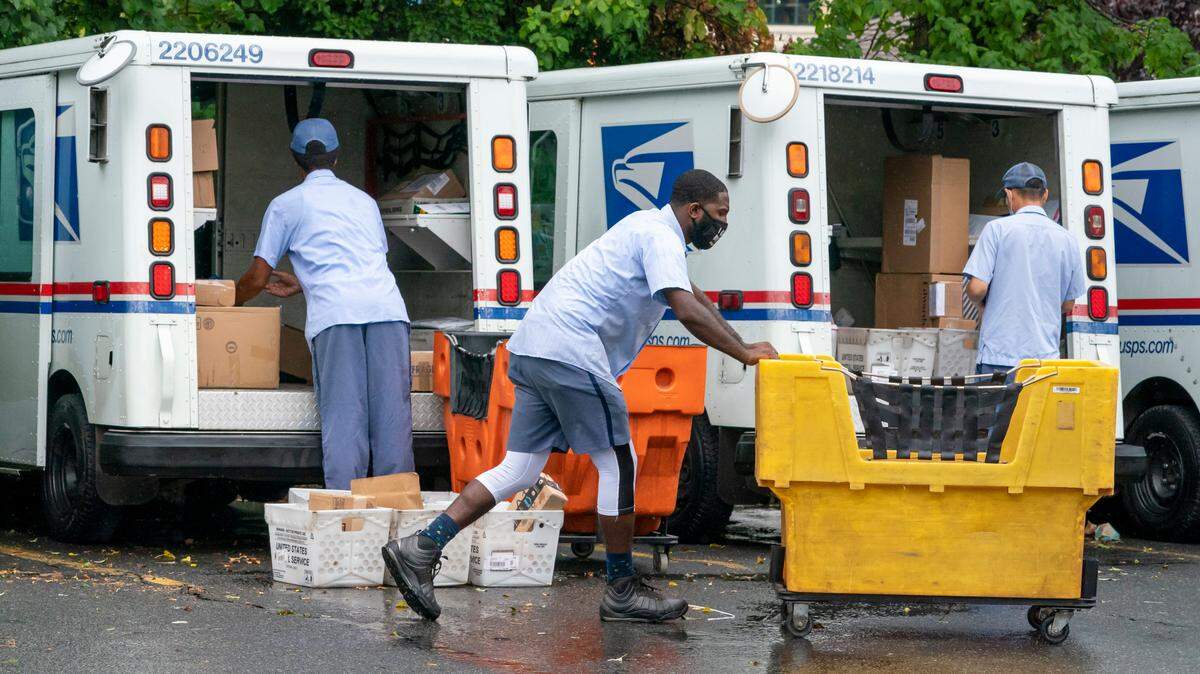
US Postal Service
Let’s quit thinking of U.S. Postal Service as a “nice to have” and realize what it is — an important part of our U.S. infrastructure.
Cutting service does not serve the public. While a lot of personal and business transactions are handled online, many citizens rely on the mail for monthly bills and payments. These are time sensitive communications.
Use of mail-order prescriptions is also increasing. We shouldn’t have our blood pressure and other important medicines delayed.
Let’s realize the importance of a timely mail system and pay for it. We fund things like roads, bridges, airports and the like. Mail is just as important.
George Woodfin, Charlotte
DC statehood
Regarding Noah Feldman “DC statehood could backfire on Democrats,” (March 28 Opinion):
The argument in favor of making the District of Columbia the 51st state is that D.C. citizens need a voice in the federal government. A simpler, more equitable solution would be to turn the district over to Virginia and Maryland and let the federal government continue to maintain federal property in those states, as they do in all states.
Of course this is too simple and will not provide the two additional Democratic senators, which seems to be the real reason for statehood.
Phil Barton, Hickory
Georgia’s vote
Are you ready, Georgia?
In 2016, North Carolina’s Republican-led legislature passed the “bathroom bill,” which limited Charlotte’s attempt to give equal rights to our LGBTQ community.
What followed was years of boycotts by businesses and sports groups, limiting economic growth and our ability to host NCAA and NBA championships. An Associated Press analysis says it cost North Carolina an estimated $3.76 billion and nearly 3,000 jobs.
I predict that Georgia’s voter suppression attempts will have a similar impact. The legislature passed the law, but everyone in Georgia will suffer consequences.
Deb Park, Charlotte
Wealth tax
In his March 26 op-ed in the Observer, Chuck Collins conflates the concepts of income and wealth when he states that a wealth tax should be levied on those “who make more than $50 million.”
The distinction between the two is critically important because, while income can be readily assessed via W-2s, 1099s and K-1s, assessing a person’s wealth is an entirely different ballgame.
A Wall Street Journal article estimated that 62% of the wealth of the super-rich is comprised of illiquid assets like homes, yachts, private businesses, real estate and works of art. Valuing these types of assets is an inherently difficult, costly and imprecise endeavor.
Attempting to do so on an annual basis would be an absurdly onerous enterprise, which is why many European countries that have tried a wealth tax later abandoned it.
Stephen Shuford, Charlotte
ABC Commission
Regarding “You’ll pay a bit more for liquor in NC thanks to a 10-year ABC warehouse contract,” (March 23):
This is another example of the inept ABC Commission. An individual owner of a liquor store would control orders based on brand demand and thereby control inventory at an acceptable level.
But since N.C. citizens are paying the bill for the ABC Commission’s mistakes, it does not seem to worry that LB&B Associates is nearly doubling a fee the state pays for warehouse operations.
North Carolina needs independently owned liquor stores that will work to control their cost and pass the savings on to retail customers.
Randy Meredith, Mooresville
Cooper’s rules
I have to disagree with “NC Restrictions” (March 26 Forum). I hardly view South Carolina’s lifting of restrictions as an example North Carolina should follow.
While I can sympathize with restaurant owners, I, as a consumer, have no intention of dining in a restaurant if tables and guests are not at least six feet apart.
The pandemic is not over. I agree with Gov. Roy Cooper’s continued restrictions. Until the majority are vaccinated and we’ve achieved herd immunity, we need to continue to do all we can to protect N.C. citizens.
Perry Hayes, Cornelius
BEHIND THE STORY
MOREHow do I get a letter published?
The Charlotte Observer publishes letters to the editor on Sunday most weeks. Letters must be 150 words or less, and they will be edited for brevity, clarity, civility, grammar and accuracy. To submit a letter, write to opinion@charlotteobserver.com or visit our letters submission page.
What are you seeking when you choose letters?
We’re seeking a variety of viewpoints from a diverse group of writers.
What must I include?
You must include your first and last name, city or town where you live, email and phone number. We never print anonymous letters. If you’d like for us to consider publishing your photo, please include one.
How often can I have a letter published?
Every 30 days. But you can write as often as you’d like.