NC celebrates 50 years of women’s college sports. How far have we come, and what’s left?
READ MORE
Evolution of Women’s College Sports
Next year, North Carolina celebrates 50 years of Title IX for college sports. It’s reshaped the landscape in unpredictable ways, and many women say they have more competitive opportunities than ever. But how fair is it really? The work is not done yet. This is The N&O’s speical report.
Expand All

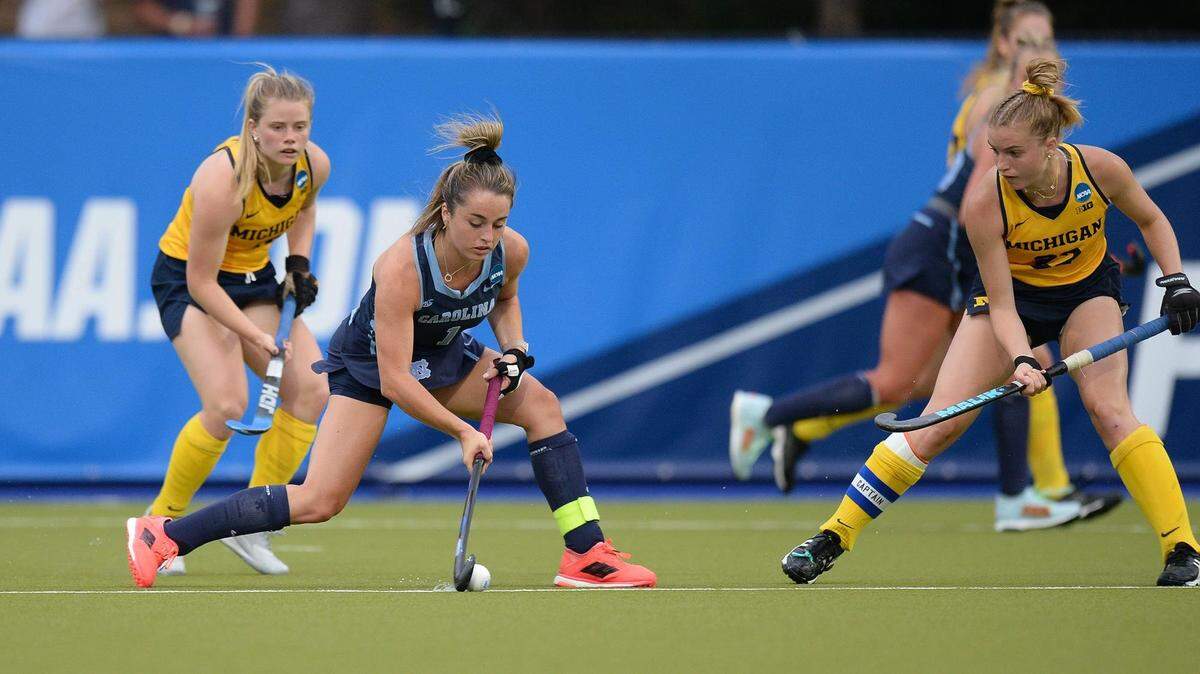
On a humid Friday night earlier this month, there was hardly an empty seat to be had inside Karen Shelton Stadium on the south side of the UNC-Chapel Hill campus. Spectators filled in all but a few of the 1,000 Carolina blue chairs in the minutes before UNC’s field hockey match began against Duke.
The field hockey teams, as their men’s basketball counterparts often are, were nationally ranked. Rameses, the UNC mascot, darted around the stands, offering high-fives and posing with children. Members of the UNC band gathered in one corner of the stadium, their instruments shining under the stadium lights. House music thumped over the loudspeakers.
If ever there was a scene that captured the evolution of women’s college sports, especially those sports outside of basketball, it was here. By the time the match started, UNC students lined the top row of the stadium, unable to find anywhere to sit — a standing-room only crowd. Soon the match began and when Erin Matson controlled the ball for the first time, a hush fell over the crowd.
“She’s like, the best in the country,” a student said from the top row of the stands, and later, when Matson put the moves on a defender who tried to keep up with her, the student gushed again: “That was kind of hype,” he said, in the parlance of a college student in admiration.
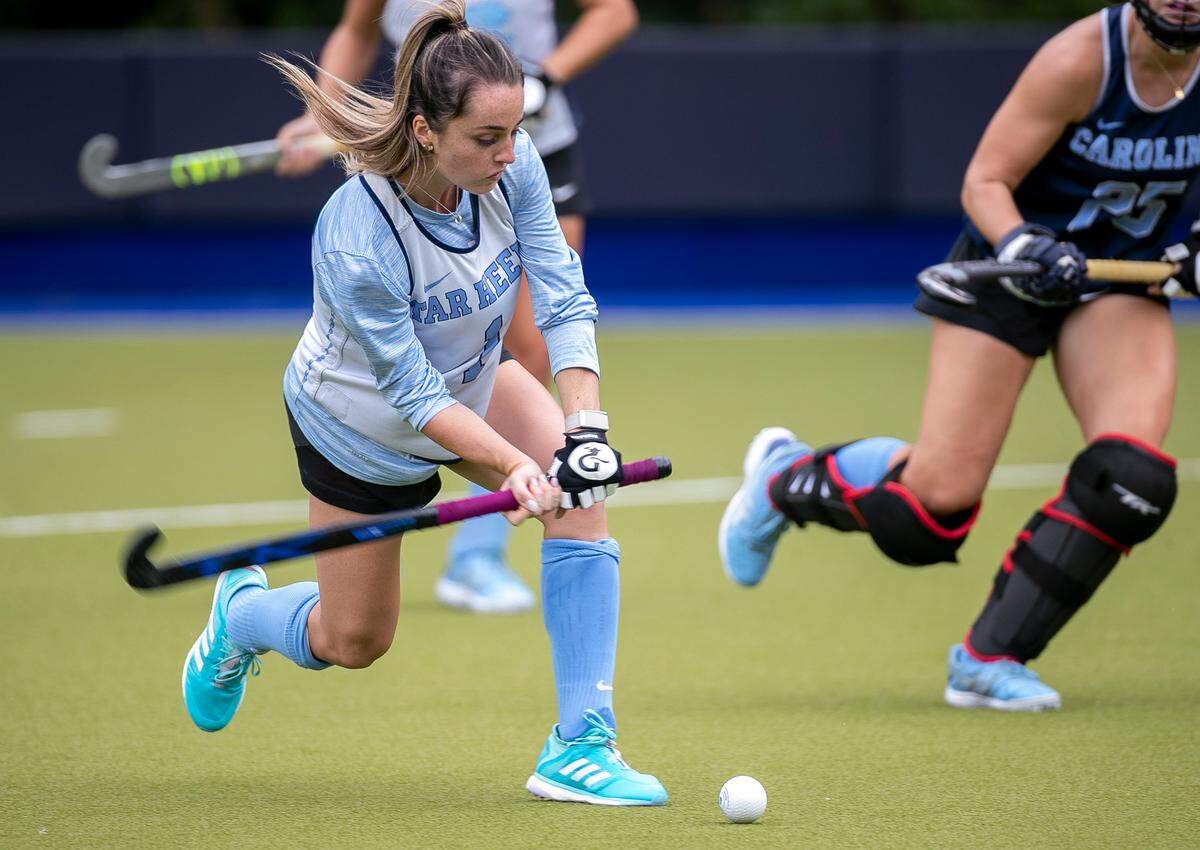
Matson is a senior at UNC and has become one of the most decorated athletes in school history. Some might be quick to describe her as the Michael Jordan of field hockey. It’s apt, perhaps, except for one detail: Compared to Matson, who first became a member of her sport’s national team when she was 16, Jordan was not as accomplished an athlete during his three years at UNC.
Matson and the college program she represents speak to the growth of women’s sports, a half-century after they started to become more mainstream. She has been able to capitalize off of the NCAA’s allowance of endorsement deals, and more than 11,000 people follow her on Instagram. Her team, meanwhile, plays its home games in a facility that’s the envy of its rivals.
Karen Shelton Stadium was built atop a part of campus that used to be intramural fields. Before that, it was a parking lot where Tar Heels fans tailgated on fall Saturdays before football games at nearby Kenan Stadium. Karen Shelton, in her 40th year as UNC’s field hockey coach, remembers those days well.
In her earliest years at UNC, the thought of one day having a stadium named after her would have seemed like an impossible fantasy. For years, she sat behind the steering wheel of a van and drove her teams to matches. She fought to overcome the lack of resources and inequities that forced her teams to practice on a shared field not only after the football team, but also after the band.
“Start at 7:30 at night,” she said recently of her practices in those days, “and finish at 9:30, 10 o’clock at night. Thirteen years, we did that.”

Now the stadium in her name was full, roars reverberating through the pines whenever Matson scored a goal — and she scored three of them during the Tar Heels’ 4-1 victory. UNC and Duke are rivals in everything, yet both schools this academic year are celebrating 50 years of organized women’s athletics. The 50th anniversary of Title IX, the milestone gender equity law that brought about a new era in the early 1970s, will arrive next June and, with it, no shortage of reflection about how far women’s athletics have come.
Yet how much progress has been made depends on perspective. For every example like UNC field hockey, a national powerhouse that represents the best of women’s Olympic college athletics, there are others critics use to argue that the fight for gender equity is far from over. A half-century after a reform movement slowly began, college athletics has reached a larger inflection point, too, that is bound to reshape the landscape in unpredictable ways.
In many ways, women have more opportunities to compete than ever.
In others, the fight for fairer opportunities continues to be a competition of its own.
***

The accompanying portrait for this story is in itself an exhibit of progress — three prominent athletes from three sports at three neighboring ACC schools. It would have been impossible to produce a similar photograph 50 years ago, when Walter Byers, then in charge of the NCAA, resisted the implementation of Title IX in athletics and wondered if it’d lead to the collapse of college sports.
N.C. State did not have an organized women’s basketball program then. Duke did not have a women’s lacrosse team. Field hockey was among the seven varsity women’s teams UNC launched in 1971, though that was long before the team regularly received new apparel and equipment, let alone had a dedicated stadium to call home.
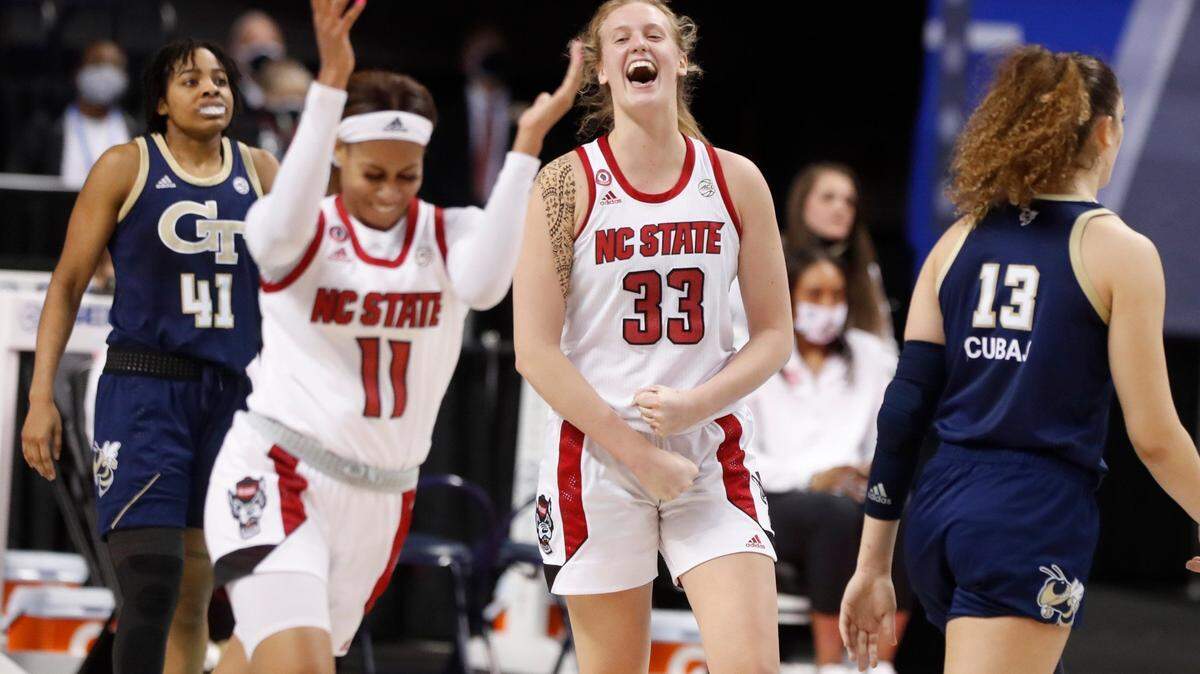
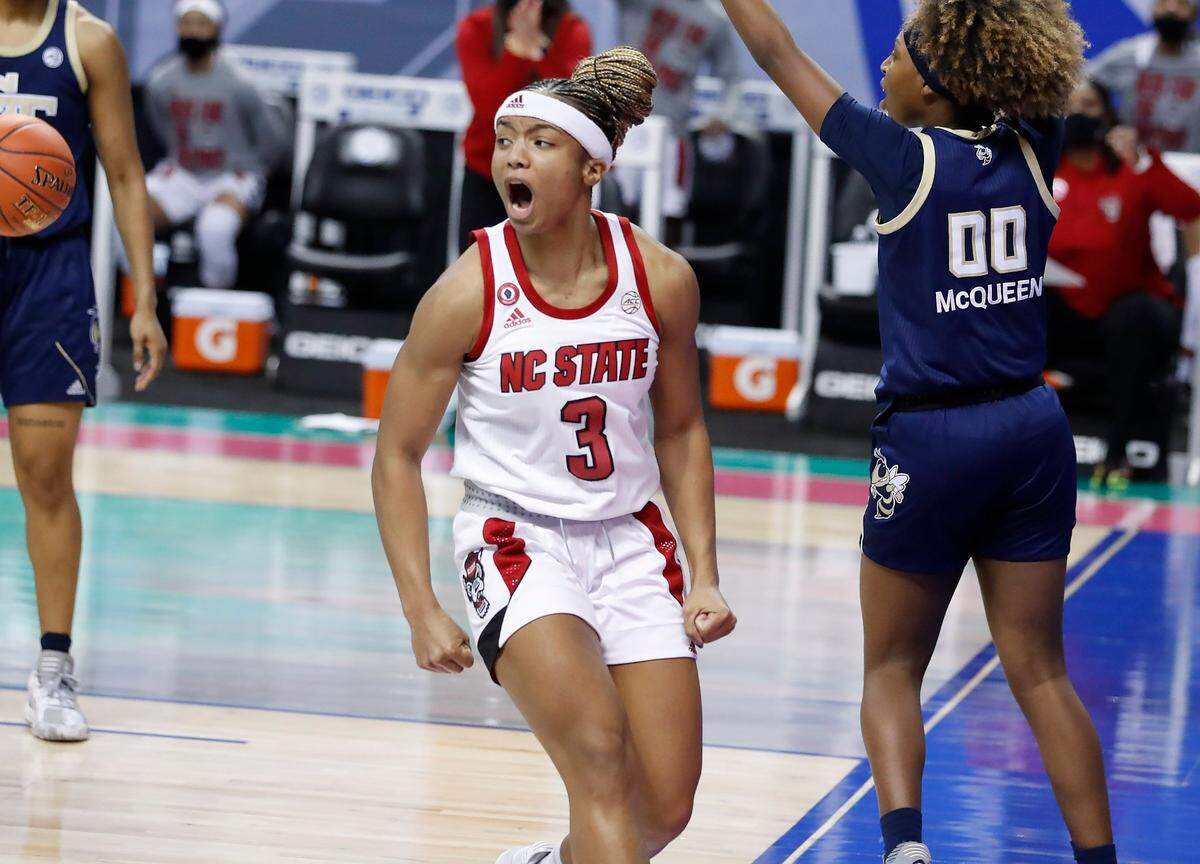
In their own ways, the women in the photograph represent the culmination, and continuation, of a long fight toward gender equity in athletics. There’s Matson, among the best in her world at her sport. And Kai Crutchfield, a Raleigh native who returned for one more basketball season at N.C. State. And Alexis Joseph, who not only overcame barriers related to her gender but also her race on her way to becoming a lacrosse player at Duke, where she’s active in campus leadership.
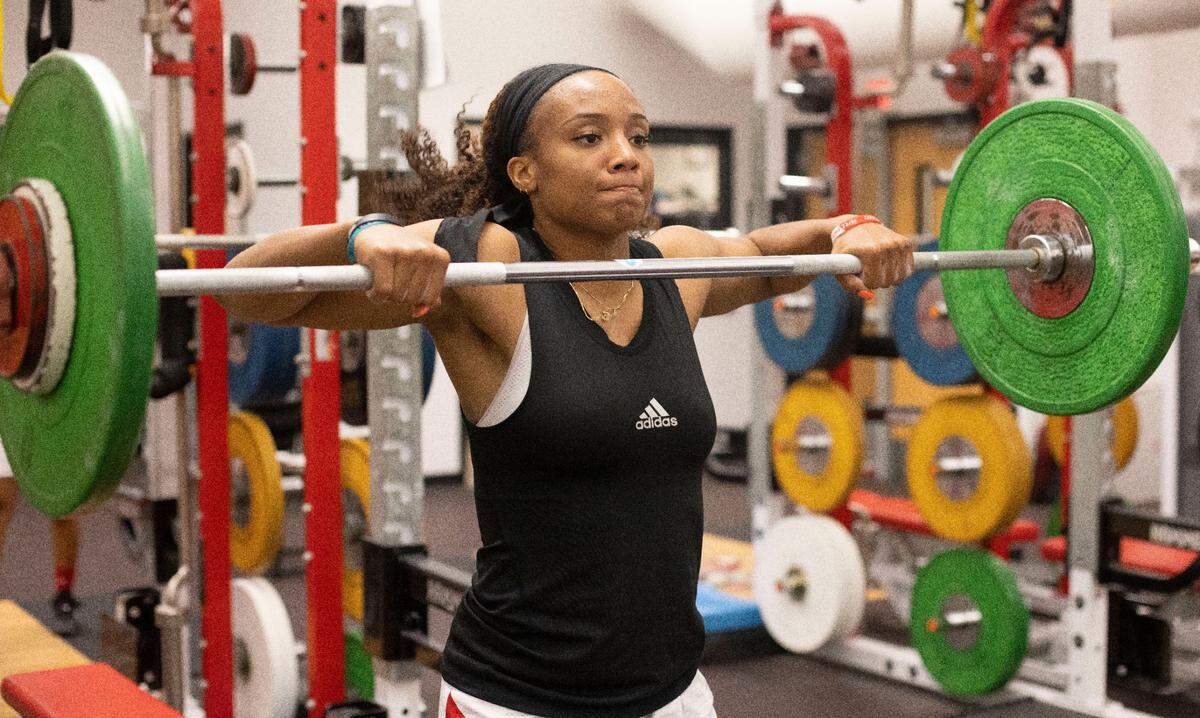
“Being a woman, but also being a Black woman — that created a lot of obstacles for me,” Joseph said. For one, she didn’t know what lacrosse was until middle school, having grown up in Philadelphia without access to the sport. Then once she began playing, there was the obstacle, as she described it, of people who “did not want me to be there.”
“I just really wasn’t accepted in the lacrosse world,” Joseph said. “It’s a very white-dominant sport. A lot of people didn’t want me to be on their teams. I had to have certain coaches really fight for me to give me the chance that I deserved because I was good and I am good. And it took a long time for me to realize that because of how hard it was for people to give me that shot.”
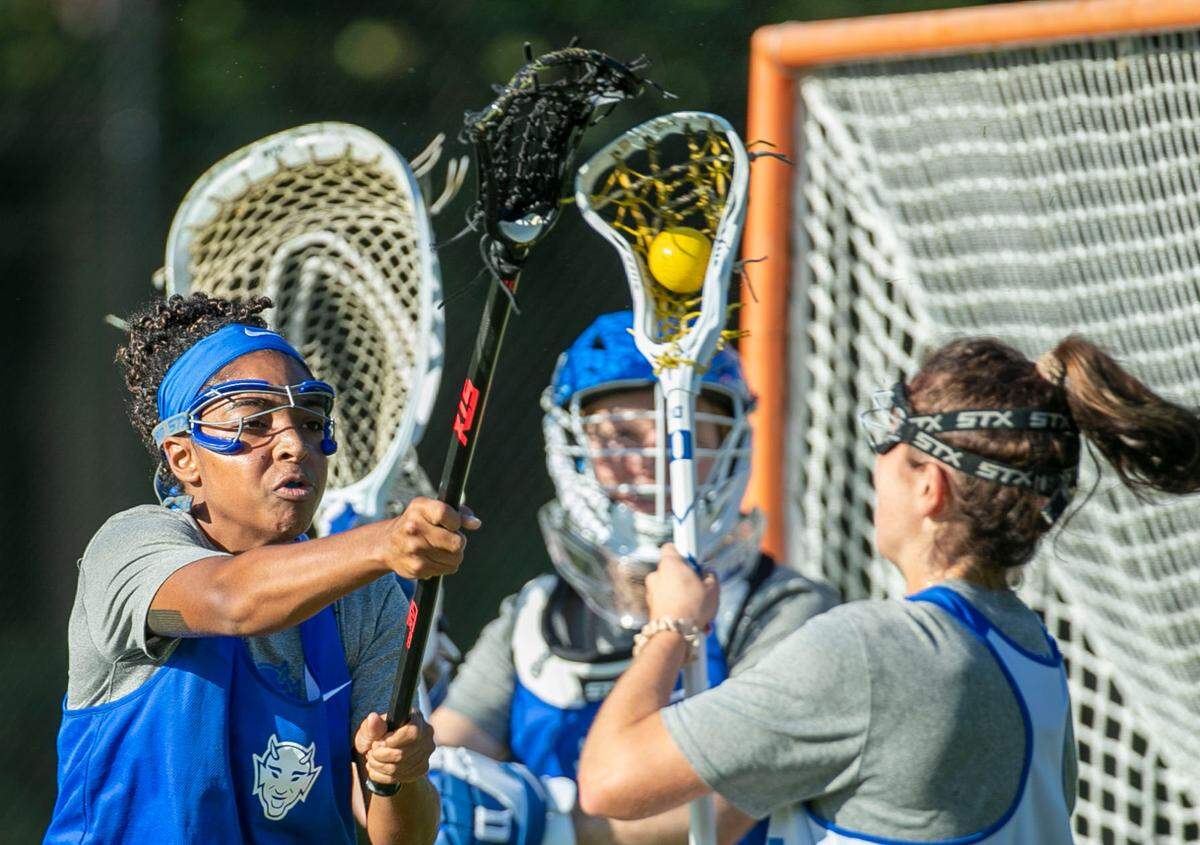
At any of their competitions these days, whether a basketball game at N.C. State’s Reynolds Coliseum or a field hockey match at UNC or a lacrosse game at Duke, Crutchfield, Matson and Joseph can look into the stands and see girls looking back at them, the way they once looked to an older generation. There is an unspoken bond among competitors regardless of gender, but especially among those who recognize they’re competing for something greater.
“I just kind of want to be someone that those girls can look up to,” Crutchfield said. “Especially if it’s younger girls, and it’s just like — I want to be here to support you, however, whichever way I can just to show that, yeah, we are girls, but we can do it, too. We’re capable. We shouldn’t be seen as less than, and I’m more than capable of doing just as much, if not more, as a man can.”
She began to apologize, to couch her answer with a “no offense,” as if it was necessary to defend the assertion that “we shouldn’t be seen as less than” or that “I’m more than capable of doing just as much, if not more” as a man. It was reflective of a lifetime of navigating a space long dominated by men — one still dominated by men.
Crutchfield, Joseph and Matson depict the best of women’s college athletics, the standard of accomplishment and gender equity that trailblazers before them set out to establish. Yet in other ways they’re outliers, the exception to the rule. Their schools, all among one of the richest conferences in college sports, can provide for athletes, both male and female, in a way that many others can’t. And even in the ACC, gender disparities are still prevalent in ways obvious and under the radar.
Spending is just one of them. At UNC, for instance, where the university has established arguably the most successful women’s athletics program in the country, the football budget more than doubled in the past 10 years, and increased by more than $15 million, according to data the university submitted to the Department of Education. During the same span, spending increased across all 14 of the school’s women’s teams by about $9 million, combined.
Football, which has long become college athletics’ economic engine, is the primary reason why the average assistant coach salary for a UNC men’s team has more than doubled over the past decade. Assistant coach salaries for UNC women’s teams have increased by about 65% during the same span.
N.C. State’s data, meanwhile, reflects even greater spending disparities between men’s and women’s sports. There, the athletic department budget nearly doubled between 2009 and 2019, going from $47.2 million to $88.7 million. Spending across all sports steadily increased during that span, but the budget for men’s sports grew by 135.5% (from $18.2 million to $42.7 million) while spending on women’s sports went up by 80.9%.
Schools without the benefit of lucrative conference television contracts face even more difficulty in keeping up with the perpetual arms race that defines college athletics, with escalating coaching salaries and the constant need, schools argue, to improve facilities to attract talent.
Beyond college, the WNBA has become an established path for basketball players, and the National Women’s Soccer League is approaching its 10th anniversary in 2022. Yet professional opportunities still remain limited even for an athlete as talented and dominant as Matson, who has already decided to return to school for a fifth season next year.
“It’s a very tricky subject that I’m not smart enough to figure out how to perfectly make everyone happy,” Matson said recently. “Because yeah, obviously when you win, you get rewarded. So our program ... we’re lucky to have a stadium like this, and really nice things. But I also know that it wouldn’t have been possible without football and basketball and all of the sports that bring in all the revenue.
“So it’s a very touchy subject,” Matson went on, “where I think there definitely needs to be more equity and kind of awareness brought around women’s sports. I guess what we can do right now is keep inspiring little girls. Our team does a great job of that.”
***
Nancy Hogshead-Makar spends a lot of time thinking about the women and girls who won’t receive the opportunities she believes they deserve. She spends a lot of time working to expose the gender inequity that she believes is still pervasive in college athletics throughout the country.
“It’s a very sad story,” she said, underscoring multiple times her assertion that “the Power Five schools, the rich schools, are some of the worst offenders of sex discrimination in athletic departments.”
She was talking about opportunities and proper funding — or lack thereof — for women in college athletics. Hogshead-Makar is not a fringe figure calling out the system from the sideline. She is a prominent attorney with a lifetime of experience inside the world that she believes is failing women and girls.
In the early 1980s, she became the first female scholarship swimmer at Duke. She was a U.S. Olympian in 1984, and in 1995 became the first woman inducted into the Duke Sports Hall of Fame. In 2014, Hogshead-Makar founded Champion Women, an organization “that provides legal advocacy for girls and women in sports.”
One of the organization’s missions has been to track to what degree colleges and universities comply with Title IX. The conclusion, according to Champion Women: Schools almost never live up to the standard Title IX aspired to achieve.
Earlier this year, in the summer, Champion Women released a lengthy study detailing how thousands of college athletic departments, across all levels of the NCAA and other sanctioning bodies, provided for women and men. The study compared scholarship dollars, recruiting budgets, roster spots and more, based on data schools that receive federal funding are required to submit to the Department of Education.
As it applies to college athletics, Title IX promoted the principle of proportional equality, and advocates like Hogshead-Makar apply it literally. In the most literal interpretation of Title IX, a school’s athletic teams and funding would reflect the make-up of its student body. Meaning that if women are 60% of a school’s enrollment, 60% of its athletic scholarship funds should also be awarded to women, and that 60% of its varsity athletes should be women.
It almost never happens that way, and Champion Women’s study detailed those disparities. Among North Carolina schools that compete in any NCAA division, none received a passing Title IX grade.
Champion Women concluded a scholarship funding gap in the millions between men’s and women’s teams at Duke, N.C. State, UNC-Chapel Hill and Wake Forest. Among those four schools, it found a disparity in recruiting budgets for men’s and women’s teams ranging from $775,000 (at Wake Forest) to $1.7 million (at UNC).
These disparities are not revelatory, according to Champion Women’s research. They are, in fact, ordinary relative to the broader system.
“Every school in the ACC is wickedly discriminating against women,” Hogshead-Makar said.
She noted another reality that, to her, underscores the failings of the system: Approaching the 50th anniversary of Title IX, no school has ever lost federal funding due to non-compliance. Another part of the law, in addition to proportional equality, mandates that schools only have to show they’re making an effort to achieve gender equality, or that they’ve already met demand.
“Generally, there are no other places in civil rights law where you can be in compliance because you’re getting there,” Hogshead-Makar said, and her organization’s research concluded that schools were rarely “getting there,” anyway.
***
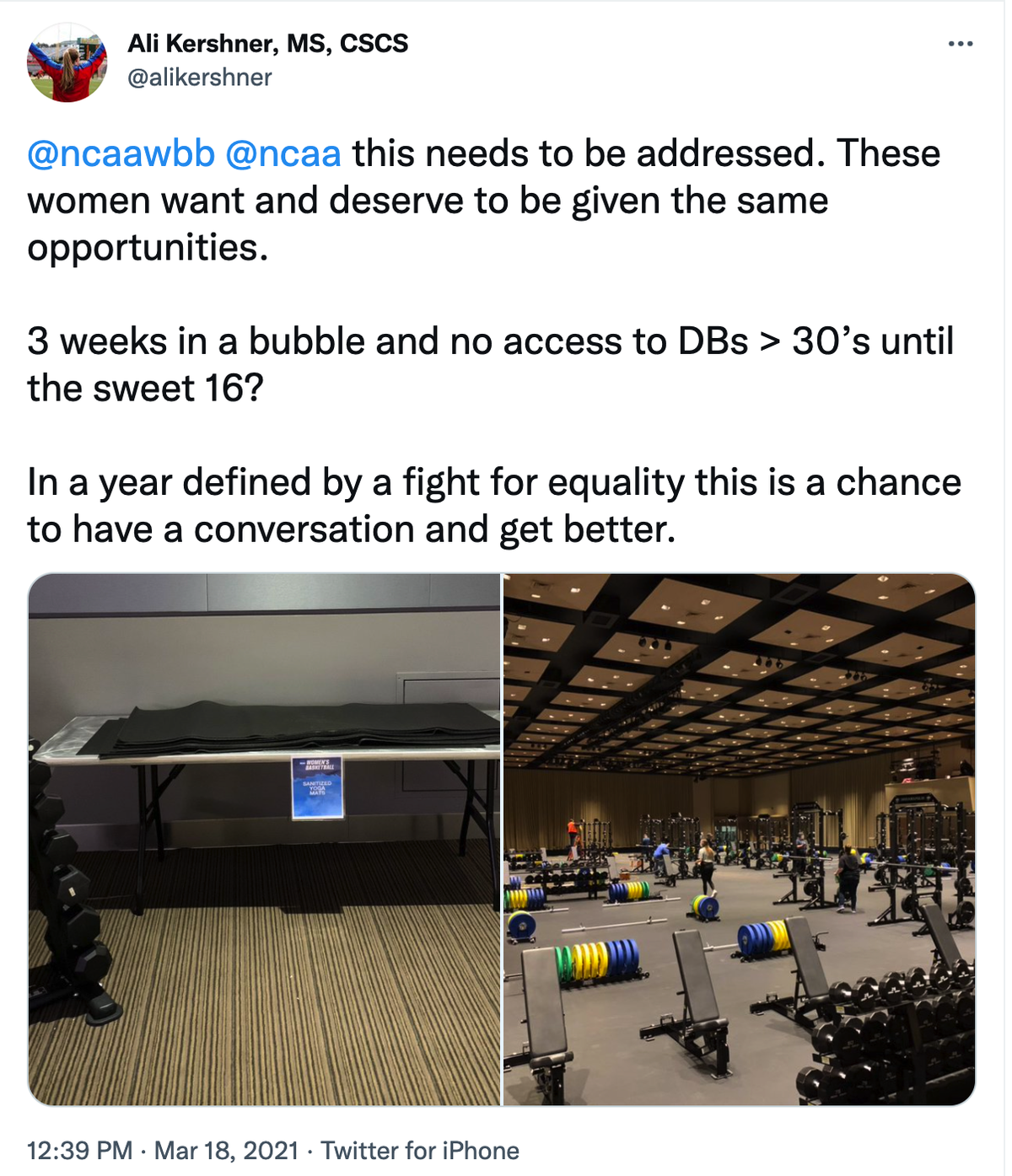
The most glaring recent example of gender inequity in college athletics came in March during the NCAA tournament. The pandemic forced both the men’s and women’s tournaments into makeshift bubbles — the men in Indianapolis, the women in San Antonio.
In mid-March, a side-by-side comparison of two photographs went viral. One showed the workout and exercise facility in Indianapolis, where men’s teams had a large room filled with benches and squat racks and no shortage of weights. The other relayed the scene in San Antonio, where a sad rack of dumbbells — the kind one might find in a standard hotel — greeted the women’s teams.
The disparity sparked outrage, and a national conversation about gender equity in college athletics. The NCAA, shamed into action, eventually provided the women’s teams with more appropriate resources and equipment. But, as Crutchfield, the N.C. State basketball player put it, “It’s almost like if someone didn’t say anything, would they have” made it right?
“I would hate to think that I was performing and playing for a national championship, and that we’re an afterthought because we’re on the women’s side,” she said.
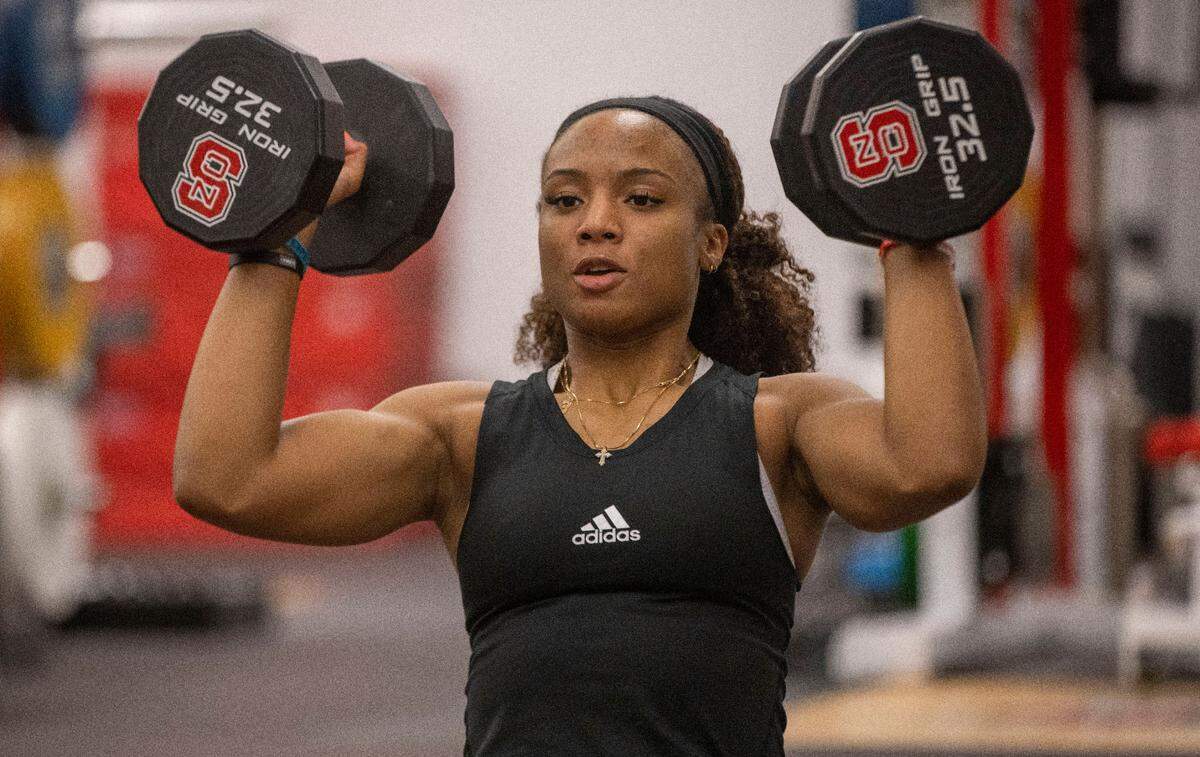
The weight room fiasco made headlines while other disparities often receive far less attention: The lack of women in athletic director positions, for instance, or the kind of smaller, everyday battles that Shelton, the UNC women’s field hockey coach, fought for years — those over things like travel accommodations or fairer practice times.
During the pandemic, Title IX came into focus, too, when some schools cut sports to save money. In the past year, Title IX lawsuits, or the threat of them, saved various women’s sports programs at Stanford, Clemson, William & Mary and Dartmouth.
At the University of Iowa, four swimmers filed a Title IX lawsuit alleging gender discrimination after the school cut its women’s swimming and diving program in August 2020. The university recently settled the case for $400,000 and must reinstate the women’s swimming and diving program for at least seven years, according to Iowa’s student newspaper.
Locally, UNC is often viewed as the paragon of women’s college athletics. The university sponsors 14 women’s teams. It has won 33 national championships in those sports. Dean Smith once memorably described UNC as a women’s soccer school, given the longtime success in that sport, and Shelton has led UNC to nine national titles in field hockey.
Yet even in Chapel Hill, there’s concern about the long-term sustainability of an Olympics sports program, given broader changes surrounding college athletics. Athletes are now free to profit off their name, image and likeness — an overdue right but one that worries administrators, the same way they used to worry about funding women’s sports in the first place.
The future of college football, and whether it remains tethered to the NCAA, has become cloudy. Meanwhile, Power Five schools have committed themselves to an endless arms race of escalating coaching salaries and facility construction or upgrades that appears difficult to maintain, even with the television money that continues to roll in, making coaches and athletic directors richer and richer.
Bubba Cunningham, the UNC athletic director, has often shared his concern about funding “opportunities” — meaning non-revenue sports and the scholarships that come with them — if the traditional collegiate model is threatened. And now it has become threatened like never before.
“It scares me to death,” Shelton, the field hockey coach, said. “And we’re cheering loudly for (football coach) Mack Brown and our football program. We know the better men’s basketball and football do, the better and the healthier our entire program is. So we all get it, we understand.”
While Shelton said she embraced opportunities for athletes to earn endorsement deals and profit on their own, she wondered about the long-term effects. She closely followed the developments across the country last year at Stanford, which appeared set to cut 11 sports before changing course.
“I know they were all reinstated but, you know — wow,” Shelton said. “And they have the largest athletic endowment in the country and they were going to give up 11 sports. ... Holy cow.”
That Stanford would even consider such drastic cuts left an impression on Shelton and others throughout college athletics. Stanford has long been considered home to the nation’s top overall sports program, and if teams could be cut there, then it could happen, anywhere.
That it did not ultimately happen offered some reassurance, though the possibility underscored the quickly changing winds of college sports. The enterprise has grown into a behemoth worth billions upon billions of dollars, and pressure to make more money has become unrelenting — so much that the ACC continues to generate record amounts of revenue every year, yet still faces a widening financial gap relative to its two main conference rivals, the Southeastern Conference and Big Ten.
It has grown more difficult to predict, then, where it’s all headed — whether football might become more professionalized, and how sports that don’t generate revenue, like most women’s teams, will be affected by the inevitable change.
For now, 50 years after varsity women’s sports teams formed for the first time at UNC and Duke and others, there are plenty of signs of progress, some of them tangible structures like UNC’s field hockey stadium.
Karen Shelton Stadium tells a story of how far women’s athletics have come. That it’s such an anomaly speaks, too, to how far they have to go.
This story was originally published October 31, 2021 at 6:00 AM with the headline "NC celebrates 50 years of women’s college sports. How far have we come, and what’s left?."