Soccer 101: Rules and words new Charlotte FC fans should learn this MLS season
READ MORE
Soccer finally comes to Charlotte
Charlotte FC has the fans and sponsors, and Bank of America Stadium is outfitted for soccer, but can the expansion MLS team deliver on the pitch? Here’s what to know as the inaugural season comes up.
Expand All
As home opener nears, Charlotte FC to unveil mini-turf soccer field for all to enjoy
Charlotte FC is about to have its ‘Harry Potter’ moment. Only one thing left to wait for
Soccer 101: Rules and words new Charlotte FC fans should learn this MLS season
Who are the Charlotte FC TV and radio announcers? Meet the voices on the call

Where can I watch Charlotte FC games? These are the best soccer sports bars in Charlotte
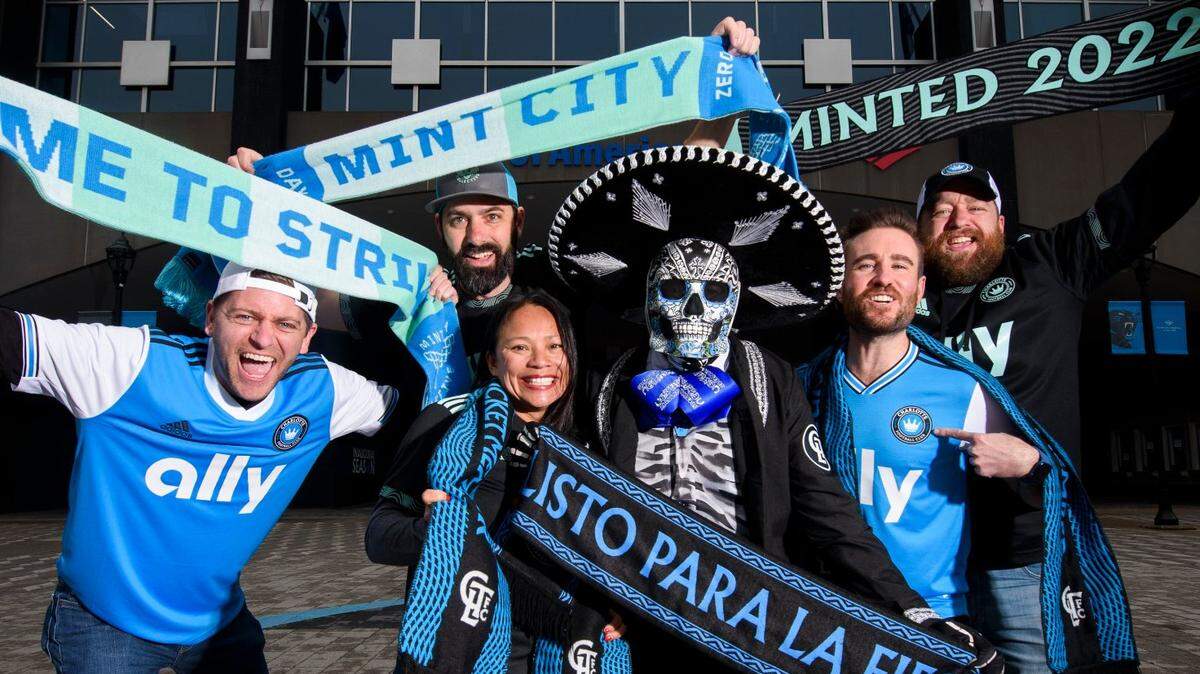
With Charlotte FC’s inaugural season underway comes the introduction of Major League Soccer to many new fans across the Carolinas.
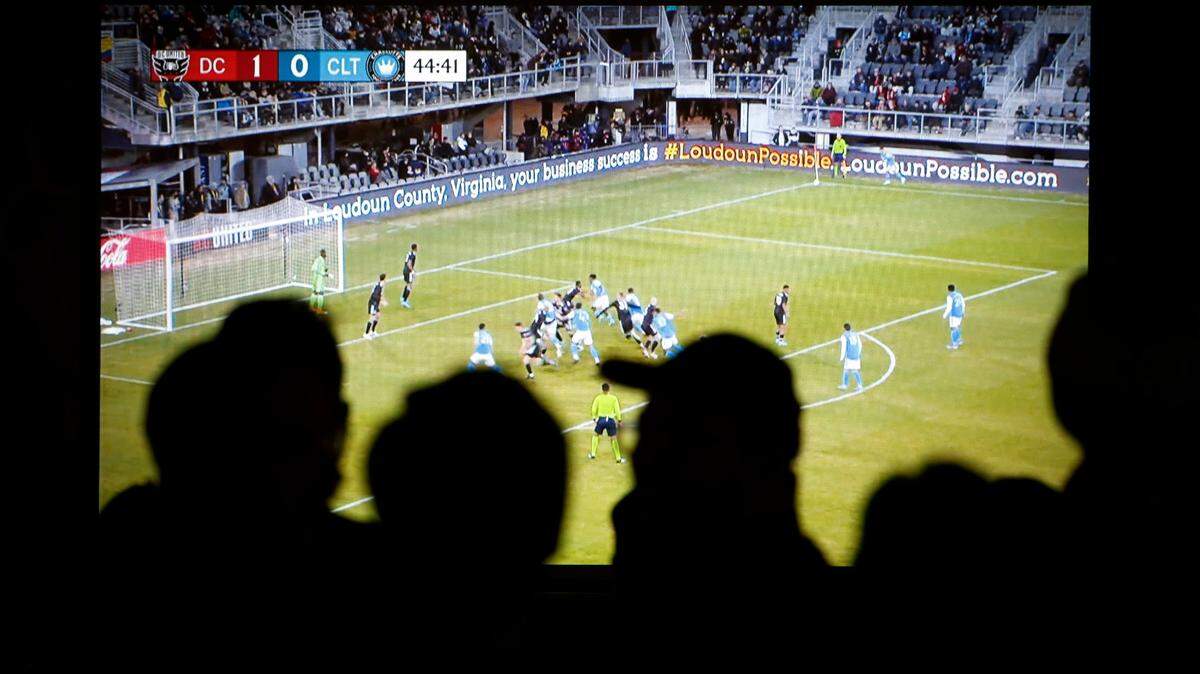
The expansion team entered the league as MLS’s 28th team and played its season-opening match last weekend against D.C. United in Washington, D.C.
Saturday, Charlotte will debut on its home turf against the LA Galaxy at Bank of America Stadium in front of what the league expects to be a record-setting crowd.
Here are soccer basics to know before the home opener.
How many MLS teams are there? How does it work?
Charlotte FC is one of 14 teams in the Eastern Conference and among 28 teams in the league. Other conference rivals in closest geographic proximity to Charlotte include Atlanta United, D.C. United and FC Cincinnati. Nashville SC moved from the Eastern to the Western Conference this year with the arrival of Charlotte FC.
Each club will play 34 regular-season matches, split evenly between home and away games. Each team plays each conference opponent twice and eight non-conference opponents once.
The top seven clubs from each conference in points advance to the playoffs (14 teams total). Teams receive three points for a win, one point for a tie and zero points for a loss. The number of goals scored over the course of the regular season also matters, because if there’s a tie in points at the end of the regular season, then a tiebreaker will determine who advances based on the total number of wins per match, followed by the goal differential per match, meaning goals scored per match minus goals conceded per match.
Charlotte FC has said that it wants to host a playoff match in its first season. To do this, the club will need to finish among the top four teams in its conference to ensure hosting duties, following an example set by LAFC in 2018 or Atlanta in 2017.
What are the MLS player and roster rules?
For match day, each team will have a maximum of 20 players on its official match roster, which includes 11 starters and nine substitutes. A team’s active roster is comprised of up to 30 players. Charlotte FC has signed 25 players.
The league has complicated salary budget and roster rules that involve what is essentially fake money (general allocation money, or GAM) that can be exchanged in trade deals or used to buy down a player’s salary budget. The Maximum Salary Budget Charge for a single player this year is $612,500.
That figure is also important because it’s relevant to Designated Players, or DPs, whose salaries and transfer fees may exceed that charge. A team is able to add up to three DPs to its roster, but it is responsible for meeting the amount outside of the salary budget for each DP. The DP designation was introduced to allow teams to sign high-quality players with more expensive contracts. Polish striker Karol Świderski is Charlotte FC’s only Designated Player so far, although Ecuadorian midfielder Jordy Alcívar carries the Young Designated Player tag, which means he’s younger than 23 years old (22 in his case) and he will carry a lower salary budget charge.
What are the positions in soccer?
Broadly, there are four types of positions in soccer: Goalkeeper, defender, midfielder and forward. Those positions become more specialized based on a player’s abilities and where exactly they play on the pitch. For example, a forward can specifically play as a striker, which means they play straight down the center and closer to the opposing team’s goal for the attack. Wingers are attacking players who line up further spaced out to the sidelines and will try to feed the ball into the striker or center forward, who plays slightly deeper than a striker.
Within the midfield, there can be central midfielders, defensive midfielders or attacking midfielders, and those players cover the areas related to those name designations: An attacking midfielder, usually a No. 10, plays higher in the field, and has been described as the “attacking playmaker.” A central midfielder will sometimes be described as a “box-to-box” midfielder, meaning that they’re responsible for helping with both defense to offense, while a defensive midfielder plays close to the defenders, deeper in the field.
For defenders, there are center-backs (left or right), who play closest to their own goal besides the goalkeeper, and right- and left-backs, who are like the wingers of the defense in that they play pushed further to the sidelines to fortify the back line.
The clock
Major League Soccer matches last 90 minutes with a running clock that counts up from 0:00 and are separated into two halves. A referee may also add stoppage time after each half, which is additional time on the clock to make up for moments of non-play, such as for player injuries, video reviews, water breaks, etc.
For playoff matches, two 15-minute extra time periods are played if the score is tied after regulation. If the score is still tied after extra time, then the match goes to penalty kicks.
Important soccer rules
Offside: According to the International Football Association Board, a player is offside when any part of the head, body or feet is in the opponents’ half (excluding the halfway line) and any of those parts is nearer to the opponents’ goal line than the ball and the second-last opponent. It’s common for players to run ahead of defenders, for example, but the offside call will typically only come if a player’s body is in that position when they play the ball.
This is the call that revoked Charlotte’s first goal against D.C. Titi Ortíz received a forward pass and played the ball while he was closer to United’s goal than the second to last United defender, meaning the United player closest to his own goal besides the goalkeeper, and Ortíz was called offside.
Goal kick: A goal kick occurs when the ball leaves the field across the goal line, having last been touched by the offensive team. A defensive player can kick it from inside the goal area to outside the penalty area before it is in play.
Corner kick: A corner kick occurs when the ball leaves the field across the goal line, having last been touched by the defensive team. The ball is placed inside the corner arc and kicked into play by an offensive player.
Foul: There are various types of fouls that can be called, and will not be allowed, such as tackling from behind, holding, kicking, tripping or pushing an opponent and deliberately handling the ball if not the goalkeeper (”hand ball”) that will typically result in a direct free kick, which is a free pass or shot from where the foul was committed. If the foul was committed in the team’s penalty area, then a penalty kick is instead awarded.
Yellow card: A referee will show a player a yellow card as a warning for unsportsmanlike behavior and/or reckless play. If a player gets five yellow cards over the course of the regular season, there will be a $250 fine and he will be suspended from his next regular-season match.
Red card: A referee will show a player a red card when a more egregious offense occurs, or if a player is shown a second yellow card, and will be sent off.
What are more soccer terms to know?
VAR: Video Assistant Referee is the widely used practice of consulting an official who watches matches broadcast on screen to make calls. VAR can be consulted for errors in the cases of goals, penalty decisions, direct red-cards and when a player is misidentified.
Pitch: The term for “field.”
Match: The term for” game.”
Boots: The term for “cleats.”
Kit: A team’s uniform.
This story was originally published March 4, 2022 at 5:00 AM with the headline "Soccer 101: Rules and words new Charlotte FC fans should learn this MLS season."