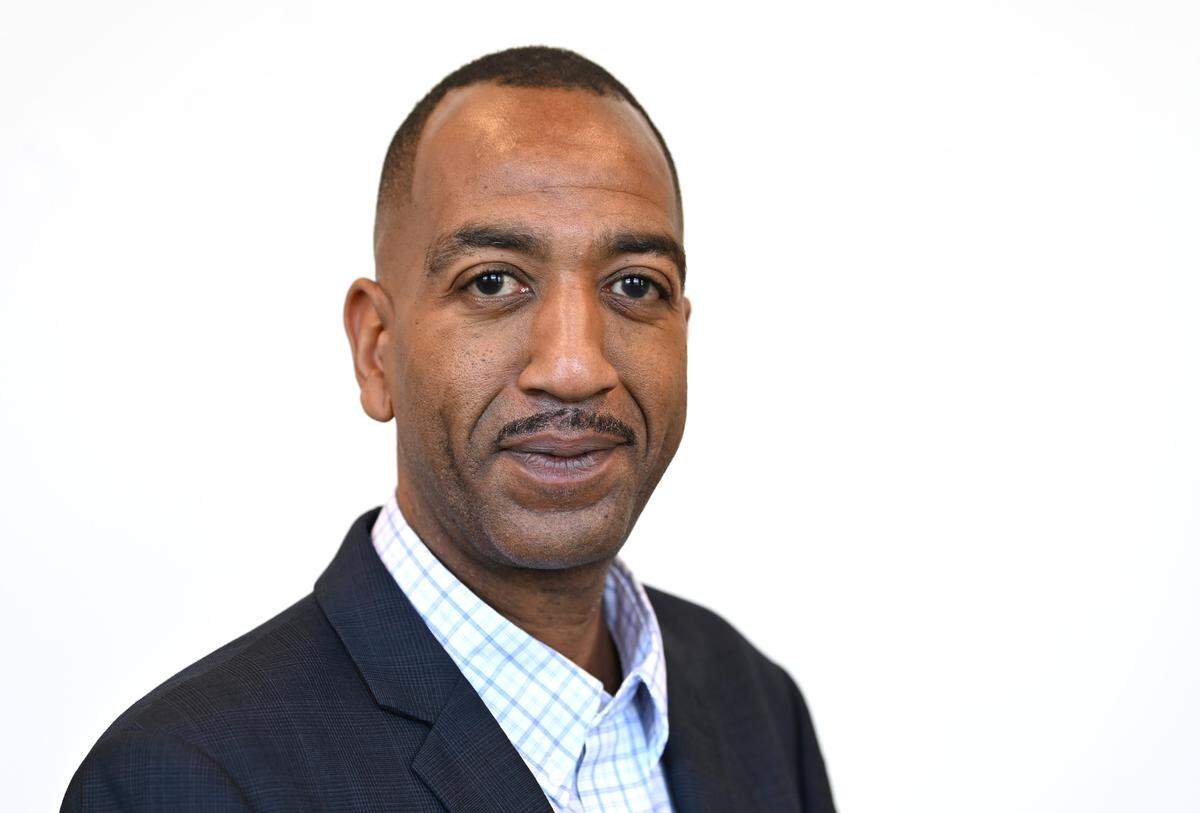
How the Charlotte Hornets are upping their wellness game to keep players on the court
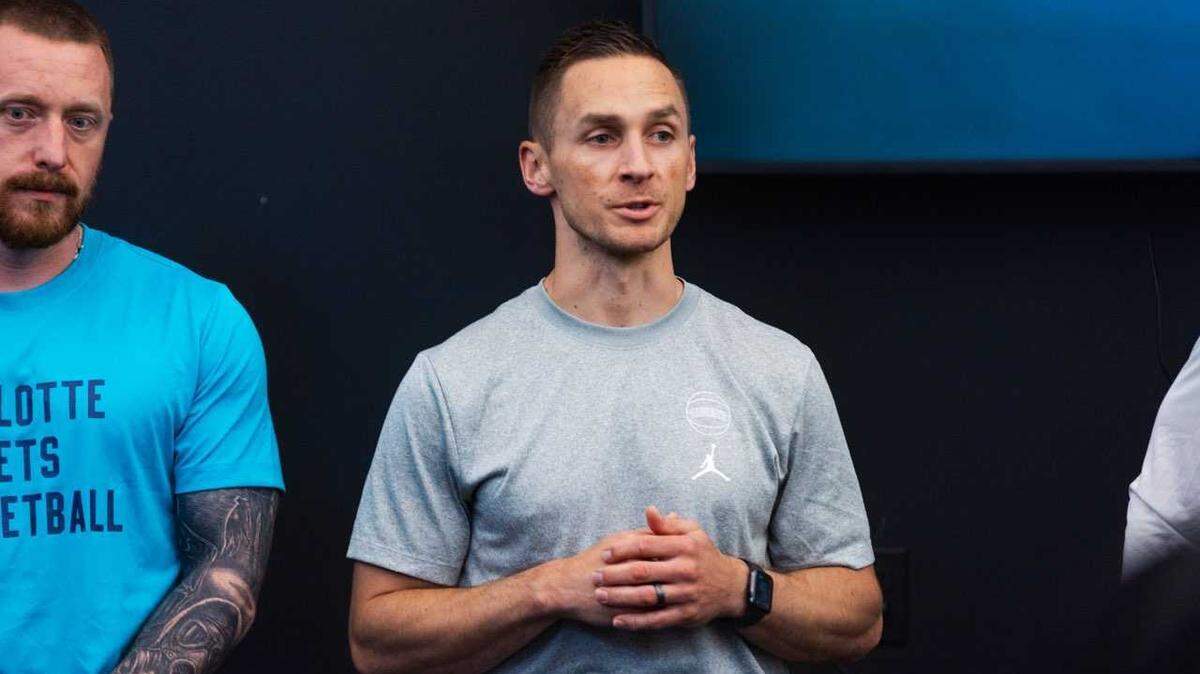
Trent Salo plops down in a chair just feet from where Jeff Peterson, the Charlotte Hornets’ president of basketball operations, is seated; a good LaMelo Ball full-court pass away from an area Salo is about to becomeextremely familiar with. Bump into Salo outside of these walls, some still covered with construction dust from the first phase of Spectrum Center’s renovation, and one might peg him as an athlete.
Years ago, that assessment would’ve been correct. But not anymore.
Instead, Salo is tabbed by Peterson — and signed off on by co-owners Rick Schnall and Gabe Plotkin — to be the vice president of the Hornets’ new health and performance department. Even on this early morning, Salo has the look of someone who just completed a rigorous workout, yet he’s calm as can be.
“As you get to know most of our staff, we all walk the walk,” Salo told The Observer. “And we believe that it’s important to treat our bodies the way that we are recommending our players to treat their bodies. Because I think it’s hard to listen to somebody provide advice if they’re not following that same advice. And we take that seriously.”
Salo heads up a new 10-person staff, which dwarfs the previous number of people in the team’s health care and performance department. Brought to Charlotte following seven years with the Detroit Pistons — including the last two as the senior director of athletic performance — Salo’s task is an immense one, given the Hornets’ injury woes over the past few seasons.
The arrival of Salo, along with hiring a sports medicine director as well as a director of athletic performance, is just the latest in a flurry of moves sweeping through the franchise in the first full year with Schnall and Plotkin calling the organizational shots.
Knowing the Hornets were second in games missed by players due to injury only to Memphis over the last two seasons, altering the their training staff and shifting philosophies were among the top priorities. Schnall and Plotkin weren’t content with the status quo and chose to devote more resources into an area that’s increasingly important in the billion-dollar world of pro sports.
“You hit it on the head — it starts with Rick and Gabe,” Peterson told The Observer. “Even during the (basketball operations opening) interview process (back in the spring), this was a huge topic for all of us. I know that in this space, you can really create an advantage if you get it right. So, it was something that we discussed a lot, and I’m just thankful that we’re aligned because you don’t always get that.
“But they were fully on board from day one, supported me to go out and find the best. And that’s what we did. So, just to have them committed emotionally, financially ... and truly invested in this space means a lot. Because as you know, guys, in order for them to play well they’ve got to feel well. And it just starts with their bodies and minds.”
That’s why the Hornets now boast an array of voices and experts for various roles.
Building on strength and performance
Besides tapping Salo, the Hornets also added Matthew Tuttle as director of sports medicine and Bryce Daub, formerly director of strength and performance for the University of Oklahoma men’s basketball, as their director of athletic performance.
Pete Elliott is on board as the associate head trainer, Rachel Webb will serve as the director of performance psychology and wellness and Anthony Berry takes the head athletic performance coach duties.
Factoring in head of rehabilitation Harrison Herman, performance dietician Oluremi Famodu-Jackson, physical therapist Cassidy Papa and senior performance and developmental scientist Harjiv Singh, it takes two hands to count the new hires.
“It’s interesting, if you look across our group a lot of them have advanced degrees and Ph.D.s,” Salo said. “They’ll all be the first to tell you, yeah the academic stuff is important, but that’s not really what matters. Everybody has that curiosity gene in their great mindset of wanting to continue to learn and get better.
“That’s part of my role, to connect all different dots.”
The lone returnee to the performance team is Quinton Sawyer, formerly the Hornets’ associate head athletic trainer for the last six years. Fresh off serving as a trainer with Team USA men’s basketball during the Paris Olympics, Sawyer was promoted to head athletic trainer.
“(We) want to certainly elevate performance,” Peterson said. “It’s not just performance on the court, it’s off the court as well. So, whether that’s sleep, nutrition, mental health, of course their bodies, physical strength, endurance, stamina. Injuries are a part of the game, so it’s inevitable.
“Because that stuff happens to every team, yeah you want to, one, prevent it as much as possible, But, two, be honest with ourselves and do a lot of debriefing and figure out how to have them not happen again in the future.”
An inside look at Salo’s vision
Each member of Salo’s team has a specialized task, charged with giving players avenues to work through — whatever they’re dealing with.
In assembling the cast, the Hornets were purposefully meticulous. Diversifying the group was a necessity and it led them to comb various locales for the best candidates.
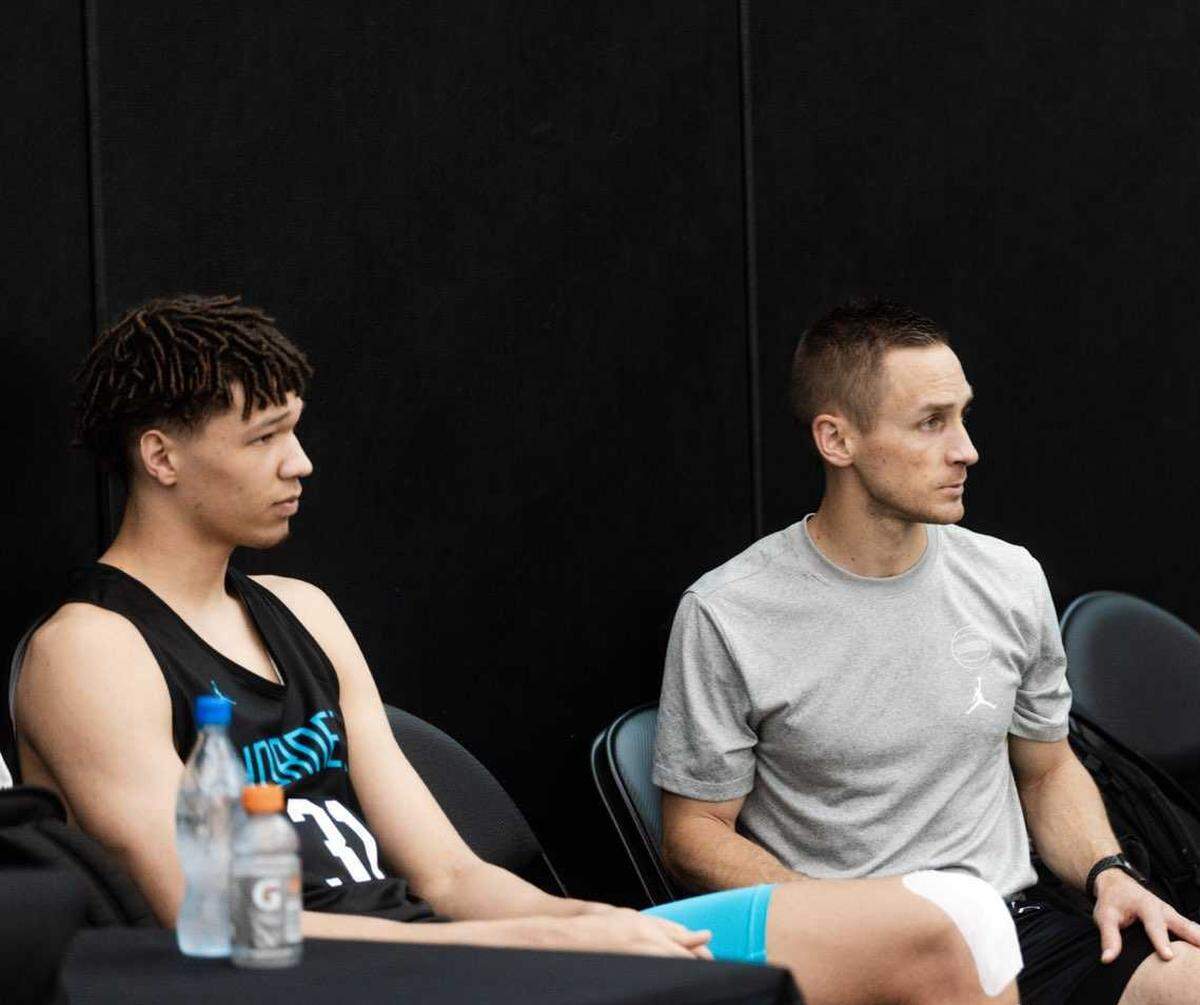
Some have backgrounds in college sports, others feature experience in high-level leagues like the NFL. More than one holds a doctorate and several of them, such as Salo, were student-athletes in college.
“Yeah, that’s a big rock of how we built this team out,” Salo said. “Even some of our staff members, not only just myself, have played a high-level college basketball. And we were strategic in that sense for multiple reasons. One, just the trust of the players. When they see us playing staff pickup and we’ve got some stuff in our bag, and they go to us, ‘Oh, that’s impressive.’
“And so we take that seriously in building trust with the players, but then also understanding the game.”
Previously, the Hornets didn’t boast a director of sports medicine to oversee all of their medical services. Same goes for the director of athletic performance.
That’s right, athletic performance.
“It’s termed athletic performance and not strength conditioning for a reason,” Salo said. “They don’t operate just in the weight room. We don’t want them being in a box and just saying, ‘No, you just lift weights with guys.’ Yes, of course, that’s a part of it. You need to get bigger and stronger.
“That said, those individuals in the weight room come from a playing background. We want them on the court rebounding for guys or collaborating with our player development coaches, saying, ‘Hey, we noticed this when he moves this way, we think he can guard a little better if he does this exercise on the court beforehand.’”
Communication is the ‘secret sauce’
Bringing new people in to hold key titles is one thing. Producing tangible results is another and, admittedly, it’s going to be an exhaustive undertaking.
So, how do the Hornets intend on transforming their performance staff into one the premier groups in the NBA?
“Yeah, great question and the big question,” Salo said. “I think it starts with communication and expectations. So, our secret sauce as a group, if you will, is communicating at a high level and everybody being on the same page. Because too often it’s doing a balance exercise in the training room, but they don’t talk to the weight room. And they do the same balance exercise in the weight room, and they go on the court and do the same thing.”
In other words, expect the Hornets’ new staffers to have plenty of dialogue among each other.
Sharing notes will be a given.
“At the end of the day for us, if you have experts in each of these disciplines,” Salo said, “and they’re great humans to start and you can collaborate with and they have the curiosity growth mindset, then there’s no reason why new information and new knowledge can’t be generated from these discussions instead of just doing something because it’s always been done that way.”
Immediately after each game, Salo will have members of the Hornets’ performance staff watching video breakdowns to analyze specific movement patterns. The goal is to use visual data and analytics to assist in maximizing the overall health of each individual.
To Salo, staying in front of pesky, nagging pain is just as important as properly treating that area of the body in need of diagnosis and therapy once a player gets banged up.
Expect a lot of show and tell from Salo & Co. on-and-off the court, too.
“We work backwards from the game,” Salo said. “What does the game demand? What are the top five injuries — ankle strains, anterior knee pain and muscle strains. OK, what does the research say when we’re trying to prevent them or trying to rehab those?
“So, we do believe in being objective. There is an art and a science to it, and we take that seriously. That said, as a sports medicine staff in particular, we need to be able to provide objective information, saying, ‘No, you have a 40% asymmetry in your strength and probably are not ready to return to play, even though you feel great.’ So, it’s combining that part with the objectivity and evidence in science to come to an informed decision.”
‘They all can get better’
Entrenched in his role since last month, the players are already growing accustomed to Salo. And he’s had his work cut out for him to ensure some of the Hornets’ top guys are ready to go following injury-riddled campaigns, and are as durable as Miles Bridges and Brandon Miller were in 2023-24.
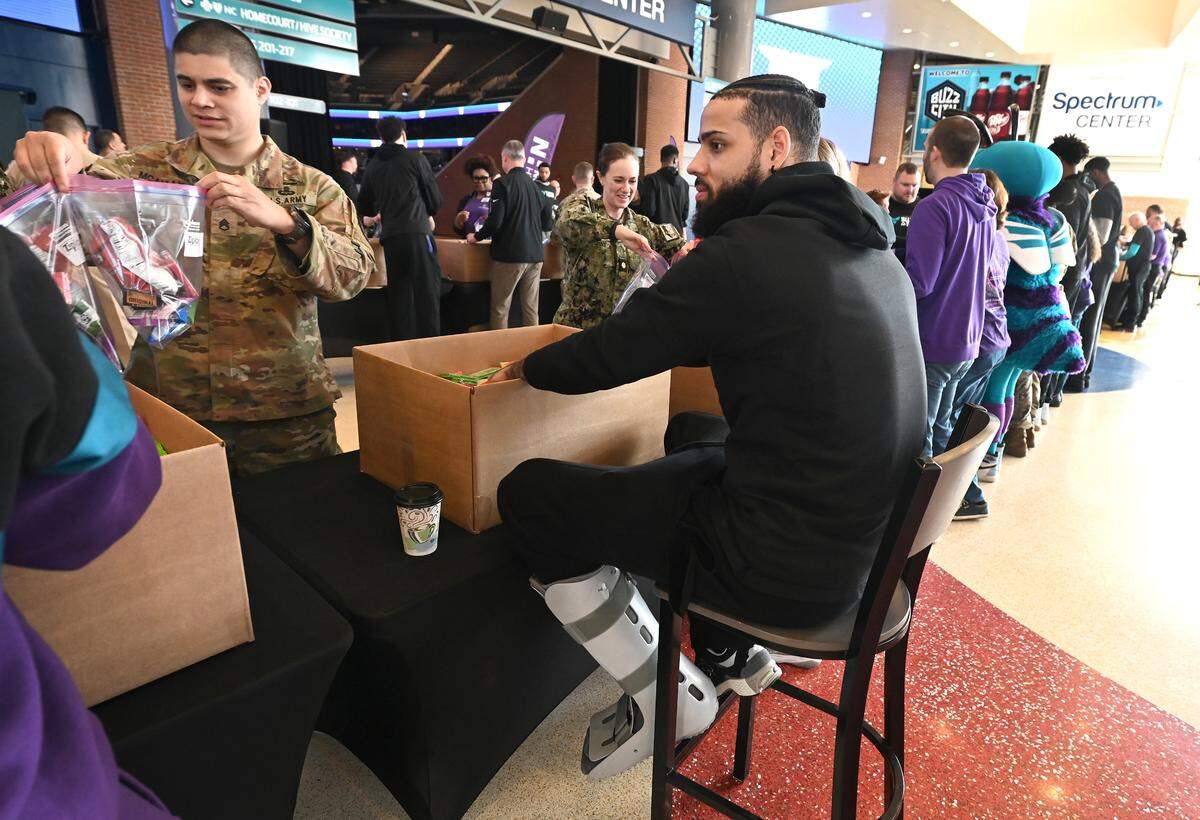
Ball, Mark Williams and Cody Martin — to name a few — have had more than their share of ailments over the past two seasons, contributing to the hefty numbers of losses and player games missed. Sprained ankles constantly derail Ball’s season seemingly each year, and Williams’ back problems forced him to sit out all but 19 games in his second season.
Keeping Ball and Williams, in particular, as healthy and happy as possible is on everyone’s to-do list.
“Specifically those guys that you mentioned, one thing about them, they all love to play, they want to be on the court,” Peterson said. “And they all just had kind of injuries again that probably are not preventable and kind of just happened. I think with these guys, we’re not looking at the past. It’s like how can we move forward and get the best out of a really healthy Mark, Cody, LaMelo. And those guys have been tremendous.
“And I wouldn’t just stop with those three. It’s the entire roster. Miles can get better in some areas. Brandon can certainly get better in some areas. Grant (Williams). Go down the line, right? They can all get better from a performance standpoint.”
Even if it won’t always happen via welcomed fashion. Having everyone — team executives, the player, agent, physicians — agreeing on the same direction of treatment during rehabilitation or ideal avenues to reach maximum health these days is a pipe dream.
Debate, though, is not going to be shunned.
“It’s crucial to say that we’re going to disagree and that’s good,” Peterson said. “We’re going to have different opinions. And these guys know their bodies better than anyone. They are experts on their body. So, nowadays our job is to push them. Sometimes just human nature, you think you can do 10 reps, you can probably do 12, right?
“But we actually encourage disagreeing opinions at times because to us, that’s how you arrive at the best answer. To truly be open-minded and say, ‘You know what? I didn’t think about it that way. Let’s try that method.’ Or ‘You know what, I want to research a little bit more on your calf, let me go see this expert in Europe.’ ... We’re just trying to pull from all different experiences and be open-minded to that.”
It leads back in part to Salo, the person overseeing this transformation in the Hornets’ health and performance department. Salo left his hometown team and the comforts of his native state for a position where he’ll be in the immediate spotlight due to the team’s recent injury woes, a decision he pondered for only about a nanosecond before moving to Charlotte.
And Peterson is certainly glad that’s the case.
“You’ve got to think about it,” Peterson said. “This position is arguably one of, if not, the most important. Players are probably going to get upset with Charles [Lee] at some point for playing time, and they’ll probably not like me at some point for whatever reason. But they get to hang out with Trent and his staff every day, and as long as they can make them feel better, they are going to love being around them.
“So, just thrilled that he even came, because he was in an excellent position in Detroit. So, he didn’t have to take this leap, either. But just glad that we’re able to partner, and I have no doubt that we will turn this thing into something special.”
This story was originally published August 13, 2024 at 5:00 AM.