Charlotte’s beloved adopted son is back. Why Kemba Walker wanted to return to Hornets
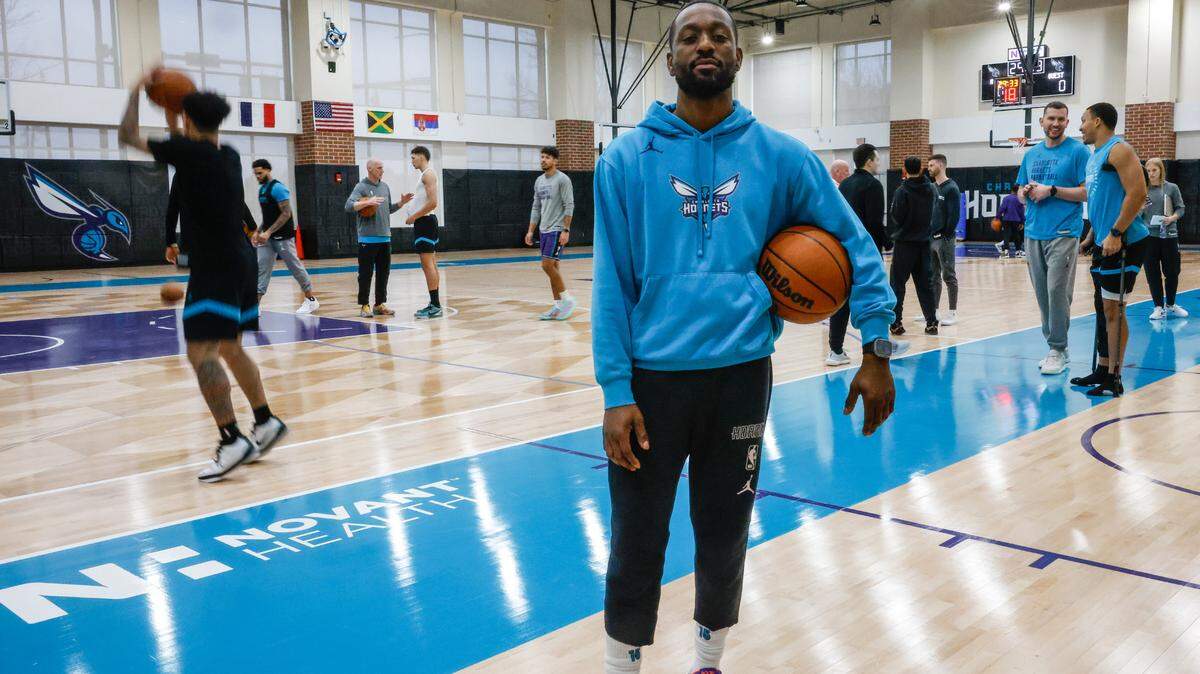
Individual pregame warmups wrap up and a certain member of the Charlotte Hornets exits the court heading toward the tunnel, causing a commotion among throngs of onlookers hoping for a keepsake signature or snapshot.
This spectacle isn’t for LaMelo Ball, although a similar scene typically unfolds when the Hornets’ star guard finishes up his routine. Instead, all the adulation is directed toward Charlotte’s prodigal adopted son, the guy who holds more than his share of team records and is considered by many to be the best player in franchise history.
Kemba Walker is back, working as a player enhancement coach on Charles Lee’s staff, and everyone loves everything about it.
“First things first: Kemba is a superstar,” veteran Hornets center Taj Gibson said. “Each time I’m with him — I’ve known him a really long time — he’s really a superstar and he carries it so humble. You think his game is so great and he’s an awesome player, but his personality off the court as a human being? Thirty times, triple that number.
“And just to have him every day in the locker room, just every day around us is amazing. You go to him with anything and he’s going to help you out with anything. I’m telling you he’s a first-class citizen. He’s so real deal.”
In a nutshell, Gibson’s thoughts reflect how everyone associated with the Hornets feels about Walker’s return, which has injected a behind-the-scenes boost that can’t necessarily be measured. It’s a pinch-me moment that has Walker’s worlds colliding in impeccable fashion.
The 34-year-old still can’t believe it at times, unable to fully grasp how everything came together in the blink of a crossover dribble thanks to Lee’s vision: Adding a well-respected voice to assist in the maturation process of a young roster.
As the beneficiary, Walker gleefully imparts wisdom to players by day and at night lays his head in the sparkling residence he has maintained in the city after going to Boston in 2019 as part of a sign-and-trade.
“I hadn’t been home in a minute,” Walker told The Observer in the first extensive interview since officially retiring in July. “I hadn’t been in my house consistently in a long time. I just wanted to be home. Charlotte is my home now, so when I didn’t sign back here, I haven’t been back since. In spurts, obviously, in summertime I sit down for a little while, but just not consistently.
“It’s been four, five years, six years, something like that, that I just haven’t been in Charlotte consistently. So when I got the call, it made it easy. Finally, like I could go home and just be home. Just a perfect situation. Obviously my old team, spent most of my career here. I think just the opportunity, the newness of everything, is what kind of drew me back.”
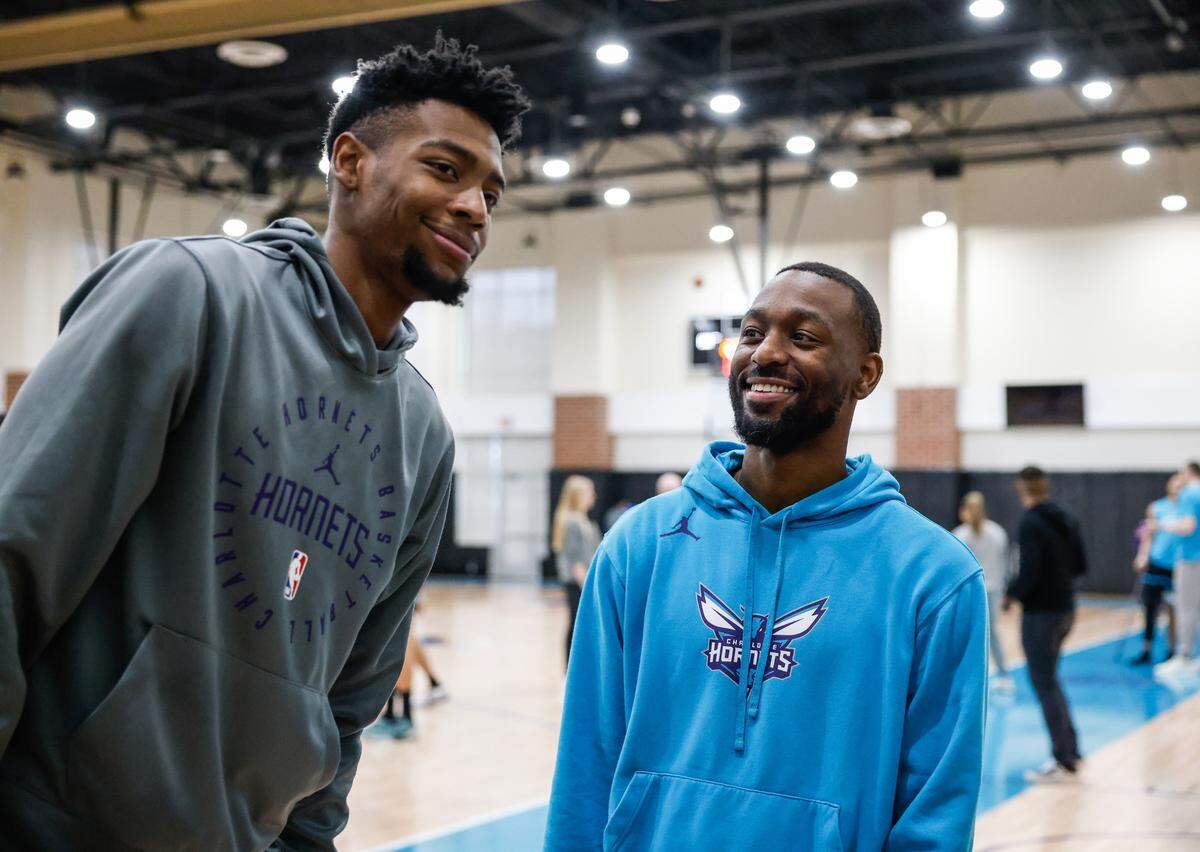
As did the allure of teaching a young core that includes Ball and Brandon Miller. Plus others he’s played with previously, including Miles Bridges and Grant Williams. And teaming up with his Bronx buddy, Gibson.
Factor in working for a coach who just turned 40 and a president of basketball operations in Jeff Peterson who’s in his mid 30s, and Walker didn’t have to be asked twice.
“I just felt like the organization needed a shift and I just wanted to be here,” Walker said. “I just wanted to come back and help do what I can to kind of get the organization back … well I wouldn’t say on track, but just on track.”
‘I thought I’d play forever’
If anyone knows the ins and outs of the Hornets, it’s Walker.
Drafted ninth overall by the organization in 2011 when it was still called the Bobcats, he ascended to All-Star status during his eight seasons in the Carolinas. He earned the distinction three times en route to becoming the team’s all-time leader in points scored, minutes played, made 3-pointers, field goals, free throws, games with 20 points or more, with at least 30 points, and 40-point games.
Following his best season statistically during an All-NBA team campaign in 2018-19, the Hornets traded Walker to Boston for Terry Rozier and a 2020 second-round draft pick as part of an agreement that led to Walker landing a four-year, $140 million contract with the Celtics.
Frequent knee injuries robbed Walker of fulfilling his potential in Boston, however. He played in just 147 total games after being traded, most coming during his first season with the Celtics.
He last appeared in the NBA with Dallas in 2022-23, playing in nine games, and had a stint overseas with AS Monaco of the French LNB Pro A and EuroLeague in 2023-24, where he won a French league championship. But those knee problems forced him to call it a career last summer.
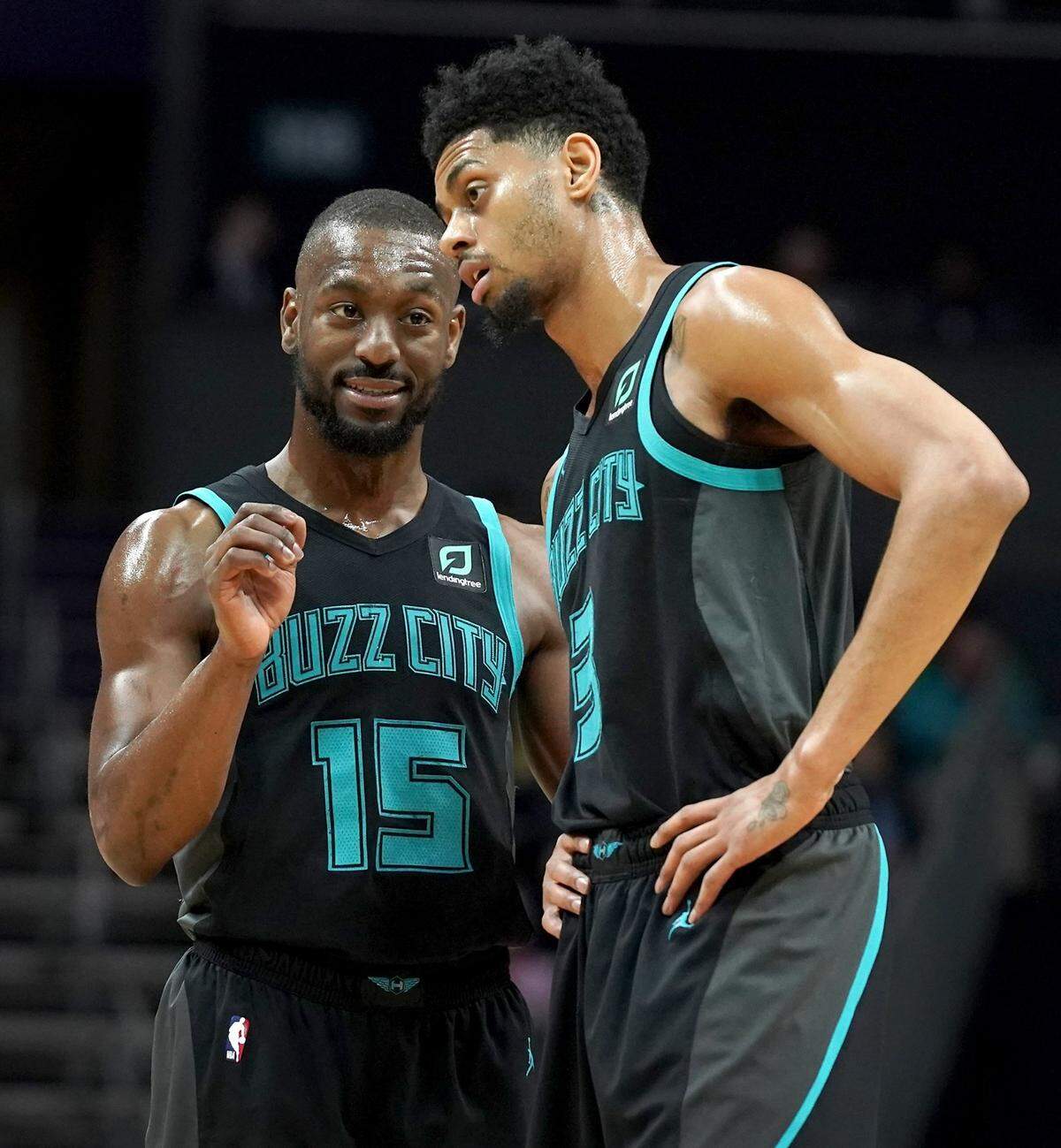
“It’s tough,” Walker said. “I thought I’d play forever, especially because I was a guy who never got hurt. I never got hurt. I played all the time. So for this to happen, the way it happened, it’s definitely tough. I’m a competitor, I’m a guy who always played. This is my only injury I’ve ever had in my life. It’s tough. It’s not like I was an injury-prone guy.
“But I think the part that helped me out the most is I know I tried everything. Literally. Every treatment, workouts, everything. I did it all before I hung it up. So, I tried to try to continue to play, but it was just my time.”
That seismic shift in Walker’s life is what led to a phone call from Lee. As he assembled his staff, Lee did homework on Walker, adding to the things he already knew about him.
With every report, Lee grew more convinced. Walker’s place was right here.
“I wanted to bring him in because of the person he is, No. 1,” Lee told The Observer. “I never got to work with him directly, but the couple of interactions I had with him at the All-Star games, I thought we had a great conversation. Sometimes you get this gut feeling about people. And so my short interactions with him, from talking to other players, other coaches in the league, all they did was speak highly of the person and his work ethic and what he’s about.
“He’s brought that to this organization, and that’s what I wanted.”
Along with a variety of other intangibles and notable accomplishments.
“On top of it he was a heck of a player,” Lee said. “He played here in Charlotte. He knows what it means to be a player in Charlotte, the importance of not being the biggest guy on the court but having that competitive heart and spirit and will.
“And so I think that he’s kind of giving that to the players — he’s giving them knowledge. He’s able to communicate at a really high level of what he sees and some of the experiences he had that he thinks he can help some of these guys, too.”
Evolving job description
That happens frequently, even during games. And his constant psychological encouragement hasn’t gone unnoticed, particularly when his words bear fruit to positive results.
“For instance, (against Chicago), I started out the first quarter, first half bad,” Bridges said. “And at halftime he told me just breathe and just go out there and play my game. It means a lot of combining from Kemba because he’s been there before. It helps for him to be here.”
Indeed. That knowledge exchange is appreciated. Greatly.
“It means a lot,” Bridges said. “Me being able to play with Kemba and know what type of person he is, it makes you want to come in and work more, knowing that he’s on your side. And just seeing him go to the coaching profession is kind of crazy, because he takes everything seriously.
“He’s professional about everything and he’s done it. He’s been there, he’s done it. He’s played at the highest level. So, you really have no choice but to listen to Kemba.”
For Walker, it’s pretty simple. He’s slowly becoming comfortable with his role, evolving in different areas as he better navigates the transition from player to coach.
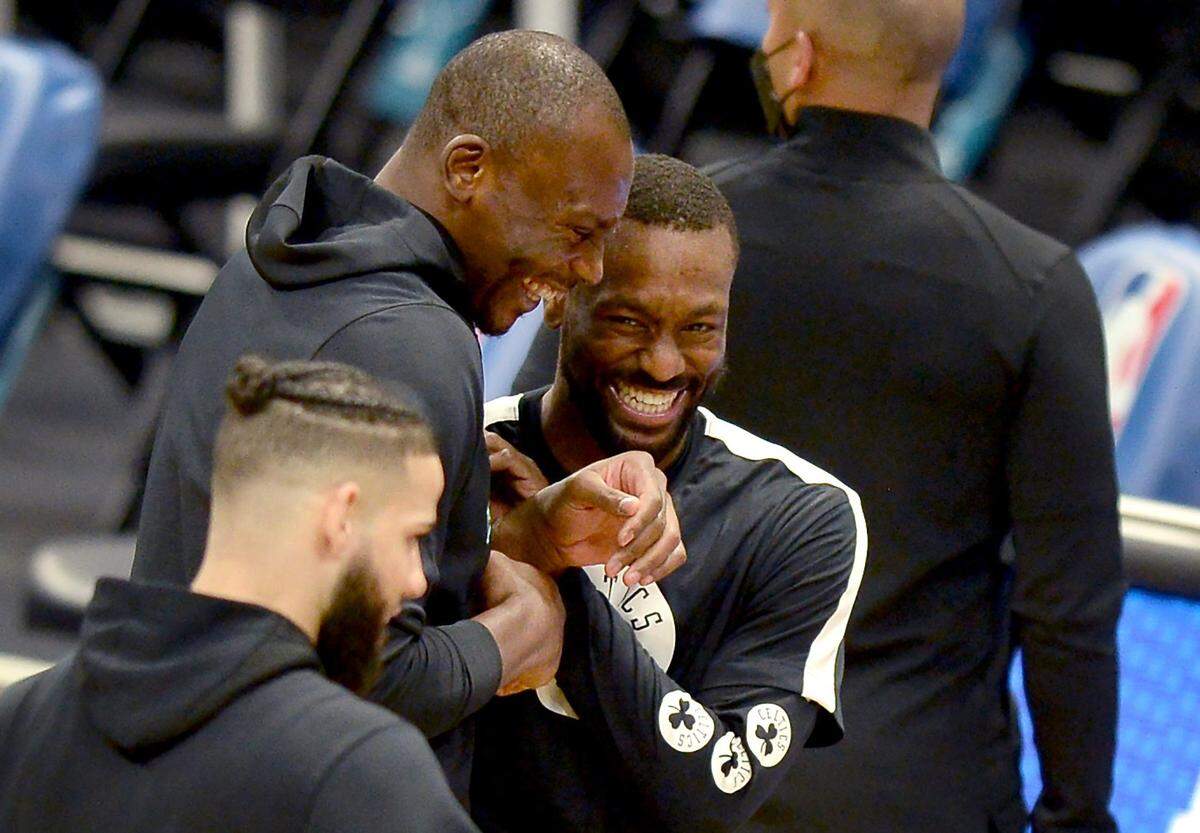
That includes adjusting to the wonders of technology and analytics that are so prevalent throughout the game, some of which is like a foreign language to Walker. But the good thing is the Hornets let him utilize his own version of Rosetta Stone in a sense, translating coach-speak into a player’s vernacular.
“I’m really just being myself,” Walker said. “They really just allow me to be here and be myself. I’m still learning. I’m learning the computer. I’m putting together personnel edits and stuff like that. But that’s the whole other side of things, which I’m still learning that stuff. But other than that, I’m really close to the players.
“I think I’m just kind of like that bridge between the coaches and the players. Obviously, I just finished playing so I’m not too far removed. I’ve got that voice of the players but I’m a coach. It’s just an understanding because sometimes the coaches might feel one way, I can just put my two cents in and give them an opinion from the player’s perspective for me.
“I’m just trying to be like a big brother to the players. Just try to show these dudes the ropes and how it goes because I’ve literally been in every single shoe that’s on the team, like literally.”
He emphasizes by repeating it.
“Top to bottom, from the guys who play to the guys who don’t play, I’ve been there so I can really see experiences with every single guy — literally,” Walker said. “It’s perfect. It’s a great role. I’m super happy to be here. I text C. Lee all the time to just thank him. Thank you for giving me the opportunity to be here.
“To be able to just stick around the game for real is a blessing.”
That feeling is mutual.
“His humility and his humbleness is what’s so attractive about him,” Lee said. “And that’s why he’s been as good as he’s been. Because he understands. He’s got the humble confidence, which is part of the Hornets’ DNA. He understands that he’s good, but he knows that he has to work every day to continue to get better.
“Or if not, somebody is surpassing him. And so I’m always super appreciative and thankful for his texts. It uplifts me, but he also has to realize how much he means to me and the staff and to the organization, too.”
‘I love Melo’
Having Walker around should also serve as a boost to Ball, the face of the franchise. Ball, in the first season of a max contract worth just under a quarter-billion dollars, now has more pressure on him than ever.
Walker understands what Ball is going through and can relate somewhat. He’s quickly morphed into a fan of Ball, growing tight with the 23-year-old, and is eager to impart as much wisdom as he can to the talented fifth-year pro.
“I love Melo — forget basketball — as a person,” Walker said. “I didn’t know him at first coming into this. Every now and then we’d say what’s up, but I didn’t get a chance to know him. So, now that I’ve got a chance to be with him every day and see him every day, I’m a huge fan of him as a person. And then obviously as a player, we all know that he is unbelievable.
“But yeah, there are some areas that he can get better at. The thing about that, people don’t see is how much he really tries to get better at stuff. He’s always watching film with assistant coach Lamar (Skeeter). Me and Lamar, we both watch film with him. He’s always on the court trying to learn.”
Being attentive also apparently isn’t an issue for Ball.
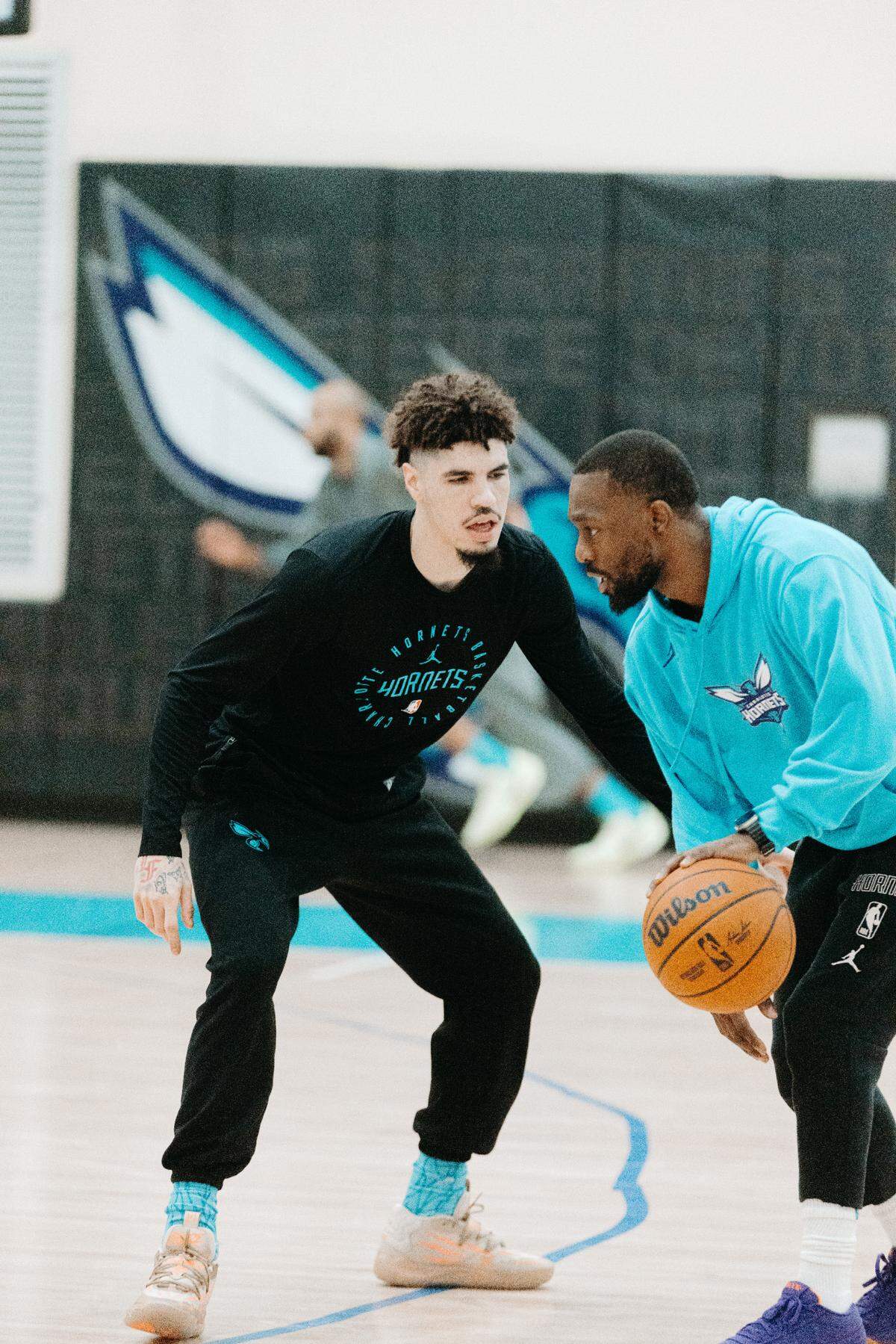
“He sits in the front row, always raises his hand, always asks his questions,” Walker said. “Like, he’s trying. And I think his greatness will come in time. His ability to play both sides will come in time. He’s still learning and he still hasn’t played a lot, a ton of games. He just hasn’t and unfortunately it’s been because of his injuries. But it matters. The reps matter in this league.
“It really does, too, try to figure out how this thing really works. It matters. So yeah, it’ll come in time as long as he keeps staying on the path that he’s on, he’ll be fine. He’ll be fine. The kid is still learning and he’s still incredible. It’s crazy, but like I said, that’s what I’m here for. I’m here to help guys like Melo, help them kind of reach that full potential.”
One area in particular where he can assist: Situational recognition.
“I call it really game flow — in-game awareness,” Lee said. “That’s where he can give so much value. Because we can watch all the film, we can do all the clips. Sometimes when you are in a team setting, it might be too deep to go into the game flow of game awareness.
“Like, ‘Hey Melo, in a vacuum, that shot, not bad. But right now, we’re down two, the other team is going on a run. We’re going to need this type of shot.’ I think those are individual conversations that have to be had and I think Kemba is able to do that.”
Walker’s view of Ball goes against what some might believe: That he’s not serious about his craft and lacks a burning desire to improve. Public perception doesn’t move Ball much, though; he isn’t fazed by it.
“Which is fine,” Walker said. “I never really gave a s - - - either, to be honest about people thinking what they think about people. It don’t matter what the outsiders think, you know what I mean? Because I see him every single day come in here, and he gets his work done. He hasn’t been late. He’s been early to everything.
“It’s actually been kind of impressive, and I think it has been more impressive because of things that I’ve heard probably happened, too. But all I’m saying is it ain’t happening no more. That’s all I’m saying, and that’s the first step, is a change. And I think he’s changing already. Lifting (on) off days, lifting after the games. He’s trying, he’s trying to get better and it’ll come, man. He’s special. He’s just special.”
Sounds an awful lot like the way many people refer to Walker.
“Man, I’ll take a bullet for him,” Gibson said. “That’s how much some days he shocks me when I look at him. And then some days when you look at his career and look at the personality, you’ve been around the league for a long time so you know the fakes from the real.
“There are a lot of guys who just talk the talk and aren’t really about walking the walk. And Kemba, Kemba Walker? Shoot, he’s all about the walk. And that’s my boy.”
And also Charlotte’s adopted son, who’s hellbent on altering the external negative perception of the franchise he put on his back nightly for close to a decade.
“We’ve never won nothing, we never got out of the first round and we don’t consistently get into the playoffs,” Walker said, “so that’s why it’s viewed that way, we are trying to shift the culture a little bit. That’s why I want to be back — help change that in some capacity.
“Obviously, when I played, we did a couple of good things here. But it still wasn’t enough. So I wanted to be a part of that stride, that next push of the good wave of the Charlotte Hornets. So, those are some of the reasons I wanted to come back.”
And Coach Kemba is all in. Old school meets new school and their hope is the reunion will lead to more special moments that have been so scarce around here.
He’s in a good spot, having fun as the journey begins.
“I am,” Walker said. “I didn’t know I would be like this, to be honest. I thought I’d be kind of miserable, to be real. But everything, it’s really just brought me joy, because really I don’t have to worry about missing or making shots anymore. That s - - - used to make me stressed out. It’s a good feeling to not have to depend on that stuff no more. Because I knew when I was playing, it was so hard to balance all that stuff, man.
“So that’s why I’m here. I can relate to all these dudes. That’s what kind of brings me joy. I can see when guys are not feeling themselves this day, that day. So I just have the ability to read the room, so to speak.”
This story was originally published January 6, 2025 at 5:30 AM.