Inside NC’s poorest community lies its richest basketball where nightmares fight dreams
READ MORE
Dreams and Nightmares: A Kinston basketball story
North Carolina is home to various basketball cathedrals, places whose history transcend the sport and define the state’s culture. Our four-part series, publishing throughout Winter 2022, explores why Kinston High School rises above the rest of N.C.’s worthy shrines.
Expand All
Inside NC’s poorest community lies its richest basketball where nightmares fight dreams
It started as a basketball game. It ended as a reminder of what Kinston is up against
As teens are gunned down in Kinston, can basketball’s refuge prevent another victim?
A hoops dream ends in Kinston, but basketball’s place in fighting nightmares persists
Outside there are reminders of what Kinston once was, remnants from the floods and decades of economic decline. Inside, along the hallway bordering the old gym that has been a refuge for generations of kids, are reminders of what Kinston still is. Hope hangs on the walls.
It’s a Tuesday night in late November, and a father is walking his son down that hall. The boy is 8 years old. He’s growing up in one of the most disadvantaged parts of North Carolina, in a city ravaged by disasters natural and man-made, where it’s easy to become lost.
The hallway is noisier now, more crowded with people coming in from the cold. A long time ago, the Kinston High Vikings used to fill this place, the bleachers overflowing on basketball game nights. That’s often how it was when Charles Shackleford played here, or Jerry Stackhouse, and locals of a certain age can still remember what it was like then.
North Carolina is home to no shortage of basketball cathedrals, places whose history transcends the sport and has helped define the state’s culture. There’s Cameron Indoor Stadium at Duke, Carmichael Arena and the Smith Center at North Carolina and, at N.C. State, Reynolds Coliseum, the unofficial birthplace of ACC basketball.
BEHIND THE STORY
MOREWhat is this series?
Kinston High School has long been home to one of the most successful boys basketball teams in the state. The Vikings have won 11 state championships and sent a long line of players onto major college programs over the years. They’ve also thrived in one of the most disadvantaged parts of North Carolina. This story is Part 1 of a series about a season in the life of Kinston High basketball. Perry Tyndall, the Vikings coach, has allowed reporter Andrew Carter behind-the-scenes access to his team as it navigates challenges on and off the court. The story of the 2021-22 Vikings is also a story about a struggling town and region; it’s a story about Kinston, home to some of the poorest census tracts in North Carolina, told through the lens of a high school basketball team.
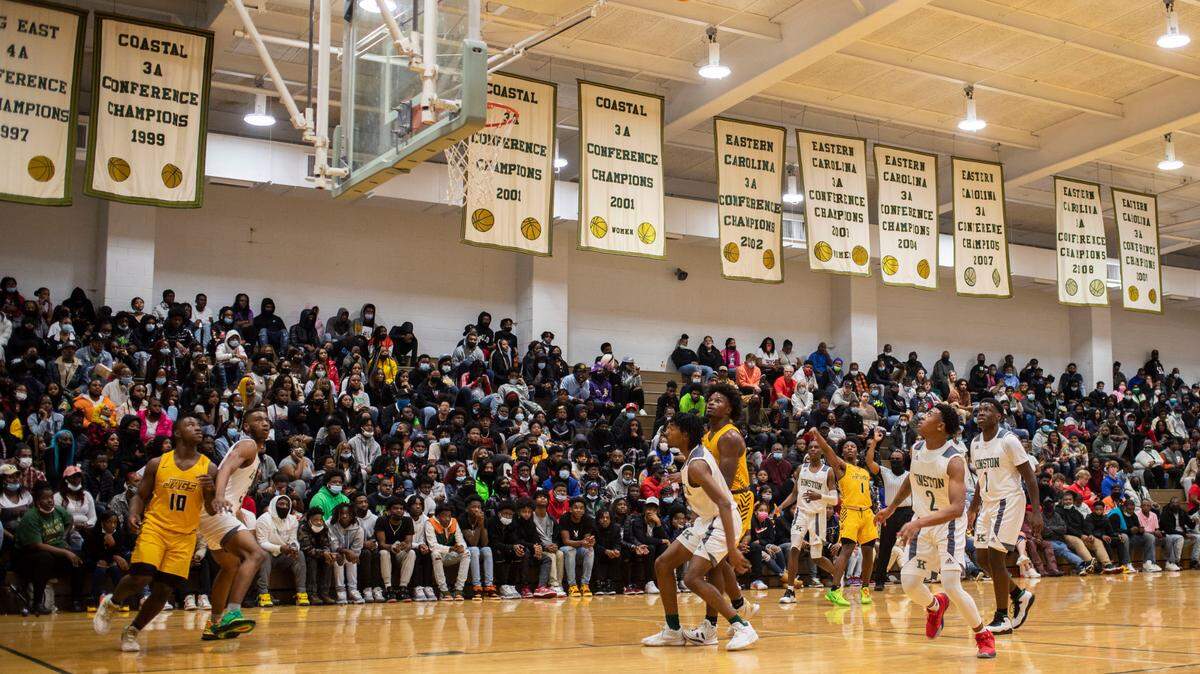
If there are high school equivalents, the gym at Kinston High is among them. It’s more than 40 years old, a no-frills low-rising rectangle with bleachers that creak with each step and, up above, rows of championship banners. The Vikings have won 11 state championships. Eighteen times, they’ve reached the state regionals, the North Carolina high school version of the Final Four. Think of a prominent college coach from the past 30 or 40 years and there’s a good chance he’s walked through these doors, drawn by the allure of Kinston’s next great hope.
During that span at least two constants have emerged around here: More and more, Kinston has come to be defined by loss — loss of jobs, of opportunities; loss of safety and economic security; of homes and dreams ruined by the unrelenting rise of the Neuse River whenever a hurricane or tropical storm spins over eastern North Carolina. The poverty rate in Kinston is now 27.8 percent, according to census data — more than double the state average of 12.9 percent. The state’s poorest census tract is here.
The other constant: The Vikings keep persevering, and often keep winning. They’ve won four state championships in the past decade and nowadays begin every season with the realistic hope of ending it with one last victory, another championship. Given the history, it’s fair to wonder if the victories inside these walls would be as routine if not for the defeats outside. If the triumphs on the court would exist without the obstacles off of it.
The true North Carolina basketball capital
There is a great resilience in Kinston. It is the largest and poorest city in Lenoir County, which sits in the middle of one of the poorest regions in the state. The story of Kinston is the story of Eastern North Carolina, and especially the part between I-95 and the coast. It’s a region that never had all that much to begin with, and one that has been in steady decline in recent decades, small-town empty Main Streets offering short drives through ghost towns.
Kinston used to be an important part of what was, for a long time, the state’s most important industry. Tobacco gave rise to the city. By the 1970s, a number of manufacturing and textiles factories had established Kinston as a place of commerce. Google most of those places now — the Albain Shirt Factory, for instance, or Frosty Morn Meats — and they show up only in obituaries.
A lot of what made Kinston is gone, but basketball remains. People hold onto the game here, perhaps because it’s one of the few things left from a different time. If North Carolina had a basketball capital, there’s a case to be made that it would not reside in Durham or Chapel Hill but here, in an old tobacco town that has long fought to reinvent itself. For a long time now, Kinston has been attempting to rebuild.
Like the town, the Vikings of 2022 are rebuilding, too. There is no Brandon Ingram on this team, or Reggie Bullock or Dontrez Styles, who last year was the latest in a long line of prominent Vikings and is now a freshman forward at UNC. This is a most atypical Kinston team because it lacks the kind of coveted prospect who draws national attention. Yet it’s also the most typical team possible, because it is filled with kids who don’t have a major scholarship offer waiting, ones who won’t be rescued by the promise of not-so-distant NBA riches.
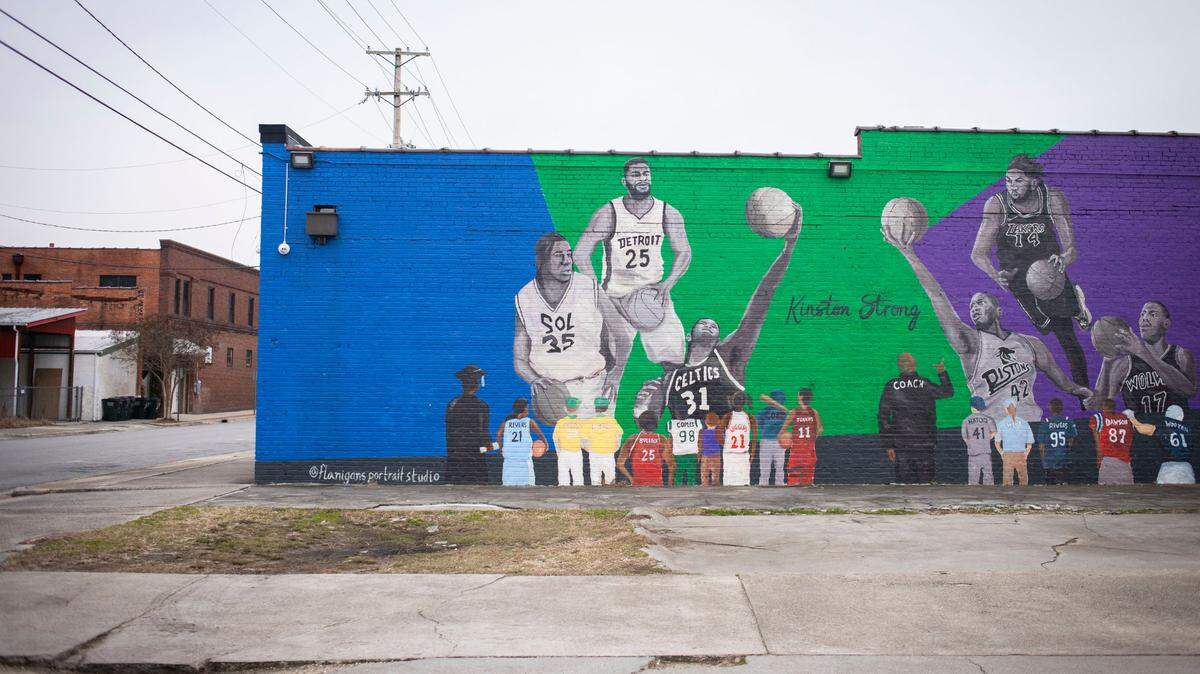
In 2015, Ingram led the Vikings to the last of four consecutive state championships. A year and a half later, the Los Angeles Lakers selected him second in the NBA Draft. ESPN sent a writer to Kinston for a long story about the town’s history of basketball success, about the secret behind Kinston’s decades-long record of sending kids to college and onto the pros.
After that story ran, filmmakers lined up with pitches to Perry Tyndall, the Vikings’ head coach. There were proposals for documentaries, for reality series. Tyndall says one involved Netflix.
He turned them all down.
“It’s not me,” Tyndall says, noting his disinclination for self-promotion or even social media. He has nothing to hide, he says, though he didn’t like the thought of cameras around. There’s enough drama in Kinston, enough his players face in their lives and around town, without the need for the Hollywood treatment. And yet he knows that his team has a story to tell, that in many ways that story intersects with “the realness” of life outside the gym. Now, amid an unending pandemic and the unsettled questions facing his city, is as good of a time as any to explore that story.
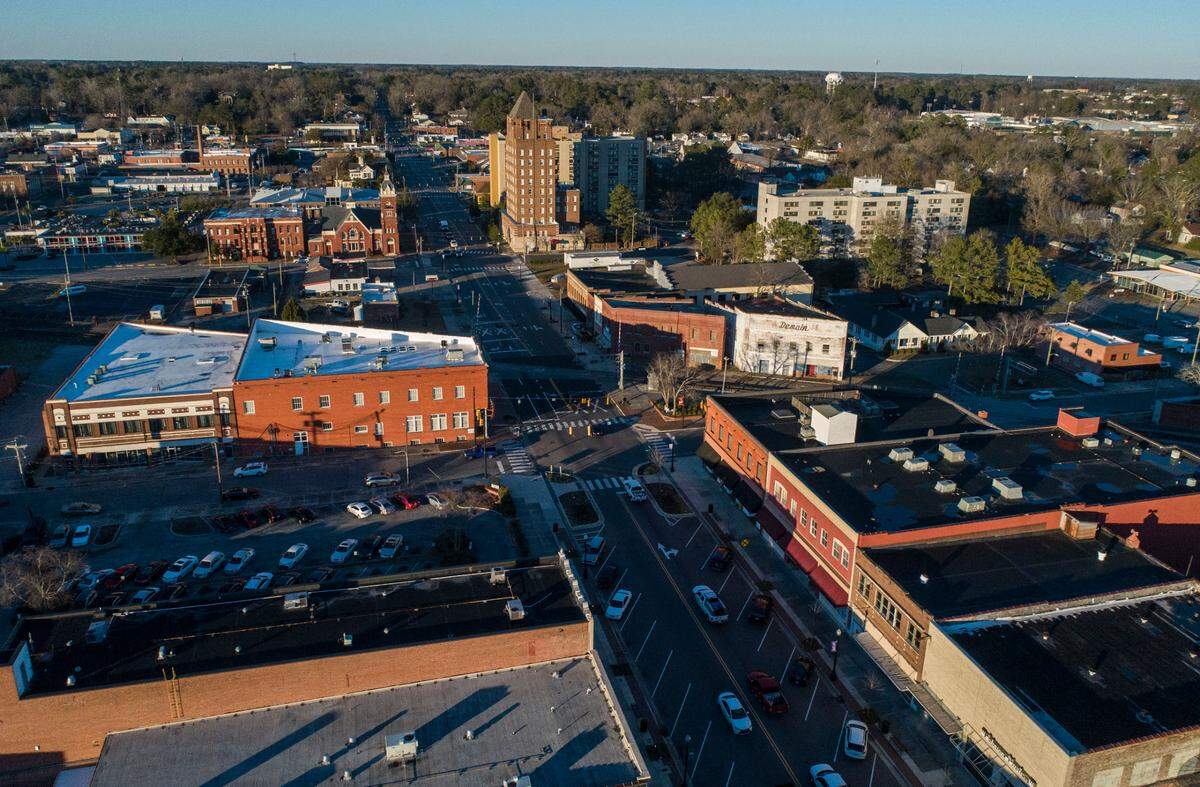
A witness to Kinston’s downturn
Tyndall has lived through the changes that have shaped Kinston into a different place than the one he grew up in. Now 42, he graduated from Kinston High and played basketball there before attending UNC-Chapel Hill, where he majored in sociology and wasn’t quite sure what he wanted to do. His older brother, Webb, walked onto the UNC basketball team and was part of the last one Dean Smith ever coached.
When Tyndall graduated from Kinston High in 1998, he says, things were just starting to take a more downward turn.
“You’re seeing some stuff coming back, but it hurt,” Tyndall says. “And you throw the floods in — it was just a perfect storm that hurt. And so I think the challenges my kids have are still from the economic end, the streets, what the streets say are important.
“You’ve got to be talking to these kids, like, a lot. Whereas, maybe years back you talked with a kid, you’d have to stay on some of them, but now you’ve got to really have those conversations. It’s a daily wrestle for some of them.
“Because I don’t want to talk bad about our school, I’m not, but I’m going to be realistic. There is a subculture within our school; you have the street and the gang guys very wrapped up in that stuff that are influencers in their own way. You’ve got to talk with the kids about good decisions.”
Tyndall is now the program’s caretaker; a coach, teacher and father rolled into one. He can spend as much time diagramming plays as reminding teenage boys of the weight of their decisions, and he often finds himself these days fighting the tide of change. Even in a basketball-crazed city, basketball doesn’t quite have the standing it used to have.
The Vikings’ gym nowadays is hardly ever as packed as it once was, for one. Kinston is shrinking, the population declining from around 25,000 in the late 1990s to a little less than 20,000 now. A ticket costs $8, and $8 here is less expendable than it is somewhere else. The games still feel like events, though, full gym or not, and on this night there’s special anticipation because it’s the first game of the 2021-22 season.
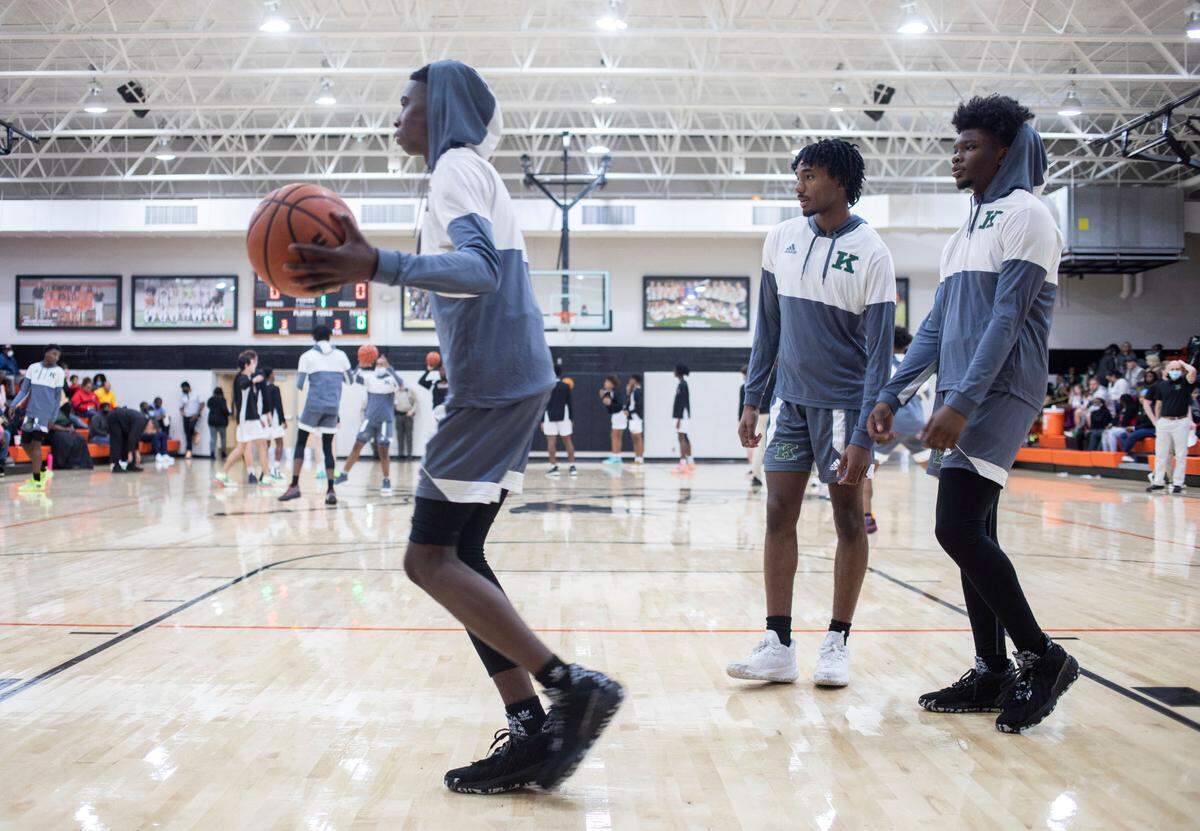
The occasion brings about a familiar ritual. A community, not as large as it once was but still strong, comes together once again. Van Simmons takes tickets near the door, same as he has for decades. JoAnn Ingram works the concession stand, same as she has for decades. Old-timers walk in and find their familiar places in the bleachers, same as some of them have for decades.
And here is the father and his son. The man’s name is Andre Harris, a lifelong Kinston resident, and his nephew, Ricardo Harris, is a senior on the Kinston basketball team. Andre’s son is in third grade. It’s about a half hour before tip-off and old friends reunite outside the gym while little kids chase each other. Andre walks his son down the hall, pointing and professing.
Photos on the wall are treasures
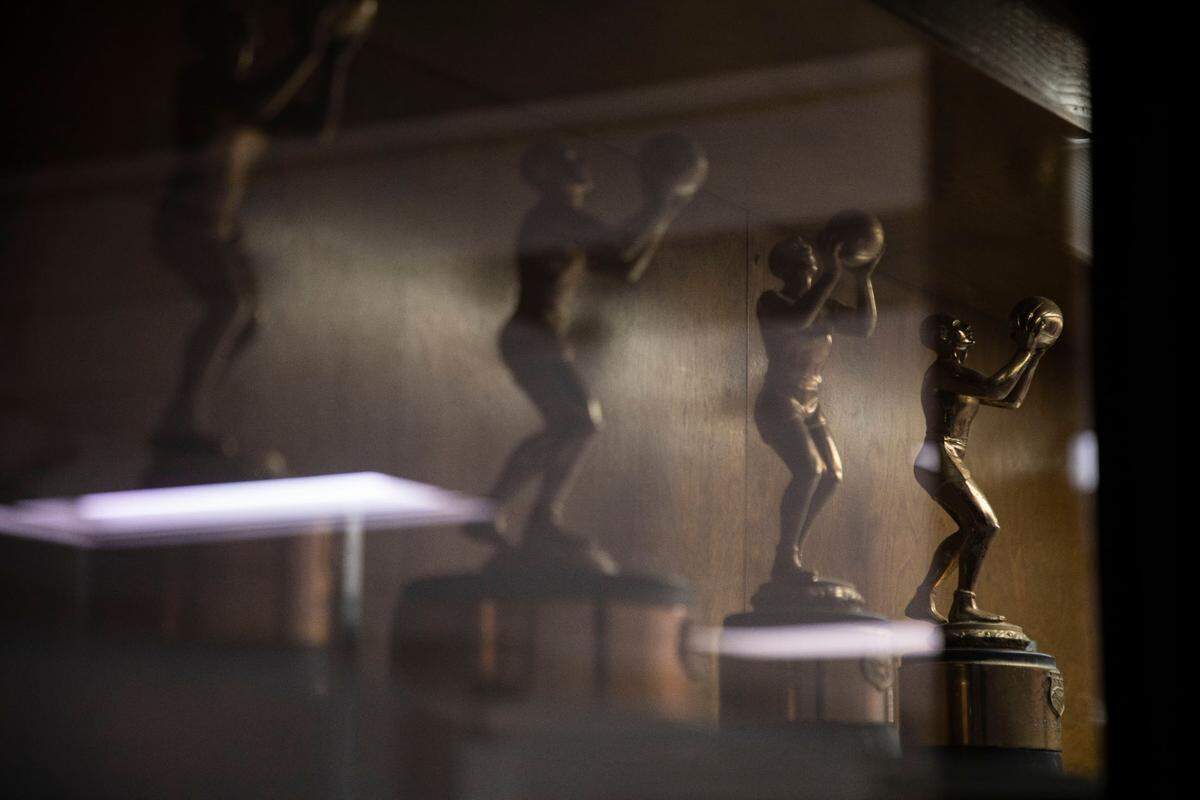
On the wall are large framed photographs, and in the photos are teams from Kinston’s past and those teams are arranged on the court of the Smith Center at UNC, or Reynolds Coliseum at N.C. State. The pictures are from regional or state championship games and now they line the wall like trophies, each team with its own story of overcoming.
Andre guides his son’s eyes to the tallest, lankiest player in one of the photos. It’s Brandon Ingram, who spent a season at Duke before being selected in the 2016 NBA Draft. Farther down Andre points up again, to a kid with a friendly smile that belies the toughness that carried him from one of the most challenged neighborhoods in the state.
“Reggie Bullock,” Andre tells his son, now looking up at both his father and the player on the wall.
Bullock played at UNC for three seasons under Roy Williams, and for about a decade now he has been in the NBA, where he has carved out his niche. He was a late first-round draft pick, the kind whose NBA success wasn’t a given, but there he is, still. His journey began in Kinston, in East Kinston, in particular, and few personify the characteristic grit of this place and its people more than him. Andre lingers in front of the photo, passing down knowledge to another generation.
He wants to give his son hope. To show him that Bullock and his teammates won a championship in jerseys with KINSTON across the chest; that winners come from here, despite anything else that suggests otherwise.
“I know that it’s hard, but it’s possible,” Andre says, still standing in the hall. “You know what I mean? So I just told him, like all the people that’s made it, let him know that you can also make it, too. As long as you put that work in, stay in school, you can do it, too.”
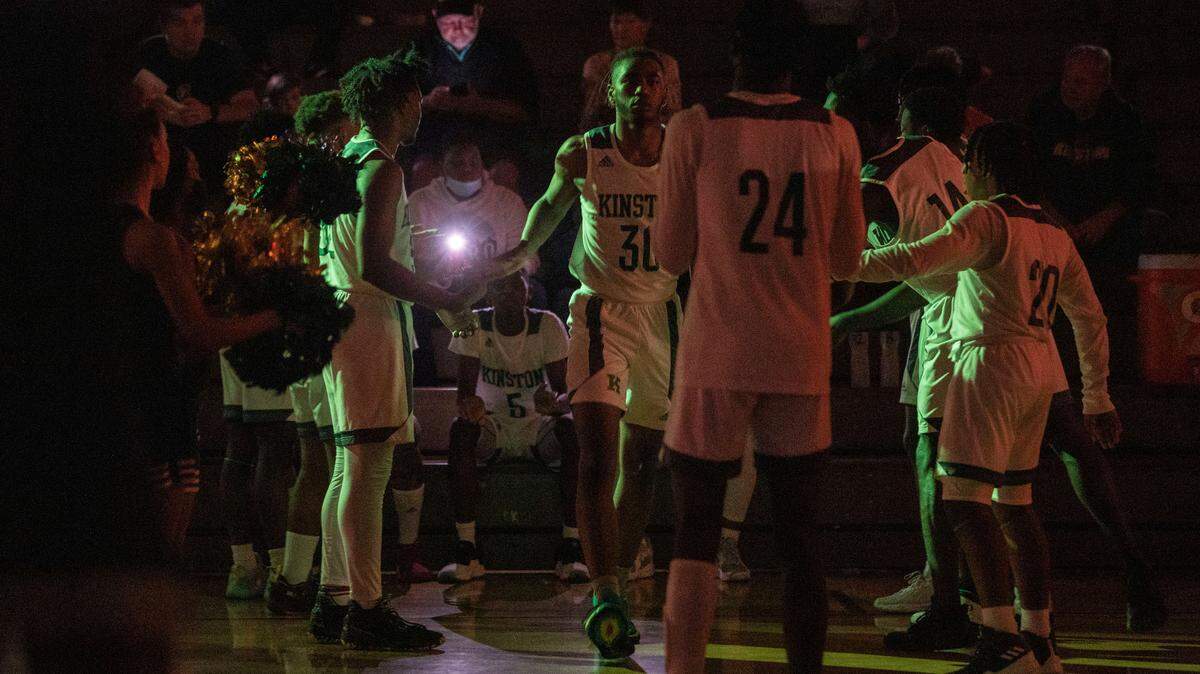
The hum of the crowd, slowly building, grows louder, the lines at the concession stand longer. It’s almost time. The bleachers fill in a little more and moments before the Vikings run onto the court for the first time this season, the beat of a hip-hop song thumps through the gym speakers, accompanied by a voice:
Ain’t this what they been waitin’ for? You ready?
The intro builds while 13 teenagers file out of their locker room and run into the gym, a moment of arrival. The song, “Dreams and Nightmares” by Meek Mill, blares overhead while the Vikings circle the court and begin their pregame warm-up. People stand in the bleachers, tapping or nodding to the music.
I used to pray for times like this, to rhyme like this
So I had to grind like that, to shine like this
Slowly, it fades into the background. Another season begins.
Testament to segregation and integration
A long time ago, Kinston high schoolers marched to protest inequality. It was 1951. The students attended Adkin High, the all-Black school just east of downtown. In the segregated South, Adkin was North Carolina’s first public high school east of Raleigh that served Black students. By the early 1950s, many of those students had had enough with the school’s inferior conditions, and they walked out of their classrooms and into the streets downtown.
The protest led to improvements — a new gym, for instance, and new labs — but in Kinston, the fight for educational equality, still ongoing, was only beginning. In 1989, AP English students at Kinston High detailed that fight in a book they produced about the history of their school. It sits now on an obscure shelf in the public library downtown, recounting times that are fading from memory:
“During the sixties, even up to the end of the decade, the vast majority of the adult white population in Kinston and Lenoir County vehemently opposed the integration of the school system, and various plans were devised, including ‘freedom of choice,’ to avoid total integration.
“The vast majority of the black population fully supported school integration. When the Kinston City Board of Education began making plans in 1968 and 1969 to fully integrate grades 7-12 in the Kinston system, a white Citizens Committee was formed to fight these plans ...”
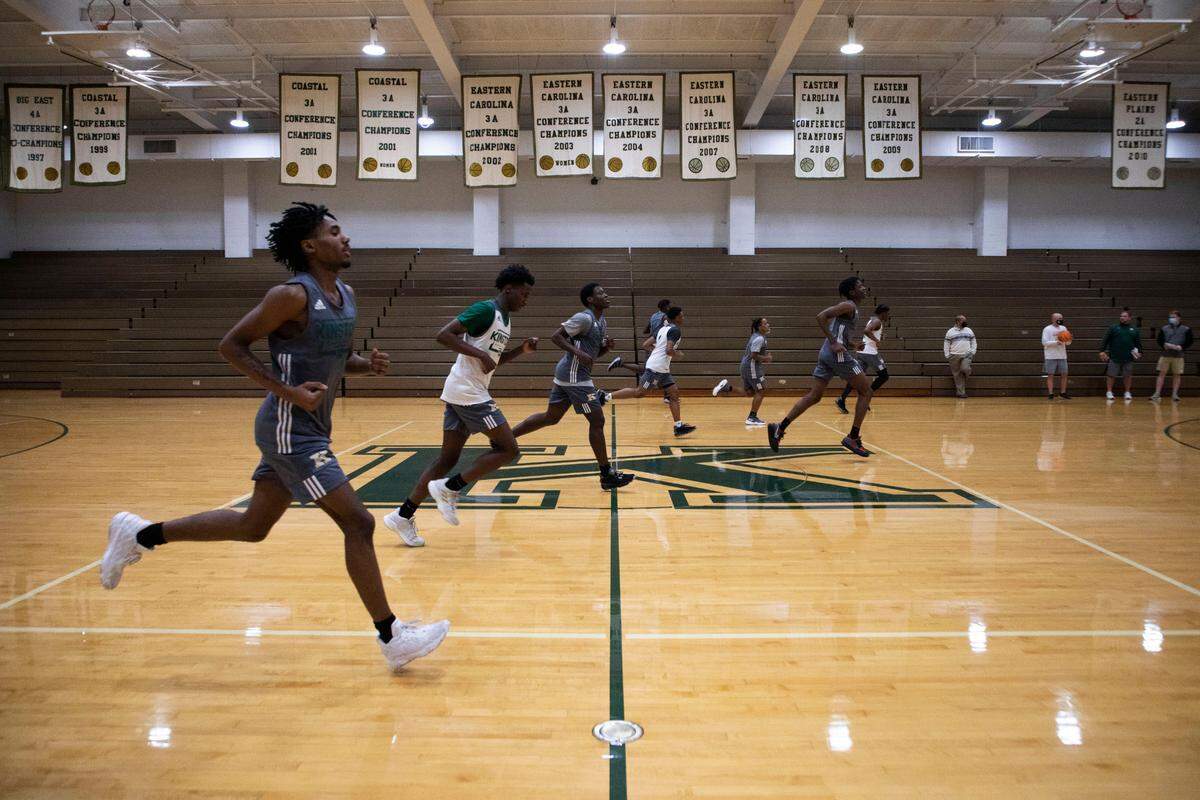
The current Kinston High opened in 1979, north of town off Highway 58. It became necessary after integration. When Adkin and Grainger High — the all-white predecessor to Kinston High — integrated, the split between white and Black students was “about 50-50,” says Norris Jones, a longtime Kinston resident who was part of the first class of Black students who went from Adkin to the newly formed Kinston High in 1971.
For a long time, Jones has attended just about every Kinston Vikings basketball game with his friend, Earl Koonce. They’re at a game now, sitting at the top of the bleachers, the sounds of high school basketball all around them: The chants of cheerleaders and the bursts of applause after a basket; the steady hum of buzzers and narration of the action over the public address system.
“Yep, we have seen some things over the years,” Koonce says slowly, in the way of a 70-year-old man, and those things include endless nights of packed houses and memorable Kinston victories, and even one night a skinny guard known then as Mike Jordan, from Laney High in Wilmington, played in this gym.
“He had about 39,” Koonce says.
“About 17 free throws,” Jones says, and if his memory is right Jordan didn’t hit the rim on any of them; only net as each attempt fell through.
Koonce and Jones have also bore witness to the changes in Kinston, not many of them good, and the shifting demographics of the high school. They lived through the days of school integration, when there was an attempt, at least, to give Black students a better chance than they’d had. Now Jones, 68, looks around the gym and it’s almost like he’s a teenager again, back at Adkin.
“Well, you can look around and tell,” he says. “We don’t have a lot of white kids in the school anymore.”
The demographics at Kinston High are reminiscent of a different time. In a city that is 66 percent Black, the school is about 90 percent Black. Its enrollment has also steadily shrunk, so much so that last year the North Carolina High School Athletic Association planned to move Kinston to the 1-A classification, reserved for the state’s smallest schools. Kinston administrators fought the decision and the NCHSAA relented, allowing the Vikings to remain in 2-A.
By comparison, when Jerry Stackhouse played here, Kinston was a 4-A school and in the same classification as the largest schools from Raleigh or Charlotte. The enrollment decline is told through the pictures on the wall outside the gym, where the classification of each Vikings championship team is listed on the photos: 4-A during Stackhouse’s day; 3-A when Reggie Bullock was here; 2-A when Brandon Ingram played, and now still, despite the efforts of the NCHSAA.
The smaller enrollment — now there’s fewer than 650 students at Kinston High — is reflective of the city’s overall population decline. It’s also representative of the reality that Kinston’s white parents are often sending their kids somewhere else — usually either to Parrott Academy or Bethel Christian, two private schools whose student bodies are overwhelmingly white.
While Parrott and Bethel boast on their websites about the quality of education they offer, there is little to brag about at Kinston High when it comes to academics. It’s a D school, according to the most recent grades from the North Carolina Department of Instruction, and it has been a D school since at least 2014. For six years it has not met its academic growth goals.
The hardship inside the school’s walls carry over outside of them. Or perhaps the opposite is more true — that students carry Kinston’s problems with them into the school. It has been 20 years now since the DuPont factory on the edge of town laid off 1,200 workers, and longer since the tobacco industry died out here and the manufacturing and textiles jobs left for somewhere else.
The economic blows coincided with historic flooding, which brought more hardship and need for recovery. In the King’s BBQ off Highway 70 near downtown, there’s a marker near the front that shows how high the water was when the Neuse poured inside — 28 inches during Hurricane Matthew in 2016; 24 inches during Floyd in 1999; 15 inches during Florence in 2018.
“Mother Nature wins battles,” the sign says. “We WIN wars.”
One city, two very different perspectives
It’s part of the identity of the city, that its people fight, that this place is #kinstontough, according to the hashtag sometimes attached to the end of tweets detailing Vikings’ basketball scores. And yet that toughness is constantly tested, whether by an under-performing school or the lack of opportunity or threats lurking to pull kids off their path.
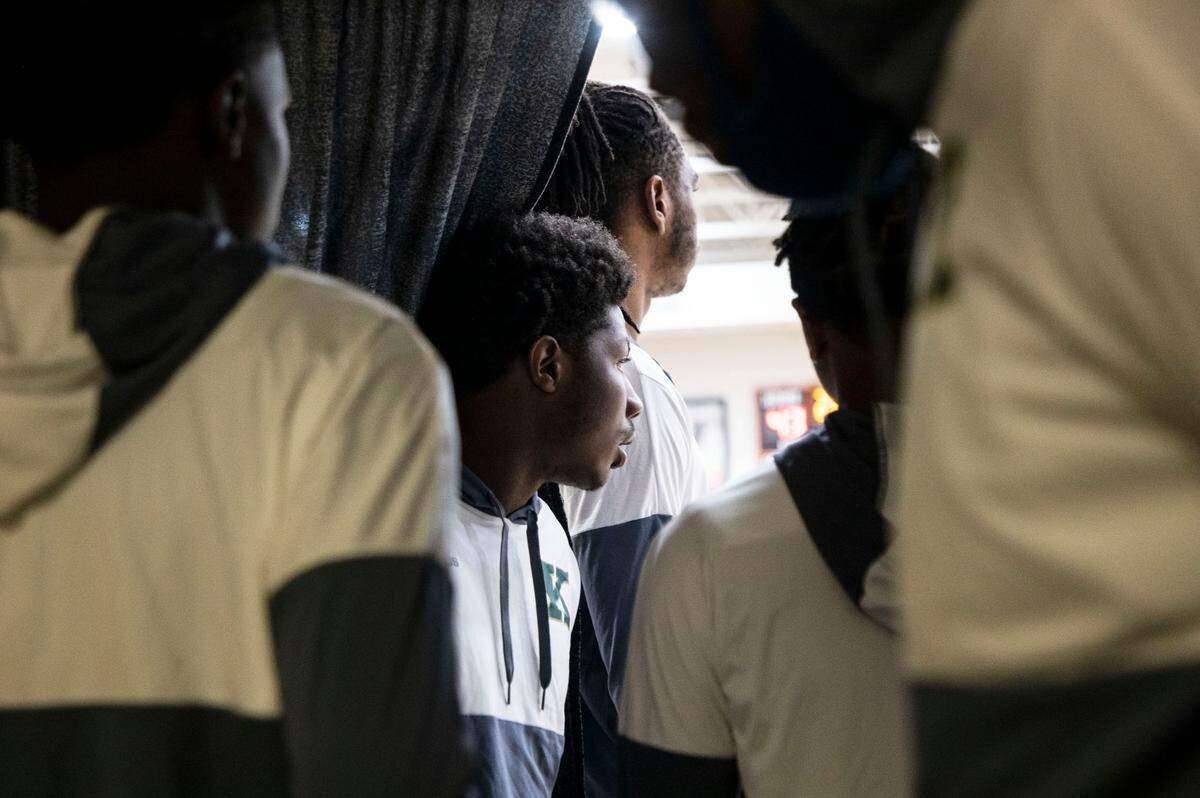
About 60 percent of Kinston High students are categorized as “economically disadvantaged,” according to the state. Almost all of them are eligible for free meals from the county. Some of them arrive at school from a part of East Kinston that a UNC-Chapel Hill study determined to be the most impoverished in the state.
There is the Kinston of the city’s tourism board, the promise of the few revitalized blocks that include the renowned restaurant The Chef and the Farmer and Mother Earth Brewing. Any hipster could go in there and think they’re in any number of similar places in Raleigh or Durham, before walking down the street to the Mother Earth Motor Lodge, a faux-retro funky take on a ‘60s roadside motel.
Then there’s the Kinston of the majority of downtown; the Kinston of empty storefronts and the blank movie theater marquee that offers shade but no showtimes, an endless landscape of vape shops and barred-window convenience stores a short drive away. There’s the Kinston that most of the Vikings experience, and some of them describe what it’s like to grow up here like this:
“A lot of challenges,” says Jyrah Canady, a senior whose father’s plight inspired his path into the National Honor Society. “A lot of peer pressure, and stuff like that, trying to knock you off your path. You’ve just got to stay strong, keep it moving.”
And what kind of peer pressure?
“Drugs. Violence. Gangs. Stuff like that,” Canady said.
A younger teammate, Nizavien Williams, describes “obstacles,” and by obstacles he means:
“Losing family.” He lost his father two years ago. “It’s a lot of stuff. Like shootings. Careless crimes. Loss of family members, or friends. Lots of stuff.”
“There’s definitely certain parts of Kinston where it’s not the best,” says Andre Patterson, a senior who moved back to the area from Northern Virginia, where his father lost his job after the pandemic set in.
“It’s tough, really,” says Jeremy Dixon, a senior whose performance this season could go a long way toward determining whether he earns a college scholarship. “It’s a lot of adversity. It’s just a lot. From school, to places people stay. It’s a lot of inner-city.
“So really, it kind of teaches you how to be tough. How to not go about things in a weak-minded way, I would say.”
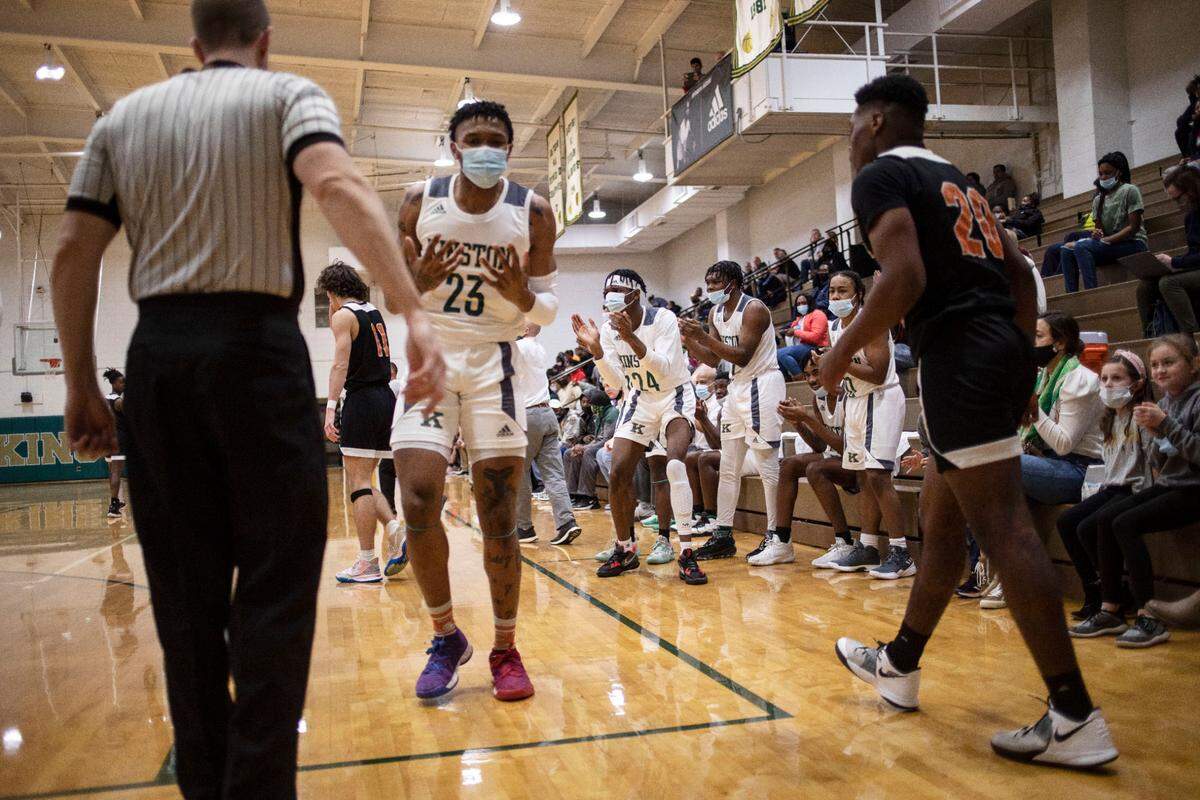
Among the Vikings’ public school opponents this season, Kinston High has the lowest performance grade and the highest percentage of economically disadvantaged students, according to the state. On the basketball court, though, it’s a different story. The season opener ends with a 51-point victory against Croatan High, from near the Outer Banks, and the next week the Vikings escape J.H. Rose High, in Greenville, with a five-point win. Afterward, the players pick up their head coach, Perry Tyndall, and parade him around the locker room on their shoulders while they celebrate.
‘Come out swinging’
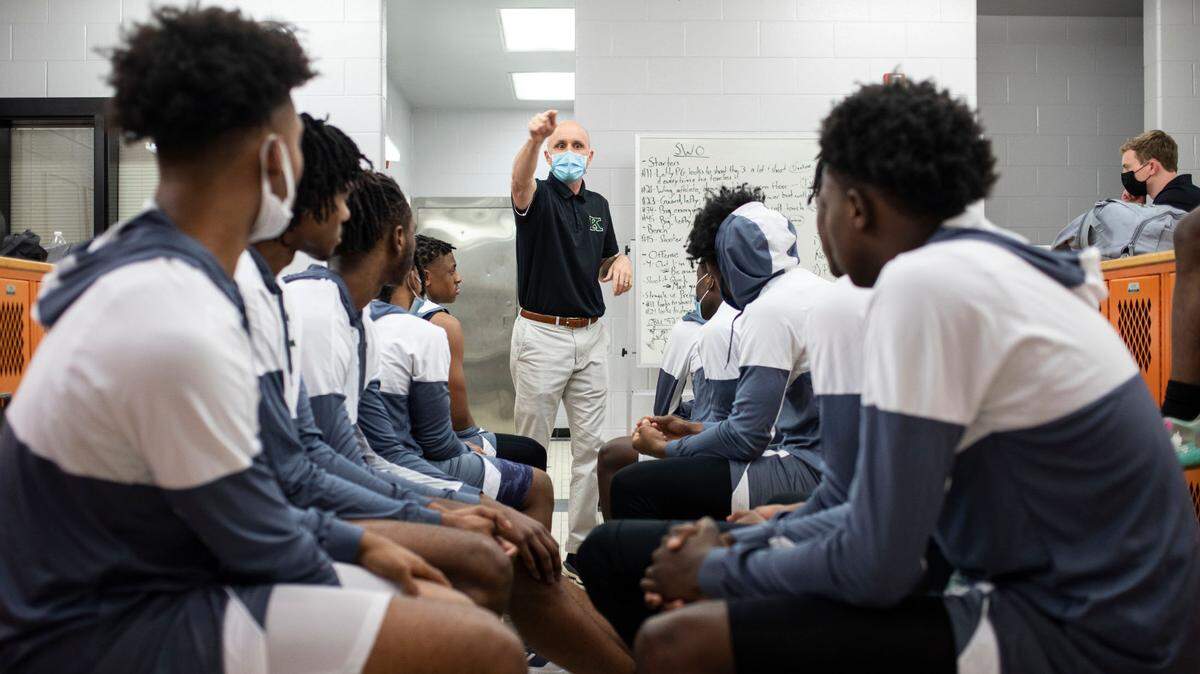
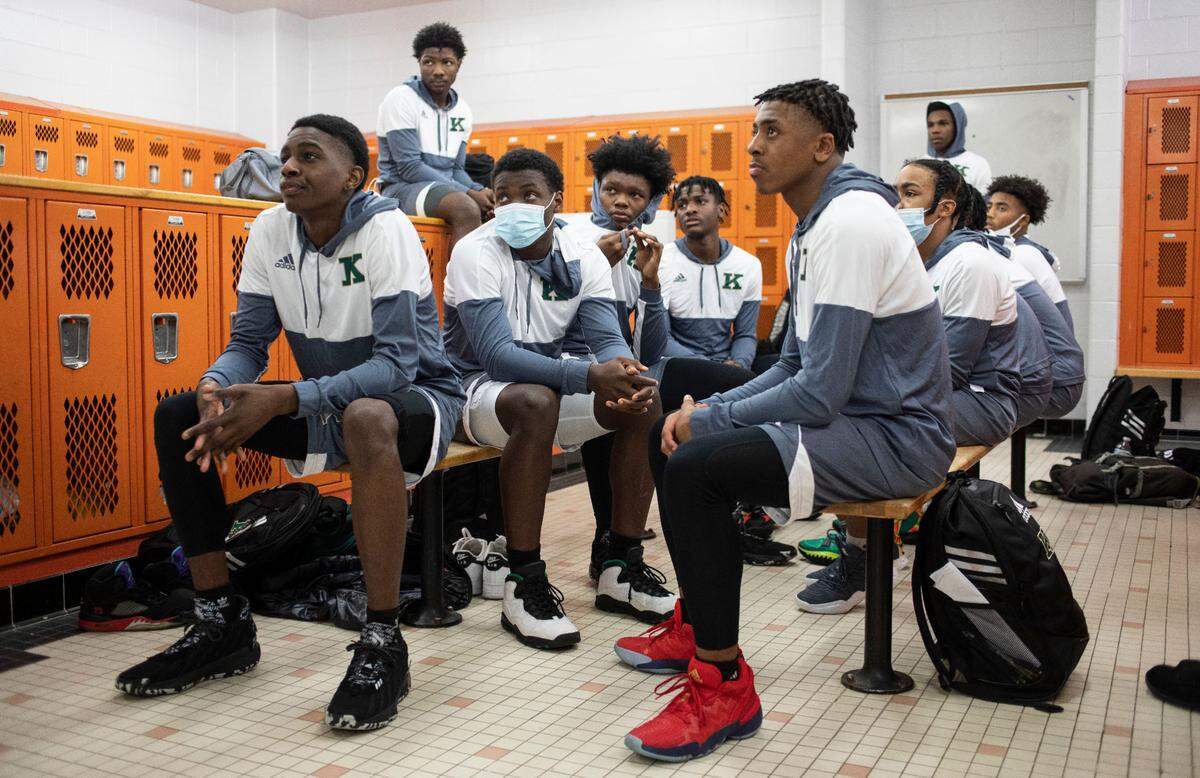
Now it’s the second week of January. Tyndall stands in front of his team in the Vikings’ locker room before a conference game against Wallace Rose-Hill. A sign behind him tells his guys to be the players the other team’s coach feared them to be. Tyndall picks up a marker, outlining plays on a whiteboard while his team sits in front of him, all eyes straight ahead.
“We got a lot of buttons we can push,” Tyndall says. “Be ready,” and then, after a few minutes of X’s and O’s: “The biggest thing: Go attack, guys. Go attack. Another statement game tonight. Solid team, respect them going out there.
“But hey, come out swinging! Come out swinging!”
He bows his head.
“Whose father?” he asks.
“Our father,” his players respond collectively, reciting the prayer, and before long they’re running onto the court again, Dreams and Nightmares playing overhead. Just outside the gym, Van Simmons is taking tickets at the door and Earl Koonce and Norris Jones are up against the wall in the bleachers, same as they’ve been for 40 years, and Tyndall huddles his guys together — no Ingram or Styles on this team, but no less heart or aspiration, either.
It’s a close game for a while, until the Vikings pull away in the fourth quarter for another double-digit victory. They’re 8-0 now, though inside and outside these walls their most challenging tests await.
This story was originally published January 16, 2022 at 6:00 AM with the headline "Inside NC’s poorest community lies its richest basketball where nightmares fight dreams."