Inside the case that could change NIL and high school sports in North Carolina
For $35, anyone who is so inclined can purchase a David Sanders Jr. “‘retro’ T-shirt” from davidsandersjrofficial.com, the website where one of the most coveted high school football prospects in the country sells his own gear. Sanders is a senior offensive lineman at Providence Day School in Charlotte, 6-foot-7 and 285 pounds, and many a top college program wanted him.
Does anybody want his merchandise? That’s more difficult to say. But a lot of it is for sale: the $35 T-shirts and others, celebrating his commitment to Tennessee, for $40. Hoodies that go for $65. Long-sleeve tees for $45, windbreakers for $90, hats and beanies for $30. Sanders has a women’s line, and one for kids, and his own logo — a slick circular monogram — and the spirit of an entrepreneur.
“I’m looking for partnerships and might be interested in working with you,” is the message at the bottom of his website, indicating he’s open for business. Sanders, who committed to Tennessee in August, is considered North Carolina’s best prospect in the class of 2025 and one of the very best in the nation. He is allowed to monetize his name, image and likeness because he attends a private school.
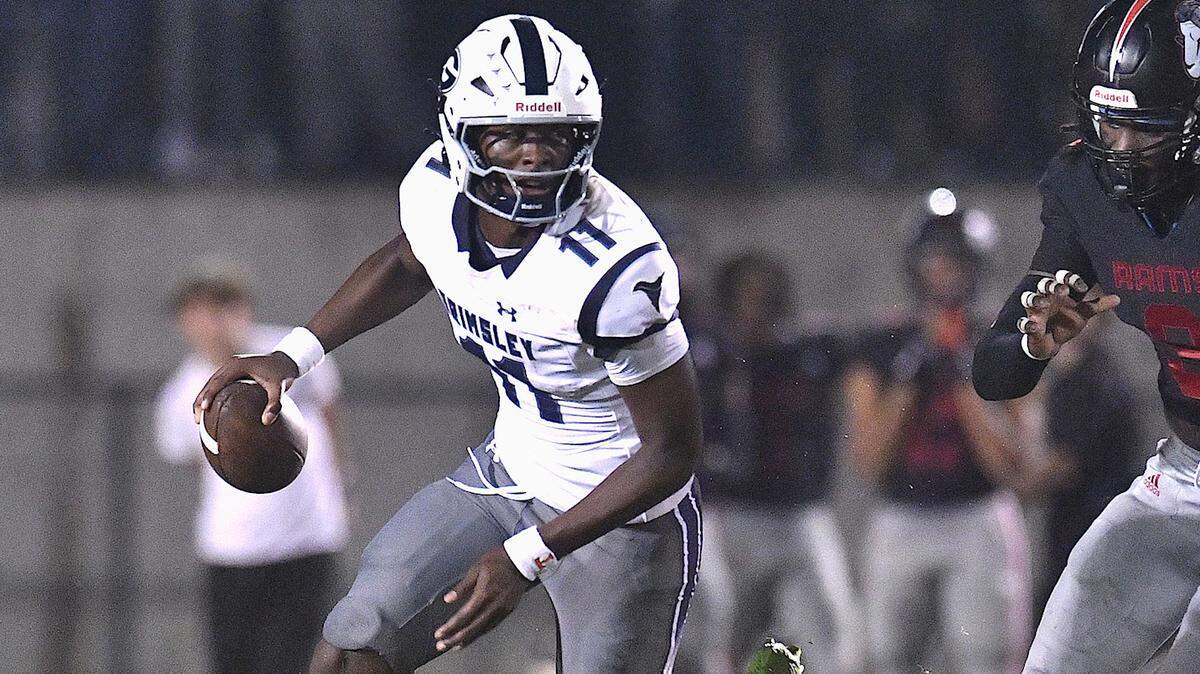
The most coveted prospect in North Carolina in the class of 2026, meanwhile, attends a public school. Because of that, Faizon Brandon, the 6-foot-4 junior quarterback at Grimsley High in Greensboro, cannot monetize his NIL. And that’s why Brandon’s mom, Rolanda, recently sued the state, which she claims is costing her son “a life-changing NIL opportunity.”
NIL arrives and a fog develops
In the summer of 2021, after years of courtroom defeats and futile attempts to fight the inevitable, the NCAA reluctantly allowed college athletes the right to monetize their NIL. Overnight, they could sign endorsement deals or get paid for autographs, or profit from their own business ventures. College athletics changed immediately, and drastically.
When the NCAA finally allowed NIL rights, it did so with little oversight or guardrails. There were (and are) rules that forbid transactional “pay-for-play” deals, but those rules have proven nearly impossible to enforce. An entire industry within an industry came into existence, one that now includes NIL collectives and agents and brand managers.
Three years later, the NIL industry is known for its lack of transparency. Though rumors and “reports” constantly abound surrounding this deal or that, it is often impossible to know how much players are getting paid, or even what sort of “work” they’re doing to earn the money. Still, NIL has allowed some athletes to make a lot of money — “life-changing money,” Armando Bacot, the former North Carolina basketball player, said in a podcast interview in July.
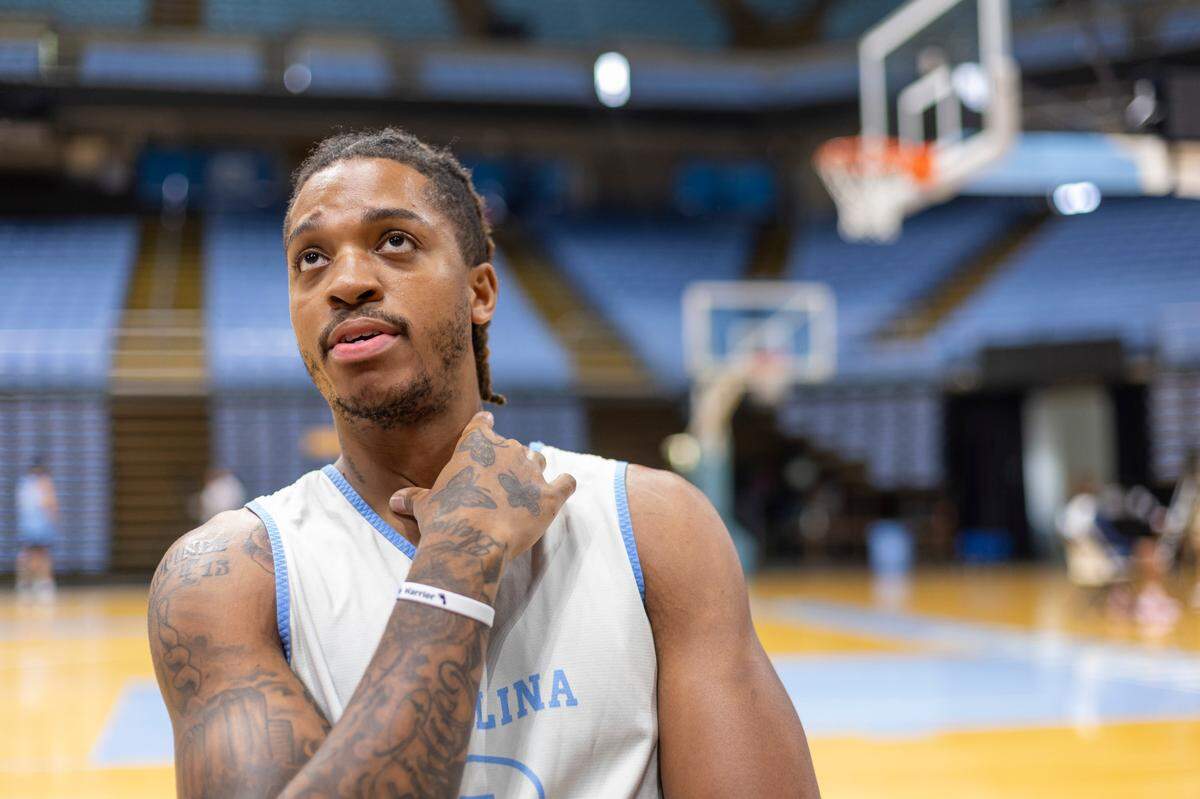
Bacot said in that interview that he earned more than $2 million in NIL money at UNC, where he became an early national face of a movement that at last allowed college athletes to capitalize on their value. In North Carolina, Faizon Brandon could play a similar role for public high school athletes who, for now, are not allowed to cash in on potential commercial opportunities.
Brandon’s lawsuit, filed Aug. 23 in Wake County Superior Court, names the state Board of Education and Department of Public Instruction as defendants. It targets North Carolina’s uneven handling of NIL rights in high school athletics — that athletes at private schools are allowed to engage in NIL opportunities, while those enrolled in public schools cannot.
There are separate rules because there are separate organizations that govern North Carolina high school sports. The North Carolina Independent Schools Athletic Association, which oversees most private schools, allows NIL deals. The North Carolina High School Athletic Association, a state-run entity in charge of public high school athletics, has not — though that could soon change.
During the state Board of Education’s next monthly meeting, set to begin Wednesday morning, members will hear a proposed rule change that would allow public high school athletes to enter into NIL deals, provided they don’t violate certain restrictions. Among those restrictions:
▪ That financial compensation isn’t based on athletic performance.
▪ That any NIL activity does not reference a school or conference.
▪ That athletes don’t appear in uniform or apparel of their school during any NIL activity.
High school athletes would also be prohibited from promoting products or businesses related to adult entertainment, alcohol, tobacco, cannabis, weapons, opioids or prescription drugs, or gambling. If the proposal is passed, though, it would not go into effect until the 2025-26 academic year. By then, Brandon’s opportunity might have already come and gone.
`Taking a stand’
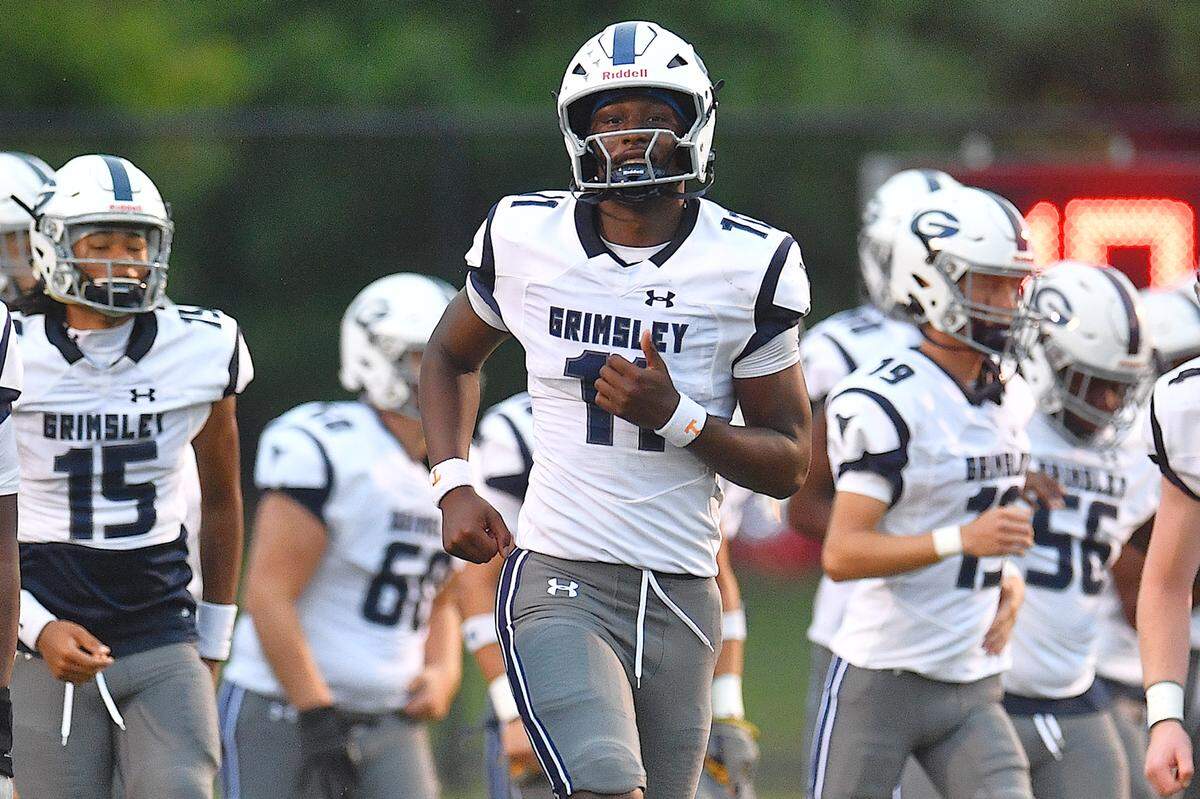
Last Friday night, Brandon and his teammates at Grimsley High traveled about two hours by bus to Rolesville High, northeast of Raleigh, for a game between two of the best high school football teams in the state. Pop-up thunderstorms delayed the Whirlies’ arrival, and pushed back the start of the game by about 45 minutes.
When it began, the scene was quintessential Friday Night Lights: bands blaring fight songs and catchy tunes; the cheerleaders’ chants rising above a festive din; a spirited student section behind the home sideline celebrating a return to school; people lined up at a concession stand for cheap candy and sodas — a Chick-fil-A sandwich, for $7, the most expensive offering on the menu.
And there on the field, when Grimsley had the ball, was Brandon. From the start, there was little mystery about why college coaches have made their pilgrimages to Greensboro in pursuit of him. At nearly 6-foot-4 and 200 pounds, the physical gifts are quickly evident. His passes fly out of his right hand in tight spirals, with a zip and touch unnatural of a player his age.
During Grimsley’s 35-20 victory, Brandon played with a poise and skill befitting of a heralded prospect. He is not only considered North Carolina’s best prospect in the class of 2026, but he’s the No. 1 prospect in the nation in his class, too, according to 247Sports.com. After throwing two long touchdown passes, he acknowledged it had been a whirlwind of a few days since his mom and their lawyers filed a lawsuit that had made national news.
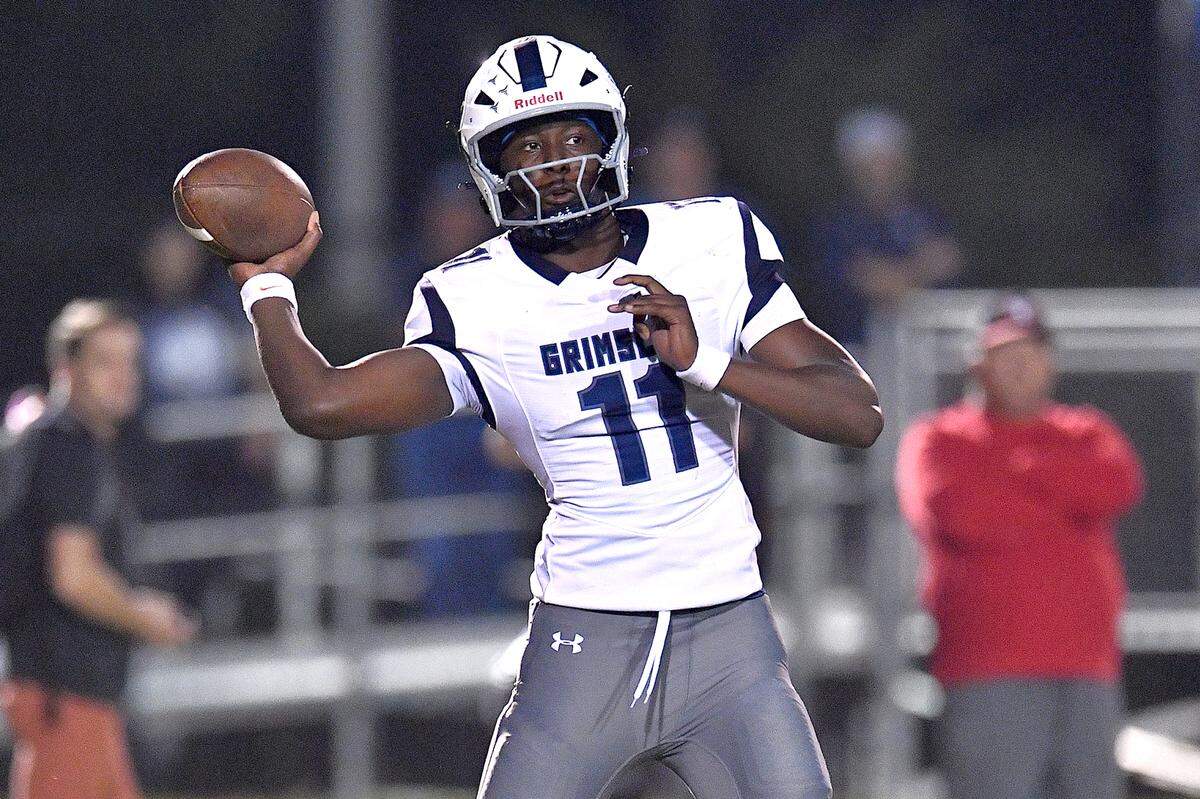
“To have other people in our state, like at private schools, be able to benefit off of NIL, and us not — I think it’s not really that fair,” Brandon said. “So that’s really the thing, taking a stand for that.”
Rolanda Brandon, who watched her son from the visiting side bleachers at Rolesville, declined comment about the lawsuit. So did Mike Ingersoll, one of the Brandons’ two attorneys from the Charlotte offices of Womble Bond Dickinson, which brought the family’s lawsuit. The conflict began late last April, when a “national trading card company,” as the lawsuit describes it, presented Brandon with an offer to sign “a certain volume” of memorabilia in exchange for compensation.
The money is not detailed in the lawsuit, other than the description that it could have been “life-changing,” for Brandon and his mom. Brandon said last Friday night that, had he been allowed to sign the deal, it would have had “a big effect,” financially, for him and his family. He said, too, the money would have allowed him to support his teammates — including taking his offensive line “out to eat after every win.”
“I was presented with a deal,” he said, “but then I couldn’t really do it.
“But I know if I was at a private school, I could.”
A temporary policy
In the months after the trading card company presented Brandon with the deal he couldn’t sign, his mom and an attorney requested a meeting with the State Board of Education about Brandon’s NIL opportunity. The board in June adopted a policy that prohibited high school athletes from entering into NIL deals during the 2024-25 school year.
That policy, though, was always meant to be temporary, according to a letter the board’s general counsel, Allison Schafer, sent to Brandon’s lawyer in early July. The letter is included as an exhibit in the lawsuit.
In her letter, Schafer wrote how NIL had been on the board’s agenda “four times since January 4 and the [State Board of Education] has provided significant opportunity for input from the public. During that time, the SBE received no public comments requesting that the proposed rule be changed to allow middle and high school students to receive compensation for their NIL.”
According to the letter, the board “now must go through permanent rulemaking on the NIL question. This is a cumbersome and lengthy legislatively required process that takes approximately one year.”
The lawsuit, which claims that the State Board of Education “disregarded limitations on its rulemaking authority imposed by the General Assembly,” warns that Brandon could lose the chance to capitalize on a lucrative opportunity. Even if the board allows athletes to enter into NIL agreements for the 2025-26 school year — or if Brandon transfers to a private school — he still would have missed out on the majority of the term of the original offer.
“This is time [Brandon] can never recover,” his lawyers wrote in their filing.
Different rules, same state
A little more than three months after he received the NIL offer at the center of his lawsuit, Brandon committed to play at Tennessee. College recruiting is always fluid, and arguably more so in these free-wheeling days of athlete compensation, but if everything stands the way it appears now, Brandon and David Sanders Jr. would be college teammates in Knoxville as early as 2026.
Brandon and Sanders have come to know each other through the community that enjoins elite high school prospects, especially ones bound for the same college, and Brandon said they’d been in touch about their disparate NIL situations. Sanders can hawk all the merchandise he wants, and solicit other offers, while Brandon and public school athletes cannot — at least not yet.
According to Brandon’s lawyers, North Carolina is the only state with different NIL rules for public and private high school athletes. Thirty-eight states, and Washington, D.C., allow their high school athletes the right to monetize their NIL, though there can be slight differences in allowances from state to state.
Brandon’s case has put a renewed spotlight on the broader conversation surrounding NIL and high school athletics and how they should coexist. For one, high school sports — especially public high school sports — are not a money-maker, and offer little inherent commercial value. The overwhelming majority of high school athletes would not command interest for their NIL.
In rare cases, though, a high school athlete could generate legitimate commercial interest. Brandon, as the nation’s top football prospect in the junior class, is among them. Cooper Flagg, the incoming Duke freshman basketball player, is another who’d generated value (and no shortage of attention) during his high school years.
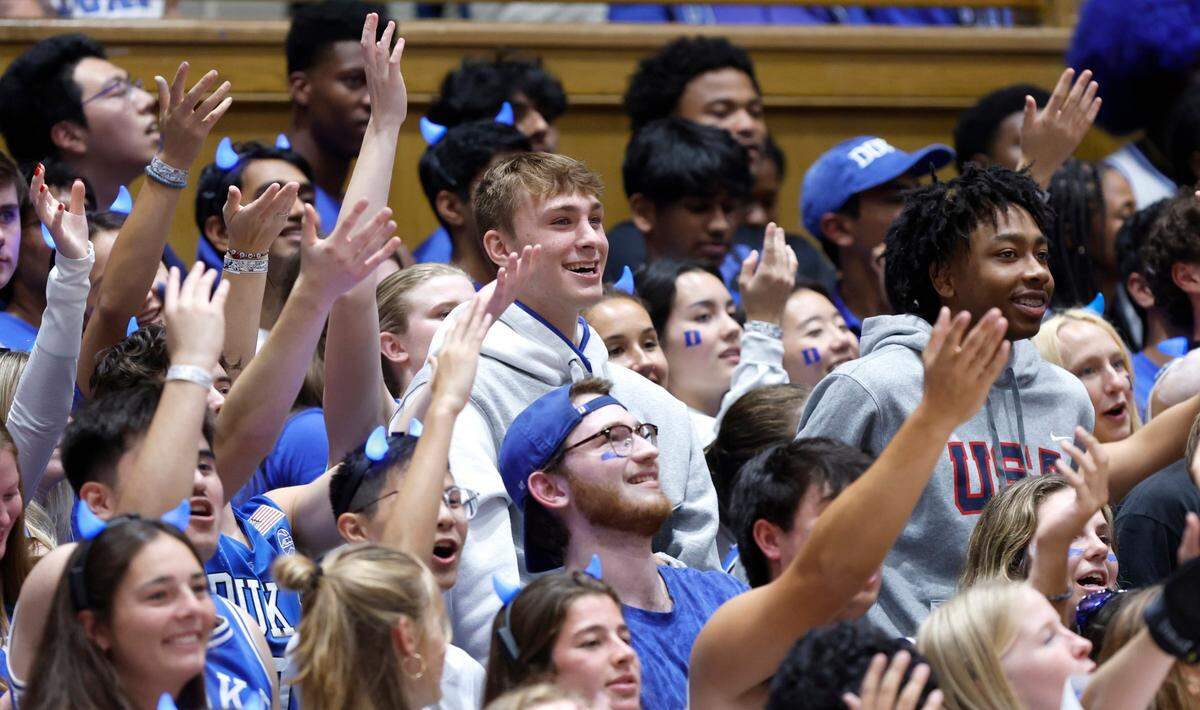
Even still, there’s the question of unintended consequences and how NIL could change high school athletics. During the past three years, NIL — along with the prominence of the transfer portal — has reshaped college sports, which are now defined by a kind of unrestricted free agency. In Brandon’s case, at least, he decided to remain in a public high school, despite the lure of cashing in had he left Grimsley and transferred to a private school.
Darryl Brown, the Grimsley head football coach, fears such a decision will become less common if North Carolina continues to restrict public school athletes’ ability to monetize their NIL. During an interview after his team’s victory at Rolesville, Brown said he supports Brandon’s lawsuit “100 percent.”
“If private schools are going to have it in this state, then public schools need to have it, too,” he said. “You can’t have it one way and not together. Basically, what you’re telling the public school athlete is they’re not as worthy ...
“My fear is because — I mean, I’ve been teaching public school, coaching, for 25 years, and my family has been educators. And my worry is that it’s going to ruin public school athletics and eventually, public school education. Because kids are going to leave — kids are going to leave for private school, kids are going to leave for other states.”
Brown had just delivered a postgame victory speech that was loud enough to hear through the walls of the visiting locker room at Rolesville, and of the NIL issue he spoke with the kind of tone and passion endemic to a lot of high school football coaches. He’s the only one in the country, though, with the No. 1 prospect in the class of 2026.
He described Brandon as “a super humble kid” and “extremely coachable” and, in another not-so-distant time, Brown could’ve counted on coaching his star player through his senior season. Now he was thankful Brandon hadn’t left already to pursue a lucrative business opportunity.
“Faizon could have left,” Brown said. “Faizon doesn’t want to leave, right? Like, he loves Grimsley, loves his teammates, loves our football program, loves his school, loves his classmates, loves his teachers. The easy thing for him to do is what some other kids have done — to pack up and head on.
“But he didn’t. In my opinion, he’s taking a stand that he may never benefit from.
“I don’t know. I hope he can, but he’s trying to make it right for others that follow.”
The News & Observer’s Inside Look takes readers behind the scenes to illuminate the people and places in our community.
This story was originally published September 4, 2024 at 5:30 AM with the headline "Inside the case that could change NIL and high school sports in North Carolina."