49ers rushing attack was a ‘buzzsaw’ in Panthers loss. It also exposed a critical flaw
READ MORE
Panthers at 49ers
Expanded coverage of Carolina’s Week 8 loss at San Francisco
Expand All
With rushing lanes that wide, all it takes is one capable running back to do some serious damage.
But when a team has three?
Well, that’s how you end up with the sort of ghastly performance the Carolina Panthers put forth Sunday.
Now, that the Panthers struggled defending the run should come as no surprise to anyone that watches the team regularly. Coming into its game against the undefeated San Francisco 49ers, Carolina already had one of the league’s worse rushing defenses, allowing 119 yards per game. Although the team’s offseason switch from a 4-3 front to a 3-4 base has certainly injected some much-needed speed to a depleted pass rush, that move hasn’t yielded the same satisfying results defending the run.
What San Francisco did to Carolina at Levi’s Stadium, though, confirms that Carolina’s run defense isn’t just a sore spot for this year’s team:
It potentially is a fatal flaw.
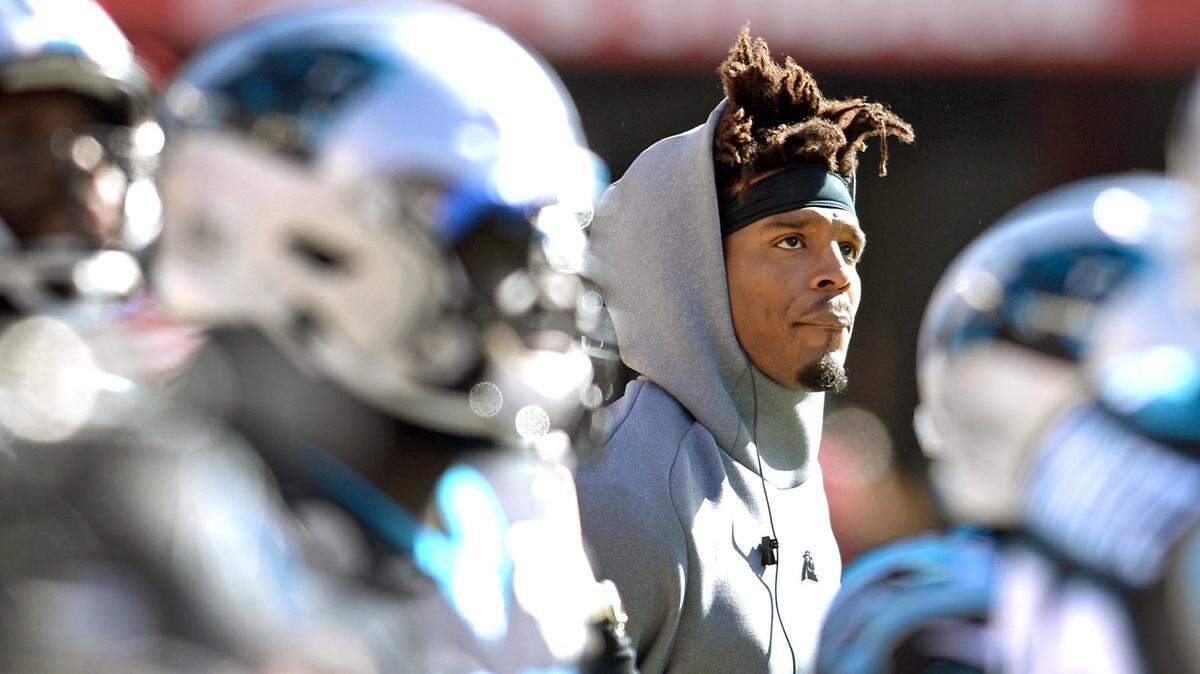
“We ran into a little bit of a buzzsaw,” coach Ron Rivera said. “There are some things that happened on the tape that we have to get corrected, and that’s the truth of the matter.
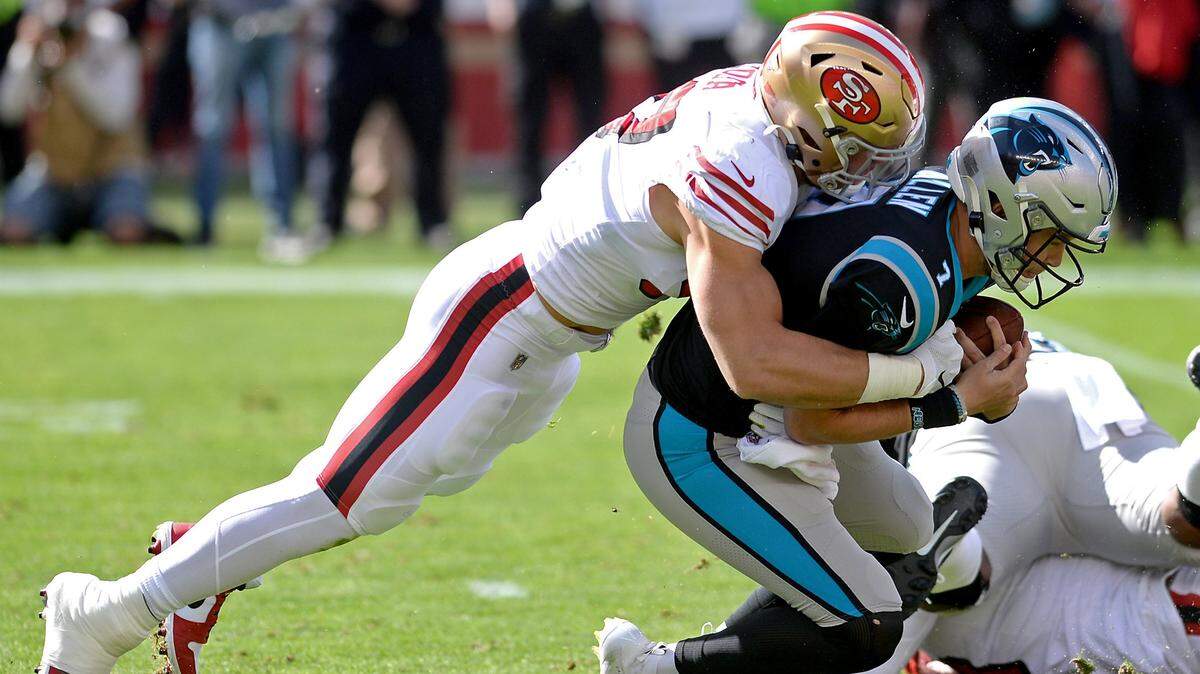
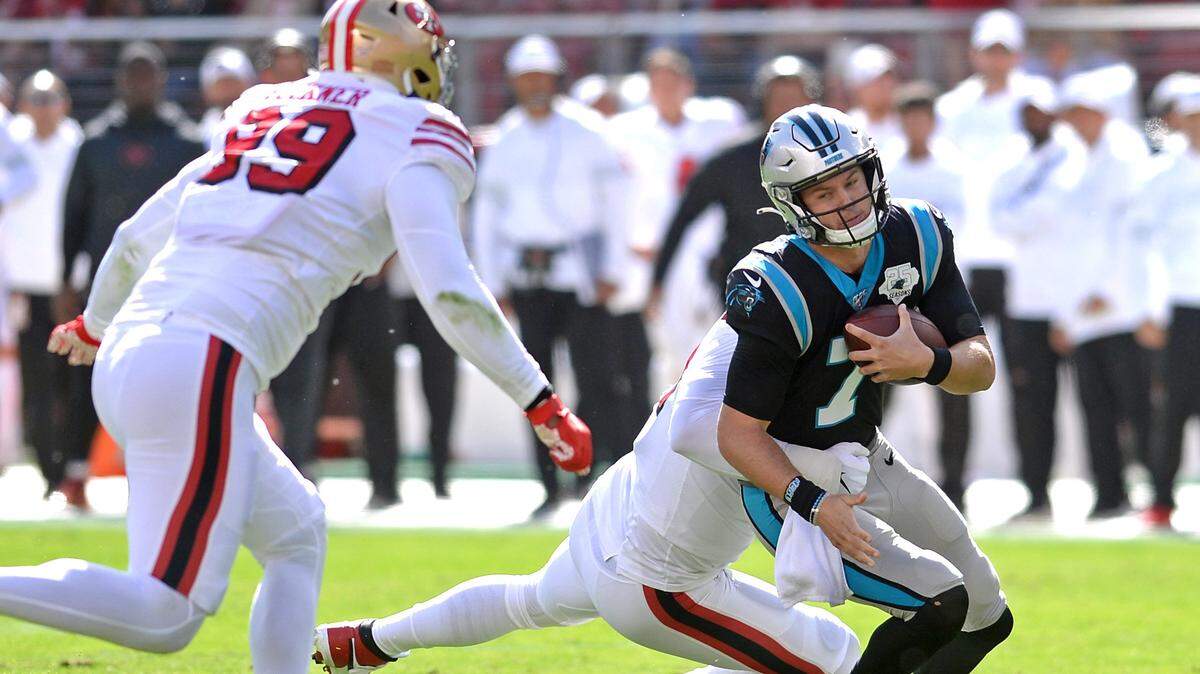
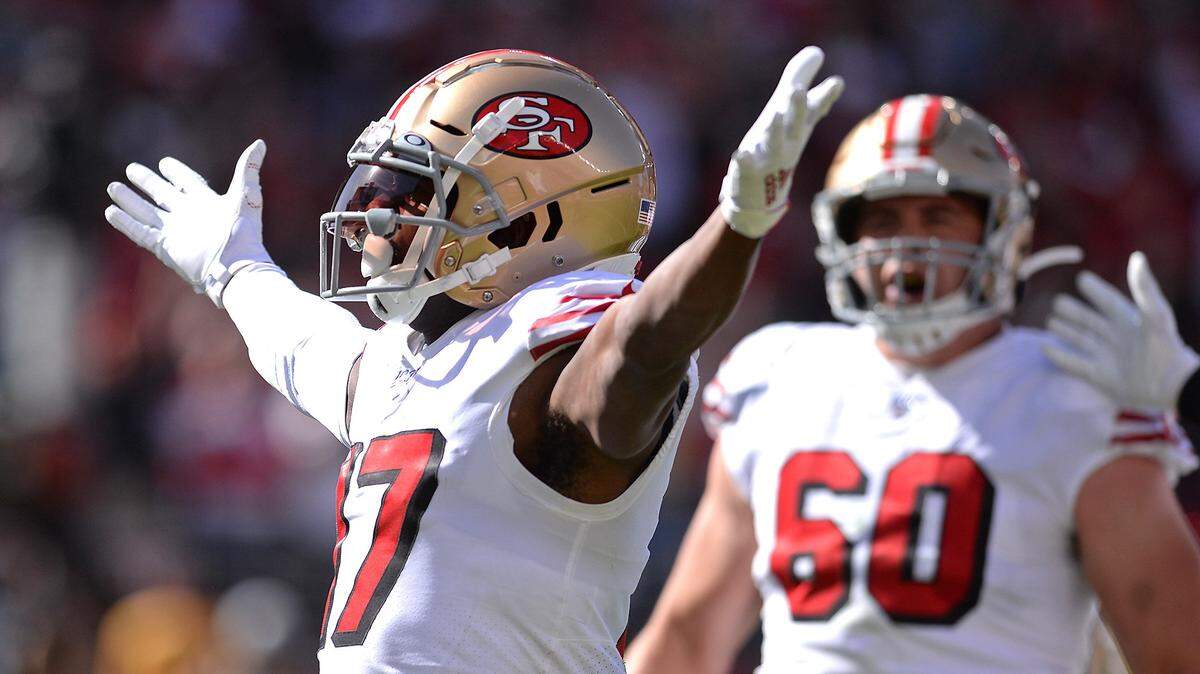
The Panthers allowed 232 rushing yards to the 49ers, the most in any game in franchise history. Like, ever. In 25 years, with all the Alvin Kamaras and Ricky Williams of the world, no team has ever eviscerated the Panthers like San Francisco did.
And it’s not as if the Panthers hadn’t been preparing for the 49ers’ rushing offense all week. Every single media availability this week, every single locker room conversation, every single press conference with Rivera touched on San Francisco’s offensive scheme.
With former Atlanta Falcons offensive coordinator Kyle Shanahan calling plays, the 49ers have developed a diverse misdirection-based rushing game. Before seemingly every play — and upon further review, quite possibly literally every play — the 49ers had some sort of pre-snap movement: Motions, reverses, motions where a player would scurry around and end up right back where he started.
There’s a reason for that — it helps identify what blitzes and plays the Panthers are running. And if you know where the defense is lined up, you have a much better idea of how to go where they’re not.
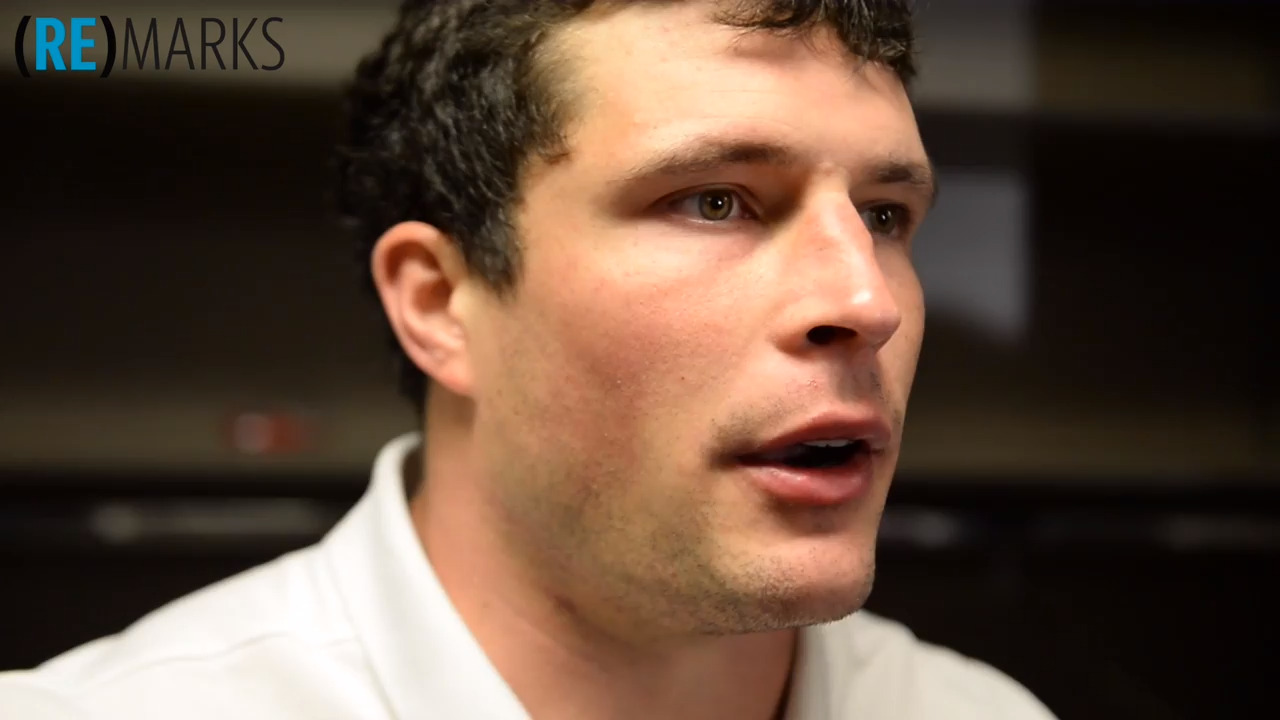
“The more you move on offense, the more it gives a defense to look at,” linebacker Luke Kuechly said. “We do a good job every week of practicing, and the coaches do a good job of giving us looks. We just have to do a better job of seeing it, talking about it and reacting in game.”
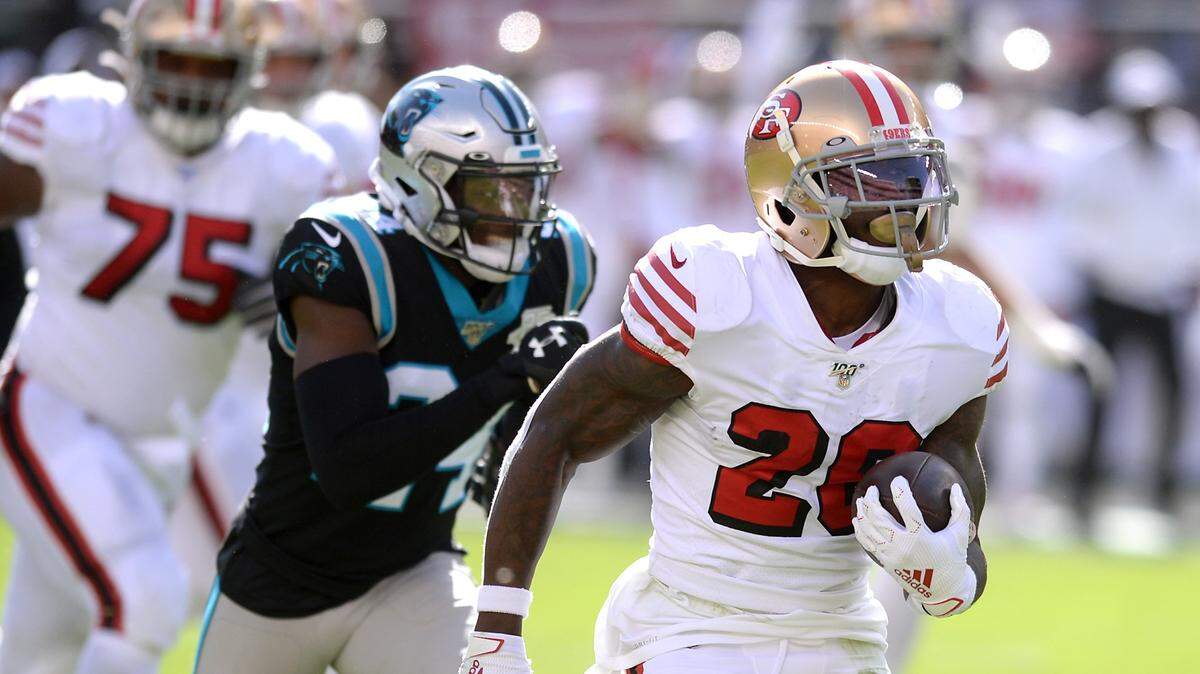
Early on, after ripping off runs of 11, 11 and 22 yards all in a row on their first offensive possession, it was clear that the 49ers would have success on the ground. Just ... maybe not quite to the extent they actually did.
Much of that damage came via Tevin Coleman, another ex-Falcon familiar with this Panthers defense. He finished the day with 105 rushing yards and three touchdowns, but on just 11 touches.
“It was real open,” Coleman said. “The guys on the O-line blocked well, tight ends, receivers, they blocked well and they opened up gaps for me.”
So what exactly went wrong for the Panthers? Why did they struggle so much to defend something they had so clearly planned for?
Two words: Gap. Integrity.
“We were getting out of our creases, and they were blocking us out of our creases, and it’s just one of those things,” Rivera said.
Essentially, with all the fancy-schmancy misdirection the 49ers rely on, its up to defenders to not get fooled by the moving parts. They stick in specific lanes — openings between a tackle and a guard, for example, for a guard and the center — and attack them fiercely.
That, in theory, means there aren’t wide-open running lanes for opposing offenses to exploit.
But if you get moved out of those gaps ...
“We were not reading our keys, and we got hurt on that,” defensive end/outside linebacker Mario Addison said. “Next time we’ve got to play with more discipline.”
It wasn’t just as if the 49ers’ stats were inflated by a handful of long runs, although those certainly came into play. Coleman broke a 48-yarder immediately after the Panthers scored 10 points unanswered that stifled all of Carolina’s momentum. Backup Raheem Mostert had a 41-yard scamper late that moved the needle from excruciating to embarrassing. Even Deebo Samuel, a rookie wide receiver, had a 20-yard winding rush on a shovel pass that went for a score.
“They did a great job. Just left and right,” safety Tre Boston said. “We knew what was coming at us, but they found ways to tweak it even more here and there. It was flashy. It was flashy stuff that got the job done.”
The tough thing about getting beat the way the Panthers did, when a team did exactly what it wanted to you, is that there isn’t a clear or obvious remedy. Gap discipline is a hallmark of this Panthers defense. It’s in their scheme, but also in their “DNA,” as players so often refer to it.
That that was so clearly missing Sunday is alarming. And if it doesn’t course-correct, it’s a serious enough problem that it could jeopardize the team moving forward.
The Panthers will have a chance to get right back at home next Sunday against Tennessee, but for now, there isn’t much to do about this dismal rushing performance.
Carolina knew that coming in. It was validated Sunday afternoon.
And moving forward, it’ll be one of the most important units for Rivera and defensive coordinator Eric Washington to correct.
“That’s the thing you have to be able to do,” Rivera said. “If you can slow their run game down, then it changes the whole thing.
“If not, if they’re running the ball effectively, you’ve gotta deal with everything they have, and that’s exactly what we got today.”
This story was originally published October 27, 2019 at 9:47 PM.