As PNC Arena development plans unfold, could West Raleigh be next ‘it’ destination?
READ MORE
PNC Arena & West Raleigh Development Plans
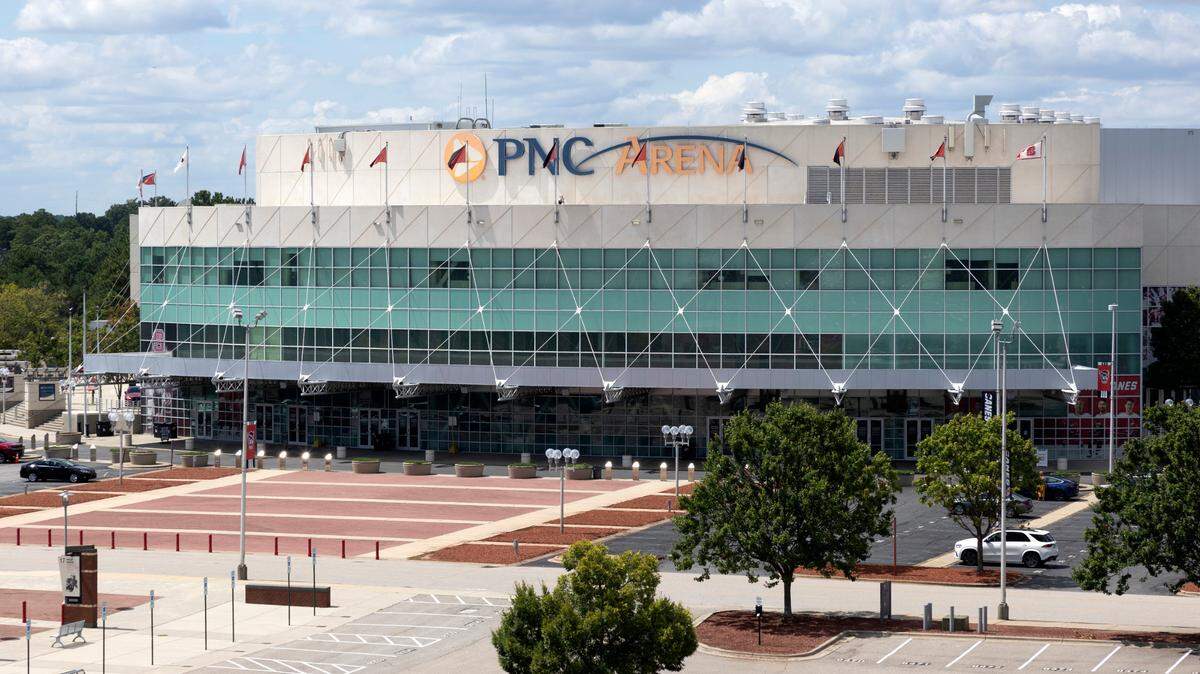
Carolina Hurricanes owner Tom Dundon has a vision for both inside and outside PNC Arena that could entice fans to come early for games and stay after they’re over. Here is The News & Observer’s coverage of arena renovations and development plans for west Raleigh.
Expand All
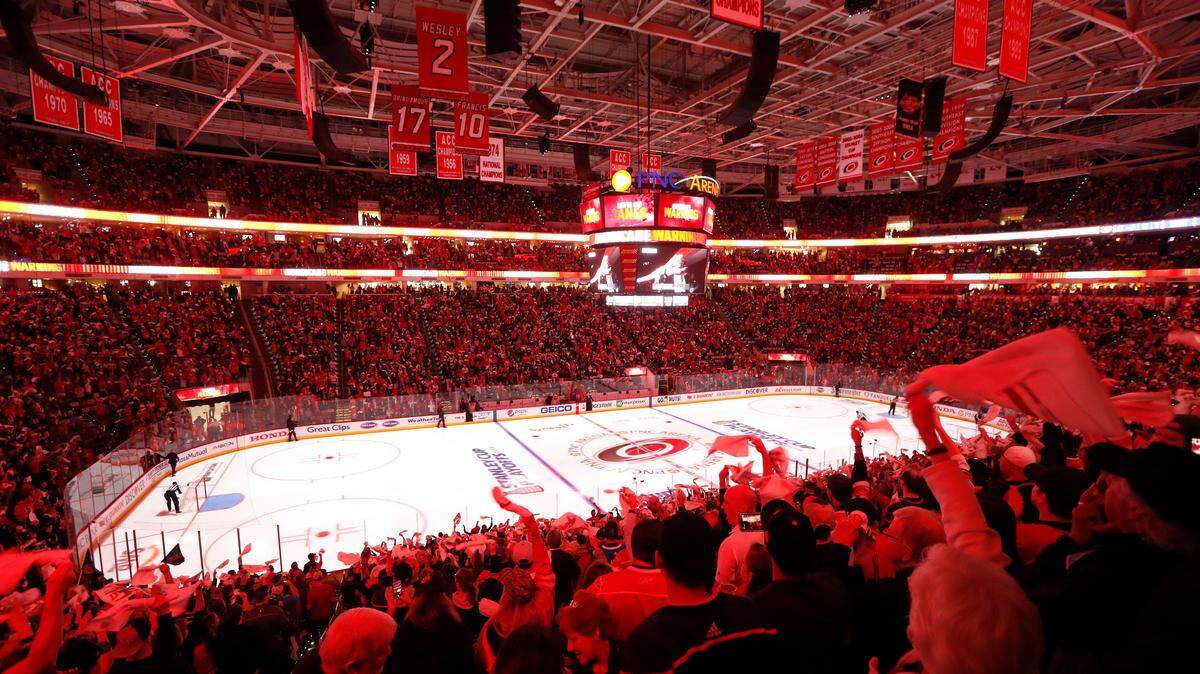
It was during the 2022 Stanley Cup playoffs and Carolina Hurricanes forward Andrei Svechnikov talking up the next home game at PNC Arena when he said, “It’s going to be exciting. Saturday night in Raleighwood will be buzzing.”
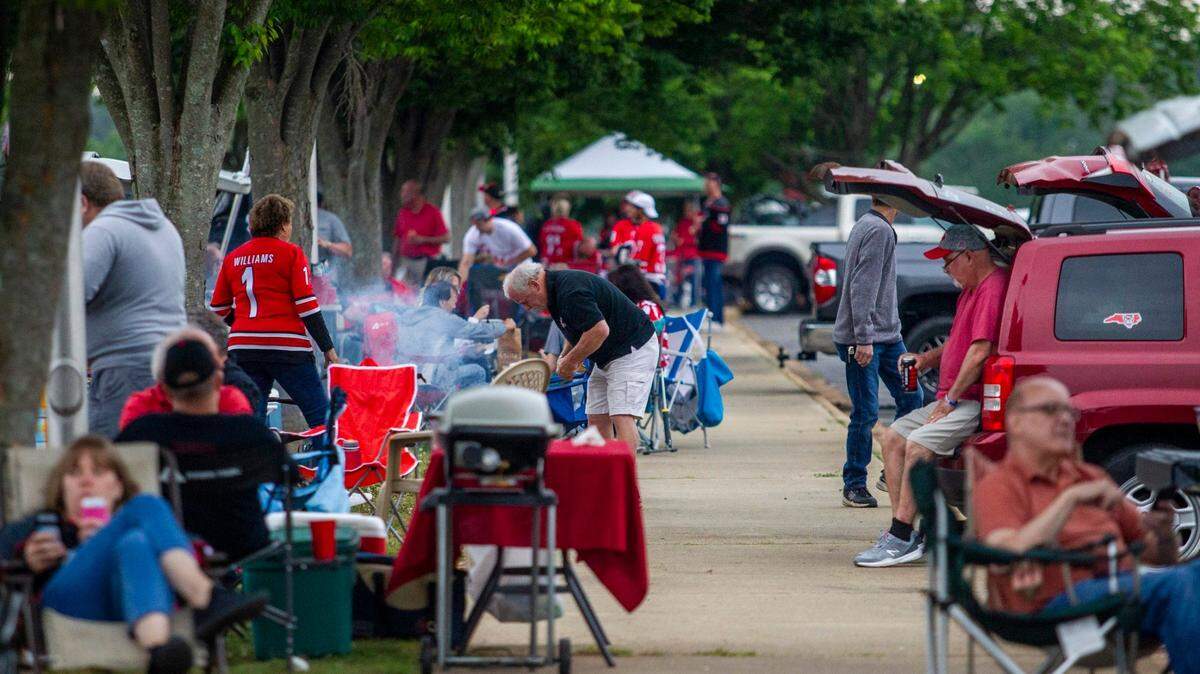
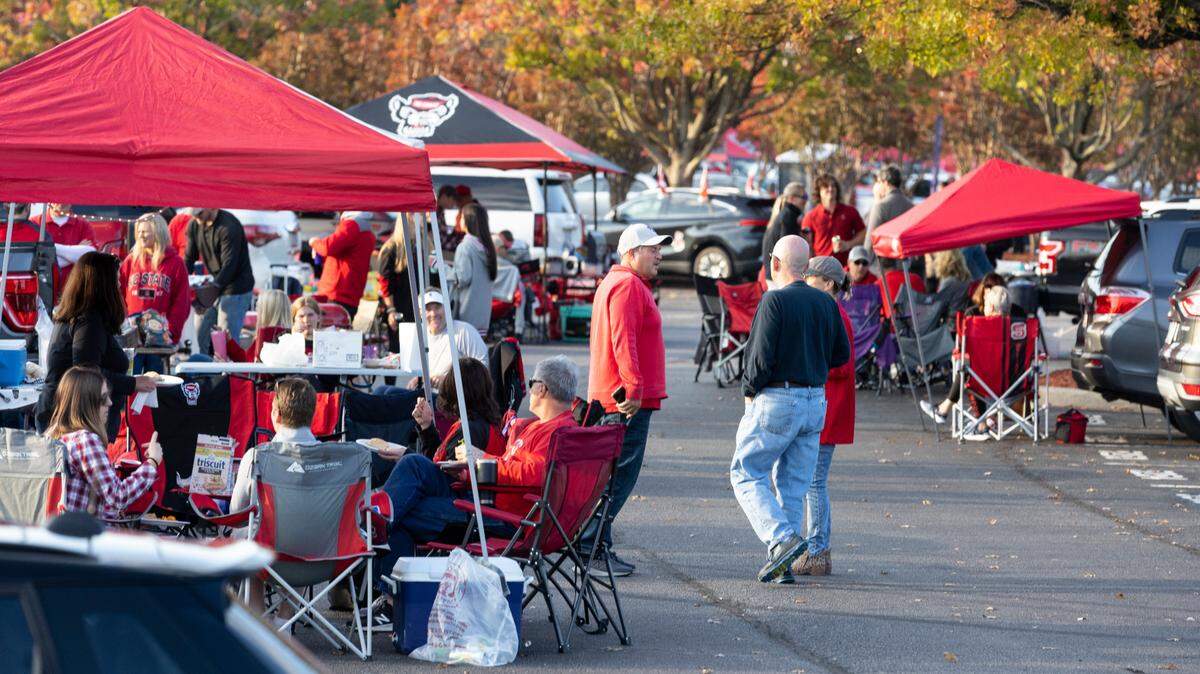
The mass of tailgaters, a loud and lively band in the front plaza and the thrill of playoff hockey would make for such an atmosphere at the arena, before and during the game. It was buzzing. That Saturday night, PNC Arena was the place to be.
And then the game ended and everyone went home.
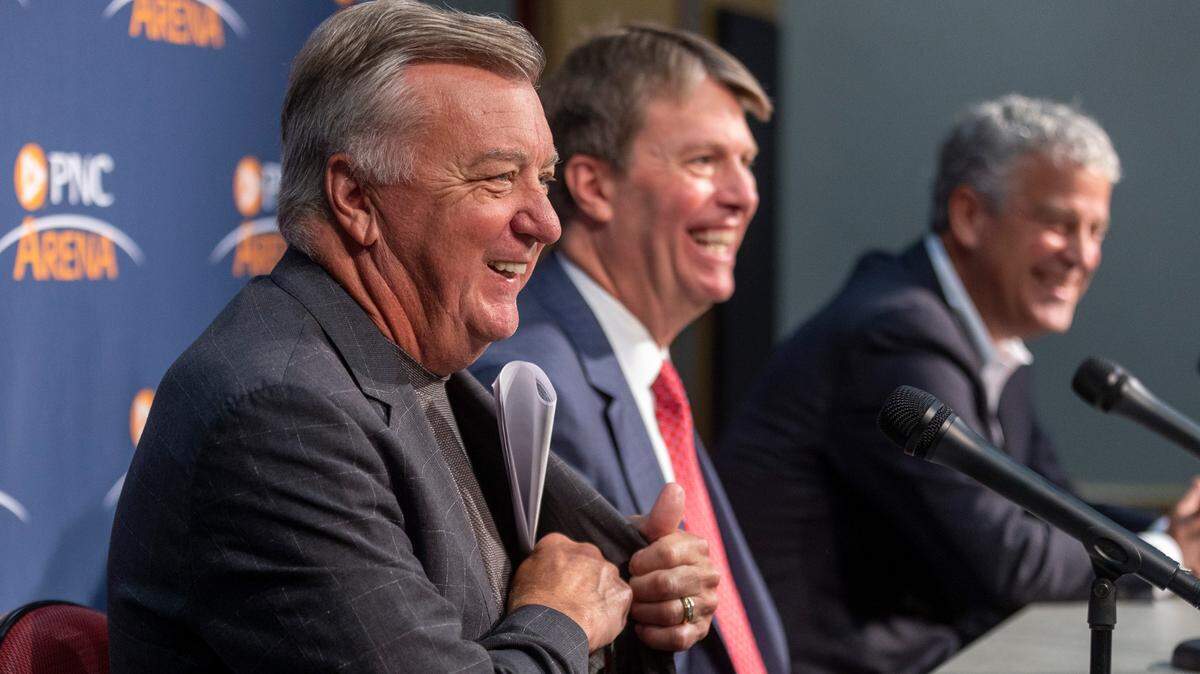
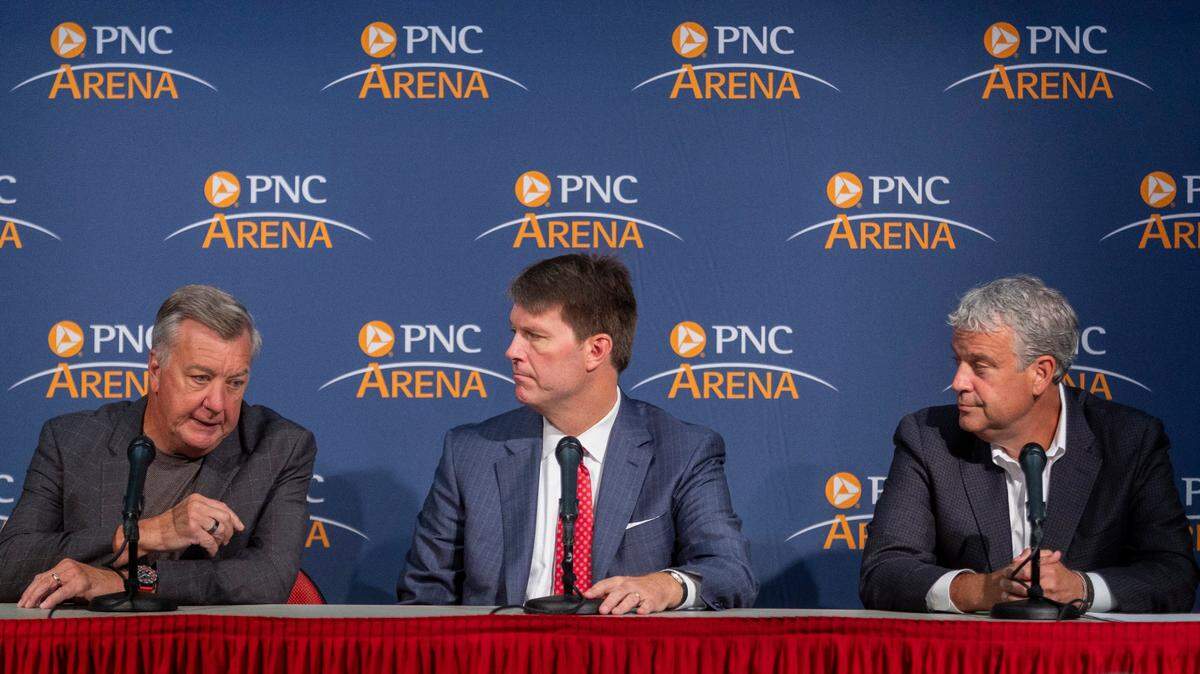
Hurricanes owner Tom Dundon wants to change that. He has another vision and other plans for both inside and outside PNC Arena that could entice fans to come early for games and stay after they’re over. Others in the community want to be a part of it and are excited about the possibilities – for the arena, for the Hurricanes and N.C. State, and more so for a section of Raleigh that could develop into a new city hub.
Could “West Raleigh” become a thing, a part of the Raleigh vernacular like Downtown and Midtown?
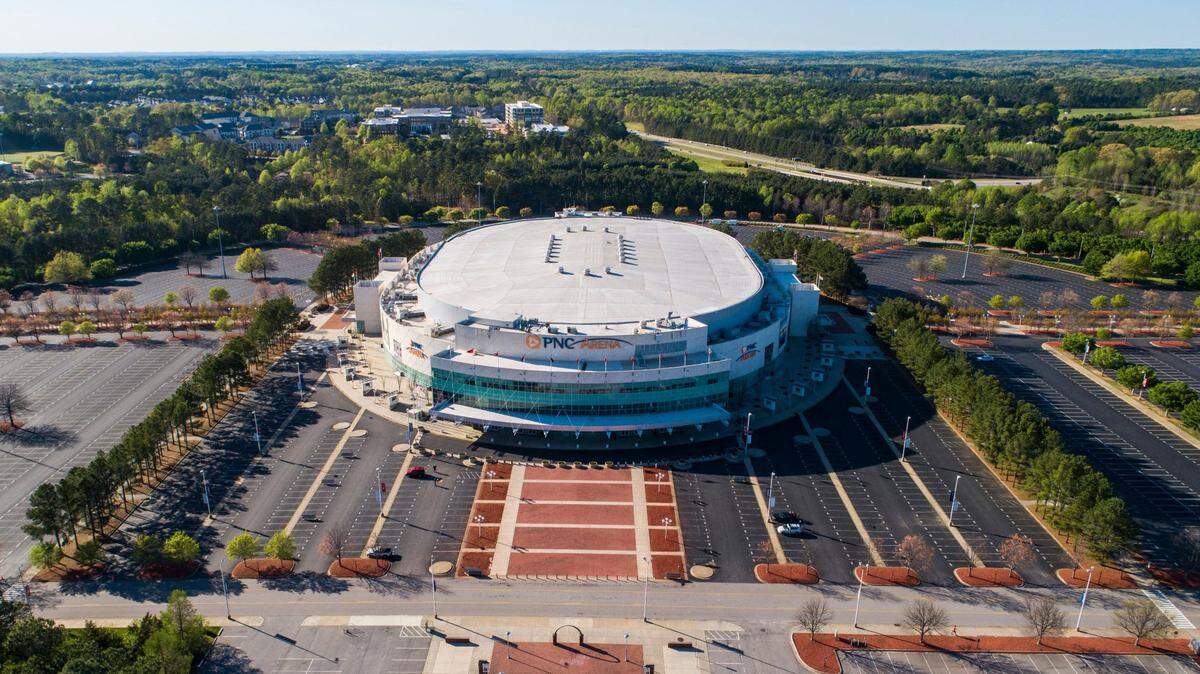
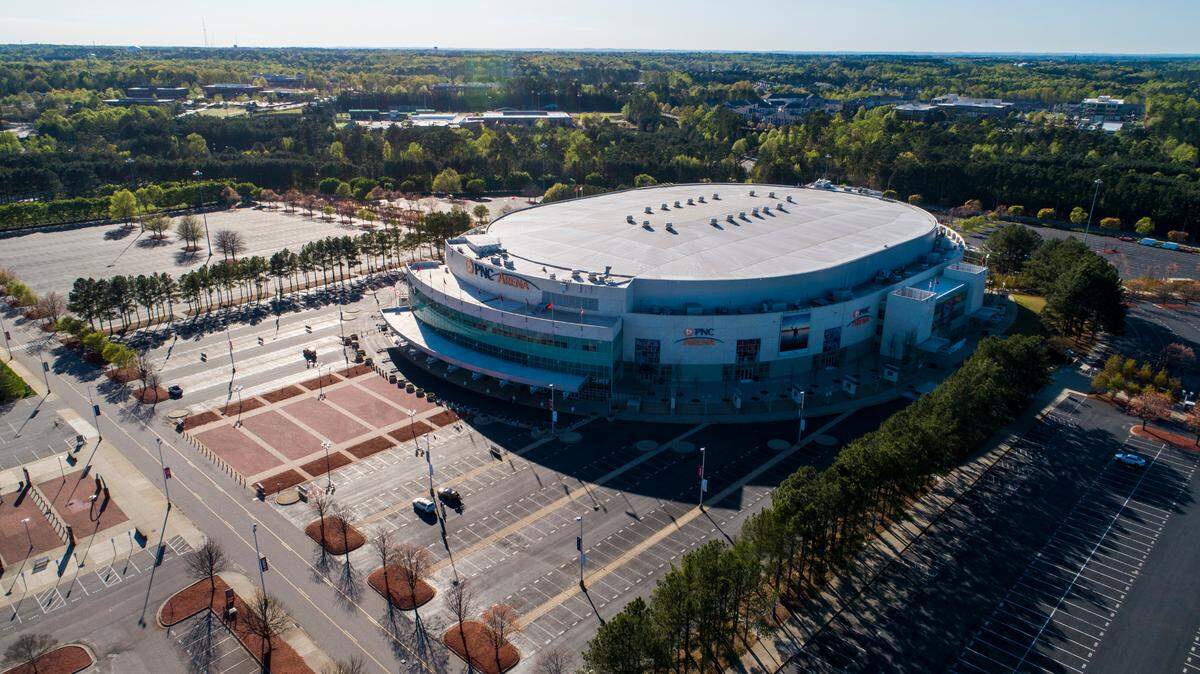
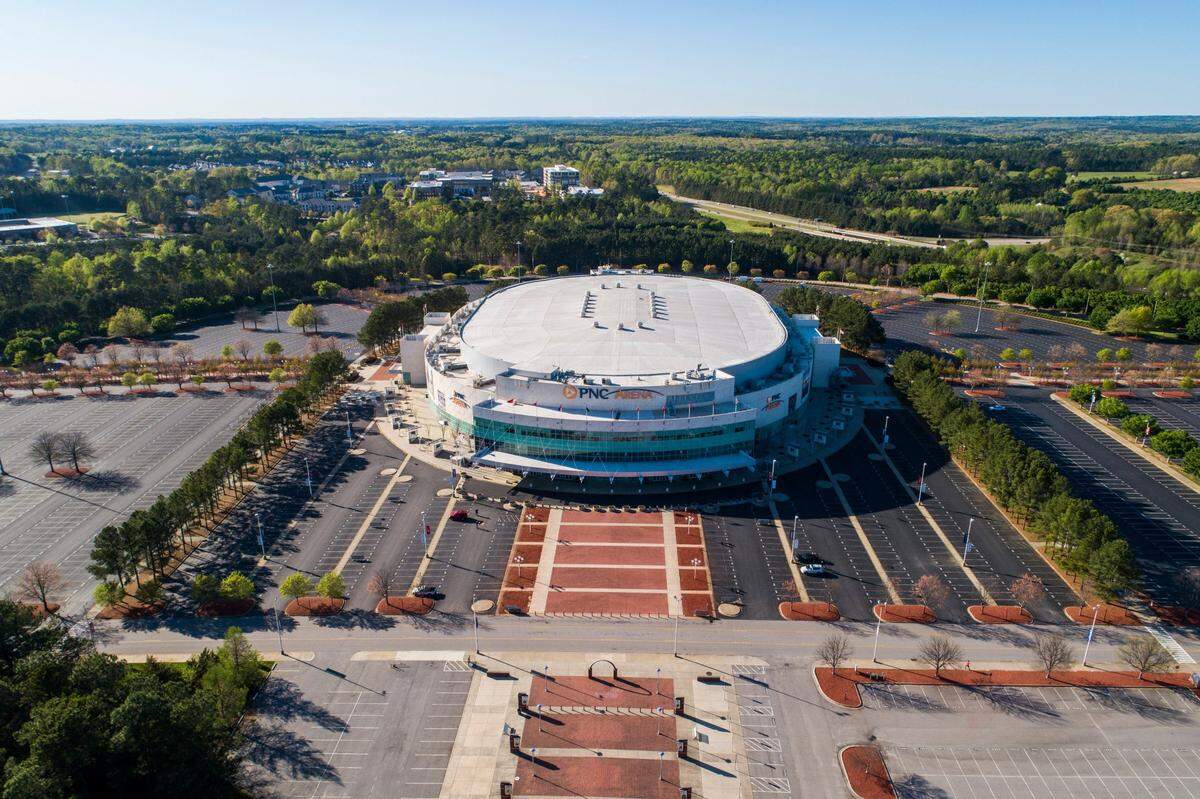
Imagine the land outside PNC Arena being transformed into a mix of luxury hotels and retail shops, restaurants, sports pubs and an indoor-outdoor concert venue. One day there also could be a sportsbook at the arena for those inclined to lay down a few wagers, something Dundon and the Hurricanes are seeking as an added revenue source at a time when the NHL’s salary cap is rising.
“I look at this opportunity that we have here, with this wonderful piece of land, and we do need to have the vision to make it magnificent,” said Kieran Shanahan, a local attorney, former Raleigh city council member and a member of the Centennial Authority that oversees the arena. “It can be emblematic of the area in which we live and it can become a destination.”
With PNC Arena as the centerpiece.
Potential for growth around the arena
Raleigh Mayor Mary-Ann Baldwin remembers working for the Greater Raleigh Chamber of Commerce when funding was first being sought to help build a new arena near N.C. State’s Carter-Finley Stadium.
“We talked about the potential for the area and the expectation was there would be growth around the arena and complement it,” Baldwin said in an interview. “We all know that didn’t happen.”
But Baldwin, Raleigh’s mayor since 2019, expects that to change and believes it will. She approves of the renewed plans to renovate PNC Arena and supports the idea of having an entertainment district and mixed-use development built around it.
“I look at this as a tremendous opportunity to really prepare for the future of our city and be at that next level,” Baldwin said. “So I’m excited about it and think it’s really important that we explore this and that we all work cooperatively to make it happen.”
Much already is happening in the area. Bandwidth, a communications software company, is building a new corporate headquarters on 40 acres off Edwards Mill Road just north of Wade Avenue. To the east, on Blue Ridge Road, the N.C. Department of Health and Human Services will relocate its headquarters.
“There’s a lot of innovation and government work that will happen in that corridor,” Michael Haley, the Raleigh chamber’s senior vice president of economic development, said in an interview. “To me, it’s a really exciting part of Raleigh and will be in the next five to 10 years. To me, a key word is ‘vibrant.’”
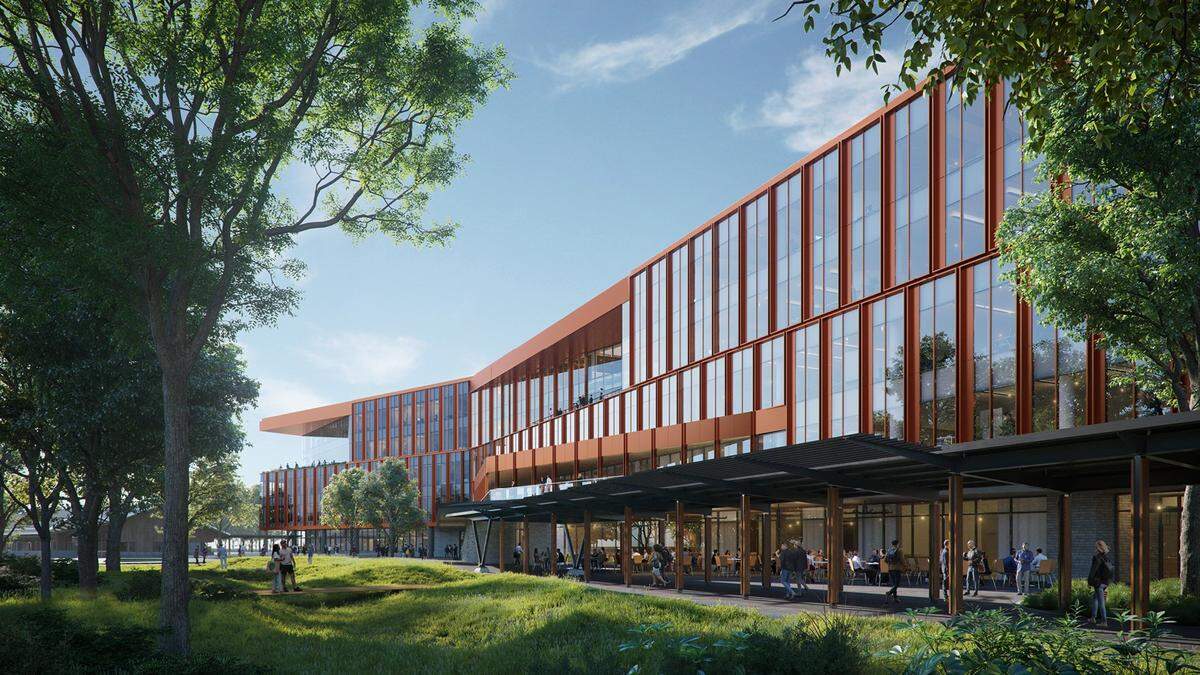
Bandwidth will employ 1,165 people and have more than $100 million in capital investment, according to a Wake County economic development report.
The state’s DHHS will move more than 4,000 workers to its new headquarters in a planned 10-story, 480,000-square-foot office building.
Commercial growth around PNC Arena
The Blue Ridge Corridor Alliance is a non-profit created jointly by the city, N.C. State and property owners and businesses in the Blue Ridge Road area to coordinate public and private investments. According to alliance estimates, $2.67 billion has been invested in Blue Ridge Corridor projects since 2016 – the DHSS headquarters pegged at $554 million.
“The area in southwest Raleigh anchored by such things as PNC Arena and the fairgrounds and Carter-Finley Stadium is currently a high concentration of destinations and hospitality,” alliance executive director Jeff Murison said in an interview. “But it has an enormous opportunity over the next five years as it continues to grow and evolve as a new urban center in Raleigh, with things such as the new DHHS campus, the Bandwidth campus and as the Centennial Authority completes its visioning process for the future of their property.
“The Centennial Authority property and PNC Arena is basically, physically the heart of the community, and one of our biggest partners and stakeholders. We’re very excited about the concepts they’re considering and their vision of the future. The kind of things they’re contemplating have a very real prospect of transforming the community and positioning it to be extremely successful for the next 30 years.”
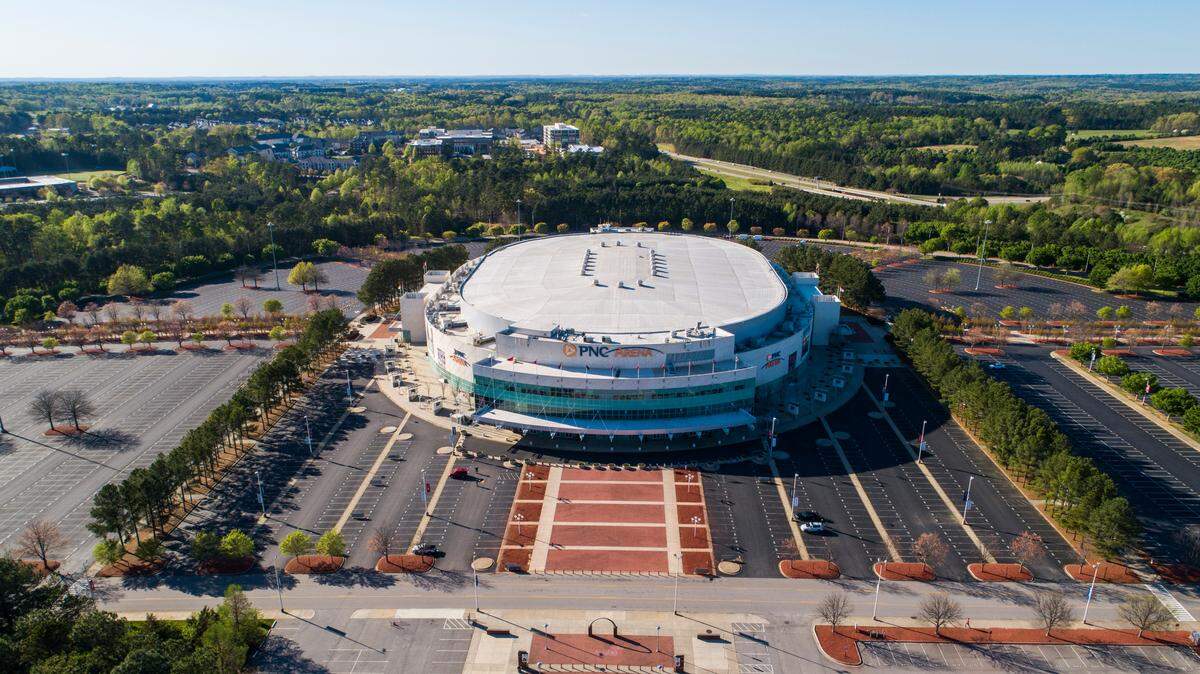
Since the arena opened in October 1999, commercial growth has been slow around it. The biggest development has been Wade Park with its mix of office buildings, housing and a few eateries.
The only restaurants within walking distance from PNC Arena are the Backyard Bistro, a Wendy’s and a Bojangles on Trinity Road.
“What was envisioned when the (arena) site was selected and when this was all approved is that the area would naturally develop and support the arena and support future growth,” Baldwin said. “That it has not happened I think a lot has to do with most of the land being owned by the state.”
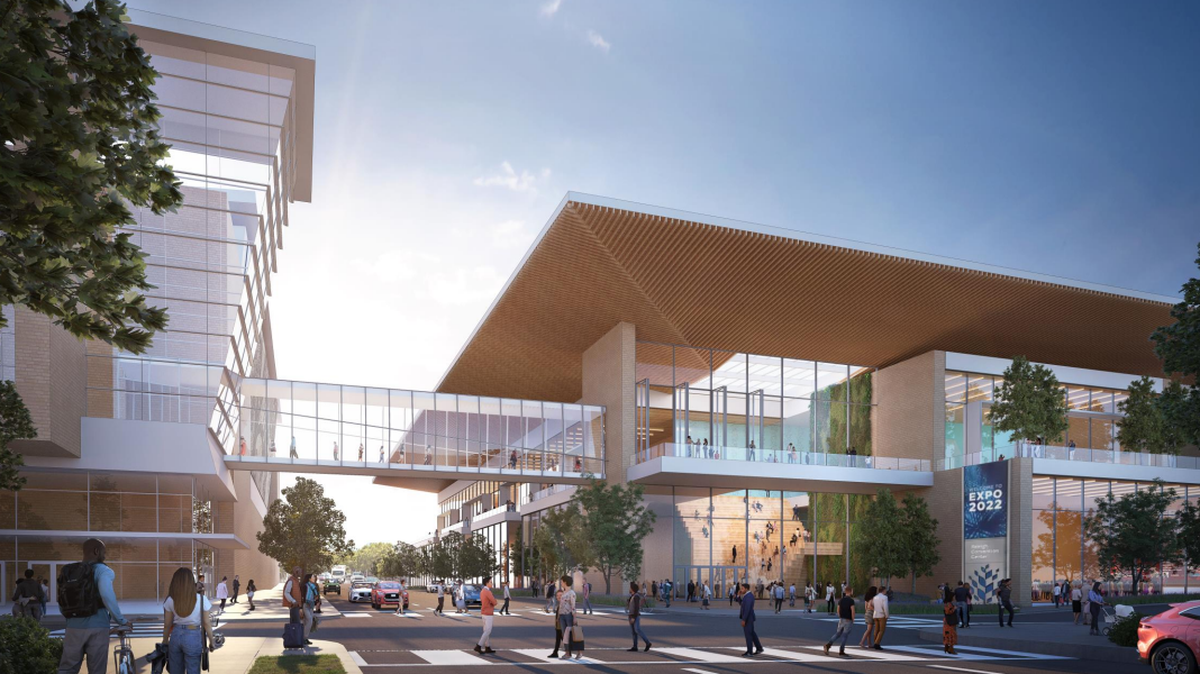
But if growth has been stagnant in the vicinity close to the arena, developing the property adjacent to the arena could change that. It could bring billions of dollars of private-sector investment. It could transform it into an area offering hotels, restaurants, housing, office space, a concert venue in a joint venture with Live Nation, the country’s dominant music promoter, a sportsbook in partnership with one of the major gambling companies, like MGM or FanDuel.
“This could be a game-changer,” Baldwin said.
How NC State, Hurricanes came to share the arena
The original vision for the arena was to be the Wolfpack’s basketball place next to NCSU’s Carter-Finley Stadium. There was talk of it having 23,000 seats – more than UNC’s Smith Center in Chapel Hill – in a college arena that had an NBA feel to it.
That morphed into plans for a smaller multi-purpose arena, one that would host N.C. State basketball and professional hockey. The City of Raleigh and Wake County agreed to share the cost of building it with NCSU and the state, and the Hurricanes spent millions more after the franchise moved from Hartford, Connecticut, in 1997.
The arena, with an estimated cost of $158 million, opened in October 1999 and was then called the Raleigh Entertainment and Sports Arena. The Hurricanes, after two years of “home” games in Greensboro, began play at the ESA and N.C. State’s men’s basketball team had a new home after 50 years in Reynolds Coliseum on the NCSU campus.
The arena has hosted Stanley Cup finals in 2002 and 2006, the 2011 NHL All-Star Game and the 2004 NHL Draft. There have been NCAA tournament regional games and the CIAA once held its conference tournament there.
There have been concerts and monster trucks, rodeos and pro wrestling at the arena. The Apex Legends Global Series, bringing a major esports event to Raleigh, was held at PNC Arena this year and was deemed a major success for the arena and economically for the community with so many out-of-town visitors.
A study commissioned for the authority in 2018 estimated the arena would have an economic impact of $4 billion in its first 20 years.
PNC Arena due for renovations
PNC Arena now is due for a major facelift and renovation, an enhancement that the authority has been exploringsince 2014 and is overdue. The pandemic put everything on hold for almost two years, but the Centennial Authority has secured a chunk of the funding in local tourism tax money needed to jump-start the renovation process again.
The funds, from Wake County and the City of Raleigh, are provided through the city and county Interlocal Agreement, which is funded by the hospitality industry’s hotel/motel and prepared-food tax. They helped finance both the construction of PNC Arena and the Raleigh Convention Center, among other projects.
“Our planning partners, the City of Raleigh and Wake County, have very distinctly told us they want us to get started,” authority chairman Philip Isley said. “They have appropriated money to us and they want to get going.
“I know it seems we are doing things fast. We are. This is the arena for our state, for our city, for our county, and we have a lot of expectations to enhance this arena and make this very much a 21st Century arena.”
A developing trend with 21st Century arenas has been more about developing space outside the walls of the arenas.
“Teams have recognized when you have people come to events, figuring out ways to keep them there longer, have them come earlier and stay later and spend more money and generate more taxes makes a lot of sense,” said Dan Barrett, the CAA ICON consultant who prepared a report on PNC renovation and ancillary development as well as serving as the authority’s representative in lease negotiations with the Hurricanes.
“It’s about how you utilize your property to its best use. Teams across the U.S., Canada and even Europe are looking at their sites and trying to figure out how to capitalize on that opportunity. And it is a significant opportunity.”
While providing more amenities for the fans at the games – refurbished State Farm Arena in Atlanta even has a Killer Mike barber shop – there has been an increasing demand to provide more entertainment options before and after the games, and just a short walk away.
“That is the national trend,” Baldwin said. “I think what’s happening is people are looking for a different experience. I think a lot of people want to see that experience expanded.”
The Hurricanes want that at PNC Arena – the Hurricanes’ lease gives Dundon right of first refusal for developing the 80 acres of property at the arena and north of Carter-Finley Stadium, an area that’s currently parking lots and undeveloped land along the perimeter. NHL commissioner Gary Bettman wants it, making it known during a visit to Raleigh during the 2022 playoffs.
“I think there’s a great vision for not just the arena or the team but for the entire area,” Bettman said during the visit. “I think that vision is exciting and it’s a win-win for everybody.”
Isley called Bettman a “great asset” in the push for improvements.
“He’s the guy,” Isley said. “He understands and appreciates that we’re a unique arena because we’re not downtown. He also recognizes the benefits with respect to our location, our ease of access.”
The possibilities for private-sector investment in a commercial and entertainment district could be many.
“I think the opportunity is unlimited there,” Raleigh developer Jeff Ammons said. “The access to highways, the access to schools … it seems to me that all the hard stuff is done. The easy stuff is coming in and building.
“It’s an excellent opportunity and so many things are in place there that if you were going to start from scratch it would be such an expense. How would you ever pull that off downtown? They’re really set up to build with what they have right there.
“That area just seems really ripe for growing.”
Plans for arena development in places like Atlanta, Anaheim
Plans for the Honda Center in Anaheim, California, where the NHL’s Ducks play, include the addition of OC Vibe, a $3 billion mixed-use entertainment development on 95 acres. It will have two hotels, housing, office buildings, more than 30 eateries and a concert venue, the Orange County Register reported.
Another prototype development is The Battery Atlanta. The Braves played in downtown stadiums for more than 50 years until the decision to build a new major-league park in Cobb County, more than 10 miles northwest of the city center – Truist Park, which was called SunTrust Park when it opened in 2017.
But there’s more than just a baseball stadium stuck in the suburbs. The Braves contributed to the building of The Battery Atlanta, an entertainment district adjacent to the park that bills itself as a “360-degree experience where you can have fun within steps of the field.”
There’s an Omni Hotel that overlooks the ballpark and an Aloft Hotel. There’s a street packed with shops and restaurants that include a wine bar and taproom. There are apartments and office buildings. There’s also a 4,000-seat concert venue, the Coca-Cola Roxy, a Live Nation venue.
It’s not just a game-day destination. It’s an everyday destination.
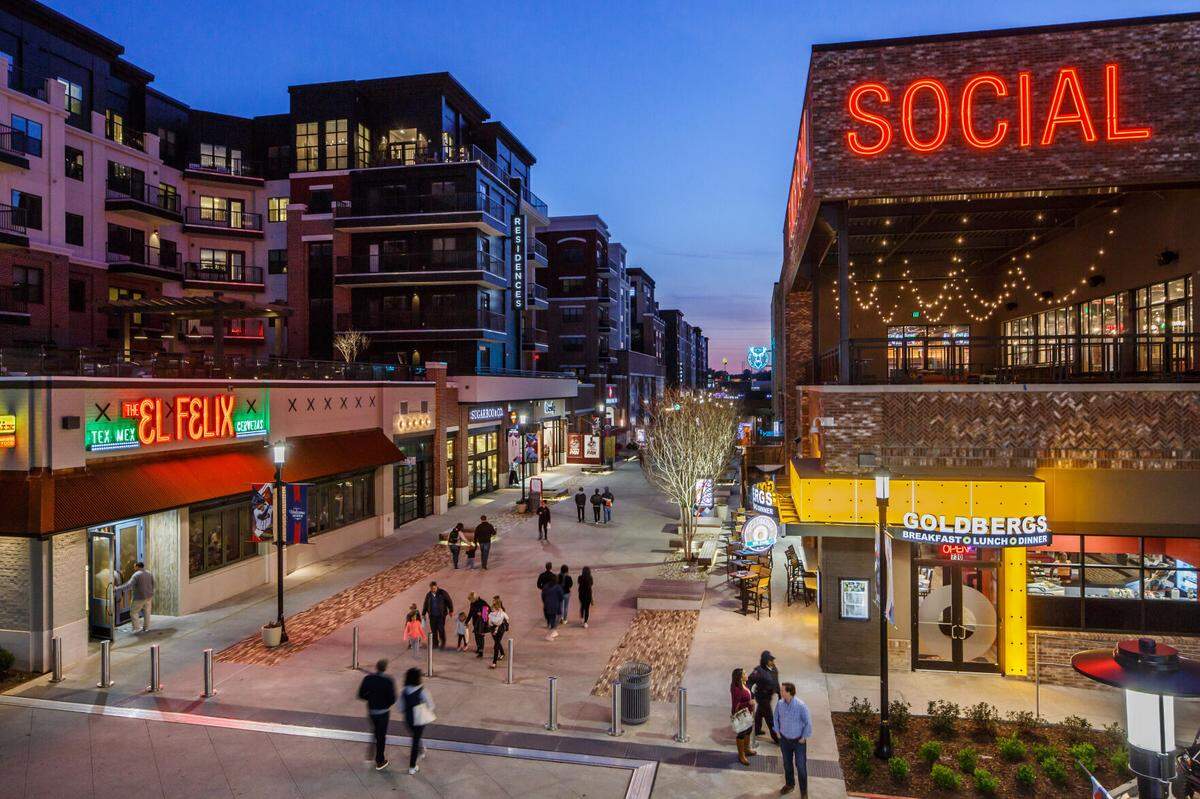
“The Battery seems to be the model right now,” Scott Dupree, executive director of the Greater Raleigh Sports Alliance, said in an interview. “If they could pull off that kind of thing around PNC Arena it would be amazing. That could be a real difference maker and it could take the building, I believe, to another level. It’s already successful but there’s certainly potential for more.”
Added Isley: “That’s a really cool project. I’m told when it’s game day you’ve got to see it. When it’s not game day you’ve got to see it.”
‘An NC State decision’
It will take cooperation with N.C. State to make it happen. It will take continued support from chancellor Randy Woodson, who serves on the authority.
NCSU officials have been reluctant to discuss the project publicly, with Woodson releasing a statement noting he wanted to “ensure short and long-term impacts to NC State are considered in any decisions.”
“Whatever we do is going to be an N.C. State decision,” N.C. State athletic director Boo Corrigan said on the ACC Now podcast. “It’s not going to be a Boo Corrigan decision, it’s not going to be an athletic decision alone. It’s going to involve the university and Chancellor Woodson, whatever direction he wants to go with the Centennial Authority, with Gale Force, with everyone else involved in what it is. I think that’s the most important thing from our standpoint, is that we’re aligned properly with the university and those decisions will be coming down the road.”
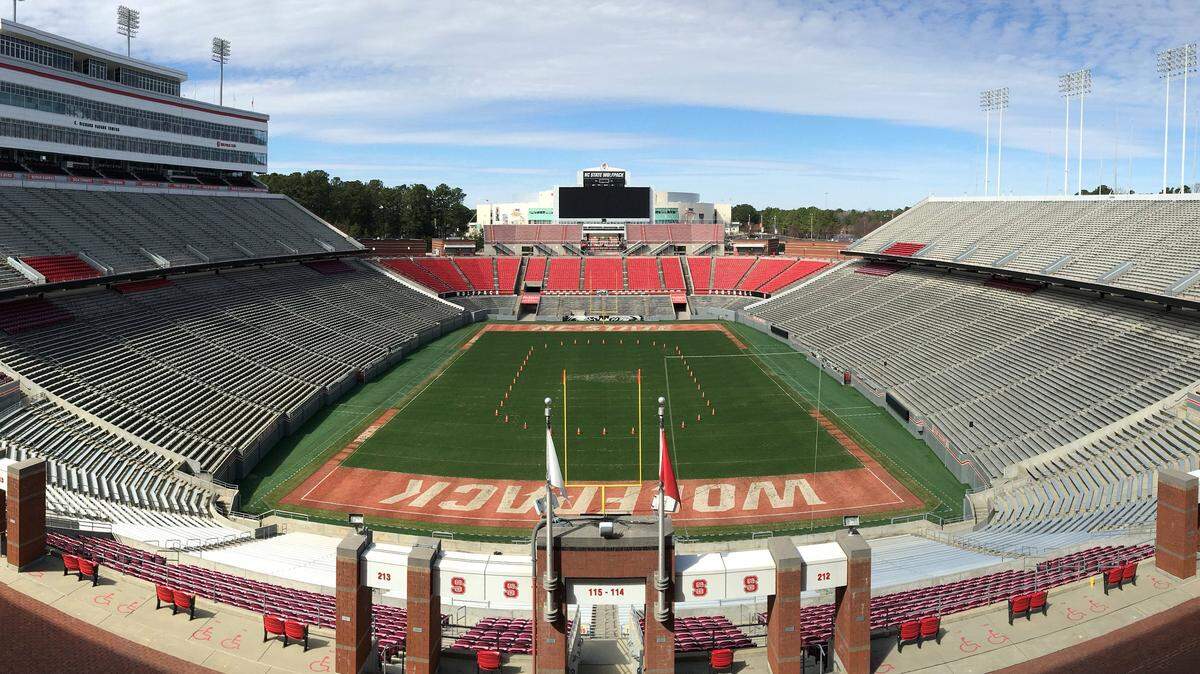
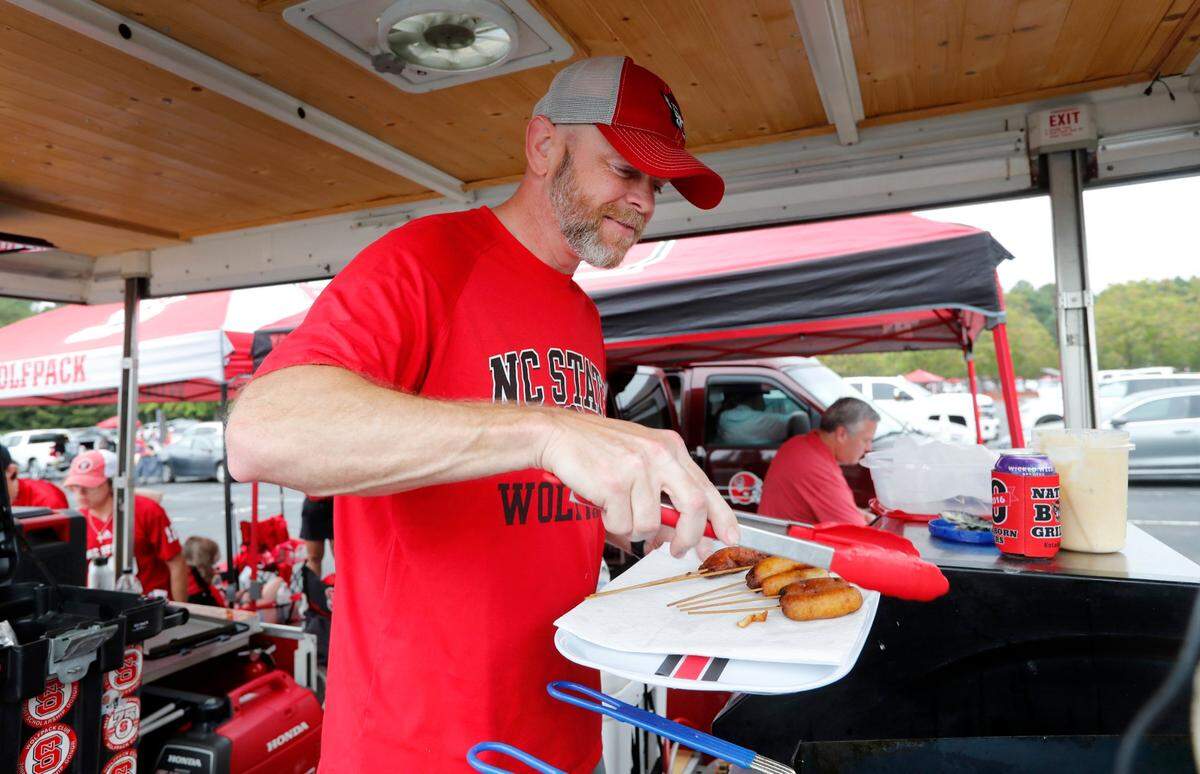
The Wolfpack uses the parking lots surrounding the arena for basketball and football games. The parking spots are assigned and parking passes are paid for by members of the NCSU Wolfpack Club. While the lots surrounding Carter-Finley Stadium would not be affected, the lots north of the stadium could eventually be absorbed by development, the capacity replaced by parking decks, some of which could be configured with wider spaces for tailgating.
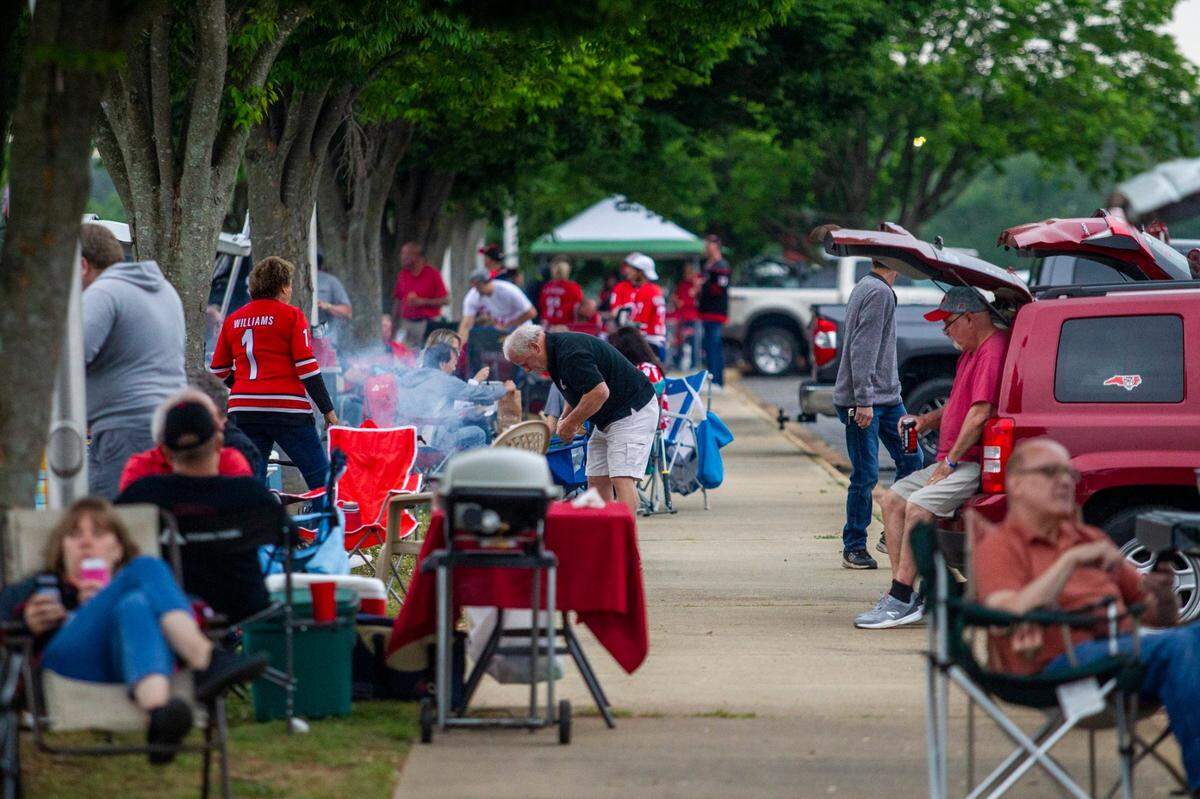
Many Hurricanes fans tailgate before games, a part of the hockey season’s playoff tradition. It will be a change for many, not just Wolfpack fans., as parking decks replace surface parking in some areas.
Isley believes any differences can be alleviated and problems resolved.
“This is a long-term project and I really believe we’re lucky because we have NC State and the Hurricanes,” Isley said. “They’re two really good tenants and they’re communicating with each other. And that’s helpful to me. The athletic director (Boo Corrigan) and chancellor have been great to work with. They certainly have been receptive to ideas as we talk through this.”
Don Waddell, the Hurricanes’ president and general manager, said there are roughly 4,000 parking spots around the arena, which could be increased to 8,000 to 10,000 spots.
“When the building was built, if you go back, there was talk of development on the property and it was never followed through,” Waddell said, “We’re sitting on 80 acres on the PNC (Arena) side that we can make into a destination place, a place where people want to go. We don’t have that now.”
The Hurricanes’ lease agreement
CAA ICON, the consulting firm that formulated the arena development master plan, negotiated the five-year arena lease extension between the authority and the Hurricanes through 2029 and has again been engaged to negotiate a long-term lease with the Hurricanes, is one of three bidders to act as the authority’s representative during renovations, along with Legends and JLL, both also major national firms.
Among the clients and projects handled by CAA ICON are the NHL’s Seattle Kraken and Climate Pledge Arena, and the NFL’s Las Vegas Raiders and Allegiant Stadium in Las Vegas. Legends’ recent projects include the multiyear renovations to New York’s Madison Square Garden, while JLL worked with the Braves on The Battery.
Ratio and HOK, the design firms hired by the Centennial Authority to handle the initial arena enhancement and renovation, have been further commissioned and charged with updating those plans for the authority.
Meetings have been with the major stakeholders on the revised renovations in the past few months. The CAA ICON report to the authority noted the firm recently met with representatives with officials from the City of Raleigh, Wake County, Gale Force, NCSU, the state departments of Administration, Agriculture and Commerce, the General Assembly and development firms Kane Realty of Raleigh and Dallas-based Woods Capital, whose owner has partnered with Dundon on projects there.
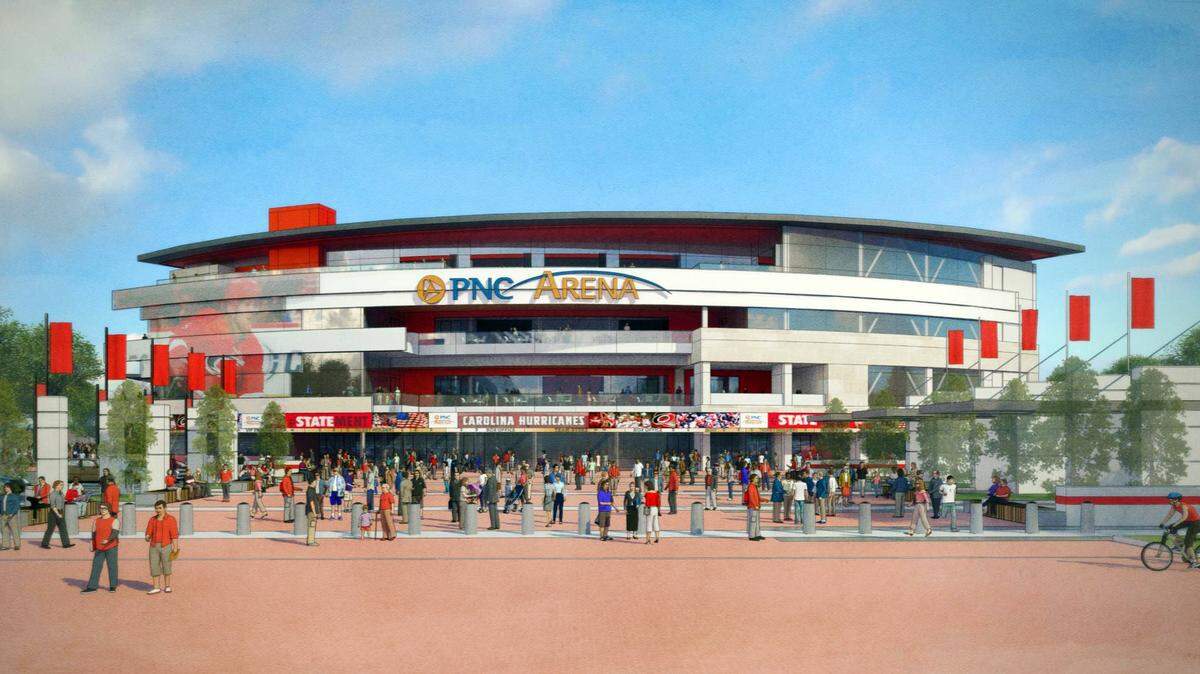
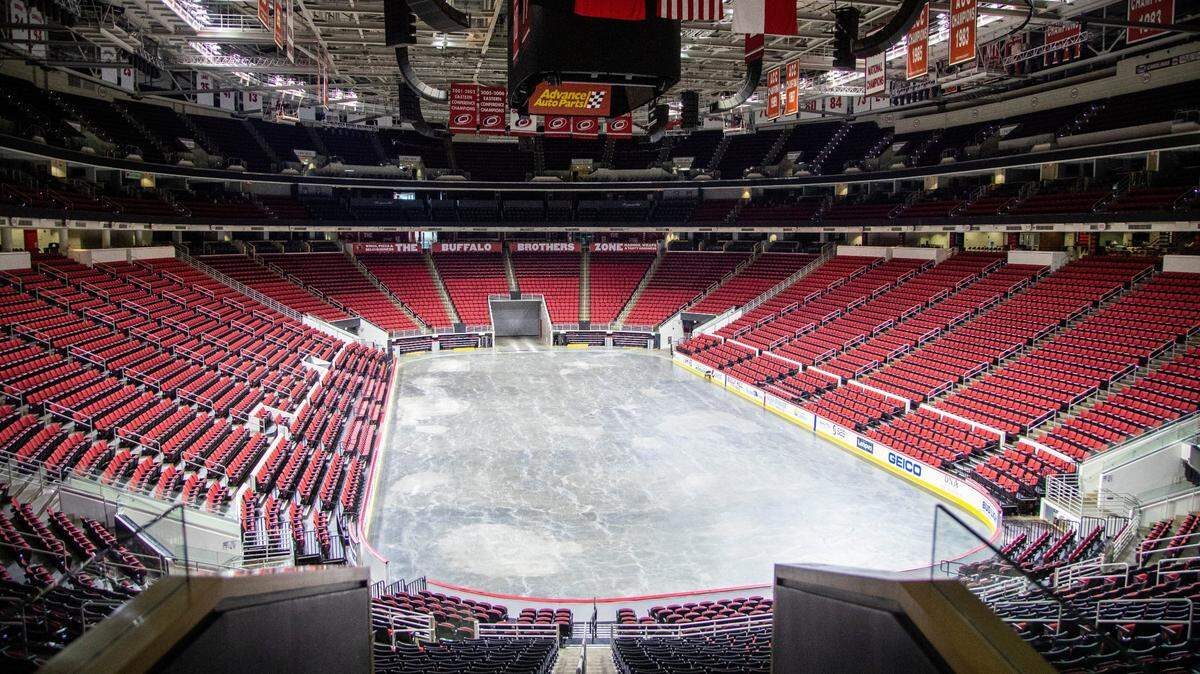
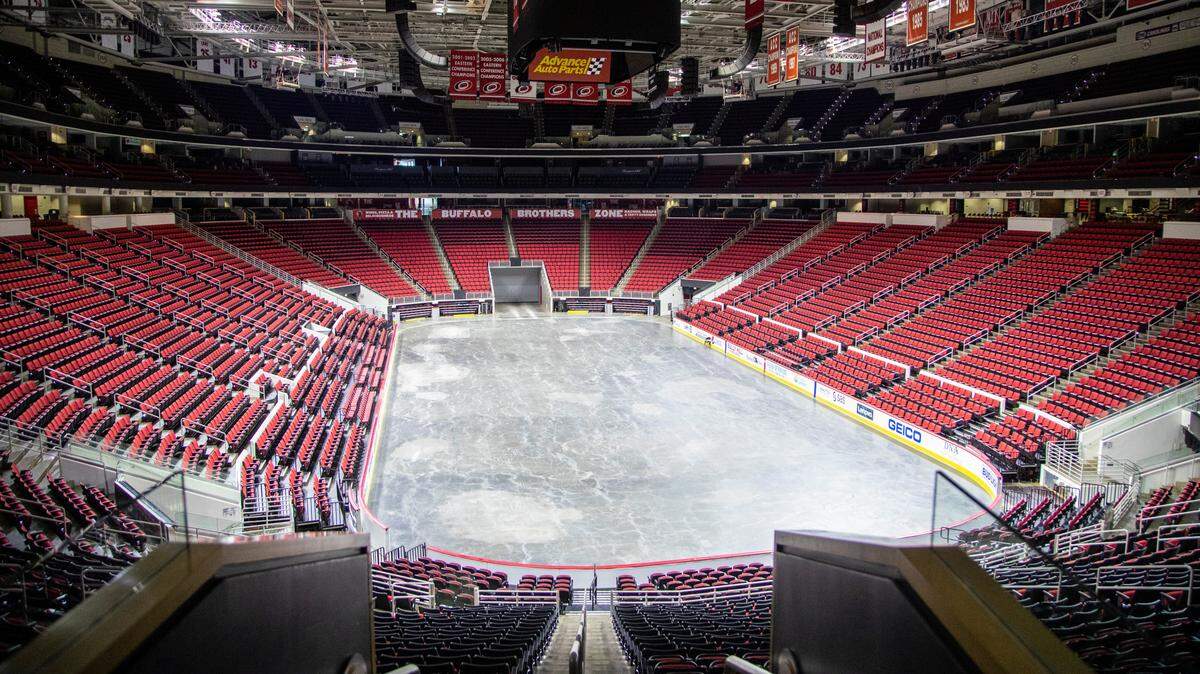
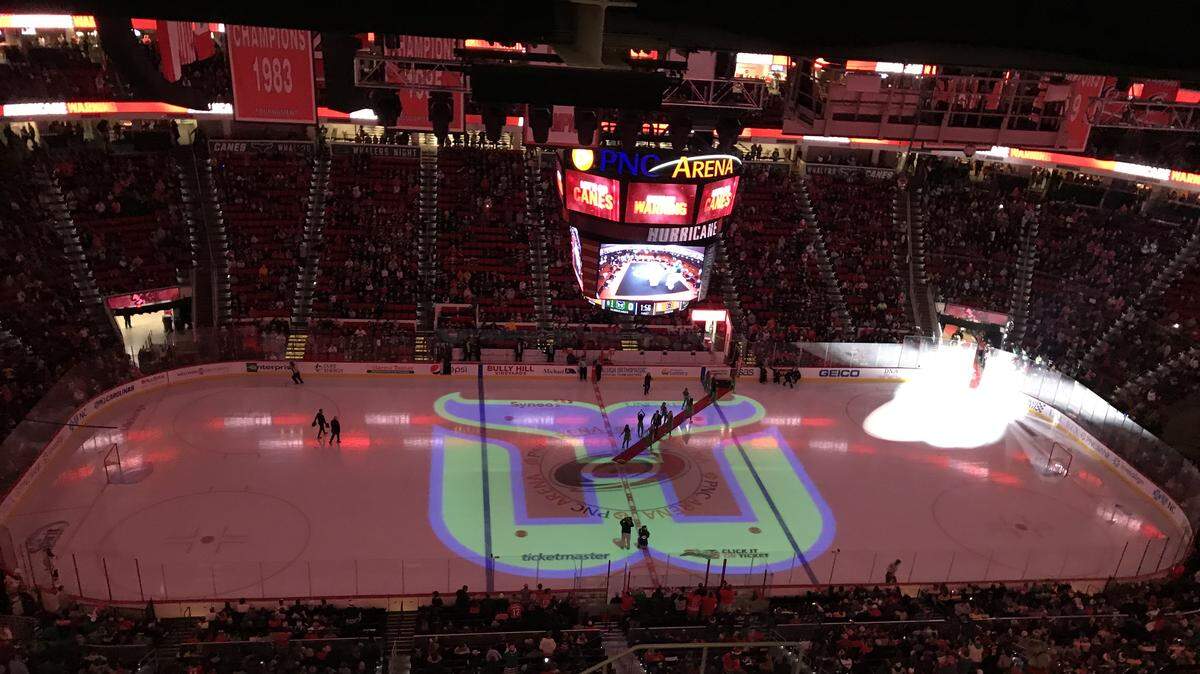
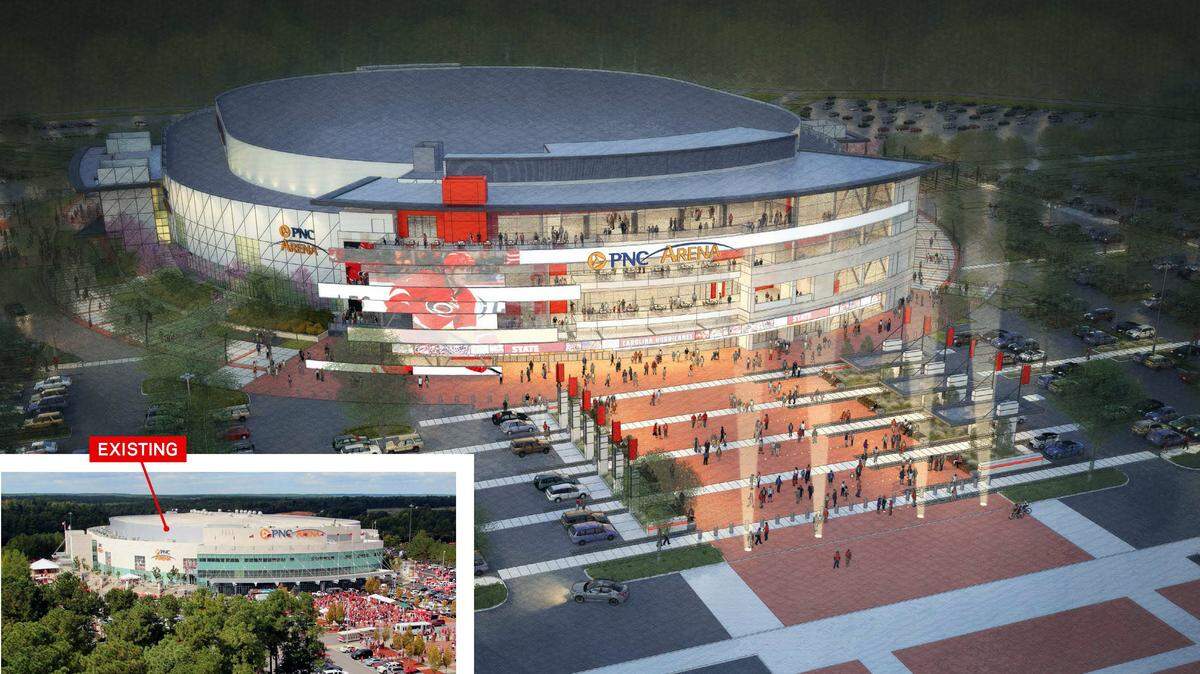
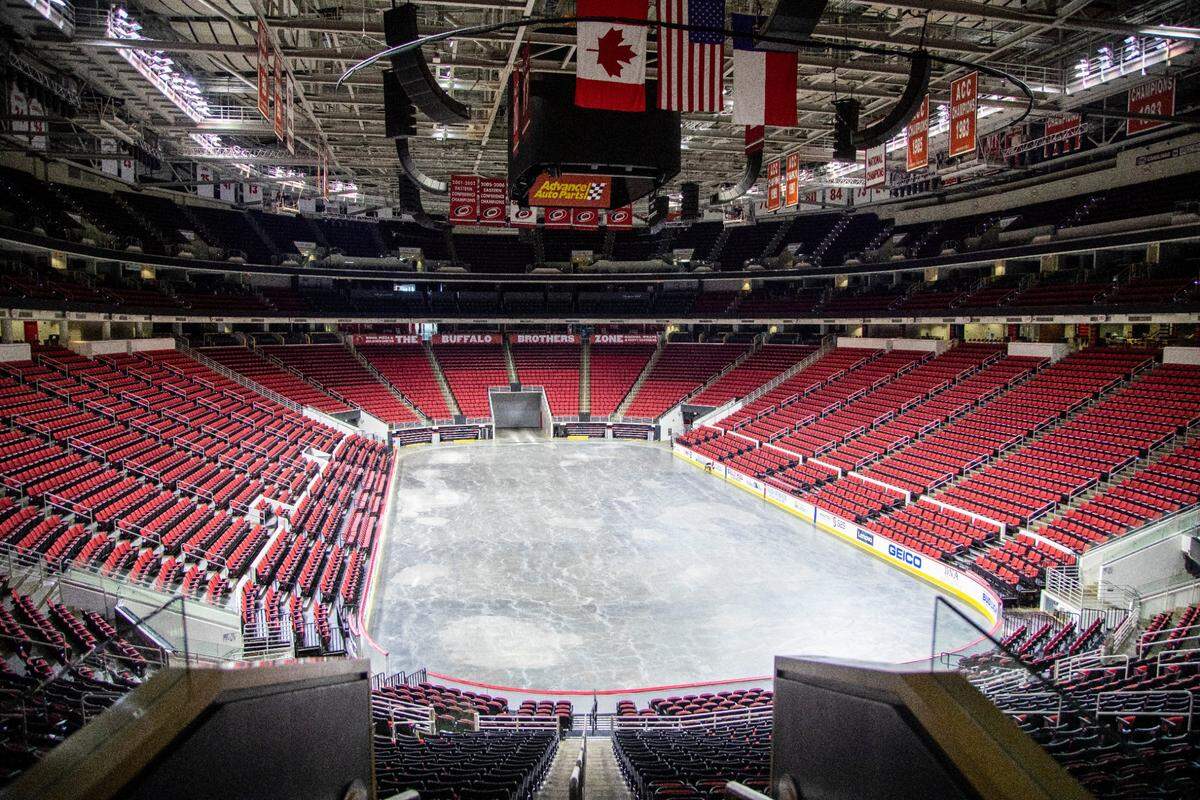
Proposed plans for the renovation include expansion of an indoor/outdoor plaza area on the south end of the arena, expansion of the Hurricanes team store and improvement to concourse areas including the addition of “view terraces” on the upper concourse.
Isley and the authority want the arena renovation on a fast track, with the first work beginning in 2024. Giving the arena a more modern feel, then the plans for commercial development should make PNC Arena more attractive for future events.
One example: bids have been made to host NCAA regionals at PNC Arena – the final two rounds, not the opening rounds – but have not been successful, Dupree said.
“We also looked at the (NCAA) Women’s Final Four but it was clear they were looking for hotels and entertainment around the building, so I felt we were not able to submit a competitive bid,” Dupree said.
Should HOK and Ratio work in conjunction with CAA ICON it would be an indoor/outdoor consortium of sorts at PNC Arena. They will have to work around the arena schedules, causing the authority’s Shanahan to liken it to “refitting an airplane while it’s flying.”
“If you were to develop, say, a mixed-used development and create a place and destination beyond the arena we would be willing to understand what kind of amenities we don’t need to duplicate within the arena,” Bill Browne, Principal and CEO of Ratio, said to authority members during a late-June presentation at PNC Arena. “We want to have a cooperative arrangement.
“Branding is really a big part of the arena world today and how are we going to change the branding from where you are now to a more contemporary, more up-to-date kind of approach? How are we going to reposition the arena so that it’s really taking advantage of the real estate as well as bringing it up to date?”
The projected cost is anyone’s guess. An initial estimate for the arena renovation was $225 million, Isley said. That was pre-pandemic, a couple of years ago.
“It’s going to be a big number,” Isley said. “If we’re mindful of what we’re doing, mindful of our goals and mindful of what our budget is, we can figure this thing out. I’m bullish.”
This story was originally published October 17, 2022 at 5:35 AM with the headline "As PNC Arena development plans unfold, could West Raleigh be next ‘it’ destination?."