It’s hard to label Panthers rookie Jeremy Chinn. It’s harder to take your eyes off him.
If you are a Carolina Panthers fan, there are several ways you can watch the team’s defense.
You can do it the normal way and just watch the ball. That can be frustrating, because the Panthers allow third-down conversions at an alarming rate.
You can watch the pass rush, which mostly means watching ferocious edge rusher Brian Burns get double-teamed and the rest of the team rarely get to the quarterback.
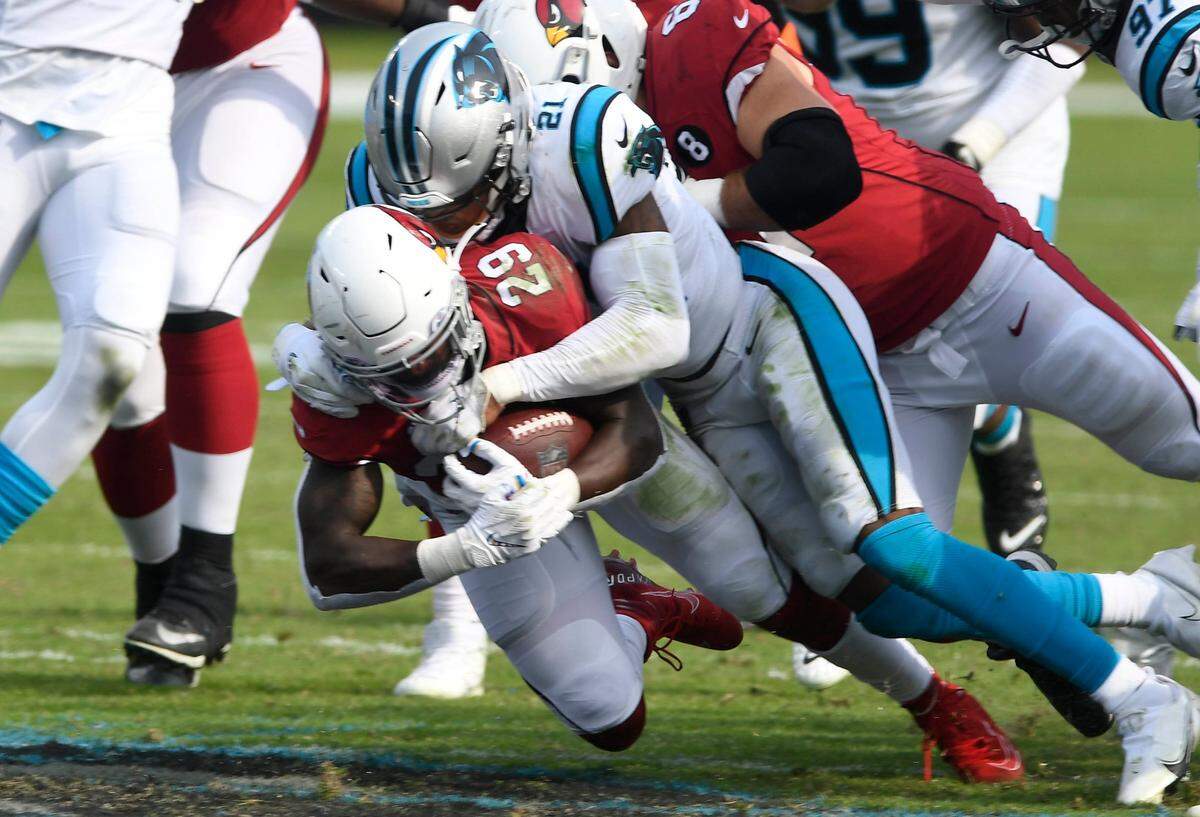
Or you can do it the way I find myself doing it more and more frequently as the 2020 season progresses — just watch No. 21, because he and the ball will eventually intersect.
No. 21 is Jeremy Chinn, the rookie safety/linebacker/whatever-you-want from Southern Illinois who leads all NFL rookies in tackles and is a legitimate candidate for the league’s Defensive Rookie of the Year Award.
Chinn — scheduled to play Sunday against Tampa Bay (1 p.m. kickoff) after missing his first game last week due to a swollen knee — is a fascinating case study in how sports are evolving.
Do you remember when players were called ‘tweeners? It wasn’t a compliment. It meant you weren’t quite one thing, and you weren’t quite another, so you just didn’t quite fit in anywhere. It was often the primary reason cited for a player not making it as a pro.
But they don’t call ‘tweeners — at least not the best ones — ‘tweeners anymore. They call them hybrids. Or “position-less players.” Or some other cool sobriquet.
This goes for the NBA, too, where some teams put five 6-foot-7 guys who can shoot the three-pointer on the floor at the same time and call it good.
Jeremy Chinn is a hybrid
I remember when the Panthers drafted Thomas Davis out of Georgia in the first round in 2005, but they weren’t sure where to play him. It was a big controversy. Was Davis a safety? Was he a linebacker? It turned out Davis didn’t quite have the instincts for safety but he was a heck of an outside linebacker, and he became a Pro Bowler there. But it took awhile to figure it out.
With Chinn, the Panthers don’t want to figure it out.
He’s their hybrid — running on gas, electric or leftover Halloween candy. And he’s gotten better since the first Tampa game in Week 2. Instead of just running around “like my hair is on fire,” as he said, he’s taking a smarter first step and then pursuing.
Chinn is a linebacker sometimes — middle, strongside or weakside. He’s a safety sometimes. He blitzes sometimes. He drops into a deep-third position sometimes that the Panthers call “grizzly.” He plays upback on the punting team, which hardly anyone noticed until he called a fake punt (after head coach Matt Rhule had called it off following a delay-of-game penalty) and ran 28 yards on fourth-and-9 against Atlanta.
He’s exciting, in other words, and gracious knows these 3-6 Panthers can use all the excitement they can get.
Chinn is a shade faster than Christian McCaffrey (you can check the 40 times or the NFL Next Gen stats to confirm, but it’s true). Chinn is also 6-3 and 220 pounds, which means he’s four inches taller and 15 pounds heavier than McCaffrey. He’s not as elusive as McCaffrey, of course, but defenders don’t have to be elusive.
The best ones are flaming arrows, and Chinn comes out of the quiver quickly.
“You don’t find guys that are that big that run that fast,” Carolina coach Matt Rhule said not long after the Panthers drafted Chinn.
How did Jeremy Chinn join the Panthers?
So how did this guy last until the end of the second round, long enough for Carolina to trade up to draft him at No. 64 overall? He was a zero-star recruit out of high school, first of all, because he grew so late. Then he played for the Southern Illinois Salukis in college.
In other words, even though Chinn is the nephew of Pro Football Hall of Fame safety Steve Atwater, he didn’t have the pedigree.
Pedigree turns out not to matter much once you get step onto the NFL stage. Then it’s just a matter of whether you can play or you can’t. Tampa Bay quarterback Tom Brady was once a sixth-round draft pick. Five quarterbacks were picked before Russell Wilson, including Brandon Weeden and Brock Osweiler. And on and on.
Now Chinn has a long way to go before he’s Luke Kuechly — let’s not fall into the trap of recency bias. He’s great — when you’re judging on a rookie’s sliding scale, that is. He’s not about to make any All-NFL teams. Chinn had one interception against Chicago, and he had that fake punt conversion, but he will need to make a lot more big plays down the road to become elite.
He has a chance, though. Chinn might play here 10 years and make a bunch of Pro Bowls, if he can keep improving at this rate. Between Chinn, Burns and Panthers defensive tackle Derrick Brown, Carolina has a trio of talented youngsters to build the defense around.
And I will say this: I used to watch Kuechly track the ball on defense and ignore the rest of the defense for long periods of time, because it was fascinating.
I did that with Jon Beason early in his Carolina career, too, and with Sam Mills in Carolina’s first two seasons.
Now I’m doing it with Chinn. Not on purpose; it’s just gravitated into that. That has to be a good sign, right?
Prediction time
I’m 5-4 picking Carolina games after correctly choosing Kansas City to win last week. Tampa Bay looked horrible against New Orleans, but the Buccaneer defense is mighty tough despite that flop.
My prediction: Tampa Bay 24, Carolina 19.
This story was originally published November 14, 2020 at 7:00 AM.