
After two decades, an uptown transit hub is moving forward. Here’s the vision.
After years of planning and delays, the Charlotte Area Transit System will start construction this summer on the Gateway Station – a new transit hub in Third Ward that will house Amtrak, local buses, Greyhound buses and possibly a commuter rail to Lake Norman.
CATS will first build infrastructure, including 2,000 feet of new track, and construct new bridges for Amtrak at Fourth, Fifth, Sixth and Trade streets. It will also install signals for trains and a passenger boarding platform and canopy.
That will cost $110 million, and will be paid with a mix of federal, state and city money. It could be finished in September 2022.
But CATS doesn’t plan to finish the project – and welcome Amtrak uptown – until the main station is built. CATS isn’t certain when that might happen, though it hopes it will be around the time the initial work is finished.
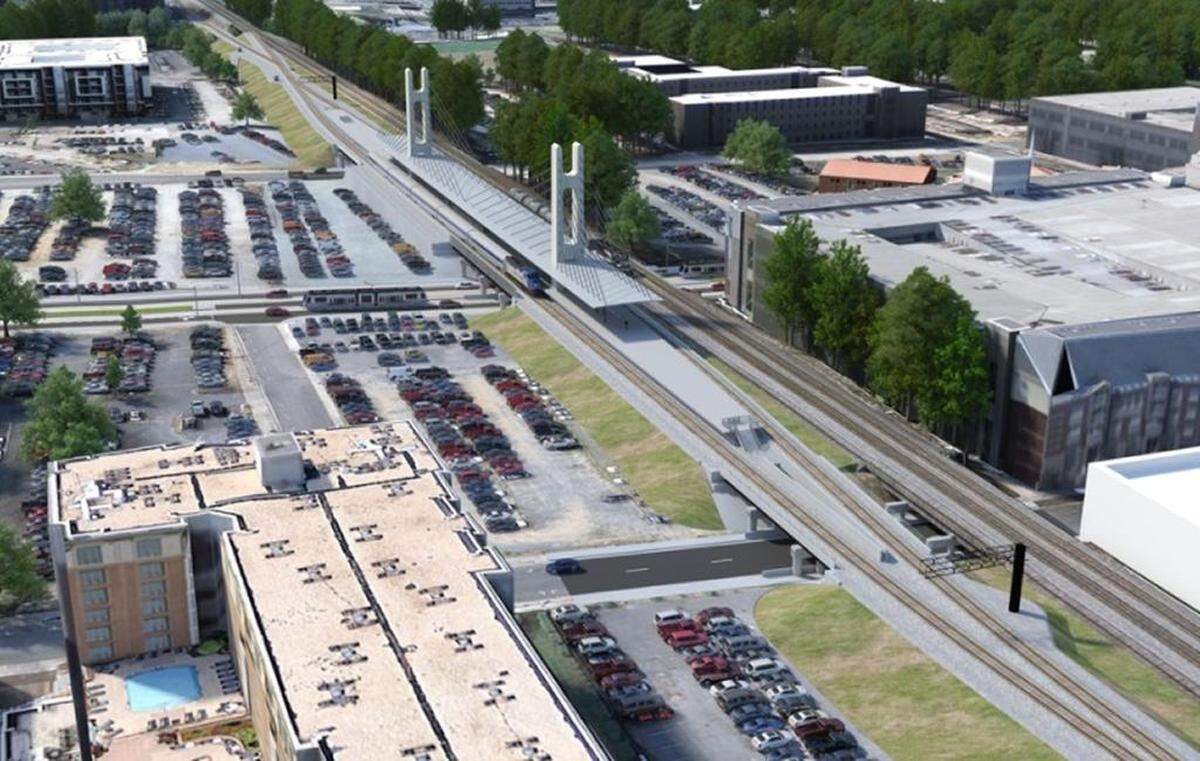
CATS chief executive John Lewis wants to partner with a private developer to build the main station, as well as retail, apartments and offices on public land surrounding the station. The main station would have a ticket booth and amenities such as a waiting room, plus retail and restaurants.
CATS has estimated the station could be 10,000 square feet. The current Amtrak station is about 1,500 square feet. In the past, CATS has said the overall cost of Gateway Station could be between $150 million and $200 million, including the $110 million in improvements that are scheduled to start this summer.
“We want to let the private sector get creative,” Lewis said. “We will say, here is a list of things Amtrak needs. You tell us how you will incorporate them.”
For the first phase, the state is contributing $48.75 million and the federal government is spending $30 million. The city has set aside $33 million for the initial infrastructure work.
City Council will ask developers to submit their plans for the Gateway station project this summer.
But some are skeptical whether the private sector will find the Gateway Station concept attractive enough to pay for the station, to be located at Graham, Fourth and West Trade streets near BB&T Ballpark.
Michael Gallis, a transportation and urban planner, helped develop the “corridors and wedges” plan for Charlotte in the 1990s that became the foundation for the CATS 2030 transit plan. He said the bus station could deter development, and he doesn’t believe an Amtrak station would lure developers either.
“We are going to build this big station, but for what?” Gallis said.
He noted that there is no development around the existing Amtrak station on North Tryon. “The bus station is a negative, not a positive,” he said.
Will project move forward?
The Gateway Station has had a long, often-delayed history.
It’s been discussed for nearly 20 years, ever since CATS first developed the 2030 transit plan. The goal is to move the Amtrak station from its dingy home on North Tryon Street to uptown. In addition, the station would be the final stop on the Red Line from Lake Norman, and a stop on the Gold Line streetcar.
In October 2015, former Charlotte mayor and former U.S. Transportation Secretary Anthony Foxx awarded Charlotte a $30 million grant to jump-start construction of the station.
At the time, Foxx said he hoped construction would begin at some point in early 2017. He also said the city could build a temporary station to get Amtrak uptown sooner.
But that timetable was pushed back – and the idea of a temporary station was shelved completely.
CATS envisions Gateway as a bustling hub of activity modeled on Denver’s Union Station, a historic train terminal that’s home to Amtrak and several light-rail lines.
Two years ago, Center City Partners led a trip of city officials and business leaders to Denver. Union Station was a key focus.
But it’s not clear whether all of Charlotte’s pieces will come together.
The streetcar is under construction and will run right by the Gateway Station site, probably opening its second leg in 2020.
The Red Line, however, isn’t funded. It doesn’t have a route yet, and it’s part of a $6 billion transportation plan that would likely need a new tax to move forward.
And it’s possible taxpayers could be asked to spend millions more on the project. A developer might agree to fund half of the cost of the new station, with taxpayers needing to pay the rest. That could be tens of millions of dollars.
If the project is finished, uptown will have two separate transit hubs. The first is the light-rail stop at the Charlotte Transportation Center, the city’s main bus station. The second will be Gateway Station, five blocks away on Trade Street.
Lewis said Monday the main bus station may have fewer routes in the future, as CATS looks to decentralize its bus system. Lewis said CATS is creating more cross town routes that will never enter uptown.
Steve Harrison: 704-358-5160, @Sharrison_Obs
This story was originally published January 9, 2018 at 5:48 PM with the headline "After two decades, an uptown transit hub is moving forward. Here’s the vision.."