
50 years later, reflect on King's deeds, not just his words
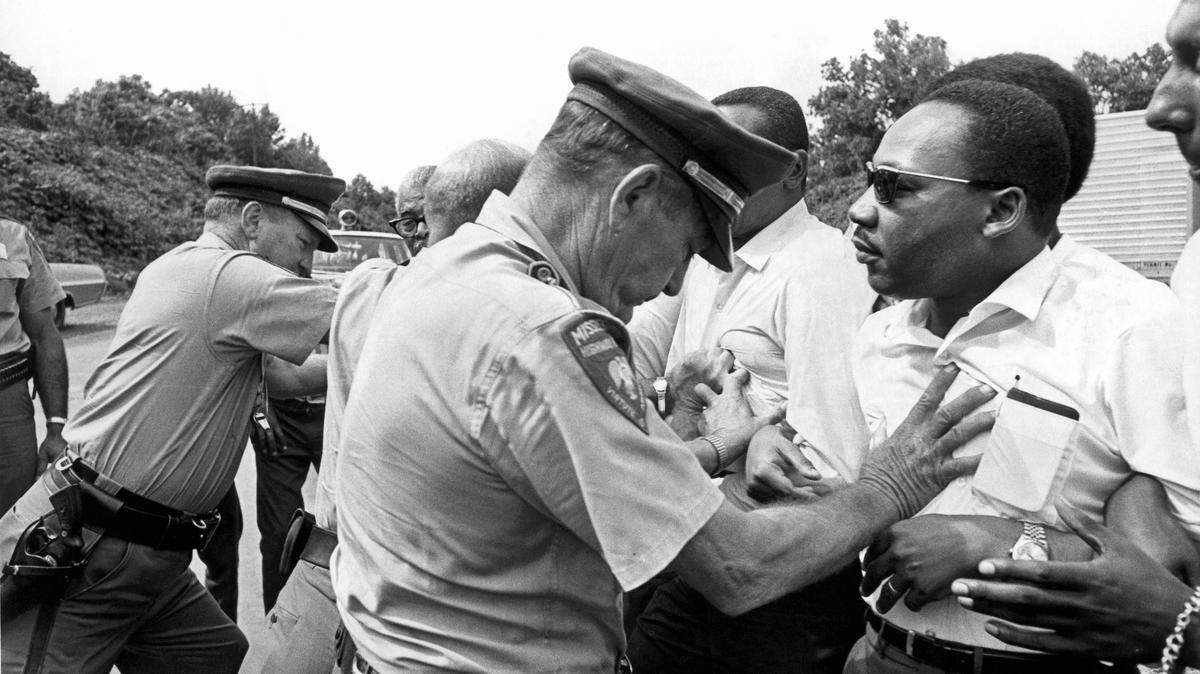
Fifty years after his death, what is there to say about Martin Luther King Jr. that hasn’t already been said? That he had a dream?
“I have a dream that my four little children will one day live in a nation where they will not be judged by the color of their skin but by the content of their character … I have a dream that one day every valley shall be exalted, every hill and mountain shall be made low. The rough places will be made plain, and the crooked places will be made straight. And the glory of the Lord shall be revealed, and all flesh shall see it together. This is our hope.”
That before he was shot in a Tennessee hotel, he was hoping to create a multi-racial campaign to improve the lives of poor people of all races and ethnicities and believed in a still-unpopular guaranteed living wage?
“The curse of poverty has no justification in our age. It is socially as cruel and blind as the practice of cannibalism at the dawn of civilization, when men ate each other because they had not yet learned to take food from the soil or to consume the abundant animal life around them. The time has come for us to civilize ourselves by the total, direct and immediate abolition of poverty.”
That he paid a hefty political price for speaking out against the Vietnam war? That he admonished critics who were more concerned about peace and quiet than equality and justice? That he won the Nobel Peace Prize and donated his winnings to further the cause of civil rights? That he was one of the most dynamic speakers this country has ever produced?
That he was a Southern black man heavily influenced by his Christian faith?
Much has been said about King because he is one of the most influential figures the United States has ever produced. But on Wednesday, the 50th anniversary of the day he was assassinated for unapologetically demanding the country live up to its founding ideals, it’s time to reflect not on King’s words, but on his example.
He sacrificed everything, including his own life, to help the powerless. He relentlessly spoke for the voiceless. He used his privilege to lift the downtrodden.
He had a choice, to either use his talents and skills and status to enrich himself or to make sure those in power could no longer ignore the full, complex humanity of the already-vulnerable.
“One day, we will have to stand before the God of history. And we will talk in terms of things we’ve done. And it seems to me that I can hear the God of history saying, ‘That was not enough. For I was hungry, and you fed me not.’”
When he was alive, King fed a multitude with words and deeds. We are called to feed the rest.
This story was originally published April 3, 2018 at 12:19 PM with the headline "50 years later, reflect on King's deeds, not just his words."