
Trade Kemba? Why new Charlotte Hornets GM Mitch Kupchak is in no rush to move star guard
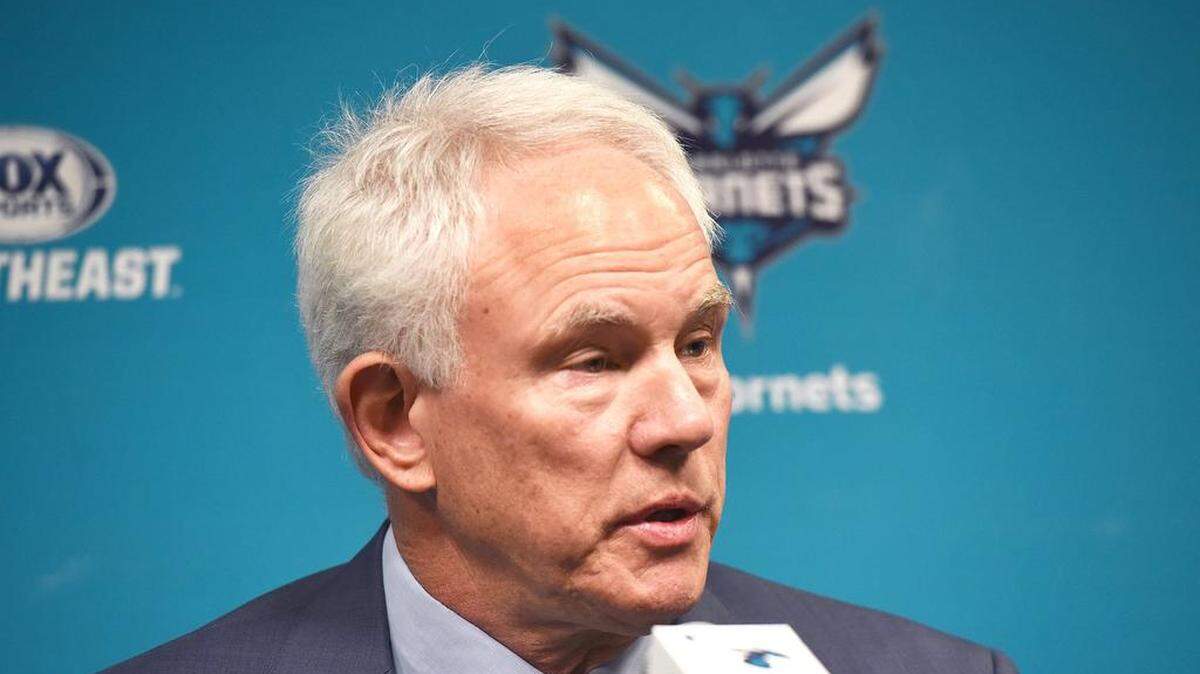
New Charlotte Hornets general manager Mitch Kupchak sounded like a guy still searching for his office Tuesday, because that’s precisely what he was doing hours earlier after flying into town late Monday.
That newness led to an abundance of “I’ve only had this job two days” responses to questions Hornets fans wanted answered at Kupchak’s introductory news conference. But here’s something I found interesting:
Kupchak, who spent 17 years at the top of the Los Angeles Lakers’ organization, didn’t sound the least concerned about All-Star Kemba Walker repeatedly mentioning his distaste for losing. That was in response to direct questions to Walker about if he’s willing to ride out another rebuild in Charlotte.
“I don’t think that’s something to overreact to. I like a player that doesn’t want to be somewhere where he’s going to lose. That’s a good thing,” said Kupchak, who replaces Rich Cho at the head of the Hornets’ basketball operation.
It doesn’t sound like Kupchak is resolved (at least yet) to having to deal Walker in anticipation of Walker’s contract expiring at the end of next season.
“I’m very aware of his talent,” said Kupchak, who called Walker a “great” player. “My understanding is he’s great in the locker room and great in the community. I don’t know why you wouldn’t want to have a player like that going forward.”
Kupchak will meet with Walker and all the other Hornets players starting Wednesday, after the team’s final game Tuesday night in Indianapolis. For the second consecutive season, the Hornets will miss the playoffs. That’s not acceptable, considering this roster was so experienced and expensive. It was in the upper half of the league in salary this season, and much of that obligation extends to next season, too.
That obligation might be the biggest short-term challenge Kupchak faces. The 10 guaranteed contracts already on next season’s payroll, plus the $3 million-plus a lottery pick will make as a rookie, will push the Hornets dangerously close to a luxury tax bill owner Michael Jordan intends to avoid.
I asked Kupchak about the salary-cap mess he inherits. It was interesting he volunteered he’d be open to moving the draft pick as a partial solution.
“Of course, you can move the pick, too,” Kupchak said. “It’s possible to look for opportunities. Maybe there’s something out there that could get you, not only a good player, but some (cap) flexibility.”
Kupchak is far from up to speed on the nuances of the Hornets’ strengths and flaws. Most jobs don’t require you to immediately do interviews on anything and everything concerning your new responsibilities, but being an NBA general manager isn’t just any job. As Kupchak said, there are only 30 of these.
If he’s formed an opinion on coach Steve Clifford’s fate, he didn’t share that. He was complimentary of Clifford from the one season Clifford was a Lakers assistant (2012-13), saying he knew Clifford was head-coaching material. But not even a hint from Kupchak whether Clifford will serve out the remaining season on his current contract.
Hornets managing partner Curtis Polk, a major player in hiring Kupchak, said ownership found Kupchak’s track record as a talent-evaluator and networker particularly appealing. Asked to detail some things about talent evaluation, Kupchak shared the following:
▪ He values analytics, but not above his own gut instincts. He loves all the data now available to every NBA executive, but that doesn’t substitute for what you can only eyewitness, such as how a draft prospect reacts when he’s pulled out of a game or is corrected by his coach.
▪ General managers shouldn’t be office-bound; they need to be in the field. Even away from the NBA for a year, Kupchak said he saw at least 30 college games in person this past season.
▪ He sees drafting and trading as the bedrocks of successful team-building. Free agency is still a tool, but not to the extent it was when the Lakers enticed Hall of Fame center Shaquille O’Neal away from the Orlando Magic in 1996. That’s in part a change in the league-wide rules.
“It’s a totally different league today than it was 17 years ago,” Kupchak said.
“Being in Los Angeles the last four or five years, we tried to attract marquee free agents. The bottom line was each free agent who contemplated moving from their home team would have had to give up one season of their (guaranteed) salary. A lot of players are understandably not going to do that. The few players who are going to do that are going to do it to win” immediately.
▪ Sacrificing cap room or draft picks on quick fixes (something the Hornets could be accused of having done of late) is often short-sighted:
“Cap room is incredibly important to making savvy trades,” Kupchak said. “You keep your stockpile of (draft) picks so you have something to wheel and deal with. It’s hard to make trades if you don’t have assets.”
It’s understandable that Kupchak’s answers Tuesday were heavy on philosophy, light on detail. It’s true he’s brand new. But this is just as true:
The Hornets' problems are major and they are urgent. Kupchak has lots to catch up on and even more to execute. Time is a luxury this job simply won’t afford..
Rick Bonnell: , 704-358-5129; @rick_bonnell
This story was originally published April 10, 2018 at 5:37 PM with the headline "Trade Kemba? Why new Charlotte Hornets GM Mitch Kupchak is in no rush to move star guard."