
Real or not, a new Charlotte museum exhibit celebrates the Meck Dec at 250
At the corner of 4th Street and Kings Drive, just shy of uptown Charlotte, a bronze sculpture depicts a man, determined, headed north atop his galloping horse.
“The Spirit of Mecklenburg,” by artist Chas Fagan, commemorates the journey of James Jack. He’s the tavern owner-turned-Revolutionary War captain who, in 1775, rode what would become the most storied document in Charlotte history to the Continental Congress in Philadelphia.
The Mecklenburg Declaration of Independence, “Meck Dec” for short, was supposedly signed by local patriots that year, deeming themselves free from British rule, a full year and some change before the American Declaration of Independence was signed.
Tuesday, May 20, marks 250 years since the Meck Dec’s signing.
To commemorate the anniversary, the Charlotte Museum of History’s exhibit, Meck Dec 250, will explore the origins of the document, its use as a symbol throughout Charlotte’s history and its continued value to the region.
“The exhibit is about the memory of the Mecklenburg Declaration of Independence. And I say it that way because the exhibit emphasizes the ways that people in Charlotte have celebrated, commemorated and critiqued the Meck Dec in the 250 years since it was supposedly written,” said Nolan Dahm, exhibits manager at the museum.
“The focus is not, ‘Did the Meck Dec exist?’ ” Dahm said. “The exhibit is about all of the context surrounding it and why it has become such a pop culture icon of Charlotte.”
On the eve of revolution
On April 19, 1775, the battles of Lexington and Concord ignited the Revolutionary War.
“That’s what’s believed to be the first actual shot between the British and the Americans,” said Dahm. “It takes a few weeks, but that news spreads to Mecklenburg County, and on the night of May 19, everybody meets.”
Outraged at the skirmish, the colonists form a committee, draft the declaration and deem themselves a “free and independent people.”
It’s a thrilling story, but the existence of the Meck Dec is nothing if not controversial.
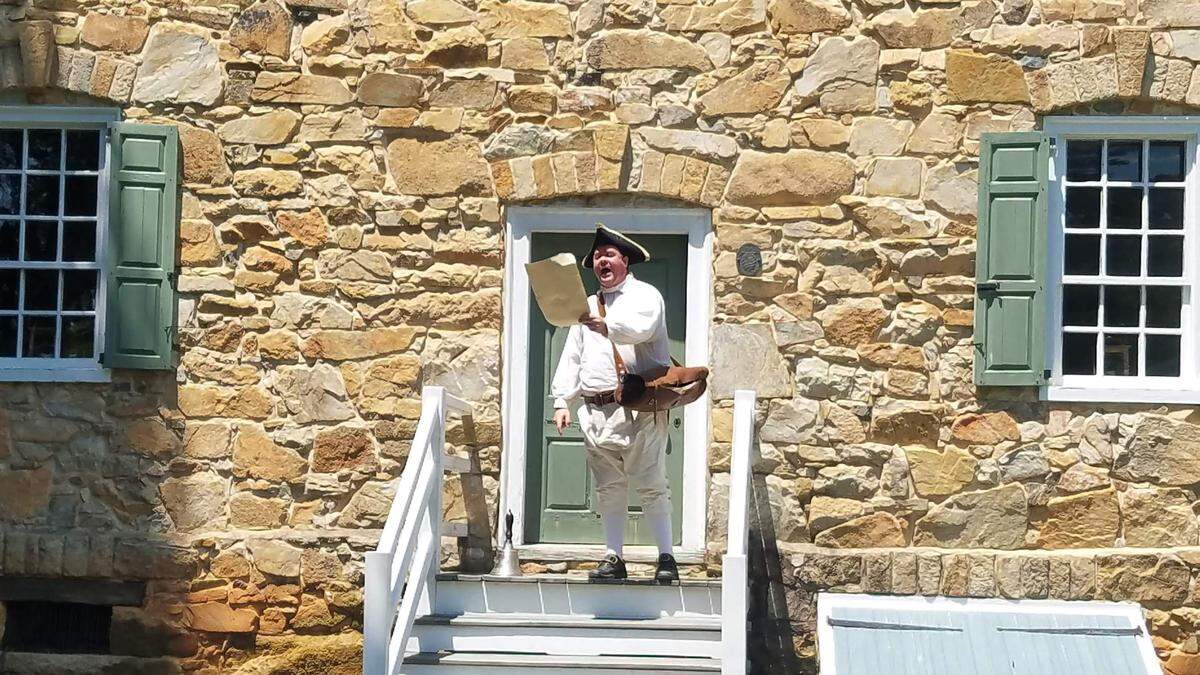
Eleven days later, another group formed, led by Ephraim Brevard, to agree upon what became known as the Mecklenburg Resolves.
“Rather than being hastily delivered up to Philadelphia — or, in addition to being hastily delivered up to Philadelphia— they were also printed in local newspapers,” Dahm said. “So we have the Mecklenburg Resolves, in June 1775, printed in the South Carolina Gazette.”
In April 1800, John McKnitt Alexander’s home burned down, and the original document supposedly perished in the blaze, too. Alexander was the secretary of the May 20 convention. That September, Alexander was said to have dictated “the Davie copy” of the Meck Dec to a friend — the earliest mention of the Meck Dec.
But skeptics say that without the original document, the story is unprovable.
The Meck Dec 250 exhibit
At the Meck Dec 250 exhibit, visitors will gain understanding about Mecklenburg County at the time.
That includes some of the other rebellious activities, like the Regulator Rebellion, in which backcountry colonists fought against what they perceived to be unfair taxation and other mistreatment by the royal government.
Guests will also see a diorama of Charlotte in 1775. “Hypothetically, on the day the Meck Dec was signed, we have a diorama that shows what Charlotte looked like,” Dahm said. “It’s interactive; there are little buttons and places light up, and you’ll be able to see what’s currently there.”
The museum will also display Catawba pottery and some original artifacts from Sugaw Creek Presbyterian Church, Charlotte’s oldest church, attended by some of the Meck Dec signers.
The earliest printings of the declaration are typically found in newspapers, like one found in the Raleigh Register from 1819. “Those are based on some notes from John McKnitt Alexander and some other sources,” Dahm said.
“But we will have the first standalone printing of the Mecklenburg Declaration of Independence,” he said, “in other words, the iconic thing that you think about with the really fancy title at the top, with the text in really nice lettering and all the signatures at the bottom.”
That version was printed in 1826, in Tennessee, by a grandson of John McKnitt Alexander. “Only six of those are known,” Dahm said.
In a separate document room, visitors can view rations records from the Revolutionary War, a letter signed by Queen Charlotte, and more. The museum will also feature letters from former U.S. presidents, from Dwight D. Eisenhower to Gerald Ford, and Lady Bird Johnson, who visited Charlotte to commemorate past Meck Dec Days. President William Howard Taft also came to town for Meck Deck Day.
Through a larger historical lens
As a historian, what jumps out to Dahm are the ways that the Mecklenburg Declaration of Independence has been celebrated over the years and how they reflect what was happening during those periods in Charlotte’s history.
“For example, right next to the printing of the Meck Dec in the Catawba Journal, 1839, is a runaway slave ad,” he said. “That juxtaposition of a call for freedom with a call for enslavement on the same page is a really powerful reminder that you know this document was important, but also limited in its scope.”
He also pointed to a newspaper from May 20, 1861, the day that North Carolina seceded from the Union at the start of the Civil War.
“They picked that day explicitly because it was Meck Dec Day, and they saw a through-line between their Revolutionary ancestors and the Confederacy” Dahm said. “In their mind, those were liberty-loving institutions.”
In 1875, the Meck Dec centennial celebration drew 40,000 people. At the time, Charlotte’s population was roughly 6,000. The museum will also have artifacts from that celebration.
“And then we have all of these presidential visits,” Dahm said. “They come to give speeches that are about the Meck Dec, but their speeches are political stump speeches… It’s just so interesting how the Meck Dec becomes this vehicle to discuss other really important stuff that’s happening in our society.”
Attempts at Meck Dec answers
In 1829, prompted by arguments between Thomas Jefferson and John Adams, the North Carolina General Assembly formed a committee to resolve the Meck Dec controversy, calling on witnesses from Mecklenburg and as far as Georgia and Tennessee, from the May 1775 meetings.
They tapped all the street-name guys — General Joseph Graham and Major John Davidson — and, in 1831, published their report.
Davidson said: “When the members met, and were perfectly organized for business, a motion was made to declare ourselves independent of the Crown of Great Britain, which was carried by a large majority.”
Graham and others swore: “(O)n the 20th they again met, with a committee, under the direction of the Delegates, had formed several resolves, which were read, and which went to declare themselves, and the people of Mecklenburg county, Free and Independent of the King and Parliament of Great Britain.”
Still, skeptics say those accounts were unreliable, taken nearly 50 years later.
While we can’t be sure of whether the document existed, Dahm is certain of one thing. “The more that I have done research on this exhibit, the more that I’ve come to understand that we can be very certain that some really important stuff happened on the night of May 19 through May 20,” he said.
“Whether or not the document that we now call the Mecklenburg Declaration of Independence was signed in the exact way, with the exact wording and people, and place … we’re never going to know,” Dahm said. “But it still matters today because, for 250 years, this has been the foundational story of Charlotte.
“Why is Charlotte an important historical place? The answer is the Mecklenburg Declaration of Independence.”
Want to go?
The Charlotte Museum of History Meck Dec 250 exhibit open to the public May 20 and runs through March. Admission to the museum at 3500 Shamrock Drive also includes a guided tour of the historic 1774 Rock House, the Revolutionary-era home of Hezekiah Alexander.
Other celebrations
To learn more about Charlotte’s Revolutionary War-era history, take the free, self-guided audio walking tour of the Liberty Walk downtown.
On May 17, The Olde Mecklenburg Brewery, home of the Captain Jack Pilsner, will host a celebration and scavenger hunt in honor of Meck Dec at 250. The following day, the brewery will host a bike ride.
For a full list of events surrounding the Meck Dec 250 celebration, visit may20thsociety.org/events.
More arts coverage
Want to see more stories like this? Sign up here for our free, award-winning “Inside Charlotte Arts” newsletter: charlotteobserver.com/newsletters. And you can join our Facebook group, “Inside Charlotte Arts,” by going here: facebook.com/groups/insidecharlottearts.
This story was originally published May 14, 2025 at 6:00 AM.