
The Ancient Ruins Every Serious Traveler Should See Once and What You Need to Know Before You Go
Ancient ruins offer time travel at its finest, connecting visitors to lost civilizations, shared humanity and the kind of awe no museum can replicate. As travelers increasingly seek immersive, authentic experiences, ancient ruins like the Acropolis, Machu Picchu and the Pyramids of Giza are climbing bucket lists around the world.
Why Are Ancient Ruins Worth Visiting In 2026?
Ancient ruins remain one of the most powerful ways to connect with the past, other cultures and the long arc of human survival — and demand for that kind of meaningful travel is surging.
For more information: 8 Global Cultural Festivals Offering the Ultimate Immersive Travel Experiences in 2026
According to 2025 Skift research, 86% of travelers are now prioritizing immersive experiences over traditional sightseeing, with millennials (80%) and Gen Z (75%) leading the shift. The same research found 86% of travelers are actively seeking out entertainment, sports and cultural activities on their trips.
A 2026 study by the European Travel Commission — the Assessment of Responsible Travel Behaviours of Long-haul Travellers to Europe — reached similar conclusions, finding that long-haul visitors are increasingly drawn to local, authentic experiences and open to destinations beyond the main tourism routes.
The pull is more than statistical. Ancient sites help travelers find their roots and feel part of something bigger. They are humbling yet empowering, a reminder that we come from a long line of survivors. They connect us to other cultures — through striking similarities and meaningful differences — and they remind us we are not alone in our struggles, which echo across millennia.
They also let visitors fantasize: to wander the gardens of kings, to imagine the roar of a gladiatorial crowd, to stand where a pharaoh once stood. And they give voice to people who no longer have one, resurrecting the past through stone, story and interpretation. For travelers chasing more than a photo op, these sites don’t just teach history — they make you feel it.
Which Ancient Ruins in Europe Should Be on Your Bucket List?
Europe is home to some of the most iconic ancient ruins on the planet, from prehistoric stone circles to entire Roman cities frozen in time.
The Acropolis — Athens, Greece. A UNESCO World Heritage Site and the most visited cultural site in Greece, the Acropolis is an ancient citadel perched on a craggy ridge above Athens. The name comes from the Greek ἄκρον (akron), meaning “highest point,” and πόλις (polis), meaning “city.” Its most famous structure is the Parthenon, a temple dedicated to Athena — goddess of war and wisdom, and the namesake of the city itself.
Stonehenge — Wiltshire, United Kingdom. This prehistoric megalithic monument predates the first Egyptian pyramid. Its outer ring of lintel-topped standing stones — each roughly 13 feet tall, 7 feet wide and weighing about 25 tons — is aligned with sunrise on the summer solstice and sunset on the winter solstice. Construction spanned several phases from roughly 3100 BC to 1600 BC, built by Neolithic Britons rather than Druids or Celts as once theorized.
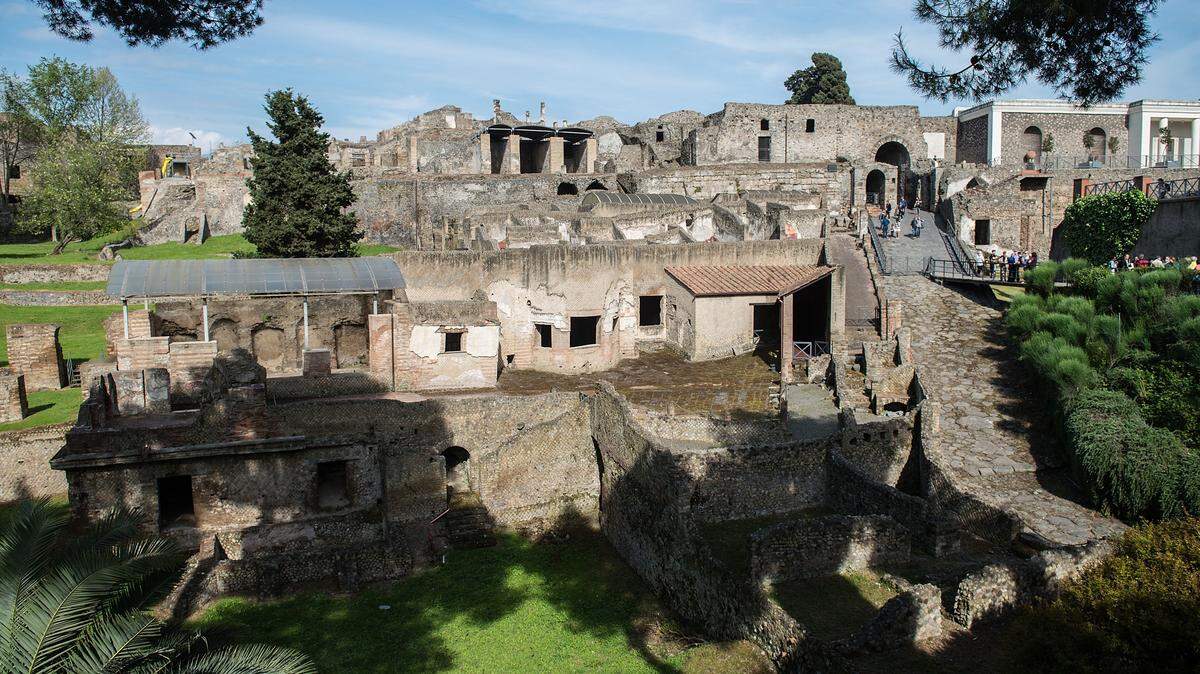
Pompeii — Naples, Italy. Another UNESCO World Heritage Site, Pompeii was a booming, sophisticated Roman port city until 79 AD, when Mount Vesuvius erupted for two catastrophic days and buried it beneath up to 20 feet of ash and pumice. The 10-mile-high plume asphyxiated around 200,000 residents but also preserved the city in remarkable detail. Today the excavated streets, temples, shops, houses, frescoes and pottery offer a snapshot of Roman daily life frozen in a single moment.
Aquae Sulis — Bath, England. Latin for “Waters of Sulis,” this Roman town in the province of Britannia was originally home to the Iron Age Dobunni, who worshipped the goddess Sulis at a sacred hot spring. After the Roman conquest of Britannia in AD 43, a formal temple complex rose around AD 60. The Romans identified Sulis with Minerva — goddess of wisdom, warfare, arts, trade and strategy — and the shared traits helped the Celts adapt to Roman culture. Ptolemy recorded the site as “Aquae calidae,” or warm waters, in his 2nd-century Geographia.
What Ancient Ruins Should You See in the Middle East and North Africa?
The ancient ruins of the Middle East and North Africa reach back millennia, preserving everything from rock-cut tombs to entire Greco-Roman cities — and they remain some of the most atmospheric stops on any bucket list.
Amyntas Rock Tomb — Turkey. Carved into a cliff face around 350 BC, this Lycian rock-hewn tomb is larger and set higher than the others around it, a signal of Amyntas’s importance in his day. Reaching the well-preserved tomb requires a steep climb, but visitors are rewarded with carved columns and reliefs depicting mythological scenes. The site offers a rare window into the religious and cultural beliefs of the ancient Lycian people, about whom relatively little is known — a mystery that only deepens its appeal.
Jerash — Jordan. One of the oldest citadels in the Middle East, Jerash has seen an unbroken chain of human occupation since the Bronze Age. The grand walled Greco-Roman settlement is entered through 2nd-century Hadrian’s Arch and includes the Temple of Zeus, the Hippodrome, the Temple of Artemis and the Forum’s oval colonnade of 56 Corinthian columns. Once a major city on Rome’s ancient trade route, Jerash was buried and preserved by the dry climate for centuries until excavations began in 1925. Many travelers consider it arguably more impressive than its counterparts in Rome itself.
Pyramids of Giza — Cairo, Egypt. Built roughly 4,500 years ago as the eternal resting place of Egypt’s great pharaohs, the Pyramids of Giza remain among the most recognizable monuments on Earth — even though neither the pharaohs nor their treasures are still inside. The construction method is still cloaked in mystery. Long assumed to have been built by enslaved people, modern excavation has revealed that the workforce was made up of Egyptian laborers from low-income families.
Which Ancient Ruins Are Must-See Sites in the Americas and Asia?
From Mayan pyramids in the Yucatan to the Inca highlands of Peru and the longest wall ever built, the Americas and Asia hold some of the most awe-inspiring ancient ruins anywhere.
Chichen Itza — Yucatan, Mexico. The best-known Mayan ruins in the world, Chichen Itza is both a UNESCO World Heritage Site and one of the New Seven Wonders of the World. Founded in the 6th century, it flourished from 900 to 1300 AD and was once home to about 50,000 people, making it one of the largest political and economic cities in the Mayan world. The site covers around six square miles and is centered on the Castillo, or Kukulcán pyramid, where each equinox the shadow of a serpent appears to slither down the steps. Visitors can also explore the Great Plaza, the Ball Court, the Temple of the Jaguars and the Sacred Cenote. The reason for the city’s eventual decline and abandonment remains unclear.
Machu Picchu — Peru. Often mistakenly called “the Lost City of the Incas,” Machu Picchu was brought to global attention by American historian Hiram Bingham in 1911 after remaining largely unknown for almost 400 years. Its exact purpose is still debated. One theory holds it was a palatial retreat for the emperor Pachacuti, deliberately abandoned before the Spanish invasion to protect it. Another suggests it was an administrative and trading center linking the Amazon, the Urubamba Valley and the highlands — a theory supported by the eight access routes that converge on the site. An estimated 1,200 people could have lived there.
Easter Island (Rapa Nui) — Chile. This remote Chilean territory in the southeastern Pacific is famous for its nearly 1,000 moai, the towering stone statues carved by Polynesian people centuries ago. Key sites include Ahu Tongariki and Rano Raraku, where statues remain partially carved into the hillsides. Sunrise hikes beside the statues, volcanic landscapes, local guides and museums bring Rapa Nui culture to life, while conservation programs protect the archaeological sites and local communities continue to preserve their traditions, language, music and dance.
For more information: 8 Global Cultural Festivals Offering the Ultimate Immersive Travel Experiences in 2026
Great Wall of China. Not a single continuous structure but a series of fortifications stitched together by mountains, trenches and rivers, the Great Wall stretches about 13,000 miles east to west, built from stones, compacted earth, lime and brick. Construction began as early as the 7th century BC to protect against nomadic assailants, with the First Emperor Qin Shi Huang adding a major portion from 220 to 206 BC. Most of the wall standing today was built during the Ming Dynasty from 1368 to 1644.
This article was created by content specialists using various tools, including AI.
.jpeg)