I turned off all my notifications after watching Netflix’s ‘The Social Dilemma’

Let me set the stage: You are sitting at your desk and your phone buzzes with an Instagram notification alerting you your favorite celebrity is going live. Intrigued (or bored), you unlock your phone and watch about 30 seconds of the livestream until you lose interest. But wait, it’s now been 30 minutes since you picked up your phone — how did that happen?
You have been aimlessly scrolling through the platform, looking at your middle school crush’s engagement photos and a video on how to make bacon-wrapped jalapeno poppers.
Sound familiar?
Recently, I watched Netflix’s trending documentary, “The Social Dilemma.” As someone who has a background in social media and digital marketing, this caught my attention. And, I am not the only one. The documentary-drama has not only sparked conversation among Netflix viewers, but it has led to many ditching their social media altogether.
Silicon Valley creators = this generation’s Victor Frankenstein?
With 94 minutes of eye-opening truths, “The Social Dilemma” discusses the harm of popular apps and social networking. It not only gives viewers a peek behind the curtain, it practically rips the whole thing down.
“We curate our lives around this perceived sense of perfection because we get rewarded with these short term signals — hearts, likes, thumbs up — and we conflate that with value, and we conflate it with truth,” Chamath Palihapitiya, former VP of Growth at Facebook, said in the documentary.
The fascinating part: the individuals discussing the detriment are the Silicon Valley tech experts themselves, some of whom created the platforms in question. The experts shed light on how tech company giants have influenced elections, violence and suicide rates.
At the end of the documentary, the experts suggest a couple of methods to limit time spent on devices, including turning off notifications and uninstalling unnecessary apps.
“I’ve uninstalled a ton of apps from my phone that I felt were wasting my time. All the social media apps, all the news apps and I’ve turned off notifications on anything that was vibrating my leg with information that wasn’t timely and important to me right now,” Justin Rosenstein, former engineer at Facebook and Google and co-founder of Asana, said in the documentary. “It’s for the same reason that I don’t keep cookies in my pocket.”
OK, hold up.
The masterminds themselves limit their time spent using the apps they helped engineer? This got me thinking: Can something initially created for good be manipulated into something harmful for the masses?
But didn’t we always sorta know better?
I suppose I always knew in the back of my mind there were some consequences from using social networking apps, but not to this extent. Feeling manipulated and exploited, I took the advice from the pros. For almost two weeks now, I have turned off my notifications, with phone calls and text messages as exceptions.
As an additional note: Prior to watching the documentary, for about six months now (right at the beginning of the pandemic), I set time limits on my social apps, limiting me to about 15 minutes of scrolling per day.
Here is what I have learned: My notifications might be turned off and my apps might be restricted, but I still have a lot of work to do. Yes, I am less distracted by constant buzzing throughout the day, but I still catch myself breaking my time limits and scrolling aimlessly through Instagram and Facebook, distracting me from what is going on in real time.
Honesty hour time. I can admit my reason for scrolling primarily stems from a fear of missing out (FOMO). Maybe I missed a friend’s announcement on Instagram. Maybe there is an important email in my inbox. What if I have an unread direct message? These are all thoughts I’ve had, luring me back into a vicious cycle of double-tapping and scrolling.
However, according to my iPhone’s data, my screen time has dropped about 40 percent, which I believe can be attributed to my awareness after watching the documentary, along with turning off my notifications. There are times where I experience FOMO, yes, but I have felt an extraordinary sense of freedom by detaching from my device. Maybe ignorance really can be blissful.
Great story bro, but is it realistic?
Like myself, uninstalling apps and turning off notifications might be freeing, but what about those whose livelihood revolves around social media? Is it realistic to turn off notifications, or even delete the apps altogether? Lana West, a marketing communications specialist who lives in Charlotte and works with Schleich USA, offered the perspective of someone who works in social media 40 plus hours a week.
“I 100% stare at a screen all day, there’s just no way around it. If I am not on it, I am kind of not doing my job,” West said. “I couldn’t delete the apps on the phone unless I carried around my laptop all day, but I think that is even worse.”

As someone who is constantly looking at social media channels throughout the day due to her occupation, West said she spends less time on her personal social media accounts, which is a trend she has seen among individuals in the industry.
Since working at Scheich USA, West turned off her personal notifications but kept her work notifications on to limit her screen time. “I would rather get the notification alerting me to go into the app, as opposed to having to constantly go in and check. However, that is not to say that I do not find myself getting sucked into the vortex once in a while,” West said.
After watching the documentary, West said she has been more aware of her personal screen time out of boredom or discomfort. She said she is now more aware when she is aimlessly scrolling as opposed to intentionally looking at the platforms.
Men’s luxury style influencer and marketing professional, Noah Williams, has also been ahead of the trend. Ever since his style account hit 10k followers a few years back, Williams turned off all Instagram notifications.
“Going into watching the documentary, I thought I was going to learn something new, but I really didn’t,” Williams said. “As a content creator, you understand there is a very clear line between what you are creating and real life.”
The suggestions mentioned in the documentary regarding screen time limitations are practices Willams said he has already implemented in his own life. “When you produce a shoot, it is produced — it is not organic,” Williams said. “The biggest thing people have to realize is don’t take social media as a literal thing, take the imagery as a form of art.”
Similarly, visual storyteller Asa Kryst offers a perspective that sees both sides of the equation. “It was terrifying and eye-opening to see. The worst part is that it seems that they don’t have full control over the AI,” Kryst said. “But, I’m not going to delete it; I still think social media is a great thing.”
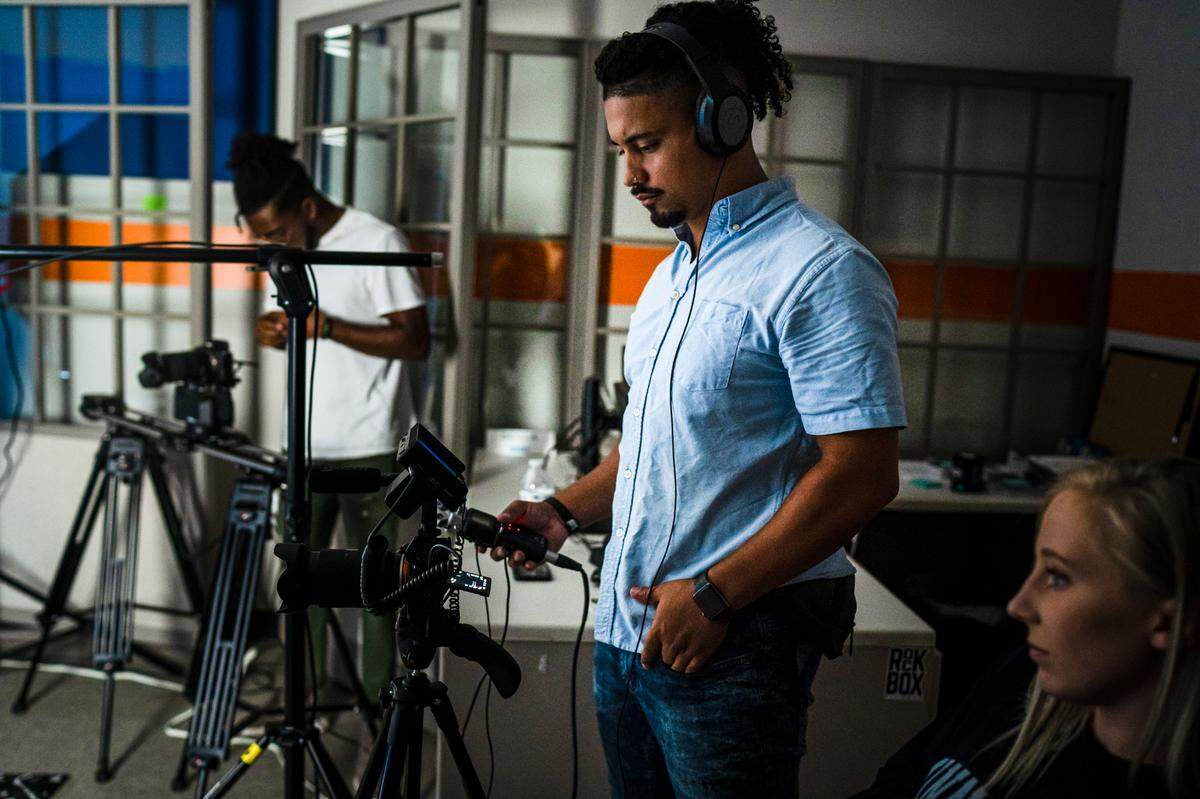
Social media has not only given Kryst the opportunities to stay connected with friends and family, but the platforms have allowed him to grow his business. “It has given me personally so much growth in my business and opportunities that I’m not sure I would ever get without social media,” Kryst said.
However, Kryst has begun taking a more conscious effort at limiting his screen time after watching the documentary and has become more aware of his time spent on social apps. “It did make me more conscious of aimlessly scrolling, Kryst said. “I’ve been at that point where I’ve refreshed my feed multiple times in the same session, and I’m just waiting for something.”
What about echo chambers?
Along with hypnotic, aimless scrolling, the documentary also touches on how social media has led to extreme polarization, especially during times of national crisis and significant change, such as COVID-19 and the presidential election.
“The way to think about it is as 2.5 billion Truman Shows. Each person has their own reality with their own facts,” Roger McNamee, an early investor venture capitalist in Facebook, said in the documentary. “Over time, you have the false sense that everyone agrees with you because everyone in your news feed sounds just like you. Once you’re in that state, it turns out you’re easily manipulated.”
Is it possible social media is to blame for creating these “echo chambers” shielding us from opposition and stirring division?
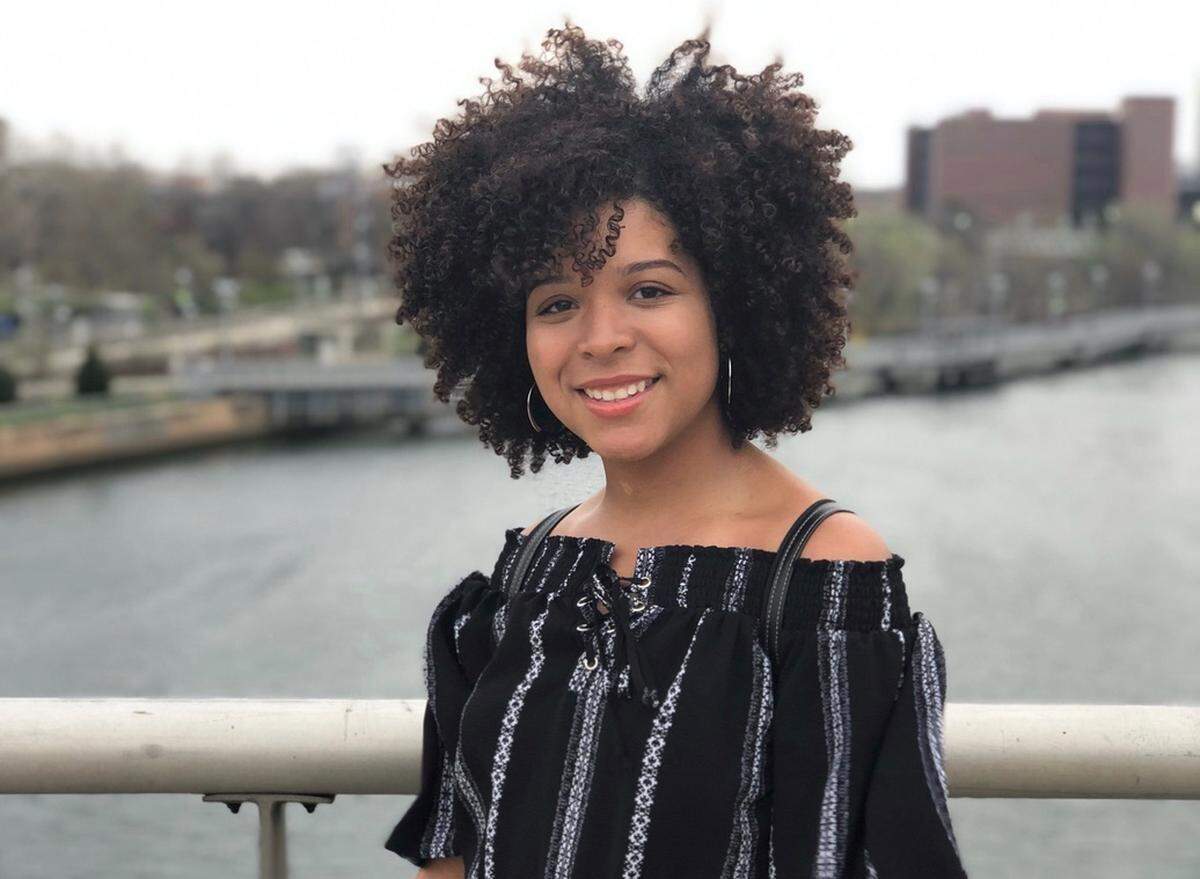
“I do think social media is to blame for our increased polarization and our echo chambers,” Elisabeth Hyde, a local consulting analyst, told CharlotteFive. “If I lean left or if I lean right, I will never see the other side, and I might go as far as to demonize the opposing side.”
Is social media usage a generational concern?
As mentioned previously, the documentary discusses the horrifying data regarding social media’s impact on suicide rates, especially among teenage girls. To learn more on how the two are correlated, I spoke to Dr. Mary Lacey, a behavioral health doctor specializing in anxiety, depression and ADHD.
“Scrolling, in of itself, is a way for an immature brain to gain information about what is expected, acceptable and goal worthy. It’s an addiction to perception, an impulse that constantly drives the need to conform,” Lacey said.
“The problem with this is that teenagers have an undeveloped prefrontal cortex, which doesn’t allow them to have a true understanding of judgment, mood and efficient reasoning skills. Without efficient reasoning skills and the ability to make accurate judgments about the world around them, kids are left to make assumptions about everything they see on social media. Basically, their perception is their reality.”
Social media has become a huge part of culture and our day-to-day lives, but is it slowly impacting our lives in a negative way? I will let you be the judge of that. Whether you have watched the documentary or not, we want to know how your social media life looks. Do you have your notifications on or off? Do you have your own unique ways of limiting your screen time?
We want to hear from you, so let us know in the comments on our social media (yes, we realize the irony of this) or email charlottefive@charlottefive.com and tell us your story.