How to train for a virtual race in 2020, when the last thing you want to do is run
We are about a week from the “start line” of the Novant Health Charlotte Marathon, virtual this year during COVID-19 (along with the half marathon, relay races, 5K and 1 mile kids’ run).
I decided to sign up a couple of months ago, even though it’s been 6 years since I’ve run the Charlotte Marathon and quite a while since I’ve been in the habit of distance running.
So, how are those long runs going, you ask? With the window to run our local marathon fast approaching (Nov. 6-22), let’s just say … things could be better? By the time I decided to sign up for the race, I did not have enough time to do a full training for a marathon. So, I just estimated some mileage goals, then put them in my calendar — and I mostly laugh when the alerts pop up.
And then I remember: We’re in 2020, the year of the COVID-19 global pandemic, during an all-time high of political and racial unrest, wildfires and hurricanes, not to mention murder hornets, and my mental health is hanging on by a thread some days, and I already watched all of Netflix (insert plug for My Octopus Teacher) and I’m pretty sure we’re living in the Upside Down, anyway.
And all of that serves as my reminder to why I wanted to do this marathon in the first place: With everything going on, it can be easy to slip out of healthy habits. I needed a goal.
I know I won’t be breaking any personal records this time around. But it’s OK, didn’t we all collectively decide that 2020 is the year of the pivot, anyway? So, instead of running all 26.2 miles, maybe I’ll walk. Or walk/run. Or I’ll run the downhills and walk the uphills — whatever it takes to get in those miles.
When I wanted to bail, D.C. Lucchesi with the Charlotte Marathon team reminded me that this year, there’s no time limit — and with a window of 16 days, I could run less than 2 miles a day if I really wanted.
2020 is officially the year of no pressure on the race course — we have enough to worry about as a society.
Even in quarantine, I knew I still needed the support of Charlotte’s running community, so I reached out virtually to my running friends and CharlotteFive readers for advice. I got so many good tips that I wanted to share a few of them with you here, in case you’re planning for your own virtual race:
(1) Seek professional help
Seek professional help, and not in the “if you want to run 26.2 miles you clearly need help,” kind of way (but for the record, mental health help is crucial during these times, too). It’s important to get professional physical help before attempting to begin or advance a new cardio program, whether it’s running a marathon, jumping on a Peloton for the first time or beginning a new Chakti yoga routine. I decided to visit Novant Health Sports Performance in Huntersville before starting on my latest adventure.
Performance manager Will Hayes took me through an assessment that tested my ability to complete activities such as squats with a pole behind my head and lunges with a pole along my spine. We did bird dogs and one-arm planks, and he measured how high I can jump.
Don’t worry, there was no judgment of my tight hips or achy IT bands — he knows where runners have weaknesses, and he’s here to help. After the assessment, he showed me some exercises and stretches I can do at home that reminded me of workouts I’ve done at Barre Code and in yoga classes. The center also offers group fitness classes — find the schedule on MindBody.
At first, I hesitated to travel “all the way” from Charlotte to Huntersville, but it took me only about 20 minutes from NoDa. There’s a location at the Arboretum, too.
(2) What’s your emergency plan?
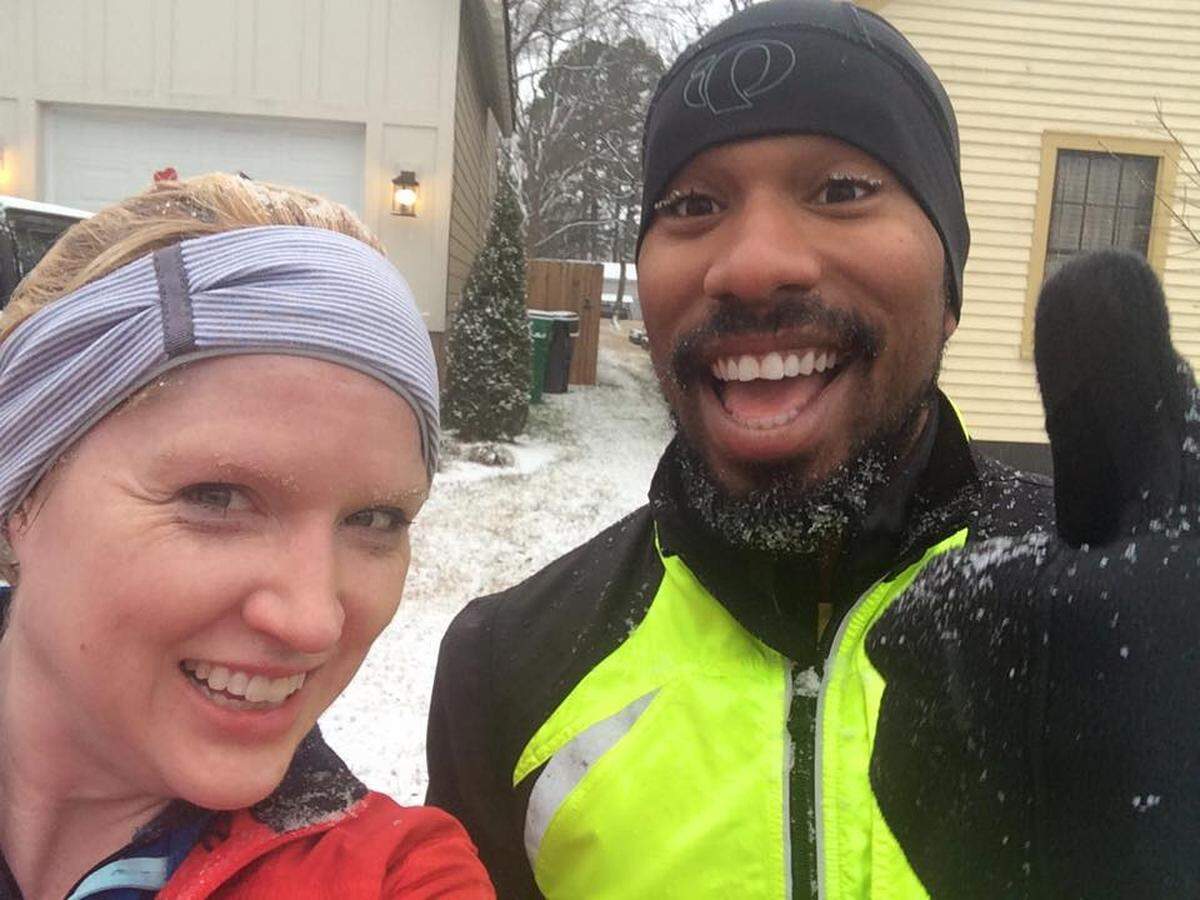
Mosi Smith is the baddest ultramarathoner I know, and when he lived in Charlotte, he was also one of my nicest, most patient running buddies. Five years ago, he took me on my first snowy run (OK, my only snowy run). After other running adventures, we did push-ups in my driveway (his idea) or hit up hot yoga. I knew if I needed inspiration or advice, he would be the person to ask.
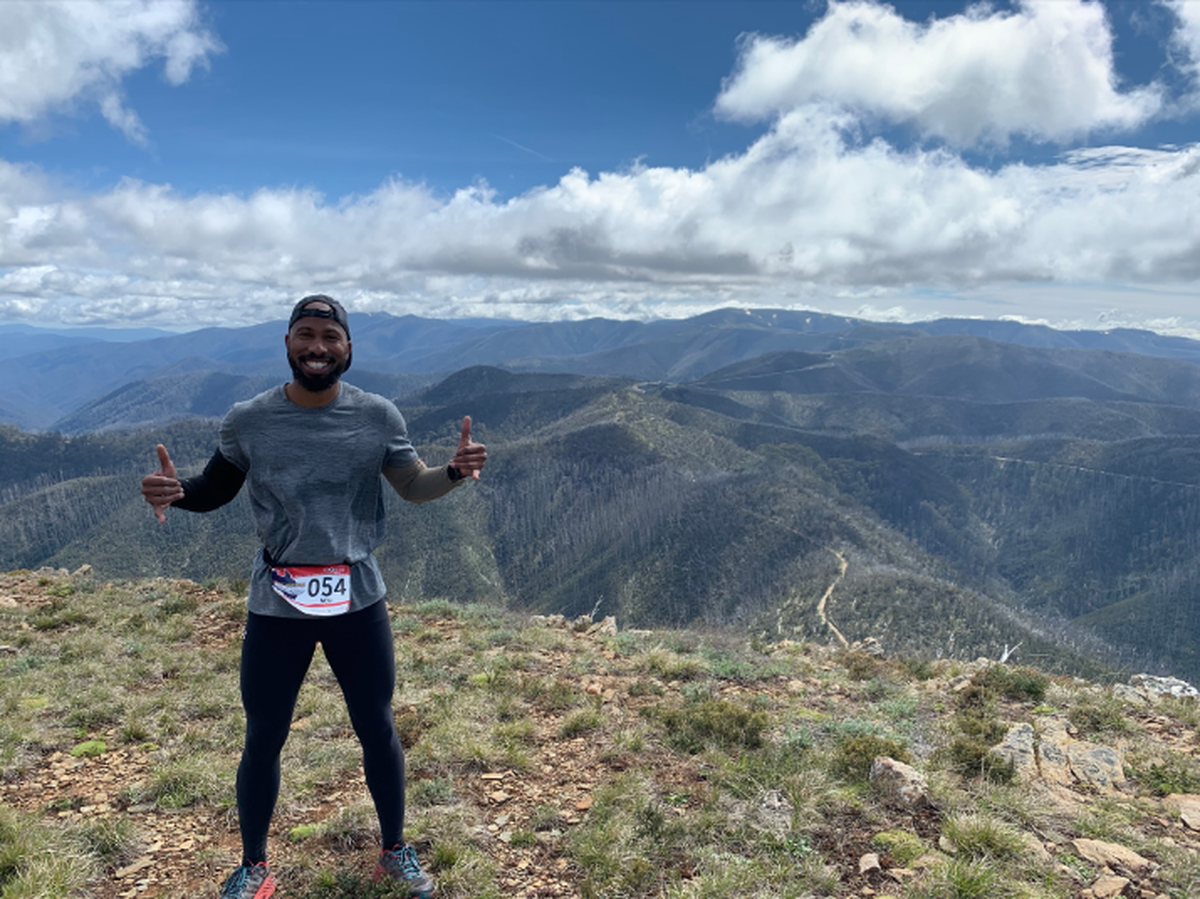
In addition to running the 135-mile Badwater and multiple other ultramarathons and being featured in ESPN The Magazine, Smith has completed a handful of virtual races. He sent me these suggestions:
Biggest takeaway is to treat your training as if you’re racing in person.
You get the benefits of choosing your venue. Make it interesting to you, whether that means a course that is going to run fast or one that will take you into the backcountry.
Plan ahead on the execution. This is particularly important for the trail enthusiasts. Figuring out where and if water/food resupply will occur, what happens if a medical emergency occurs, what is the main means of communication/if available, and who knows where you’re running.
Enjoy the run — we spend too much time on our feet not to do so.
(3) Keep your route simple
“I love that you are using this weird time we are in to run your fourth marathon,” Sara Whitten, who is an RRCA Certified Running Coach, emailed me. “I’ve run 14 marathons and the last one was virtual to replace the marathon I was signed up for in Edinburgh, Scotland.”
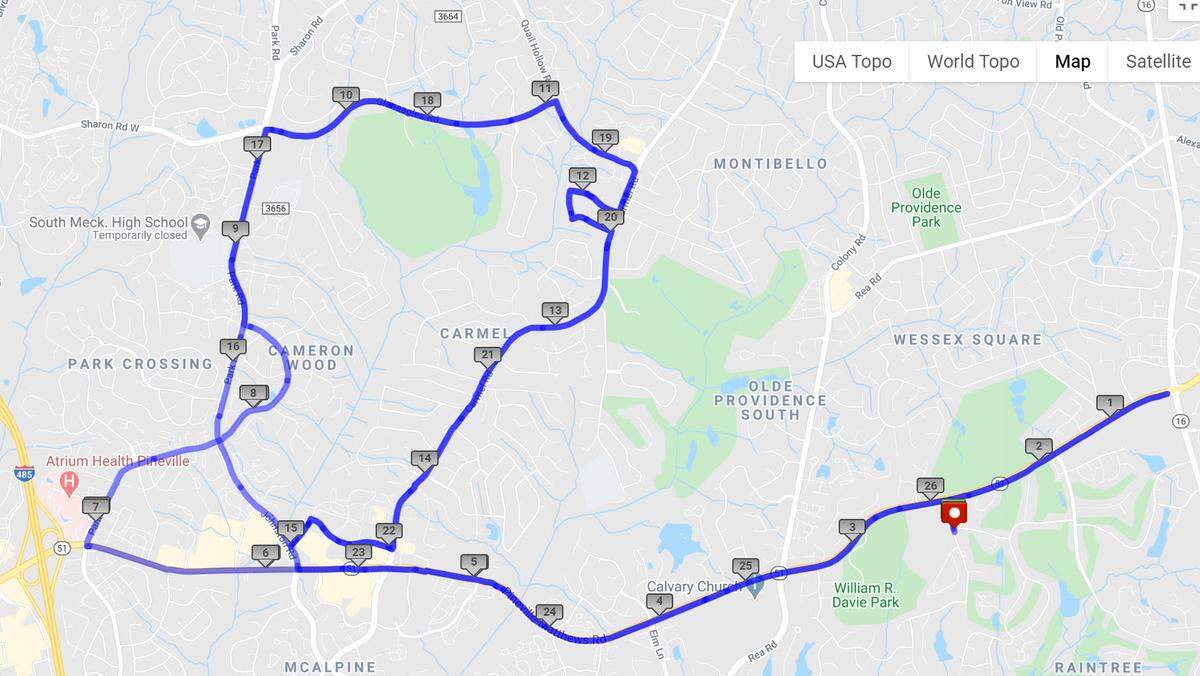
She planned her virtual marathon route based on these criteria:
She was prepared to run it alone.
She wanted to run on her side of town.
She planned her route with gas stations or grocery stores along the way for restroom breaks or food needs.
She didn’t want a lot of turns — “too easy to get lost if I’m on my own.” Also, “I wanted it to be a simple enough route that if I needed my husband to come pick me up, that he would have a rough idea of where I was,” she said.
“In planning my route, it gave me a whole new appreciation for the planning that goes into any races,” Whitten said. She offered to share her route with any runners looking for a South Charlotte route. I’ll paste her turn-by-turn directions at the bottom of this article.*
(4) Skip the hills if you want — it’s your race course
Beth McMillan ran the Charlotte marathon in 2019 and helped her friend through a virtual marathon in May. She ran the Charlotte Marathon with an Osprey Water Pack that holds 1.5 liters of water — and the vest had enough pockets to hold her food.
“A great idea is to loop your race at 13.1 to stop by your house (similar to how the marathon goes through uptown again at 13.1) in case you need a bathroom break, food, or if you’re just not feeling great.”
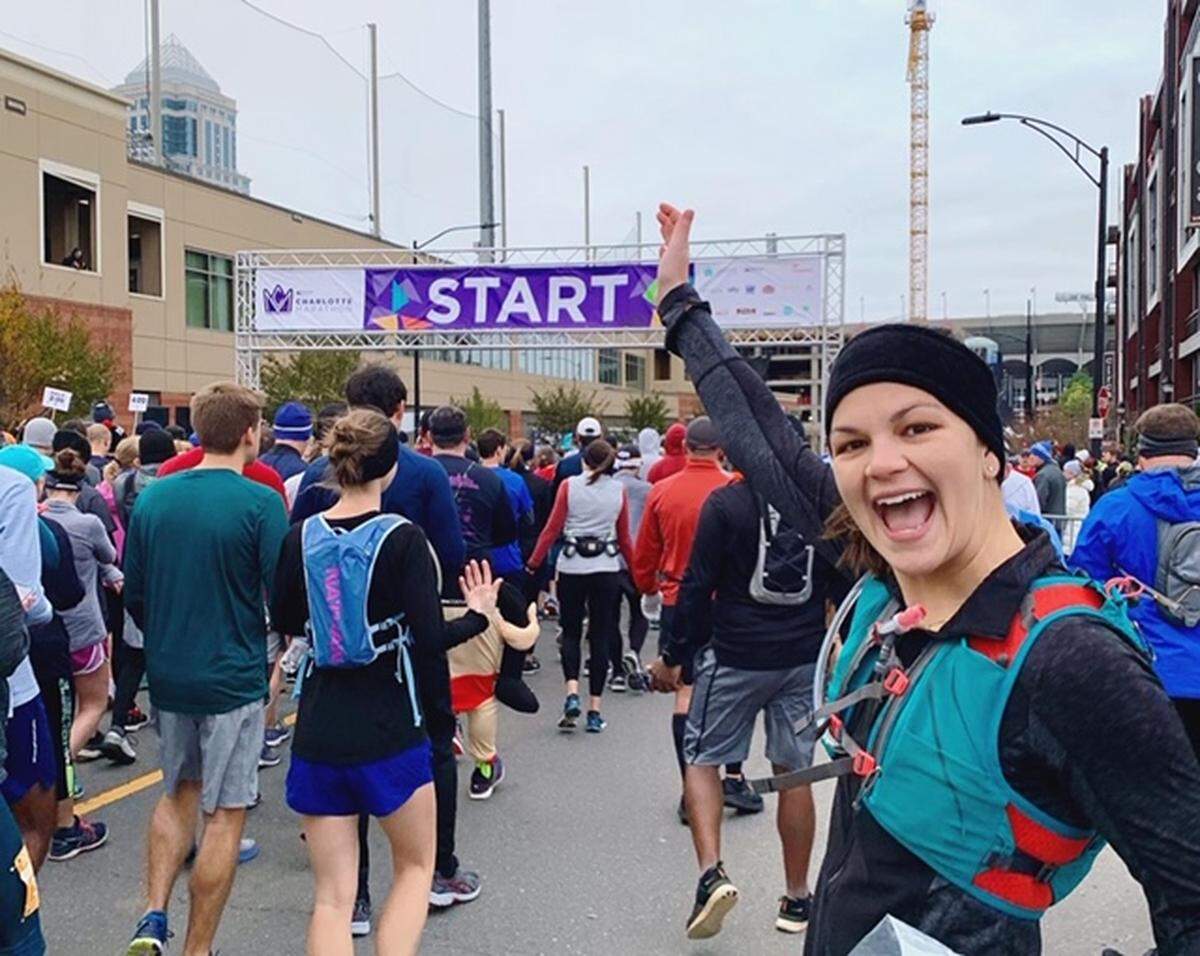
McMillan also offered:
If you have running friends, have them come out and meet you for a few miles, and if not, just tell your friends where you’ll be on race day and maybe they can pop out with a sign or snacks to help get you through.
It’s ultimately like a long training run when you’re doing the 22 miles. How do you set yourself up for success when you do that alone? If anything, the training is the hardest part and the marathon will be easy.
You don’t have to make it as hilly as the original course would be.
That last piece right there might be the best advice I’ve heard yet. Friends, where are the flattest roads in Charlotte? Email me and let me know, stat. (I will add, this advice sent my cousin and me down a rabbit hole for a minute where we decided to go to the beach to run our marathon, where all the roads are flat, but then we decided against it because neither of us want to stay in a hotel during COVID-19.)
(5) Set up a water station in your driveway
Joe Culligan ran a virtual half marathon from his house in East Charlotte and he planned his route as a loop. “Most races are done in the loop format anyway, so I figured why not,” he told me via email. “For me, that means running around the block, which is a little over 3 miles.”
This has multiple advantages, he said:
He could use his own restroom.
He created his own water station, placing drinks on a little table outside his front door. (He said he didn’t really use them until he was done. Still, I bet they were a nice security blanket.)
“I have never done a marathon and don’t really have any desire to do one, but you can apply what I did for the half marathon to any race,” he said.
Culligan said the one big disadvantage is traffic. In a race, streets would be blocked off for runners. Culligan ran early in the morning when fewer vehicles were on the road. “I did stop my watch when I was waiting for traffic because you wouldn’t have to wait for traffic in a ‘normal race’, but that only happened a few times.”
(6) Should I wear a mask while running?
Now that I know all the route-planning secrets, I have one more decision to make: To mask while running, or not?
During training runs, I typically have a mask in my pocket, ready to be pulled up at any moment if it gets too crowded. I have never had to use it — if I turn a corner and I see so many humans that I can’t stay far away, I simply turn around.
But what about when I’m out running 26.2 miles? Crowded path chances are higher just based on the amount of time I’ll be outside. Should I wear a mask? If so, is there a certain fabric that’s better than others?
For the answer, I turned to a familiar byline: C5’s (and my!) former editor, Katie Touissant, wrote a piece for Novant Health over the summer about how to get used to running with a mask.
She breaks down all the details in her piece, but the bottom line is, it can be done — with practice. I guess I should have read her article a while ago so I could have been working on bringing down my Rating of Perceived Exertion Scale.
So for this race, I’ll just keep doing what I practiced in training — mask in pocket, turning around at the sight of too many other humans.
Maybe if I pretend I’m in a zombie flick it’ll make things more fun ...
Are you training for any virtual races during COVID-19? Email any tips to charlottefive@charlottefive.com and we may include them in upcoming coverage.
*Sarah Whitten’s virtual marathon route:
- Start at South Charlotte Middle School, 8040 Strawberry Lane.
- Take 51 to Providence Road and turn around
- Take 51 all the way to down 51 to the gas station and Park Road
- Take Park to Johnston Road and cross over
- Take Birnen Drive around in the loop back to Park Road
- Take Park Road to Gleneagles Road
- Gleneagles to Quail Hollow Road
- Quail Hollow to Carmel Road
- Carmel to Montibello Drive
- Take Montibello around the loop back to Carmel
- Carmel all the way down to Little Avenue
- Little to Walsh Boulevard (behind Charlotte Catholic)
- Walsh to Johnston/Park Road
- Park Road to Gleneagles
- Gleneagles to Quail Hollow
- Quail Hollow to Carmel
- Carmel to Montibello
- Take Montibello around the loop back to Carmel
- Carmel all the way down to Little
- Little to Walsh (behind Charlotte Catholic)
- Walsh to Johnston
- Johnston to 51
- Head back to South Charlotte Middle School.
Charlotte Marathon
Sign up for the marathon, half marathon, relay, 5K or kids’ 1-mile fun run at thecharlottemarathon.com
The completion window is from November 6-22, 2020.
This story was originally published October 30, 2020 at 1:04 PM.