‘I just did not feel like myself’: A Charlotte woman’s perimenopause story.

READ MORE
⚕️Navigating perimenopause in Charlotte: A complete guide
Hot flashes? Brain fog? Anxiety? Feeling like you’re going through puberty all over again? You’re not alone, and it’s not just in your head.
Expand All
For 46-year-old Jillian Hamady, The Workman’s Friend, a quaint Irish pub in Plaza Midwood Charlotte, held sentimental value. It was where she and her husband had their first date, where he would later propose, where the couple had their engagement photos taken and where they also hosted their rehearsal dinner.
But in the months leading up to her wedding, something was off.
“I don’t think we ate there in the six to eight months before the wedding,” Hamady told CharlotteFive recently. The unexplained symptoms she was experiencing were making it hard to enjoy her favorite places.
“The symptoms would feel like they come in waves, one minute you are fine, the next not,” said Hamady. “I’m fine, then I’m too hot, then I’m angry, then I’m sad. Sometimes even including the physical symptoms like cramping or bloating, which I wasn’t used to experiencing, so it doesn’t really put you in the mood to go have a fun night out.”
It wasn’t just the pub. She also recalls becoming unusually sensitive to smells. Hamady remembers going to see “Deadpool & Wolverine” at the Cinemark Bistro in Charlotte, but became overwhelmed by the strong scent of the popcorn and almost had to leave.
The sensory overload and mood swings were coupled with other baffling symptoms: heart palpitations, difficulty concentrating, disrupted sleep, vaginal dryness and trouble losing weight.
“I just did not feel like myself,” Hamady said.
In anticipation of her upcoming wedding, Hamady wanted to look and feel her best, but she was struggling. She saw doctors for each issue separately, but without resolution. She scoured the internet to try to find the cause. Search results pointed towards perimenopause, but given her age, she did not think that applied. Surely, there was another explanation.
“It was easy to tell myself the same thing, especially with the stigma associated with menopause and aging in general,” said Hamady. “I was getting married and in the middle of planning my wedding (which was stressful), my job was stressful, I have ADD.”
“I know there is stress and tension in wedding planning, and body image issues trying on dresses, but this went above and beyond what I would consider normal,” said Hamady, who admits she bought three wedding dresses (and was considering a fourth) before deciding on one to alter.

Could it be perimenopause?
The next time Hamady saw her doctor, she asked if perimenopause could be the culprit, but subsequent blood work did not support her suspicion. Hamady spent the next year trying to better understand and manage her symptoms. She started wearing a heart monitor and made various changes to her diet and exercise regimen, but nothing seemed to help.
“It took several months of being unable to get the symptoms under control ... that made me realize all these symptoms I thought were separate actually might be related,” she said. “Whenever I would Google my symptoms or how to deal with them, the algorithm still kept suggesting perimenopause.”
During her next annual exam, Hamady decided to ask her provider if she could try hormone replacement therapy to see if that would make a difference. After a few more appointments and additional testing to rule out other potential causes, Hamady was started on oral progesterone and estradiol gel. Within a few weeks, Hamady’s mood was better and her sleep had improved.
“I can’t stress enough how important it is to advocate for yourself because only you know what feels ‘normal’ in your body and what doesn’t,” said Hamady.
What is perimenopause?
Women who are similar in age to Hamady and who are experiencing related symptoms might also be in the beginning stages of perimenopause. According to the Mayo Clinic, perimenopause is a time of transition that starts when a woman is in her late 30s or early 40s and lasts until the beginning of menopause. Throughout these years, the body begins to prepare for the end of reproduction. The ovaries produce less estrogen and progesterone, and menstruation becomes irregular. Women can experience hot flashes, mood changes and disrupted sleep, as well as decreased bone density and muscle loss.
As women start to progress through this period, their wellness routines might need modification to adequately manage symptoms and reflect the changing needs of their bodies. Practicing stress management and sleep hygiene, as well as making adjustments to diet and exercise can help.

Coping with stress and anxiety during perimenopause
According to Johns Hopkins Medicine, serotonin levels fall and cortisol levels rise during perimenopause. These hormonal changes can contribute to feelings of irritability, nervousness and sadness. Sometimes, physical manifestations of anxiety can also occur, resulting in increased heart rate, sweating, shaking and difficulty with concentration or sleep.
JHM suggests practicing mindfulness or starting a morning meditation or yoga practice, engaging in quieting or leisurely activities that bring joy, such as reading, writing or listening to music, or spending time with friends, family and other loved ones. These techniques can help support mood and decrease anxiety.
In some cases, JHM indicates that talk therapy or prescription anti-anxiety medications can help with symptom management. Consult with a medical provider to determine if this would be right for you.
How to improve sleep during perimenopause
According to research, estrogen and progesterone levels fluctuate during perimenopause and can impact sleep quality, which makes it important to be intentional with sleep hygiene.
While these techniques are oftentimes thought to be implemented at bedtime, sleep interventions can begin during the day and start with exercise. Research suggests that movement helps to regulate circadian rhythm and increases melatonin production, which is a hormone that increases at night and promotes sleep.
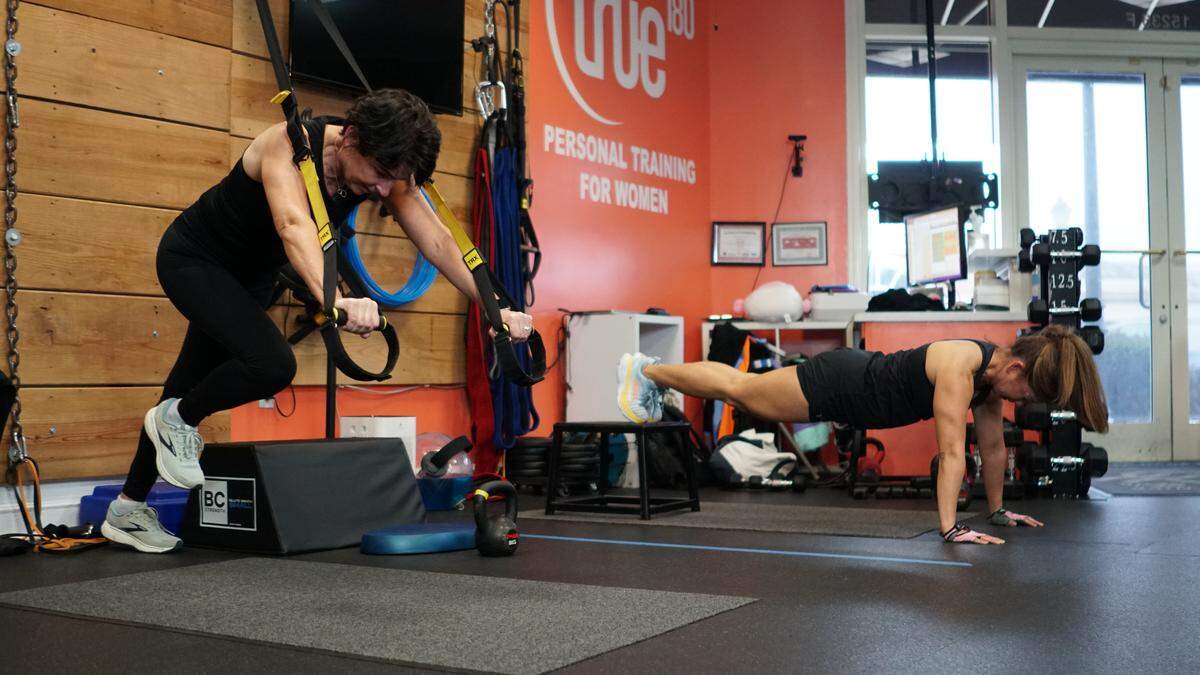
Natillie and Josef Brandenberg, founders of True180, which provides personal training services in South Charlotte specifically to women over 40 years old, agree. “Exercise enhances sleep quality, both falling asleep and staying asleep, for women in all stages of life, and especially during menopause,” said Natillie, who also recommends limiting alcohol (and caffeine) consumption. “Alcohol can reduce sleep quality even more, make hot flashes more intense and/or frequent.”
The Cleveland Clinic suggests having a consistent nighttime routine. This includes making sure room temperature and bedding are comfortable. Take a warm shower and engage in relaxing activities before bed, such as reading. Try following a guided meditation or falling asleep to a sound or aromatherapy machine. Most importantly, limit screen time, urges The Clinic. Watching television or using a tablet or phone can activate the brain due to blue light exposure, making it difficult to fall asleep.
Your perimenopause nutrition: What to eat
Research also suggests that women avoid restrictive diets during perimenopause and eat high protein and nutrient-dense foods. Protein is especially important and should be incorporated into every meal to support muscle and bone longevity.
“Eating balanced meals at regular intervals sounds pretty elementary, but can make a big impact on how we feel,” said Kristen Bunich, a Charlotte-based registered dietitian. “This pattern of eating makes it easier to notice hunger and fullness cues, improves energy, improves mood and helps support hormone balance. Our plates should be balanced with fiber-rich carbohydrates (lentils, whole grains, fruit, starchy vegetables), proteins (eggs, Greek yogurt, beans, tofu, fish, chicken) and fats (nuts, avocado, seeds, olive oil).”
According to Bunich, as women age, their ability to absorb certain nutrients diminishes. This is why she also recommends that women eat foods that are high in calcium and Vitamin D, both integral to achieving optimal bone health. While getting vitamins and minerals through food is ideal, she encourages women to take a quality multivitamin to fill in any gaps and ensure that nutritional needs are being met.
“Antioxidants and Omega-3 fatty acids, which can be found in fruits, vegetables, flax seeds, nuts and fish can help decrease menopausal symptoms,” said Bunich.
Exercise for perimenopause: The role of strength training
According to Harvard Health, as women age and estrogen declines, muscle mass is lost and bone density can decline. Weight bearing and strength training can help maintain muscle mass, protect bone health and prevent the development of osteoporosis, which occurs when bones become fragile.
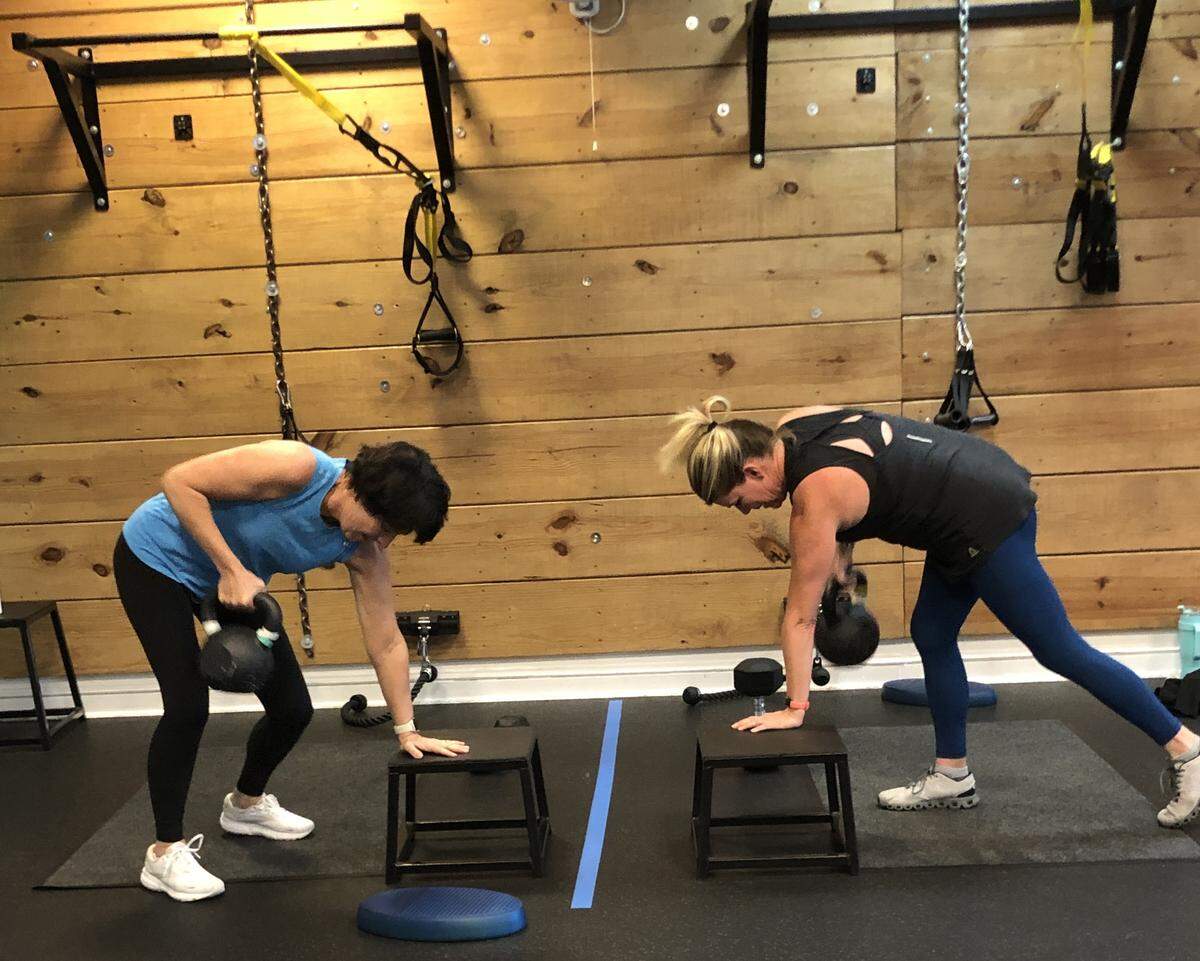
“Rather than focusing primarily on cardio, women benefit greatly from strength-based training — ideally lifting heavier weights three to four times per week. Incorporating shorter, more intense intervals like HIIT (high-intensity interval training) or SIT (sprint interval training) can also be valuable, but those should be added gradually based on individual tolerance,” said Candice Canace, menopause specialist and owner of Charlotte-based fitness studio, Lemonade Fit.
According to Canace, regular strength training can also help alleviate perimenopausal symptoms, particularly the severity of hot flashes, and improve sleep, while preventing insulin resistance and the development of diabetes and cardiovascular disease.
“Creatine supplementation can also be an effective tool for women in midlife. Research shows it can help increase strength and power without necessarily changing body weight,” said Canace. “Beyond physical performance, creatine has also been linked to improvements in memory, cognition and even mood, as well as reductions in inflammation. However, not every woman tolerates creatine the same way, so it’s best introduced thoughtfully and monitored individually.”
Is hormone replacement therapy (HRT) right for you?
According to the Mayo Clinic, for some women experiencing perimenopausal symptoms, hormone replacement therapy (HRT) can help alleviate hot flashes and night sweats, protect against bone loss and reduce the risk of heart disease when used appropriately.
Polly Watson, a licensed physician and functional medicine provider in North Carolina who serves patients in the Charlotte area, focuses on hormone wellness and the treatment of menopausal symptoms. Watson encourages her patients to consider HRT during the perimenopausal period due to many of these potential benefits.
“We often add testosterone therapy for women who are complaining of low libido, maybe low energy. We can give cyclic, oral micronized progesterone therapy to help with PMS, to help with anxiety, it can sometimes help with sleep,” said Watson. “In this perimenopause time frame, (women are also) already starting to lose bone, so estrogen does have an indication for osteoporosis prevention, and that process starts several years before the final menstrual period.”

If you are wondering about hormone replacement therapy, consult with a medical professional to discuss appropriateness, risks and benefits, and potential side effects, as well as best formulation and delivery method to meet individual needs.
Whether in the beginning of perimenopause or into the throes, Christy Maloney, registered dietitian and founder of Enhance Nutrition, reminds women that “(Our) bodies are meant to change as we age. Embracing perimenopause means embracing your body as it changes and knowing that your body is aging as it should.”
Disclaimer: This content is meant for educational and informational purposes only and is not a substitute for medical advice. Please consult your doctor or other qualified healthcare provider for any questions you have regarding your health or a medical condition.
This story was originally published November 10, 2025 at 5:30 AM.