
‘We had to do it justice.’ Levine Museum showcases lost neighborhood of Brooklyn
What if Dilworth disappeared?
Imagine city leaders deciding the land on which all the houses, businesses, schools, shops and churches stood needed to be developed into something better. Residents would be offered money to relocate, but would they get a fair price? Those who could afford a lawyer would likely get more. Those who couldn’t would take whatever they were offered.
Don’t stand in the way of progress, Dilworth residents might be told as they uprooted their families to resettle in another — unfamiliar — part of town. “We’re going to give you a better life,” authorities might say. And the authorities might really believe it themselves.
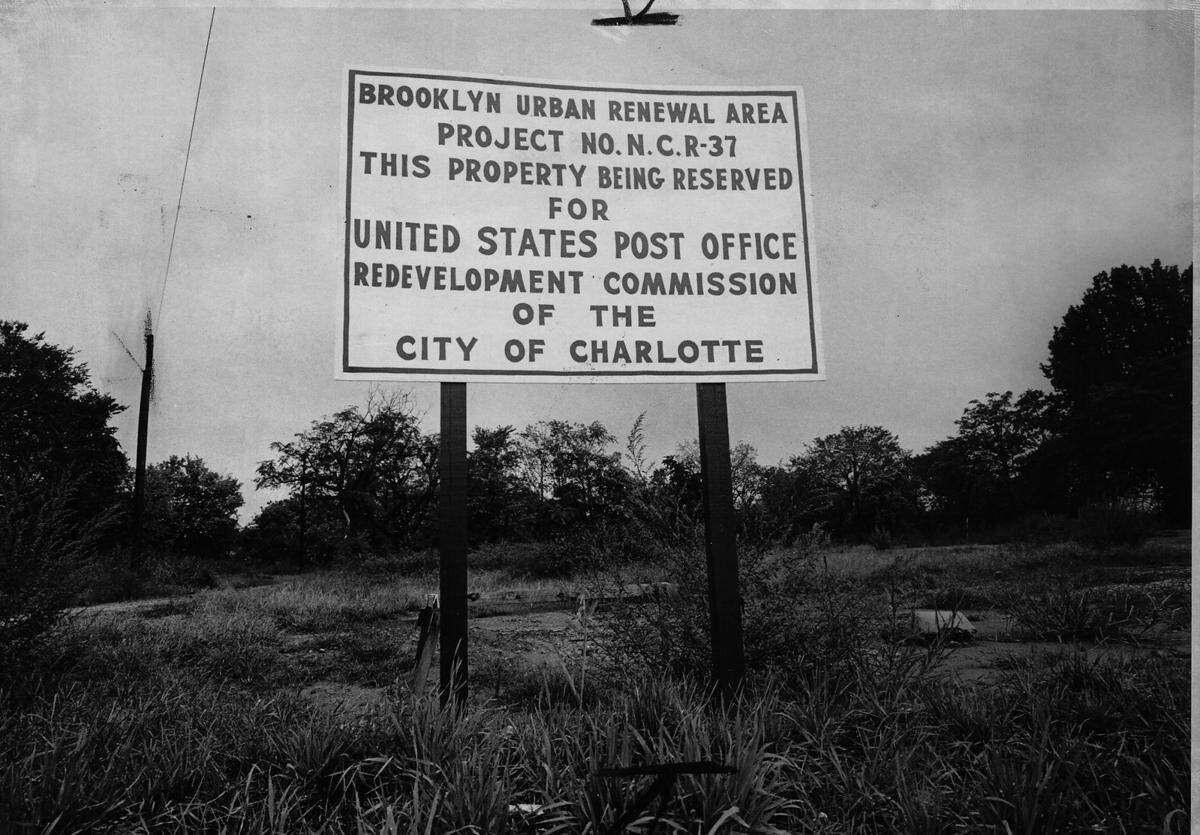
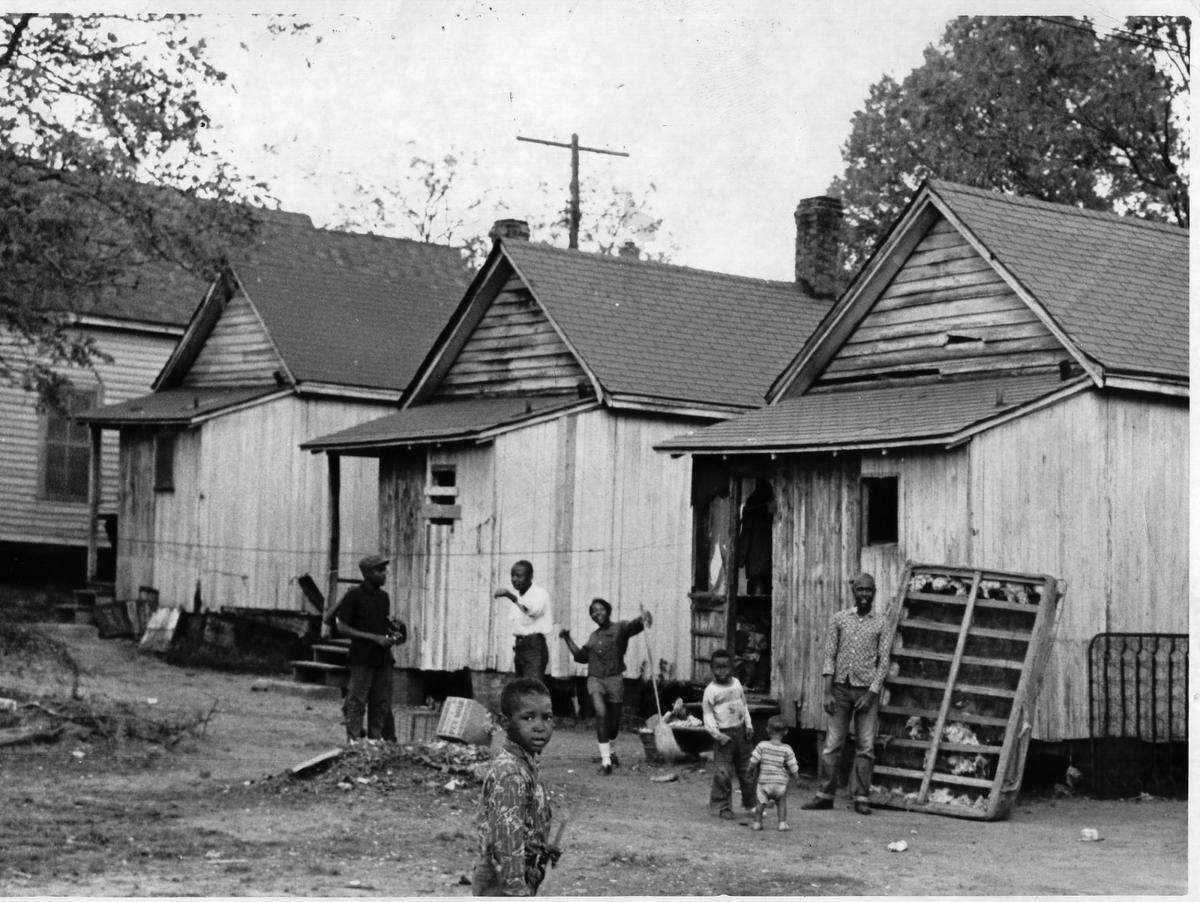
The equivalent of erasing Dilworth happened to Charlotte’s Brooklyn neighborhood, the largest African-American community in the Carolinas, beginning in 1957. Brooklyn once stood in what became uptown Charlotte’s Second Ward. Today, the area includes the county courthouse, Marshall Park, the NASCAR Hall of Fame — on land that once housed the city’s first African-American library — and the Charlotte Convention Center.
To convey the scope of what it meant to displace an entire community of African-Americans — a city within a city — Eric Scott, the Levine Museum of the New South’s director of exhibits and programs, said, “It’s like displacing Dilworth.”
Seventy-five hundred people had made their home in Brooklyn, a community named after the New York borough,. And over the course of a decade, it was gone, as was much of its history.
The Levine Museum’s second installment of “#HomeCLT: People. Places. Promises.” opened Nov. 15. “Brooklyn: Once a City within a City” is the sixth neighborhood to be added to the multiyear, multifaceted #HomeCLT installation.
The exhibition has interactive and augmented reality elements to it. An app developed by Dr. Ming-Chun Lee of UNC Charlotte’s School of Arts and Architecture allows visitors to experience Brooklyn through images and stories on their smartphones.
Few vanish
The first #HomeCLT exhibit featured five neighborhoods: Eastland, Hidden Valley, Dilworth, Sedgefield and Enderly Park. The second in the series features just one. That’s a measure of how significant Levine leaders consider Brooklyn and its demise.
“All the neighborhoods we featured in the earlier exhibit are still here,” said Willie J. Griffin, the staff historian for the museum. “Brooklyn doesn’t exist anymore. We had to do it justice.”
Neighborhoods change over time, Griffin pointed out. But few completely vanish.
For example, he said Hidden Valley is known primarily for gangs and drugs and is populated predominantly by people of color. “But it started as an almost all-white neighborhood meant to house UNCC professors,” he said.
How does that happen? How do neighborhood demographics change? Those are among the big questions the Levine Museum is posing in its ever-growing, evolving exhibition. Staff is asking area residents to ponder those questions, too — and hoping Charlotteans think about the consequences of urban renewal.
“We hope people will start to consider the human variable behind development decisions,” Scott said.
“Historically, people have made a lot of assumptions,” he continued. This exhibit demonstrates what happens when a group of people decides, as Scott put it, “I think those people would be better off if …”
Newcomers to the area might notice, Griffith said, that the predominately African-American neighborhoods in town seem to be poor. “How did we get here?” he asked. It’s a question worth exploring in order to avoid repeating the mistakes of the past — the mistakes that led to Charlotte-Mecklenburg ranking last among the 50 largest U.S. cities in upward mobility.
A 2014 study found that in Charlotte, your economic opportunity is closely linked to your ZIP code. If you’re born into poverty in Charlotte, you’re likely to remain there. Part of the reason is gentrification. “The land with the skyline view becomes valuable,” Griffith said. If people of color happen to be living there, those in power will often find a way to displace them.
A toxic word
“At its heart, it’s a class issue,” D.W. White, author of “The Edge Becomes the Center: An Oral History of Gentrification in the 21st Century,” said of gentrification in a 2015 interview in The Atlantic. “[B]ut in the States, through our history, we’ve made it a race issue. It very much is a race issue.”
White argues that gentrification is a “toxic” word. In The Atlantic interview, he cites architect Stephen Chu’s belief “that language evolves and land evolves as well.”
“And words get really tired,” White said. “They … lose their original point of origin. So I think that we can stop leaning on that one word [gentrification] and try to talk about all the aspects that affect our lives when a lot of money comes to town and people are displaced, and the character of the neighborhood changes.”
The term “urban renewal” entered the lexicon with the passage of the Housing Act of 1954. The act provided federal funding for public housing, particularly for those who were being moved out of their homes to redevelop what many considered “slums.”
And “urban renewal” sounds so positive. What could possibly be wrong with a renaissance of a city’s urban core? Novelist James Baldwin summed up the problem neatly in giving a different name to urban renewal: “Negro removal,” he called it.
.JPG "Brooklyn Savoy Theater (observer).JPG")
Part of the point of the Brooklyn exhibit is to show people that Brooklyn was not a slum. Griffith said the former residents he talked to wanted to make that clear. Brooklyn wasn’t utopia, but it was a vibrant, thriving community with distinguished homes, a library, hotel, theater and more.
A new cycle
The “urban renewal” term is being used again, which makes the Brooklyn exhibition especially relevant.
Two weeks before the last presidential election, then-candidate Donald Trump delivered a speech to an invitation-only gathering in Charlotte and outlined his New Deal for Black America. He promised more school choice, safer communities, lower taxes and infrastructure improvements.
Trump’s proposal outline, subtitled “A Plan for Urban Renewal,” drew skepticism from The New York Times in a Dec. 7, 2016, story: “Among scholars and many city dwellers, urban renewal is remembered for its vast destruction of minority communities, when entire neighborhoods were razed for housing, highways and civic projects.”
It happened all over the country. Brooklyn is Charlotte’s best (or, worst) example of that story.
“The story of ‘Brooklyn’ … explains so much about Charlotte today, and asks us to think about the future we’re creating for Charlotte,” Museum President and CEO Kathryn Hill said in a news release.
The exhibit gives voice — literally — to the memories of former residents. You can see and hear former Brooklynites reminiscing about what once was.
All that remains
Imagine, again, that Dilworth is gone. Only four of its original structures remain.
The impact is hard to fathom, but that’s the reality for former Brooklynites. Only four structures from the old Brooklyn remain: Grace on Brevard, an events venue that once was the Grace AME Zion Church; the Mecklenburg Investment building, which housed black doctors and dentists; the former black YWCA; and the former Second Ward High School gym.
The people who called Brooklyn home didn’t disappear overnight. The last people to be moved left in 1968. They settled in Double Oaks, University Park, Earl Village and Piedmont Courts.
Former residents of Brooklyn know: You can’t go home again. But through the efforts of exhibition organizers, they can try to relive it. And the rest of us can try to learn from it.
Brooklyn
What: “Brooklyn: Once A City Within A City” is the newest part of the Levine Museum’s growing exhibit called #HomeCLT: People. Places. Promises.
Where: Levine Museum of the New South, 200 E. Seventh St.
Hours: Monday through Friday, 10 a.m. to 5 p.m.; Saturday, 10 a.m. to 4 p.m.; and Sunday, noon to 5 p.m.
Details: museumofthenewsouth.org.
More arts coverage
You can find all our arts season preview stories and calendars in one place: charlotteobserver.com/topics/charlotte-arts-guide.
Want to get more arts stories like this delivered to your inbox? Sign up for the free “Inside Charlotte Arts” newsletter at charlotteobserver.com/newsletters
You can also join our Facebook group, “Inside Charlotte Arts,” at https://www.facebook.com/groups/insidecharlottearts/
This story was originally published December 4, 2019 at 10:20 AM.