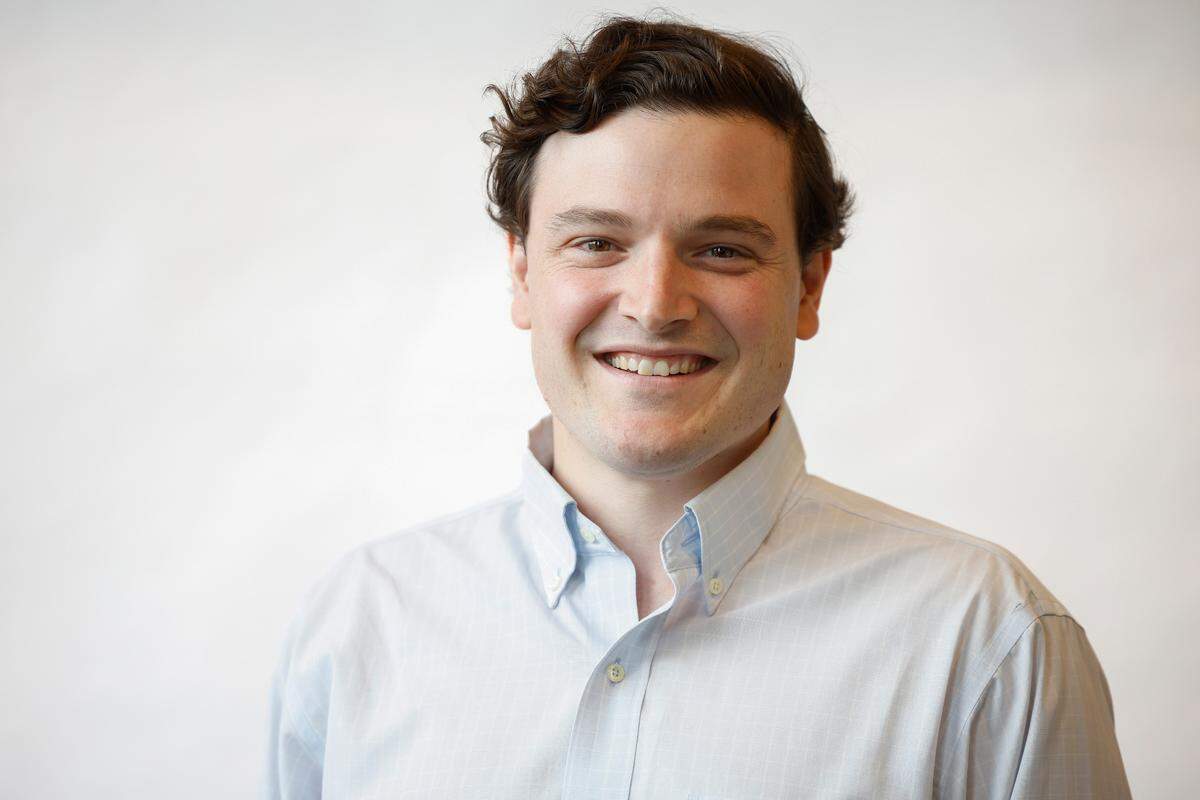
Meet the NC hip-hop architect aiming to remix his profession and urban design
Sekou Cooke is on the verge of adopting a new motto: remix everything.
It can be applied to something as simple as what the architect and UNC Charlotte professor calls his radical approach to reusing older, vacant buildings.
An empty warehouse for instance — much like a person — has a shell and skin. Just because it’s empty, doesn’t mean it can’t serve a neighborhood in a new way. It has a lifespan, a spirit and a soul.
This type of teaching is part of a still-emerging field of study called hip-hop architecture. And Cooke stands at the vanguard of the movement.
The field has been around since the early 1990s, when Cooke was among a group of Black students who challenged the principle ideas of architecture by applying hip-hop culture to the concept of designing buildings or entire neighborhoods.
Cooke has literally written the book on the topic.
The aptly titled “Hip-Hop Architecture” was published last year. In it, Cooke provides examples of work that could be interpreted as hip-hop architecture while bringing awareness to how under-represented people of color are in architecture.
Cooke wants to provoke new ways of thinking about how cities should be designed, shifting away from large-scale development that serves high-profit developers and toward smaller-scale, “tactical urbanism” that can spark growth organically.
It’s a big reason why Cooke came to fast-growing Charlotte last August.
After spending the last seven years as a professor at Syracuse University, Cooke arrived here with a goal to reshape UNC Charlotte’s master of urban design program, which typically has around a dozen students.
Cooke, 44, has plenty of experience to call upon. He has architecture degrees from two Ivy League universities — a bachelor’s from Cornell and a master’s from Harvard. He also has run an architecture business for several years now.
And underlying the foundation of his classroom and professional practice is hip-hop.
Listen to early hip-hop tracks by artists like Kurtis Blow or Mos Def, Cooke said, and you can practically smell the high-rise tower elevators and hear the sounds of the street rappers like them describe.
“Hip-hop is a product of the city,” Cooke said. “It’s virtually impossible for a rapper to talk about who they are or where they’re from without describing those types of conditions.”
At UNC Charlotte, Cooke is teaching classes on hip-hop urbanism. He was featured in a New York Times profile of the Black Reconstruction Collective, a group of architects, artists and designers.
And for the next month, Cooke’s exhibit, “Close to the Edge: The Birth of Hip-Hop Architecture,” can be found at the university’s uptown Charlotte building.
Challenging the rules
One component of Cooke’s work is to bring awareness to how under-represented Black people are in the elite, white-male dominated profession of architecture.
Of the roughly 116,000 registered architects in the country, Cooke said, only about 2% identify as African American.
Hip-hop architecture gives a blueprint for Black architects and others to express themselves through their projects. As Cooke writes in his book: “Many have managed to exist simultaneously as successful architects and Black. Few have managed to express their Blackness through their architecture.”
In a recent interview with The Charlotte Observer, Cooke elaborated on that theme: “What hip-hop architecture does is say, here’s a process, here’s a platform, here’s a framework that includes you.
“You can play along with us. We’re going to reshape this thing in ways that aren’t necessarily within the rules. They’re actually challenging the rules and saying how can things be completely different or better or something that we never even imagined.”
From Jamaica to Cornell
Born in Kingston, Jamaica, Cooke was that kid who’d take apart his toys to see how they worked.
When he was 5, his grandmother told him about people who draw buildings for a living. He wanted to become an architect ever since.
Hip-hop also was prevalent early on in his life. His mother’s family lived in New York and New Jersey, and Cooke would visit them every summer. This was in the early 1980s, a few years after hip-hop got its start in the Bronx.
It took about a decade for Cooke to connect his love of architecture and his early exposure to hip-hop.
Starting at Cornell in 1994, Cooke was among a critical mass of students of color, thanks to an administrator who heavily recruited Black and brown students. So what might typically be an architecture class of 72 with one or two Black students suddenly had eight.
Cooke remembers fellow students picking projects rooted in their culture and history because they recognized the power that comes with it. “We were being taught in an era that was promoting the opposite,” he said.
Elsewhere on campus, Nathan Williams, who graduated six years ahead of Cooke, penned a thesis that first coined the term hip-hop architecture.
Another architecture student there, Amanda Williams, said the thesis changed her life. “It was like a call to action and purpose,” she said.
The message, Williams said, was not that hip-hop was going to be her vehicle. Rather, it was another tool in the toolbox on top of all the other architectural principles she learned in the classroom.
Why wouldn’t she use it?
The four pillars of hip-hop
Many people ask Cooke what hip-hop architecture looks like. If I see it will I recognize it?
Cooke doesn’t offer an easy answer. He wants to make the case for how hip-hop culture can be applied to how cities are laid out and what opportunity that brings for designers. This is part of the reason he describes hip-hop architecture as a theoretical movement.
It’s easier to describe how hip-hop architecture is created rather than what it looks like, Cooke writes in his book.
Typical architectural styles produce consistent formal language, he explains. Products of hip-hop architecture are “only consistent in their flows, layers and ruptures, but parallel all other hip-hop products in their inconsistency of form.”
This all goes back to the four pillars of hip-hop: A b-boy, or breakdancer, twists, pops and spins his body. A graffiti artist takes a blank wall — often in forgotten or hard-to-reach places — and forms a variety of colors, sometimes not following straight or clear lines. A DJ samples and mixes pre-recorded sounds to create something entirely new while the MC, or rapper, takes complex rhyme schemes and layers them over beats.
Someone who practices hip-hop architecture can reshape a city in the same way a b-boy would distort his or her body, Cooke said.
This distorting and layering is in a constant state of flux. Hip-hop artists like Kendrick Lamar embody hip-hop attitudes of always looking for opportunities, Cooke said. Always looking for ways to make something a little better.
“Hip-hop is constantly redefining itself so that it doesn’t stagnate,” Cooke said. “So it can’t be co opted, it can’t be appropriated that easily. And by the time you’ve figured out how to appropriate it, it has already moved on to the next thing.”
Hip-hop culture can transform a city
Cooke already has his class thinking about how Charlotte could be redesigned or reimagined, using the lens of hip-hop culture.
For a recent project, students came up with small-scale “interventions” that could benefit a particular site or project. One looked at the redevelopment of the former Eastland Mall site. A developer is planning a major mixed-use project there.
For years, a number of mostly Latino vendors set up an outdoor market on weekends. Skaters also built their own park on site. Now, with construction imminent, the city kicked out the vendors and skate park from the site.
One of Cooke’s students, Javier Guillen, took the developer’s proposal, plus the skate park and vendors, and came up with a design that incorporated it all. It’s the type of force, Cooke said, that the lens of hip-hop culture can bring to a city.
Another student, Sarah Spalding, is pursuing a dual masters in urban design and architecture.
Cooke’s program, she said, pushes her thinking beyond just designing a single building. Instead, Cooke has her focus on the entire city, considering sidewalk connections, proximity to transit and other quality-of-life factors she was never forced to consider before in class.
Spalding, 23, said Cooke’s class provided her with a solid framework for how to think about issues like affordable housing and racial disparities more deeply. She always knew she wanted to serve people and a community.
“That’s where I really want to take my career,” Spalding said.
Improving the city
In his short time in Charlotte, Cooke has noticed some patterns in its growth, including plenty of mid- to high-density residential development coupled with dense office development.
He’s seen the flurry of apartments, condos and shops along the light rail Blue Line that stretches from South End up to the university’s main campus north of the city.
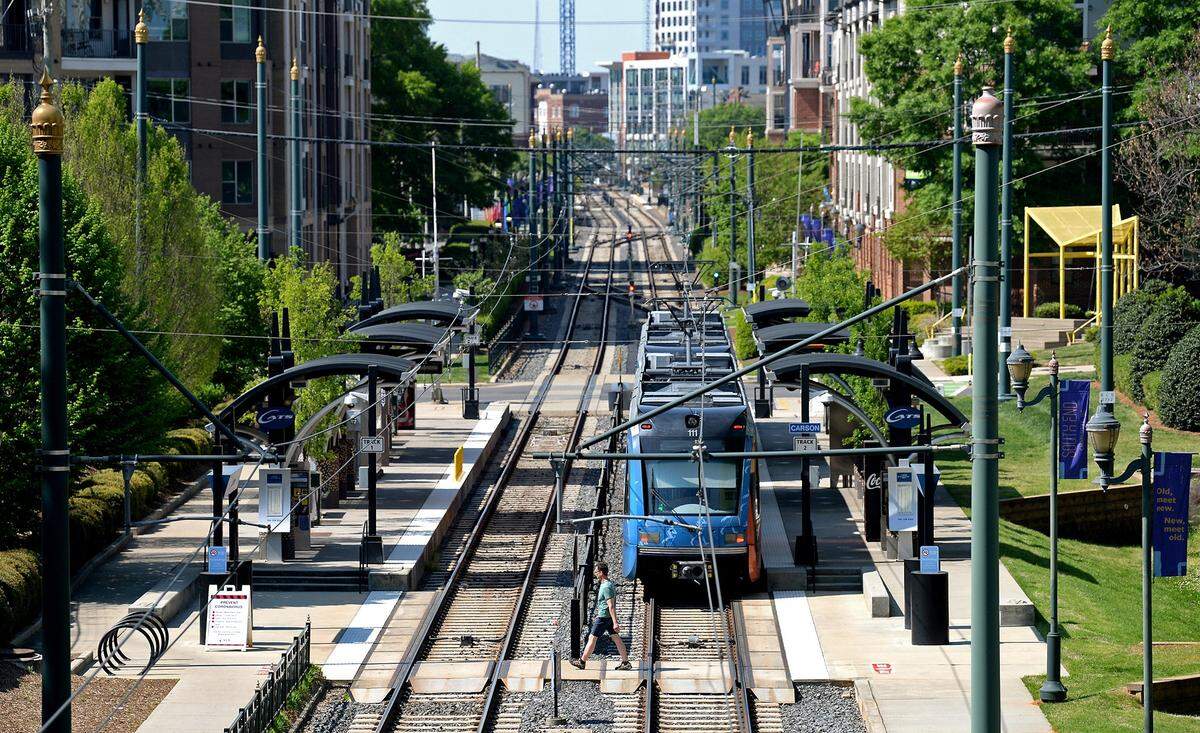
All the activity caters to a select group, according to Cooke. He sees this playing out in booming South End, where the primary demographic is 18-to-29-year-olds who earn higher-than-average incomes compared to the rest of Mecklenburg County.
“If we want the entire city to be that, we can continue along this path,” Cooke said. “Or we can acknowledge the fact a city has to be much more diverse than that, in terms of experience, in terms of housing types, work types, public amenities, art spaces, ages, identities and cultures.”
The need for improvising and adapting
From a planning and design perspective, Cooke has arrived in Charlotte at an interesting time.
The city recently adopted a wide-ranging land-use document to guide growth over the next two decades and is revising other rules in the lengthy Unified Development Ordinance document.
But such plans don’t always fully consider the life on the ground of those who create or end up living in or using individual projects.
“It doesn’t matter how many people we can get in a room or who the people are in the room,” Cooke said. “The process of sitting down and coming up with rules that govern or decide what the city is going to look like in the next 40 years takes away all the spontaneity. It takes away all the improvisation, all the adaptation.”
After all, remix is everything in hip-hop architecture.
This story was originally published June 8, 2022 at 6:00 AM.