For many who attend, church is a place to listen to teachings, make friends and build support networks to help serve their communities. But a nationwide trend shows a sharp decline in millennials who attend church. In some cases, ideological differences separate millennials from traditional worship. However, nondenominational churches have been able to retain young members. This special report explores the multilayered relationship the state’s millennials have with religion.
In Denver, North Carolina, it’s common to see church parking lots full on Sunday mornings.
Those who walk through sanctuary doors are immediately greeted by smiling faces. Murmurs from those catching up with friends echo throughout the building as an organist plays spiritual hymns.
After the choir sings a few opening renditions, the pastor begins the sermon. At times during the pastor’s message, members of the congregation respond with an “Amen” or by raising their hand, signaling they agree with what was said. After an hour or so — and a closing song from the choir — the service concludes.
Although Wyatt Manlove spent numerous Christmas and Easter holidays at Denver’s Salem United Methodist Church experiencing these scenes, his attention during Sunday services was often focused elsewhere.
“I remember being bored in the pews during services,” Manlove said. “There were these little slips of paper where you would write your donation amount for the tithing, and me and my sister would draw on those a lot. I was just trying to fill time during service because I didn’t understand it.”
Casey Diffley, 26, moved to Denver, a small town about 30 minutes northwest of Charlotte, before starting high school and grew up going to Methodist and Baptist churches. He enjoyed the “sense of community” they offered. And the basic tenets of religion — the concept of heaven and hell — resonated with a lot of members but not him.
“It’s never a bad thing to have some sort of mindset that there’s a better place after all of this,” said Diffley. “You just have to come to terms with whether you believe that or not.”
For most who attend, church is a place to listen to teachings, make friends and build support networks to help serve their communities.
That’s how Manlove and Diffley felt at first. Both grew up attending worship services regularly, but both decided church was no longer for them when they started college. The men are part of a nationwide trend that shows a sharp decline in millennials who attend church.
Trends in millennial church attendance
Data from a 2020 Gallup poll shows that only a third of millennials belonged to a church, down from more than 50% a decade before.
The decline in church membership is tied to the increasing number of Americans who express no religious preferences, according to the Gallup poll. The percentage of Americans who do not identify with any religion grew from 13% in 2008-2010 to 21% in 2018-2020.
According to an analysis by American Family Survey, church attendance among Americans under the age of 35 declined from 36% to 26% between 2019 and 2021 – the highest drop among all age groups. For comparison, attendance among those aged 35-64 dropped by 4% during the same time period.
While exact numbers on church closures are not available, Gallup estimates that thousands of U.S. churches are closing each year due to drop in membership.
Despite the drop in church attendance, a Pew Research Center study shows 51% of Americans aged 18-29 are “absolutely certain” they believe in God.
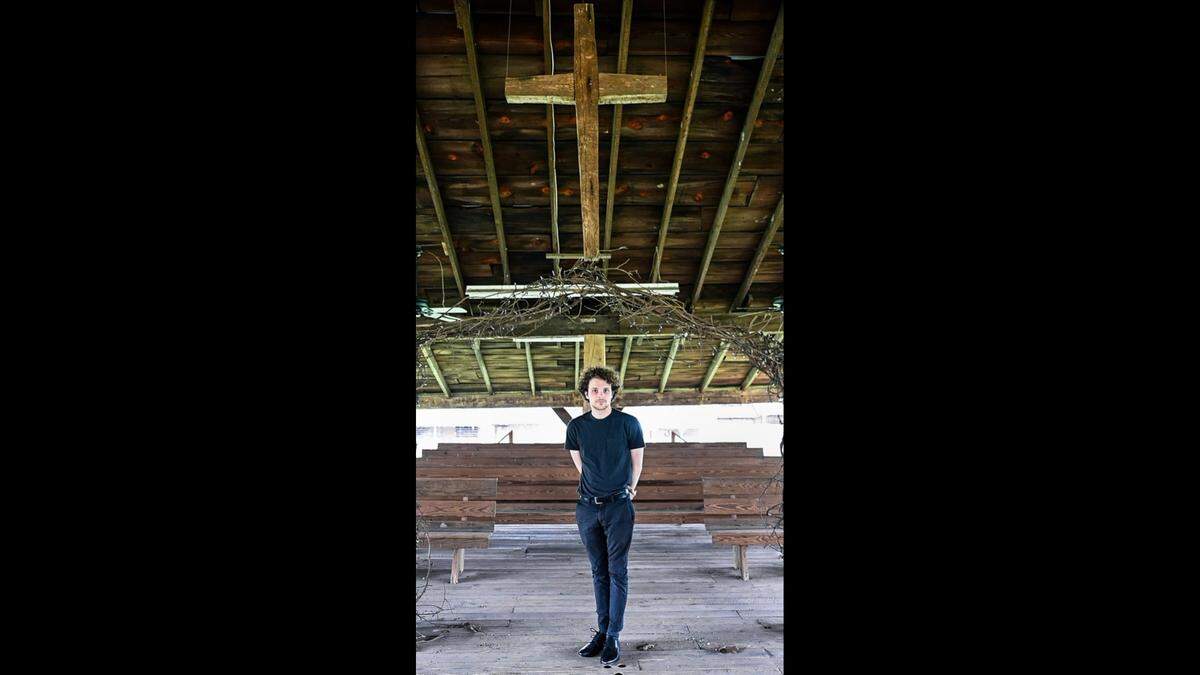
Wyatt Manlove, 25, stands at the worship space at Rock Springs Campground in Denver, North Carolina. “I felt my spiritual journey was better off in my own hands than in the hands of an institution,” says Manlove about why he does not attend church. Manlove is a graduate student in the Religious Studies Department at UNC Charlotte. Melissa Melvin-Rodriguez mrodriguez@charlotteobserver.com
A shift in mindset
Diffley said his reason for abandoning church stemmed from his inability to nurture a belief in a faith he couldn’t prove was true.
“I was going through a bit of a reformation in my thoughts, whether they were political or ideological,” he said. “I think all of that kind of culminated at the same time.”
Manlove’s attitude about church – and religion in general – changed after enrolling in religious studies classes at UNC Asheville.
“I felt that my spiritual journey was better off in my own hands, rather than in the hands of the institution,” Manlove said in reference to church. “I had interest in questions that weren’t limited to one doctrine or one path that is represented by churches.”
Manlove’s path to majoring in religious studies began at age 6 after watching the cult-classic horror film “The Exorcist,” which follows the journey of a 12-year-old girl who is possessed by the devil, and her family’s journey to evict the demon inside her. After revealing to his pastor that he’d seen the movie, he was pushed to ask questions about what he saw.
“After I got over the fear that movie gave me, I was just interested in what I would later understand to be the theology behind it,” said Manlove, who is currently pursuing a master’s in religion at UNC Charlotte but doesn’t attend church regularly.
Ideological differences separate millennials from traditional worship
Access to information, particularly on social media, has played a major role in young people developing negative attitudes about church, Manlove suggested. He also believes that today’s political climate has caused many millennials to turn away from Christianity.
Diffley, who has been to a few services at Elevation Church, a Baptist Evangelical megachurch with 10 locations in the Charlotte area, said he understands the appeal of relatable sermons and a sense of camaraderie.
But it lacks in one key area for him.
“I didn’t see a lot of the spiritual side when I was there, but I don’t know that our generation cares that much for it,” he said. “They (churches) care more for the actions of the church, like taking care of your neighbor and loving everyone no matter what, which are phenomenal things.”
While service at both traditional and nontraditional Christian churches tend to center around teachings of the Bible, Diffley said some young people may be inclined to ask their own questions and do their own research about topics scripture doesn’t cover.
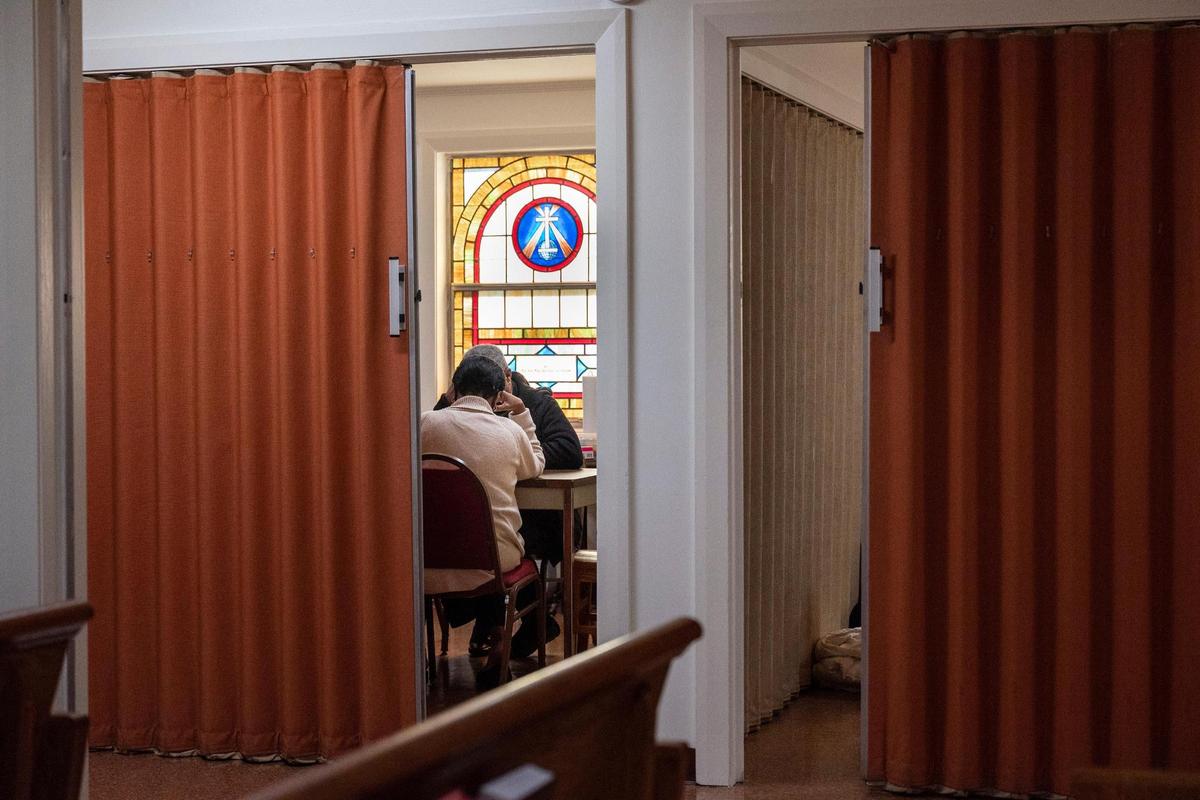
A Bible study meets after worship service at Rock Hill United Methodist Church. Melissa Melvin-Rodriguez mrodriguez@charlotteobserver.com
Traditional vs. nondenominational
Though the number of people who attend worship services is dwindling overall, nondenominational churches have been able to retain young members. According to a Pew Research Center survey, nearly 1 in 4 Americans who belong to a nondenominational church are under the age of 29. And 70% of all members attend services at least once a week.
Holli Meredith is a 28-year-old Florida native who moved to Charlotte two years ago and attends Vizion Church, a nondenominational church with two locations in Charlotte. She confessed that she once thought church was “really boring,” but it has since become a significant part of her life.
“I love spending time with a Christian community,” Meredith said. “It was an obligation, but now it’s something I desire to do. It’s what I feel like I need in order to survive.”
The congregation at Vizion is comprised mostly of college students and young couples, Meredith said. She suggested that nondenominational churches could be more attractive to young people because members have autonomy as opposed to most denominational churches, which are overseen by a governing body.
The role of each governing body differs by denomination, but their duties can include selecting pastors, determining compensation for church staff and setting budgets for each church.
“With Presbyterians, there’s a headquarters that makes decisions for everybody,” Meredith said. “With nondenominational churches, there may be less rules, which isn’t a bad thing. It’s just different.”
Serving a higher purpose
As a kid, Torey Haynes recalled going to church, Sunday school and youth group meetings regularly at Rock Hill United Methodist Church, a predominantly Black church in eastern Lincoln County. Now 24, Haynes said his most memorable experience was going on a mission trip to eastern North Carolina to help rebuild homes after a tornado ravaged the area.
“When I was younger, I didn’t like being in the heat helping out, but when you’re older, you forget that stuff,” Haynes said. “It was about serving something higher than ourselves. That’s really what kept me on this path and pushed me.”
Haynes went on to major in religion at Shaw University, a historically Black college in Raleigh. In hindsight, Haynes said he wouldn’t have studied religion because most of the concepts he learned were self-taught. But doing so later provided him with opportunities such speaking on behalf of HBCUs at the White House in 2018.
After earning his bachelor’s degree, Haynes enrolled at Hood Theological Seminary and is on the path to becoming an ordained minister in the Methodist church. He currently serves as a lay minister at Rock Hill UMC.
“Rock Hill has been a stable community for me,” he said. “It was a place with a lot of support that helped me when I was in school as a struggling college student.”
Torey Haynes, 24, is a lay minister at Rock Hill United Methodist Church as he continues his studies at Hood Theological Seminary College in Salisbury. Melissa Melvin-Rodriguez mrodriguez@charlotteobserver.com
Faith beyond sanctuary walls
Though sanctuaries are often thought of as the only place where worship and fellowship happen, Haynes said most of the work done by his church occur outside of its walls.
Haynes explained the lack of desire from young people to attend church could be attributed to the lack of its involvement in social movements such as protests in response to the killing of George Floyd or the push for affordable health care.
“People do not see the church at the forefront of these movements,” Haynes said. “I think the question is not ‘Why aren’t young people coming to church?’ but ‘Why isn’t the church in spaces where young people are?’
“The reality is that everybody is not going to feel like their best selves in this space,” he added. “People can practice their faith anywhere.”
Instead of expecting them to come to Sunday services, Haynes said the church has to build relationships with millennials without pressuring them.
“We can maintain a local membership at the gym where guys are going to work out, but we’re still checking in on them,” Haynes said. “I’m not going to say that’s everybody’s focus, but my role is to continually focus on building the community outside of these walls.”
Churches, said Haynes, can also extend their reach by broadcasting their services online — something many were forced to do during the early days of the COVID-19 pandemic. Although it took a while to set up, Haynes said people of all ages have been watching services at Rock Hill.
“We started on Facebook and we also have Zoom meetings people can join,” he said. “We have a great team here and people stepped up to make that happen.”
Searching for the right spiritual fit
To get millennials to return the pews, Haynes said churches have to do a better job of tailoring advocacy efforts that align with the interests of young churchgoers.
“We have to make sure we’re inclusive and that people feel comfortable here,” said Haynes. “We have to be a community they can see themselves in. If we’re not that, then they’re going to go find it somewhere else.”
But for Manlove and Diffley, inclusivity and outreach aren’t enough.
Manlove said he would have to experience a “come to Jesus moment” to return to church and pursue a “higher calling.” His commitment would hinge on whoever is in the pulpit.
“A lot would ride on the preacher who’s in charge of the church and what they’re about,” he said.
For Diffley, who likened lessons in the Bible to epic poems like Homer’s “Odyssey,” which teaches “good ethics and morals,” said it would take proof of God’s existence to worship. .
‘A day of rest’
Diffley, like millions of other Americans, said he likes to spend his Sundays watching football, going to brunch, getting errands done and spending time with his friends.
Manlove has used his Sundays lately to work on his master’s thesis and read work from other scholars, a routine that he called “a form of church.”
“In a weird way, I do still think Sundays are a day of rest,” he said. “I love to use my Sunday to really do something that I enjoy. It makes me feel good, and I think a lot of people go to church for the same reason.”
This story was originally published April 10, 2022 at 6:00 AM.
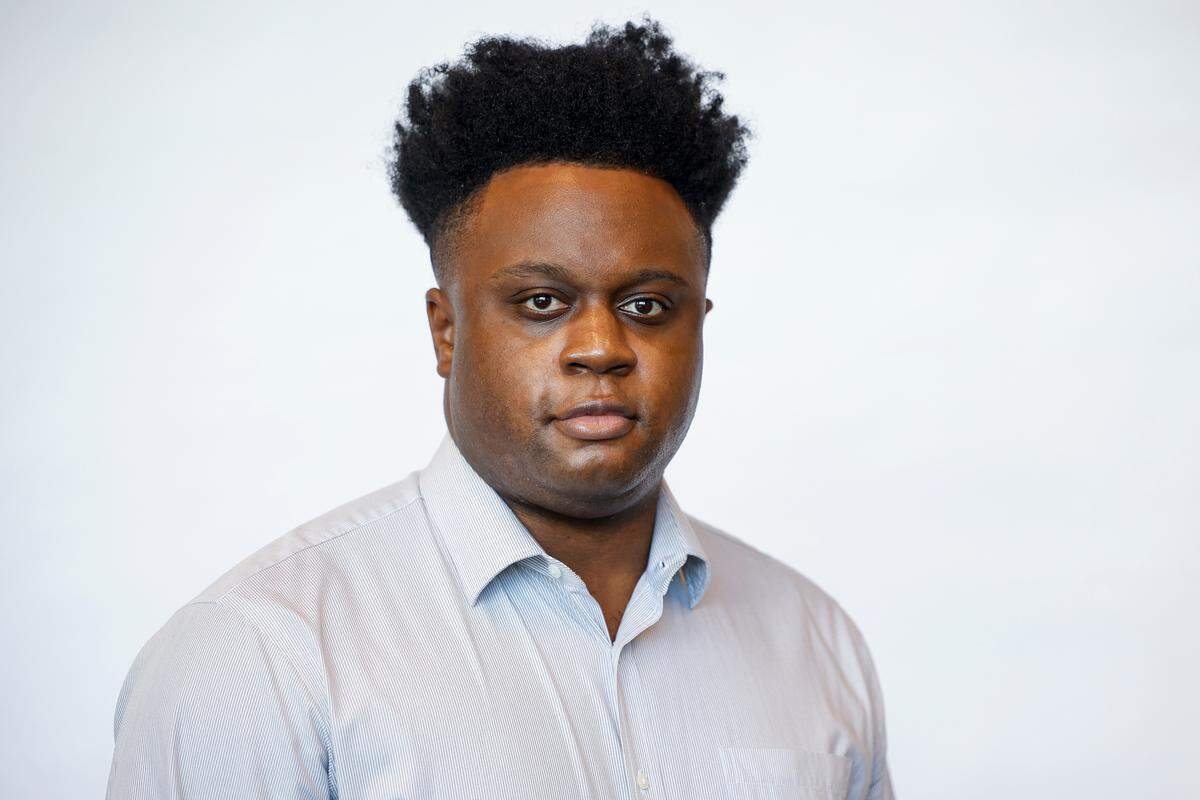
Evan Moore is a service journalism reporter for the Charlotte Observer. He grew up in Denver, North Carolina, where he previously worked as a reporter for the Denver Citizen, and is a UNC Charlotte graduate.