The Whitewater Center in Charlotte is expanding to 3 states. Who’s footing the bill?
When Vic Howie first pitched the idea of an Olympic-quality park for paddling enthusiasts in West Charlotte more than 20 years ago, government and business leaders balked.
“It was the craziest startup business in North Carolina and maybe the Southeast,” said Howie, one of the founders of the U.S. National Whitewater Center. “But it worked.”
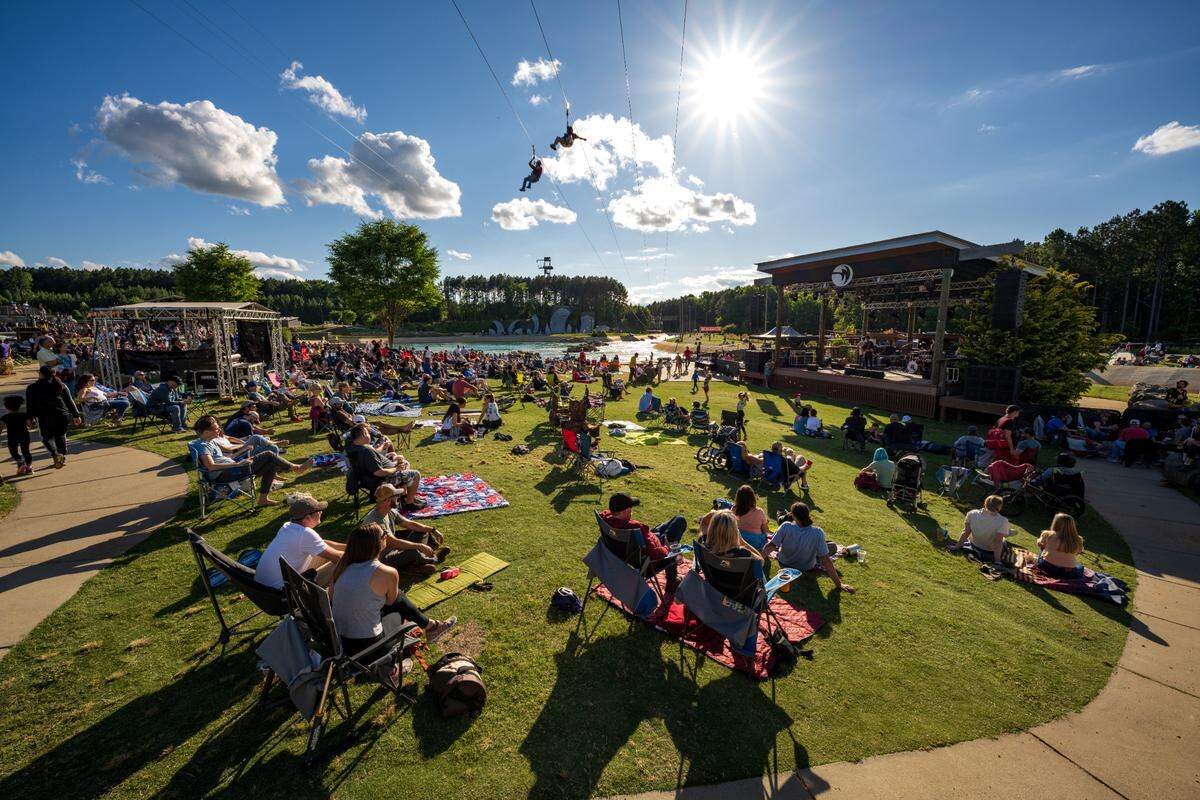
Now, the Charlotte nonprofit is expanding to four locations, in addition to its 1,300-acre site for climbing, biking and water sports. The move will expand the reach of its “outdoor lifestyle brand” to Virginia, South Carolina and as far west as Iowa.
The center’s early years came with a price tag for local taxpayers, when the city and county government paid several million dollars toward its construction loans.
The Charlotte Observer checked in with local government and Whitewater officials on the state of those ties, and how the expansion fits into the project that public and private leaders envisioned two decades ago.
Where is the center expanding?
The Whitewater Center announced on June 1 that it was adding locations, including three Whitewater centers spread across the Southeast.
The center also now operates Long Lines Climbing — a rock climbing gym and yoga studio — in Sioux City, Iowa.
The nonprofit opened Whitewater Pisgah, in Mills River, and Whitewater Santee, in Huger, S.C., on June 1. Another site, Whitewater Grayson in southwest Virginia, will open in 2023.
They’ll all operate under the “Whitewater” brand. The U.S. National Whitewater Center has been using the Whitewater name in various forms since it formed in 2001, Jesse Hyde, the center’s brand director, told The Charlotte Observer, but switched to using it as a primary brand name in 2017.
The new centers will offer outdoor activities like fishing, mountain biking, whitewater paddling and hiking.
It’s a “logical starting point” for building out Whitewater’s mission, CEO Jeff Wise said in a news release June 1. “Whitewater’s focus is to identify, protect and promote compelling destinations to get outside.”
Has the center used public funds in the past?
In its early years, public dollars helped keep the fledgling center afloat.
Project leaders took out more than $20 million in loans from 40 banks and other private lenders to build the complex in the early 2000s, the Observer reported at the time. They also secured $12 million in public backing from six local governments, including the city of Charlotte and Mecklenburg and Gaston Counties.
Before the Whitewater Center opened in 2006, the economy was booming and backers said it might never need public money. They expected the center to pay off loans on its own.
But as the economy soured in the Great Recession, the center was unable to pay off the principal of its construction loan and defaulted. “There were a lot of hard times,” Howie said.
The county and city governments ended up paying about $1.7 million annually for several years to help the center pay back its debts. In 2009, county commissioners even considered absorbing the center into the public park system.
A few years later, the Whitewater Center finally found its financial footing. Increased revenue from admissions passes, parking and food and drink helped the center ease “into less turbulent waters,” as one Observer story put it in July 2011.
“It may not have gone the way we might have wanted, but we did it,” Howie said of those years.
What about now?
But those payments from local governments stopped coming in 2011, Hyde said.
“U.S. National Whitewater Center, Inc. does not receive public funding of any kind,” he told the Observer via email. The center no longer receives financial support or funding from any governmental organization, he added.
That was confirmed by Mecklenburg County officials, who said they haven’t given any funds to the center in recent years.
According to recent publicly available IRS tax forms, the center has been in the black the last few years. Even in 2020, when the center briefly closed as COVID took hold, it reported $16.9 million in total revenue and $15.6 million in expenses. That margin was even wider the prior year.
Most of that income came from program service revenue, such as the purchase of admission passes.
The center still has at least one tie to the local government: it operates on hundreds of acres of county-owned land, Howie said. It leases that land for $1 a year in an agreement that won’t expire until 2044, according to Observer archives.
Howie has retired from the center’s board and is no longer directly involved with its operations. But he said the recent expansion moves are in line with the original mission he and Wise envisioned in the early 2000s.
“We wanted to get city dwellers out into Mother Nature,” he said. “The focus is the same as when we started.”
As for the government’s backing in those early years? That investment has paid for itself “many times over” by now, he said. “And look what we created.”
This story was originally published June 13, 2022 at 5:30 AM.