The long game: What does it take to stay afloat? Ask these Charlotte Black businesses.
Charlotte is home to several dozen Black-owned businesses of every kind of distinction: from banks to schools, to real estate agents, retail shops, eateries and even The Charlotte Post, a Black-owned newspaper founded in 1878.
One reason why the Queen City has been a magnet for African Americans, as evident through long-standing businesses, is because Charlotte has become a place where we can see ourselves thriving.
According to a new study released by SmartAsset, the Charlotte-Concord-Gastonia metro area ranked No. 2 out of 15 metro areas (including Raleigh-Cary) with a high presence of Black entrepreneurs. Around this region, Black-owned companies make up 27.6% of all businesses.
But for profitability, what does it take to stay in the black? For some businesses that are among the oldest in Charlotte, the long game appears to go beyond a business-friendly environment, dedication, perseverance or luck.
There likely are more who can claim being among the oldest Black-owned businesses, but The Charlotte Observer caught up with three owners. Each shared the secrets to their longevity, and each has their own approach for sustained and continued success.
Alexander Funeral Home — all about connectivity
Funeral home businesses traditionally have been an essential part of the Black community partly because of segregation laws. For the Alexander Funeral Home, this business came into existence because of necessity and circumstance.
The Statesville Road business, which opened in 1914, is now run by a third generation of sons, Alfred Alexander and his older brother Kelly Alexander Jr., who represents the 107th District in the N.C. House.
The family business began with their grandfather, Zechariah Alexander Sr., who was a sergeant major and a veteran of the Spanish-American War. Many of the Black officer corps in those days found work in banking and insurance businesses post-war, Kelly Alexander said.
“Plain-Z, as he was called, hooked up with the people who were doing North Carolina Mutual Insurance,” he said. “At that time, the only reason anybody wanted insurance was to bury you. In order to be able to sell insurance, you had to have a funeral, to have some kind of contact with a funeral home.”
Enter Cox and Cole, a Black-owned funeral home who partnered with Harry & Bryant, another Charlotte-area funeral home and perhaps the state’s oldest, Kelly Alexander said. In the early 20th century, funeral operations and embalming preparations still were segregated.
“Cox and Cole was the Black division of Harry & Bryant, basically,” he said. But the owners there ultimately died. Zechariah Alexander bought the business.
Alfred Alexander, 70, started in the family business when he was 9, partly because he wanted to hang out with his father.
“I started at a young age, trying to help them wash cars, put up tents, things like that,” said Alfred Alexander, who went to mortuary school years later. “Back then you had big white wall tires on cars. You had to make sure the tire was very clean.”
Kelly Alexander, now 74, gravitated to other things — namely, politics. But the business environment changed and it was necessary for everyone who owned a funeral home to go to mortuary school. That meant Kelly Alexander passed on an opportunity in Washington to work with the Jimmy Carter administration, staying in Charlotte to help his brother.
The secret to their success is what it always has been: to provide comfort to those grieving. With roughly a dozen full-time employees, a platoon of part-timers and other family, the brothers are continuously coming up with new ways to connect with clients. They have embraced technology for years.
Several monitors in the waiting areas are rolling with video loops of helpful information — such as how to get a death certificate, for example. They also run feeds of the faces of former employees, especially during Black History Month.
“While people are waiting for various things to happen, they are not just looking at a blank wall,” Kelly Alexander said. “What they see is connectivity.”
Of course, services are streamed, a modern-day practice in many funeral homes. It’s something the brothers did before it became the norm during the pandemic. And they have it down to a science, it seems. With several cameras strategically placed and a director’s station in the chapel, they capture everything during the service, Alexander said.
“If you wander in … at a particular angle, you’re on camera,” he said.
Anderton’s Barber and Stylists — it’s a safe haven
What keeps them coming back to Anderton’s Barber and Stylists is not always the steady beat of R&B music, smooth jazz or the fresh cuts — though it helps.
Stylist Dee Baidoo, known as Lady D, uses precision while she edges a client’s sideburns. Originally from Chicago, Baidoo wanted to be a social worker, but cutting hair gives her plenty opportunities to offer therapy.
“You come in here ... motivated and encouraged and you (are) just like a social worker,” a customer once told Baidoo.
“I have good vibes and positive energy, especially for the men because they (are) under so much,” she said.
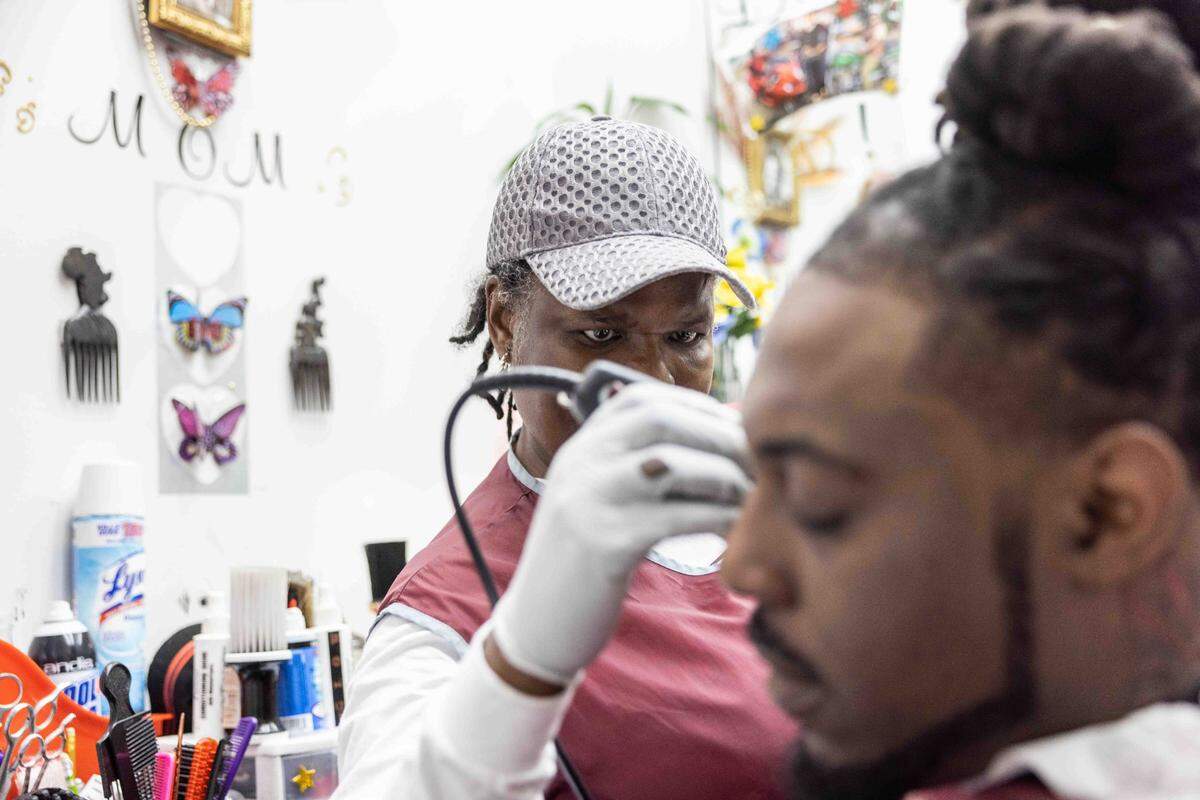
The Beatties Ford Road shop has a welcoming vibe — busy, with a half-dozen or so stylists. The business is an anchor in the community and the team is presented as role models for the young and impressionable clients — which contributes to the shop’s success.
“I am responsible for my actions and being a pillar in the neighborhood,” says Rodney Thomas-Bey, a stylist who went to North Carolina Central for graphic design. “A lot of kids coming here need a good example.”
It’s what customer C.J. Henderson said meant a lot to him when he was growing up in the West End neighborhood.
“(You) enjoy having the talks and then being around your peers and stuff like that. It’s just a safe haven,” Henderson, now 32, said. “Then it’s the loyalty aspect of it. I haven’t let anybody cut my hair, other than Rodney or Anderton.”
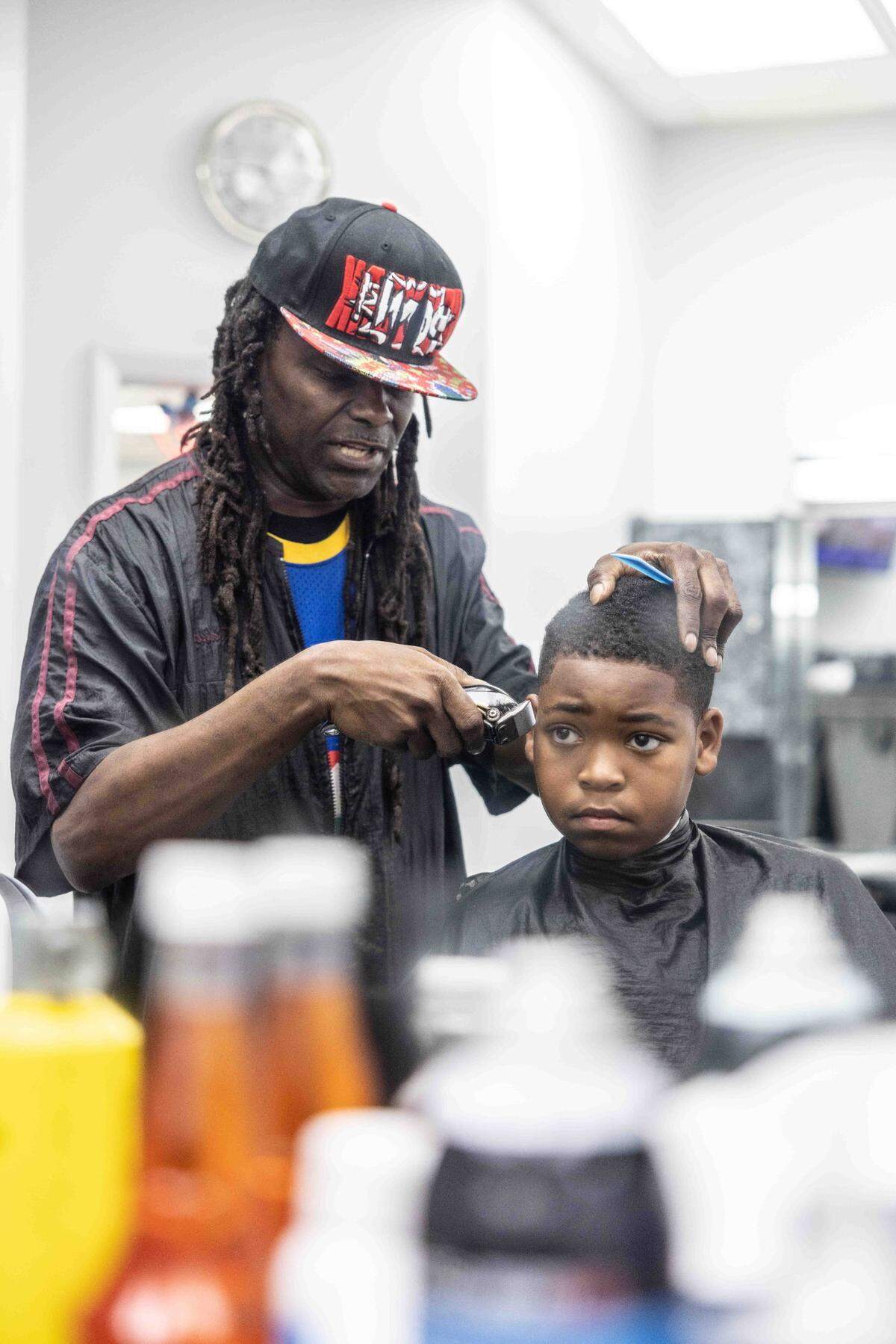
Owner Don Anderton, a semi-retired barber, opened up the Beatties Ford Road location in 1982. Originally from Weldon in northeastern North Carolina, Anderton comes from a long line of barbers — his uncles and brothers have been in the business for 75 years.
Thomas-Bey says one big boost to the shop was when marquee Charlotte Hornets ballplayers of old — Larry Johnson, Muggsy Bogues, Alonzo Mourning and others — began dropping in for cuts.
Dell Curry even brought his sons to the shop on occasion. “Steph Curry was a little kid,” Thomas-Bey said.
Stroud Florists — being personable steers success
A week before Valentine’s Day and Neil Nevins, owner of Stroud Florist, was literally coming up roses.
A flood of orders come in during this time, but it’s nothing this cozy shop on Beatties Ford Road can’t handle. Nevins, 48, and his wife Christina Nevins own the shop.
They are master designers and creators who love what they do. The duo can whip up a bouquet or a themed design — think a Panthers’ logo — or arrange the flowers to look like a birthday cake or anything, really.
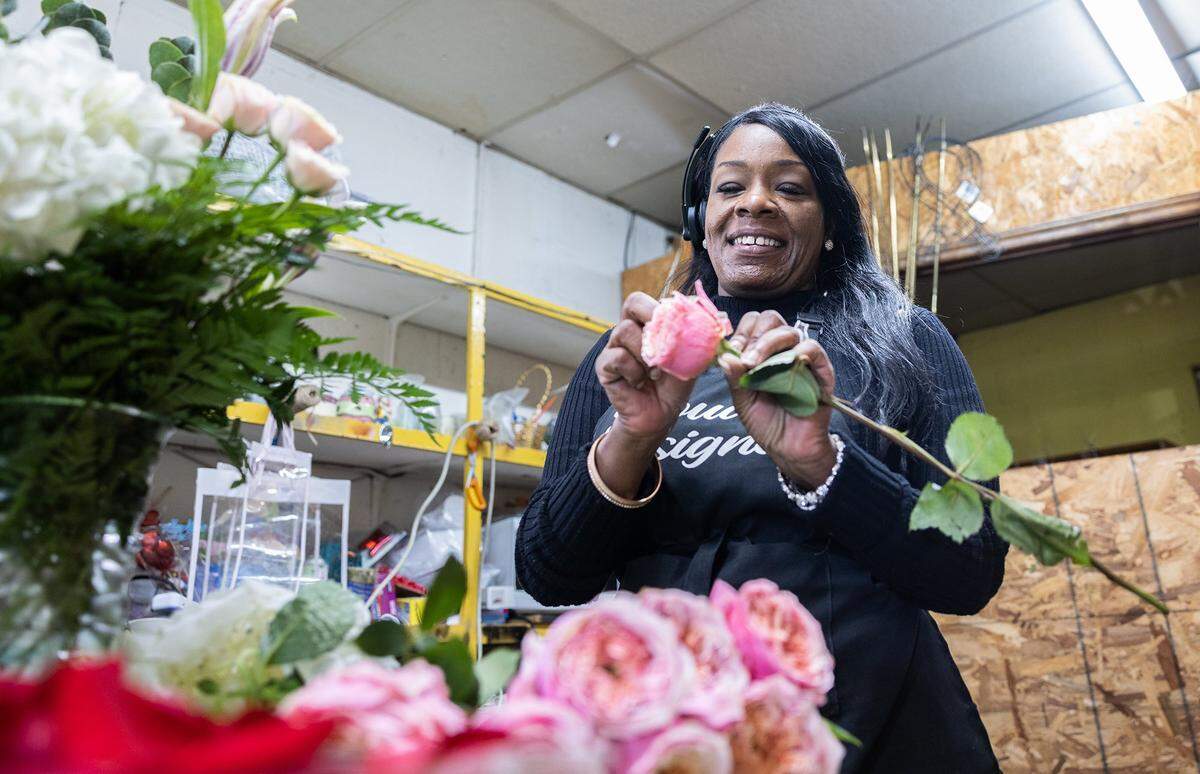
Before Christina Nevins met her husband, she never dreamed of being a florist.
“I knew a rose and daisy, that’s the only two flowers I knew,” she said.
“She’s very artistic, artsy, into painting and building things and stuff like that,” Neil Nevins said. “It was kind of natural. Marriage and marriage.”
Since 1977, Stroud has been a mainstay in the West End after Nancy and Gerardo Stroud opened its doors. Nevins, their godson, was a young teen when he started hanging around the shop. When Stroud died, Nevins took the reins. He and Christina have been married for 11 years, together for 15 years.
Part of their longevity in this evolving neighborhood is what Nevins calls an ability to be personable with consumers.
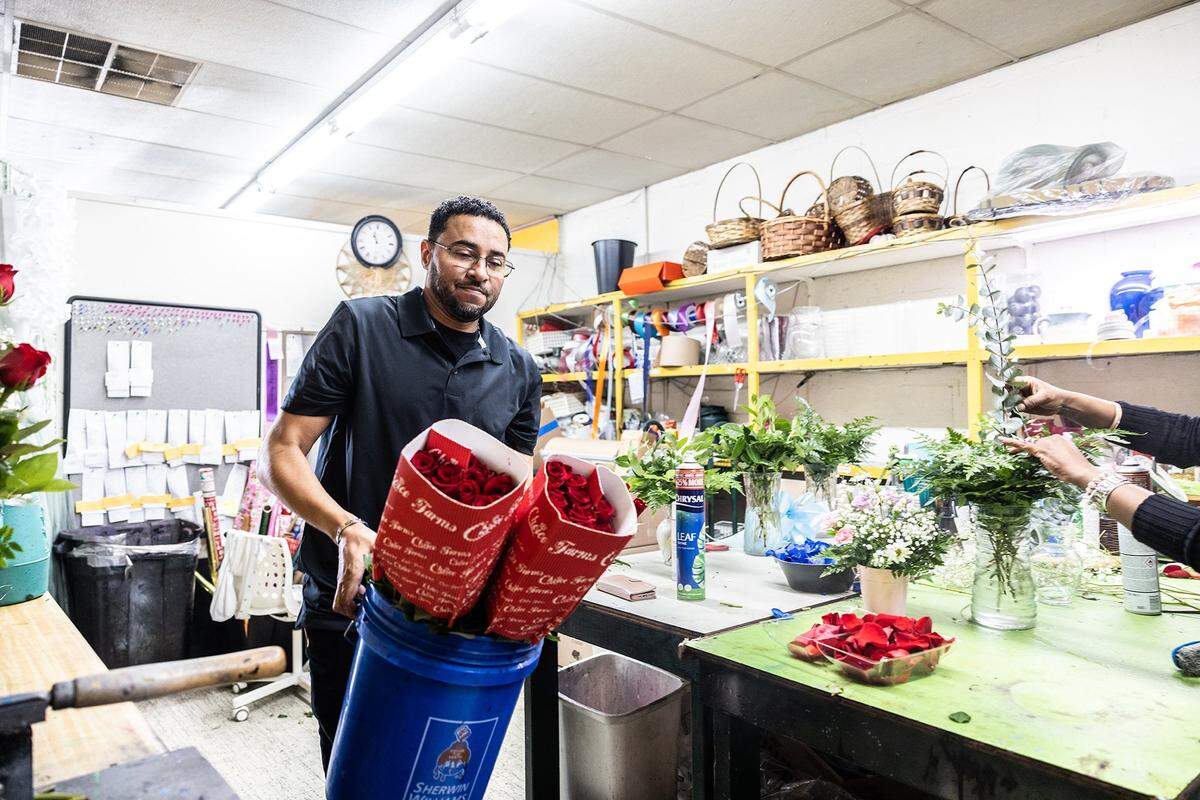
“We’ve just been, you know, keeping the tradition going. It was a standard in the community during the ‘70s, ‘80s, ‘90s,” Nevins said. “It was the first Black-owned florist in Charlotte.”
Keeping pace with technology and the internet required growth, taking chances and just “adapting like you do with daily change,” Christina said. But It’s not always a skip through the garden. There have been some disconcerting times in the West End beyond their control, such as crime outside their space.
“I think we’re safe for the most part,” she said. “There’s a lot of crime in Charlotte. By us being on this side of town, we see a lot of grieving families. We take it home with us a lot. We try not to. ”
The couple is relocating their beloved shop up to 1504 Beatties Ford Road, closer to where Stroud opened his original shop more than 45 years ago. The move was necessitated by new building owners, but it will bring them to a space twice as large.
”We were hit with a gift in disguise,” Christina Nevins said.
This story was originally published February 24, 2023 at 6:00 AM.