Gateway to uptown: Catch up on the latest changes to the North Tryon corridor
For a couple of years now, Tanner Morita has been pouring coffee into cups and wine into glasses at the Camp North End development, an area that was once a lifeless collection of abandoned industrial buildings.
Now, Camp North End is bustling with customers visiting shops and places to eat. People live there too, in a recent apartment complex with several stores around it.
Morita’s business, HEX Coffee, Kitchen & Natural Wines, was one of the first tenants to open its doors at Camp North End in April 2023. It’s another indicator of progress for the North Graham-Tryon Street corridor, a gateway to uptown.
The area is part of one of Charlotte’s Corridors of Opportunity initiatives, which support under-invested sections of the city.
More than $147 million has been invested into the program for six areas in the city. This includes a city investment of more than $70 million and over $75 million in corporate funding for the improvements. Some of that money is being spent on upgrading public housing upgrades, business grants and an E-Bike pilot program.
Along with residential neighborhoods, the North Graham-Tryon Street corridor also features manufacturing and industrial districts, and small businesses like Morita’s.
“I’m really excited to be somewhere that feels like it’s being true to the history, true to the neighborhood and true to retaining energy and culture,” Morita said about Camp North End. “It also helps retain creativity in this space.”
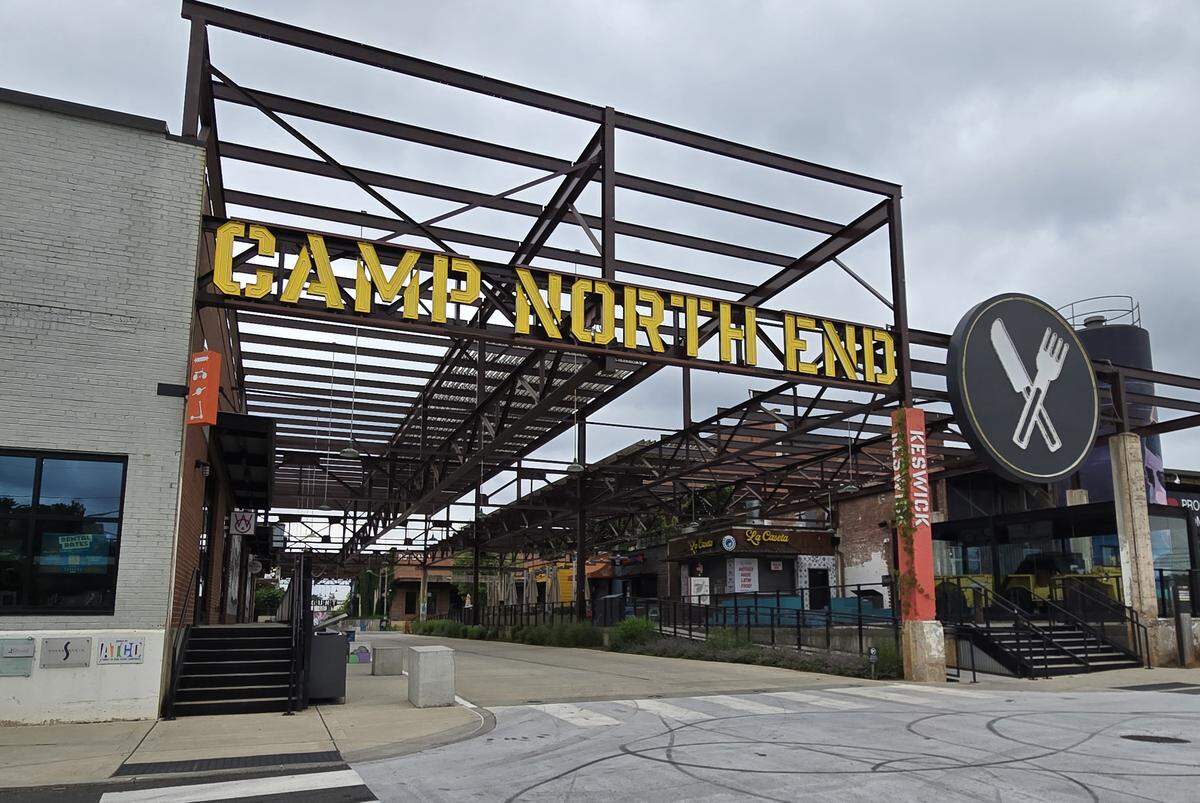
Camp North End is one of the largest adaptive reuse projects underway in the U.S., according to developer ATCO Properties & Management. It was built from a 76-acre site once used for the production of Model T cars and, later, missiles for the U.S. Army.
ATCO redeveloped more than 750,000 square feet of space for offices and local small business owners. It’s now home to eateries, bars, entertainment and recreation options.
Tanner, a Portland native, is used to remodeled spaces like Camp North End and said this approach is something Charlotte has largely lacked. There’s been a lot of development in Charlotte, he said, but often at the expense of losing historic properties.
Rachel Hopkins, owner of Room Service, a cocktail bar and lounge, has been doing business at Camp North End for about five years. She went to Northwest School of the Arts, which is just several minutes away.
“It’s incredible,” Hopkins said. “This whole area is completely different, and I feel like it’s kept a lot of the culture.”
Transforming a former eyesore
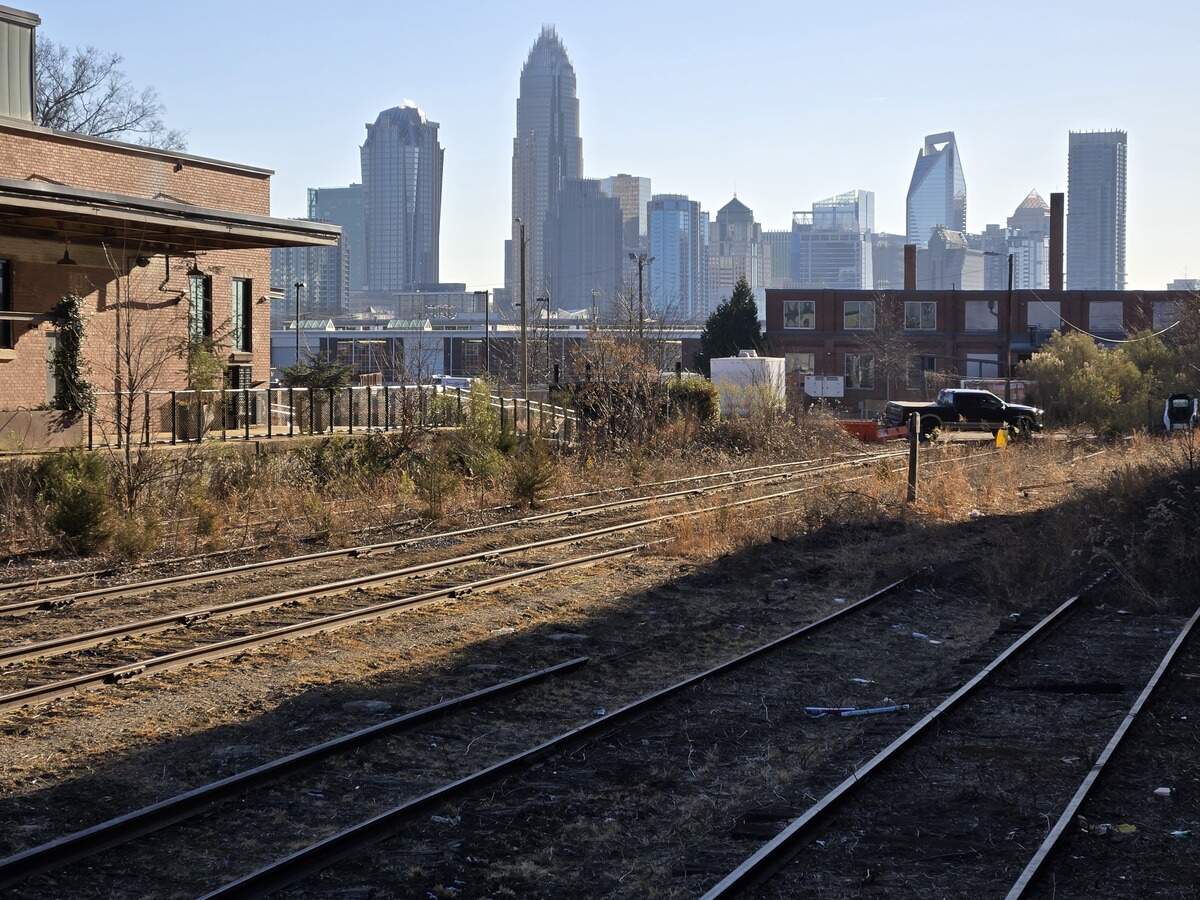
The progress at Camp North End took almost 10 years of working with neighbors, business associations and developers. For years, it had been an eyesore in the area, said Damon Hemmerdinger, co-President of ATCO Properties & Management.
“We’re super proud that we’ve turned that abandoned, barbed-wire site into a place that saw 750,000 visits during 2024,” he said.
Camp North End is now home to more than 75 businesses, and around 50 of them are minority-owned, according to Hemmerdinger. It will take about another decade before Camp North End is complete.
“Each step on that journey is rewarding to us and, we hope, positive in terms of its impact on the community,” Hemmerdinger said.
Camp North End is also home to Kinship West, a multifamily development. The development announced new storefronts this year alongside the apartments. Some of these included a salon and barbershop, a clothing store and a tattoo shop.
Malcolm Graham, a City Council representative, said Camp North End is a magnet for progress —reminiscent of the old Ford days. “We’re really excited about what’s happening over there,” Graham said.
North Graham/North Tryon streets corridor
Graham is also optimistic about other growth potential in the North Graham/North Tryon Street area.
According to the city’s Corridors of Opportunity program, there is a need to improve walkability, public transportation and safety. The city worked with neighborhood associations and business owners to establish a playbook with plans to improve the area.
“I feel really bullish about the future for that corridor,” Graham said. “A lot of hard work is yet to be done, but I think the playbook gives us a roadmap to follow.”
One of the corridor initiatives involves revitalizing Dillehay Courts, a 51-year-old public housing site. It’s being rebranded as The Gaston at North End.
INLIVIAN, formerly known as the Charlotte Housing Authority, is working with the city on The Gaston. This revitalization project aims to provide modern, safe housing options and integrate residents more fully into the corridor.
Another plan is to open an economic hub this year to provide workforce development and training resources for business owners and job seekers.
Do Greater Charlotte in North Tryon
Beyond Camp North End, the North Tryon Street area is witnessing further investment aimed at community enrichment, exemplified by organizations like Do Greater Charlotte.
The nonprofit began construction of Creative Lab Uptown at 500 N. Tryon St. The three-story, 20,000-square-foot building will provide a digital creative studio and other technology for visitors.
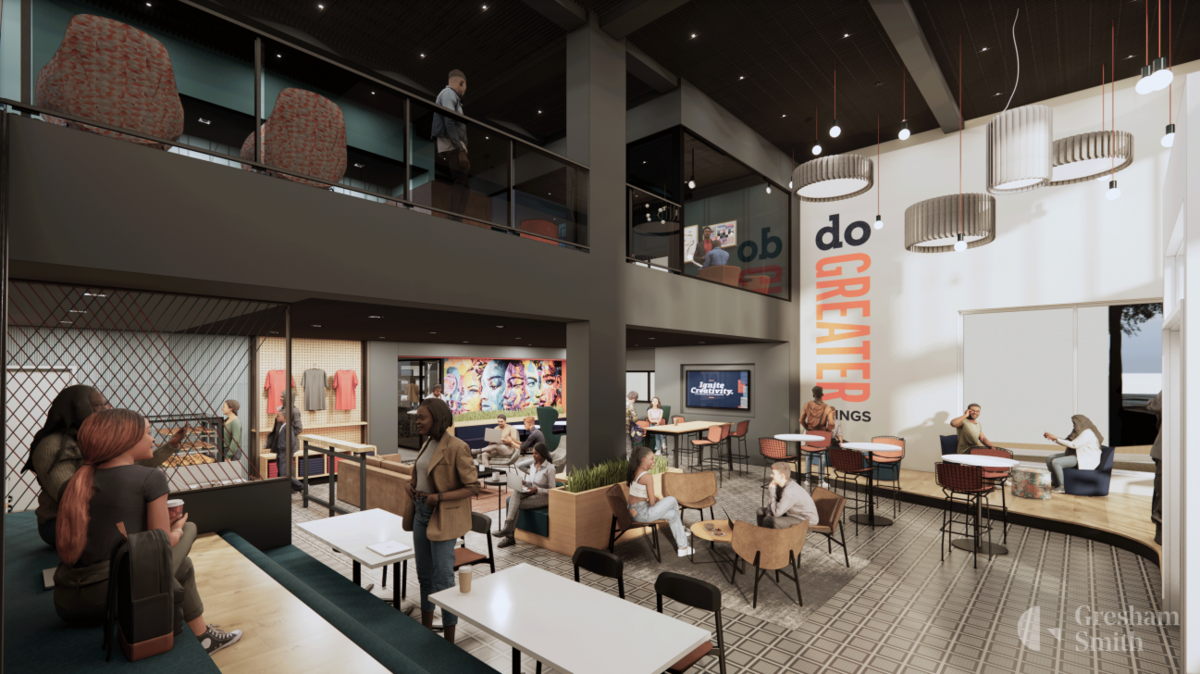
Do Greater Charlotte aligns with the Mayor’s Racial Equity Initiative, Mayor Vi Lyles stated stated in a news release. The project will help improve Charlotte’s reputation as a place for entrepreneurship, she said.
The project will be housed in a space once used by former mayor Harvey Gantt for his architectural firm.
Architect Louis Asbury designed the building in 1921. The original wood ceiling, brick walls and tile floors were reminiscent of an old auto dealership — a fitting echo as this industrial space transforms into a hub for creativity.
Its new design will honor the Harlem Renaissance, a revival of Black arts, politics and culture between the 1910s and the 1930s. Sivilay Xayasaene is leading design efforts. The idea for the project came from a 2023 competition by Charlotte Center City Partners, which had a goal of reimagining vintage uptown buildings.
Do Greater Charlotte expects to spend $5 million on Creative Lab Uptown, according to the organization. Financial assistance is coming from the private and public sectors. For instance, Wells Fargo donated $750,000 for naming rights on the second floor, which the nonprofit announced in 2024.
The eight-year-old nonprofit’s first initiative was a mobile classroom that brought iPads and laptops to underserved communities, according to Do Greater Charlotte. Do Greater Charlotte opened its first business hub in 2022 at Shiloh Institutional Baptist Church to serve people in the Freedom Drive and Wilkinson Boulevard neighborhoods.
Along with projects such as Creative Lab Uptown and other initiatives through its North Tryon Vision Plan, Charlotte Center City Partners is looking forward to seeing the area continue to evolve
“This has been an area that suffered from from disinvestment,” said Charlotte Center City Partners President and CEO Michael Smith. “We think this work being done in the North Tryon tech hub creates a foundation for that.
“There’s incredible opportunity for reinvestment and new opportunities as we develop this corridor between uptown all the way out to UNC Charlotte — connecting our greatest source of talent and our greatest source of opportunity and jobs in uptown,” Smith said.
This story was originally published August 4, 2025 at 5:32 AM.