Touring this Charlotte data center is like taking a peek inside the cloud
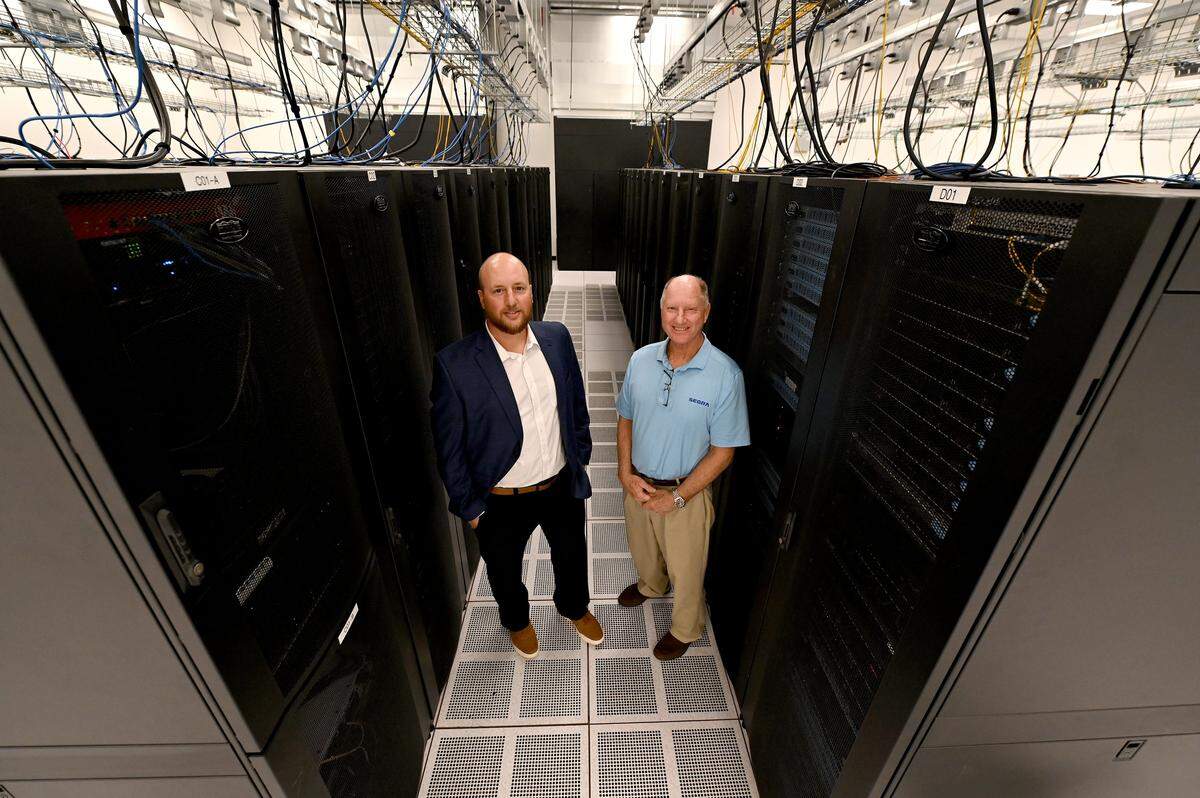
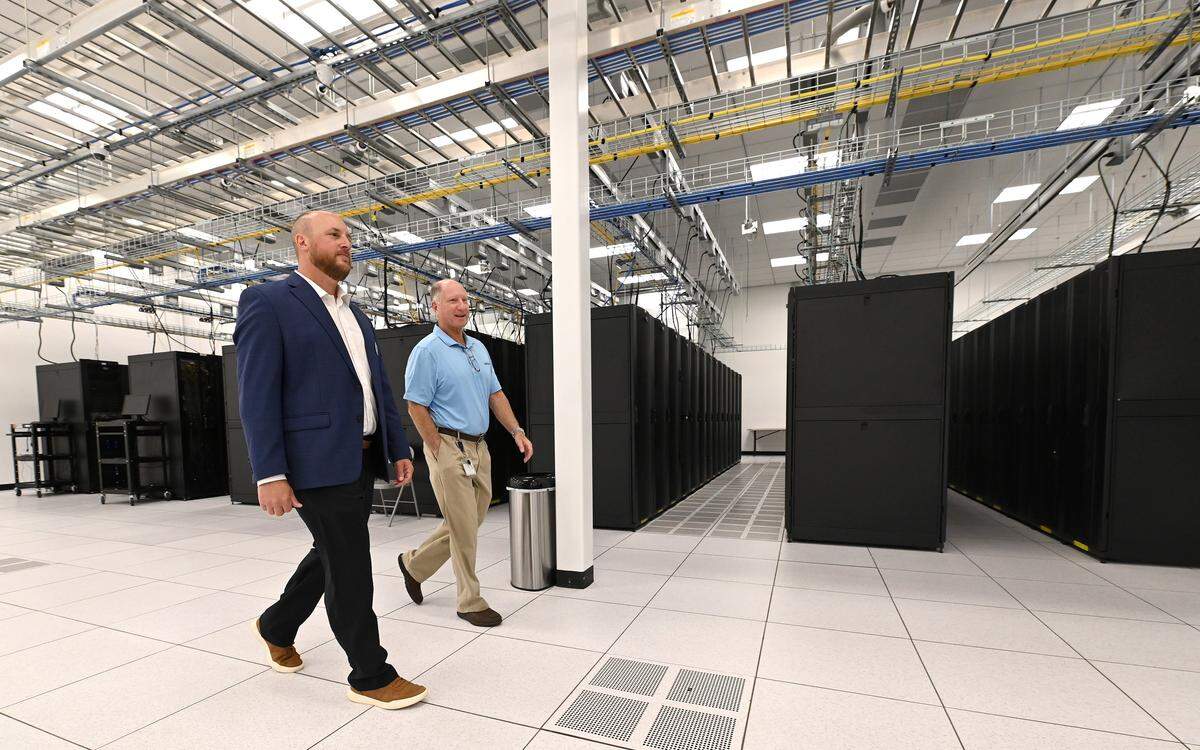
Inside a one-story warehouse in west Charlotte stand black metal cages over 8 feet tall. Within their white sterile room are rows upon rows of black racks filled with servers and IT equipment giving off a continuously loud hum.
Welcome to a glimpse of the inner sanctum of digital infrastructure — a data center. Surging demand for artificial intelligence is making these unassuming buildings the latest flash point of debate across the Charlotte region. The Charlotte Observer recently toured one data center run by Segra, a Charlotte-based telecommunications company that provides fiber connectivity, along with cloud and data center services.
Segra’s 2.5-megawatt (MW) center is not one of the massive hyperscale AI data centers being proposed in North Carolina that use water cooling systems. Segra uses traditional HVAC to cool its machines, and the tour offers a glimpse into the world that powers our digital lives.
“Charlotte is one of the fastest growing technology and business hubs in the Southeast, which makes it an ideal location for data center development,” said Chris Allgauer, Segra’s senior director of technology-data centers.
He cited the region’s “reliable and affordable power, robust fiber connectivity and relatively low risk of natural disasters” as attractive for data center operations.
“Some people have no idea what a data center is,” Allgauer said. “Until recently, it was just kind of unknown these things were just running.”
Particles are the enemy
Segra’s Charlotte Two data center near Charlotte Douglas International Airport has two data “halls,” with another in a building across the street.
Segra opened the new data hall we toured in a former warehouse space last year. It’s part of the company’s $10 million expansion that doubled the size of its Charlotte facility to 28,000 square feet, adding capacity for private cloud and multi-cloud exchange services.
Access to the 9,000-square-foot data hall is strictly controlled, requiring biometric data like a fingerprint or facial recognition.
Upon entry, it’s mandatory to step onto a sticky, bright blue mat resembling a massive mousetrap. The mats strip dirt and debris from shoes before entering the clean-room environment.
“Particles are the enemy,” Allgauer said.
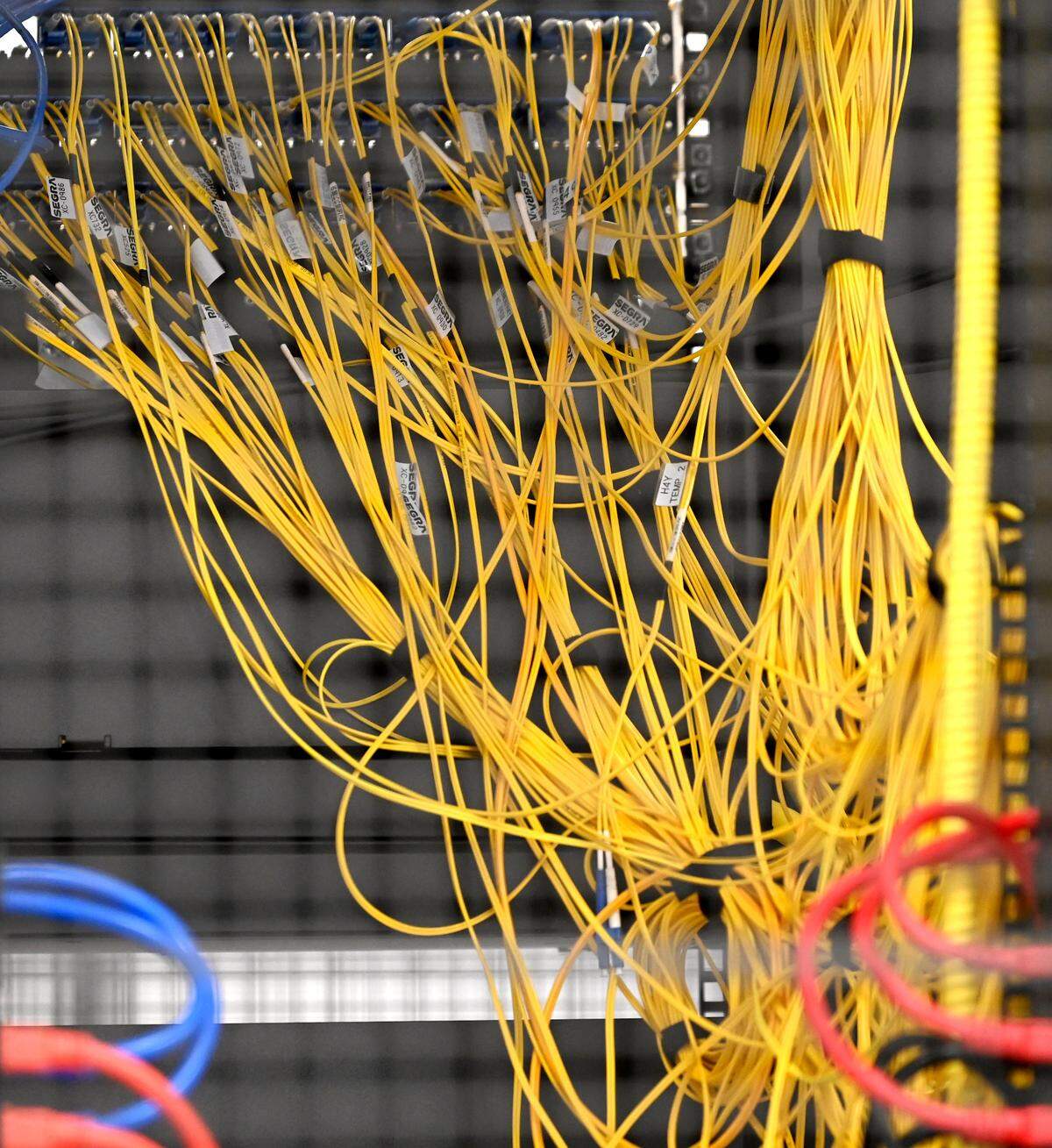
Inside, some cages are partially empty while others are filled with racks of electronic servers. Overhead, layers of silver tracks called busways run the blue ethernet, yellow fiber and black electrical cords to power the servers using multiple carriers like Segra, AT&T and Verizon.
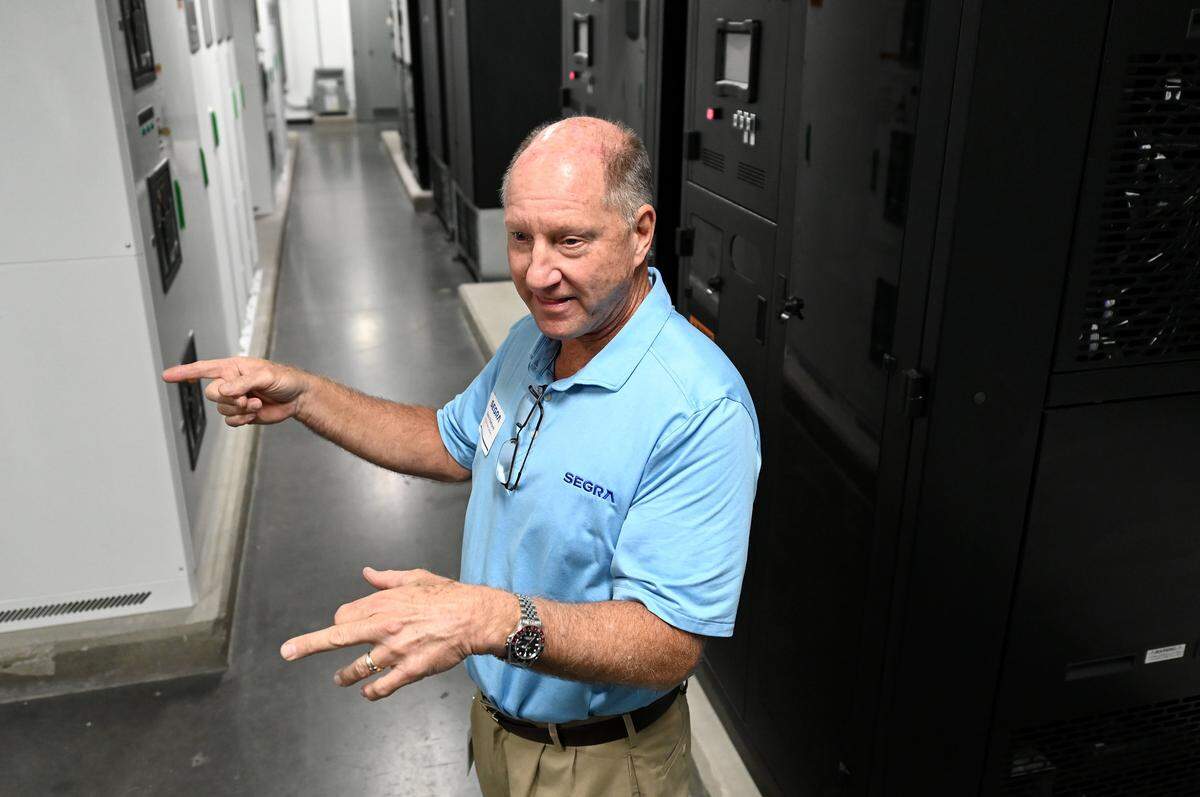
Stability is paramount to data centers, said Segra Data Center Manager Glenn Palehonki. He called the electrical room, filled with feed-in and -out cords, “the meat and potatoes” of the data center. For redundancy, the entire facility is backed up by batteries and two diesel-powered generators that kick in within seconds.
“You can’t go down. You can’t have connectivity failure,” Allgauer said.

Keep it cool in the Charlotte data center
The facility maintains a cooling system to manage the heat generated by the servers. The heat aisle temperatures are around 80 degrees and the cooling aisles are around 72 degrees, Palehonki said.
The center aisle is flanked by the locked metal cages. Beyond them on the right side are racks upon racks of servers. Cold air blows through vented tiles in the floor into the cold aisles at the front of the servers.
The hot air created by the servers is blown out the back into the hot aisles, rising to vented ceilings for recirculation.
Outside, five 30-ton condensers quietly run, although just three are currently needed as the new data hall is only about a third full. Like other area data centers, Segra has its own transformer. This data center operates as a colocation facility, meaning multiple customer businesses share space and power. The new data hall can house about 350 racks of customer equipment.
Segra can have a customer ready with power within 20 minutes, Palehonki said.

Segra is growing locally
Segra serves over 8,000 customers in 28 states, operates a 43,000-mile fiber route and has steadily expanded its local footprint.
It has six data centers in North Carolina, including the two in Charlotte and one in Kannapolis. Segra’s largest facility is 120,000-square-feet with 5 MW capacity in Winston-Salem. All the data centers are in business parks, not residential areas.
Remote and hybrid work models since the pandemic also have accelerated the need for data centers to adapt.
“Increasingly, organizations are choosing to forego maintaining their own on-premise data centers or server rooms, and they’re opting instead for facilities like Segra data centers that provide space, power, cooling infrastructure for their work loads,” Allgauer said.
With growing customer demand, Segra’s existing capacity at its Charlotte facility was quickly approaching its space and power limit, Allgauer said.
“The data center industry has experienced significant transformation, shifting from supporting conventional IT to enabling cloud computing and emerging technologies like AI and high-performance computing,” Allgauer said. “As data continues to grow exponentially, connectivity and available bandwidth have expanded accordingly to meet the rising demand.”
The company has undergone mergers and acquisitions, including being bought by Cox Communications in 2021. Another merger for its parent company is underway with Charter Communications for $34.5 billion.
Segra has about 1,500 employees, with 60 spread across its six North Carolina data centers. About 15 people work at the Charlotte data center, where roles include facility managers and technicians as well as network engineers and analysts.
The reality of digital storage, Palehonki said, is that “the cloud is just your stuff in someone else’s data center.”