Charlotte’s data center surge — pricey, power-hungry and shrouded in secrecy

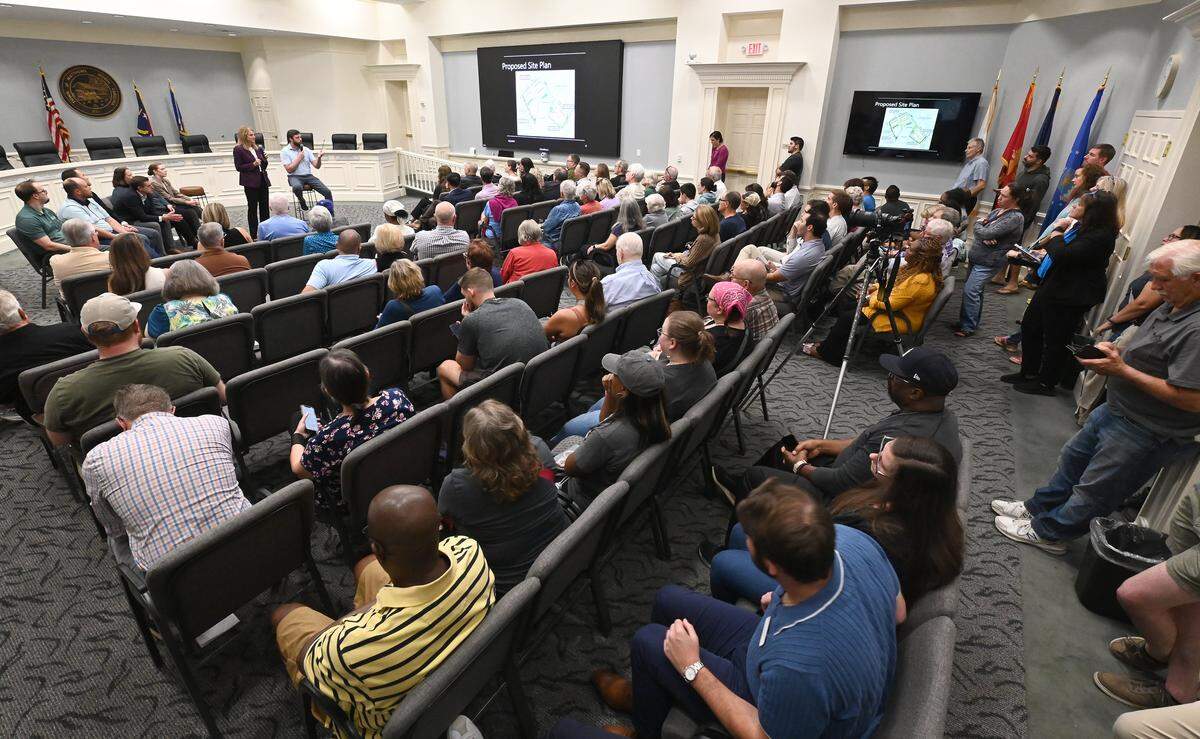
In early October, one hand after another shot up across a packed room at Matthews Town Hall, where more than 100 people impatiently waited to speak. They called out comments for over two hours, eager to challenge a developer’s vision for a sprawling data center campus near downtown.
The proposed complex would span 123 acres and place five two-story buildings on a mostly wooded lot, with capacity for 600 megawatts — dwarfing all other data centers in the state and requiring enough juice to power about 450,000 average homes for a year.
Many residents felt like Lindsay Sawey, who lives near the proposed site. “They can’t change my mind,” she told The Charlotte Observer during the meeting. “I’m just here so that I can complain.”
The room grew heated as people peppered officials with questions about noise, power bills, water usage and fire safety. Still, not everyone opposed the plan. One man stormed out, calling his neighbors close-minded and yelling: “You won’t listen to the experts.”
It’s a ferocious debate playing out across the Charlotte region, as well as nationally and globally.
Over the past couple of years, the surging use of artificial intelligence fueling apps, websites and other tech has turbocharged the need for rapid expansion of massive data centers to handle the demand. The Carolinas is now seen nationally as a rising hub that’s helping expand that supply.
At this tipping-point moment for the industry here, new and serious concerns have emerged, The Observer found:
- The energy needs of 30 data centers that are planned or under construction across the Carolinas, according to one industry report, would more than double the current energy needs in the Carolinas.
- Projected demand on the power grid creates a slew of unknowns that North Carolina utility regulators have only recently begun to grapple with publicly.
- The lack of public disclosure about the industry’s growth leaves the public in the dark over such basic questions as: how many data centers are in the Charlotte region now, what’s coming next and how much energy will they use?
“Without any transparency, without any sort of central source of information, it’s understandable to be very worried,” said Nick Jimenez with the Southern Environmental Law Center, a legal advocacy nonprofit.

Understanding data centers
Americans have lived with data centers for the better part of a century. They began in 1945 at the University of Pennsylvania with the advent of computers.
Such centers operated inconspicuously in the Charlotte region for decades. Two data centers on a block on East Trade Street in uptown went virtually unnoticed until one of them filed for expansion in September.
But over the past couple years, their rapidly expanding scale is unprecedented and impossible to ignore.
“AI is really transforming the data center landscape,” said Eric Masanet, professor in sustainability science for emerging technologies at UC Santa Barbara. “A lot of investments are being made, a lot of competitive models being developed, that’s requiring lots and lots of additional AI servers, which require lots and lots of additional data centers.”
Today’s data centers are warehouse-like facilities housing computer servers and components essential for storing, processing and disseminating large amounts of data.
Tech giants such as Google and Amazon own Charlotte-region data centers. Other owners include Digital Realty and Segra, whose sites are built for a single user or as “colocation” sites with space leased to multiple businesses.
Not all data centers are alike. AI-oriented data centers are designed to support complex AI workloads, while traditional data centers focus on general computing tasks.
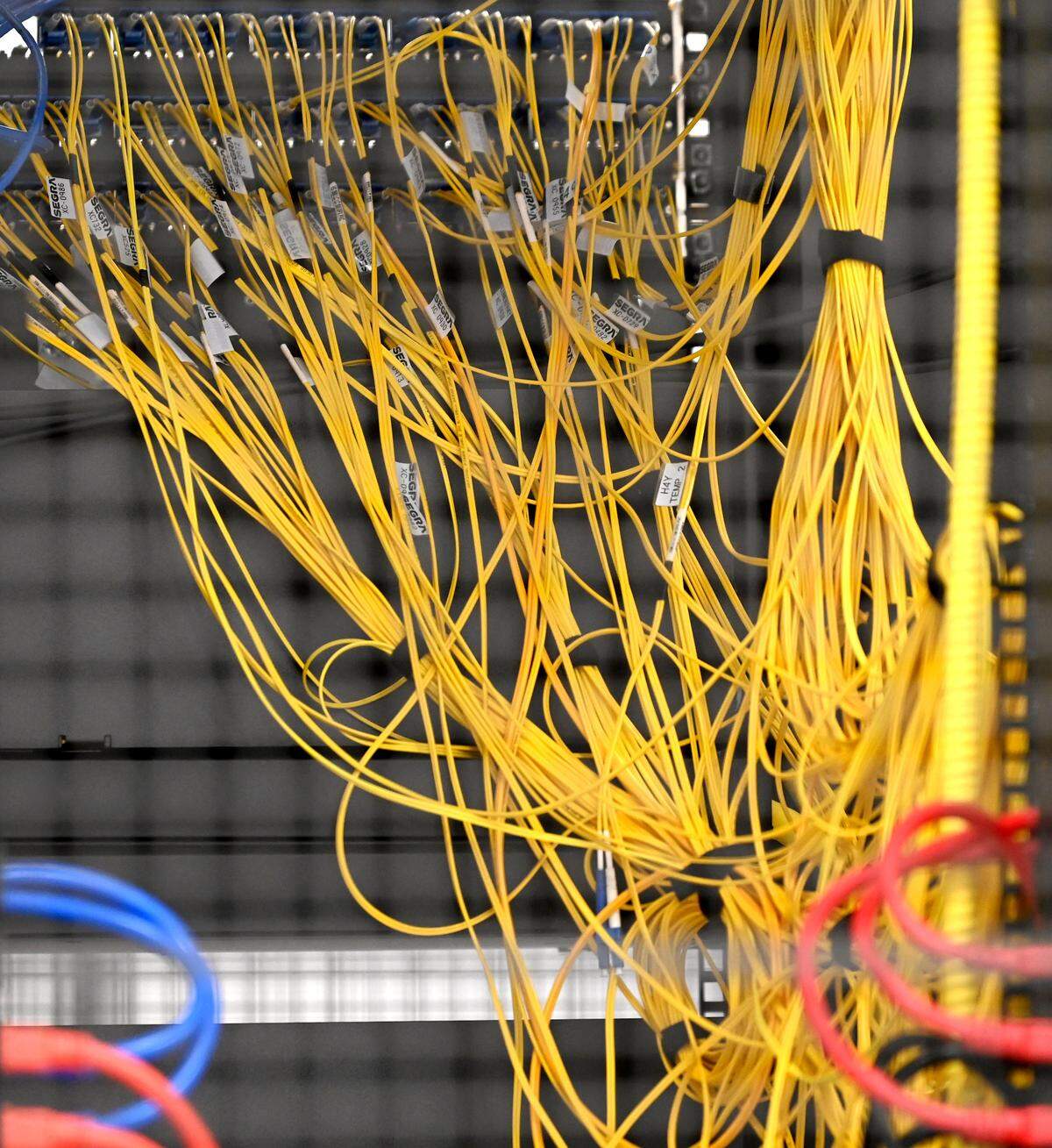
That means the facilities also operate differently. For example, Segra’s data center near Charlotte airport is cooled using HVAC while bigger data centers proposed for the region, like the one proposed in Matthews, use a closed-loop water system.
Segra, a Charlotte-based fiber network, recently doubled its size to 28,000 square feet at International Airport Drive with a $10 million investment.
Digital Realty, a Texas firm, plans to knock down a pair of century-old office buildings and construct a four-story, 12 MW data center on East Trade Street covering nearly the entire block. It also intends to open what would be the region’s largest data center campus in west Charlotte at 400 MW and 3 million square feet.
Here’s how such power usage breaks down, according to Duke Energy:
- 100 MW is equivalent to powering 75,000 homes.
- 1,000 MW equals 1 gigawatt, or GW, equivalent to powering about 750,000 homes.
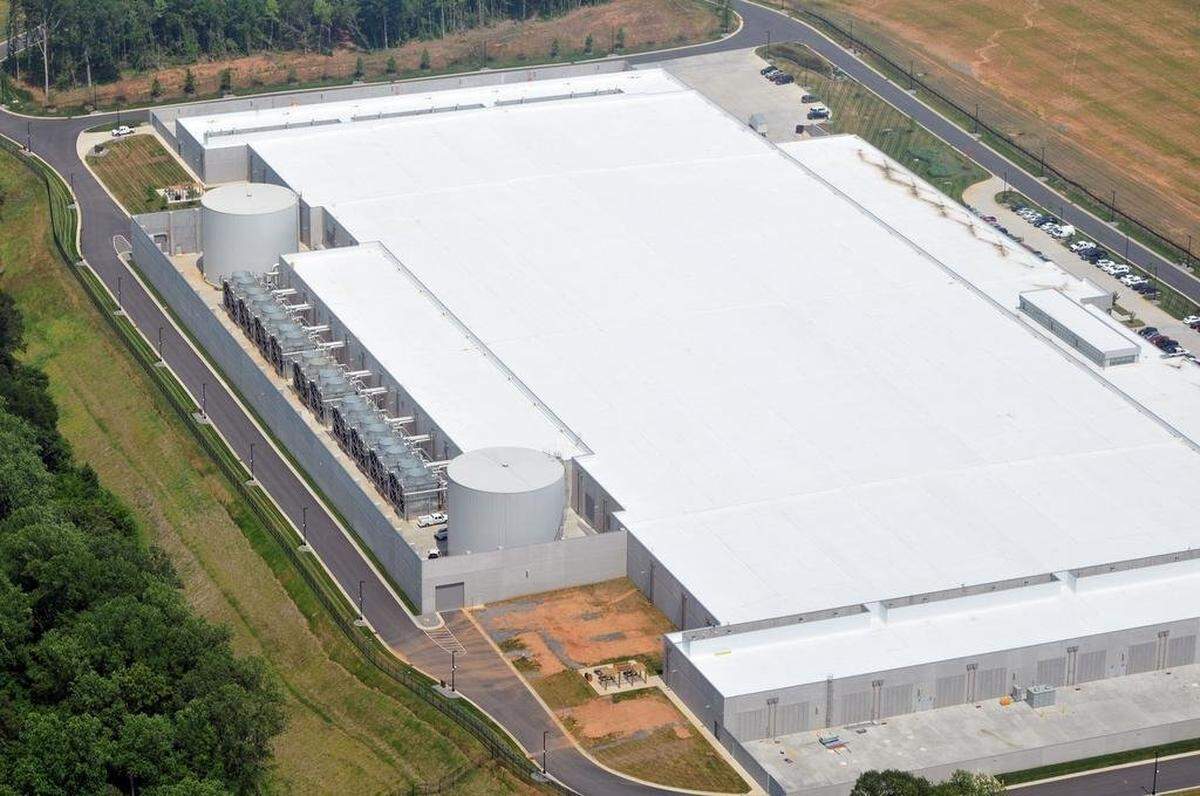
Apple’s data center in Maiden, spanning 505,000 square feet, is currently the state’s largest data center with capacity for 100 MW. The $1 billion complex elevated the Catawba County area northwest of Charlotte as a data center corridor when it opened in 2010.
Big Tech continues to pour billions of dollars into Carolinas’ data centers to keep up with AI demand.
In February, Apple announced a $500 billion expansion plan for data center capacity and other projects around the U.S., including its North Carolina sites. And in October, Amazon broke ground on a 20-building, $10 billion data center to support its AI needs on 800 acres in Richmond County, between Charlotte and Raleigh.
Data center scale remains blurry
So how many data centers are in the Carolinas? Where are they and how much energy do they use?
No definitive public source can answer that.
Companies such as Chicago-based real estate firm Cushman & Wakefield offer some insight by combining information from multiple public and private entities. The Carolinas, counted as one group, appeared as an emerging market for the first time in the firm’s annual America’s Data Center Update list.
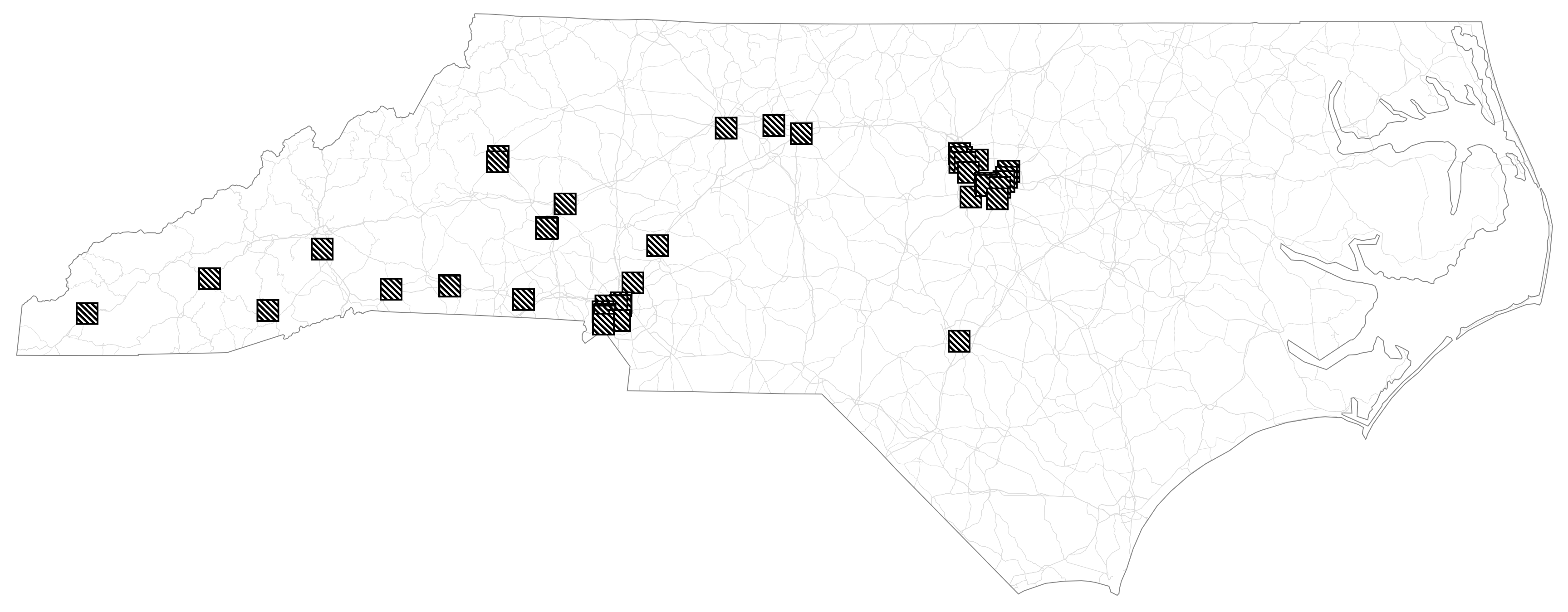
There are 67 data centers operating in the Carolinas, according to the report released in September. Another 26 — many substantially bigger than existing ones — are planned and four are under construction.
The Charlotte region, including Rock Hill, accounts for more than half of the existing data centers with 38, said John McWilliams, head of data center insights at Cushman & Wakefield. The region also has one center under construction and another 22 planned.
A quarter of the centers under construction in the Carolinas are in the Charlotte area, McWilliams said.
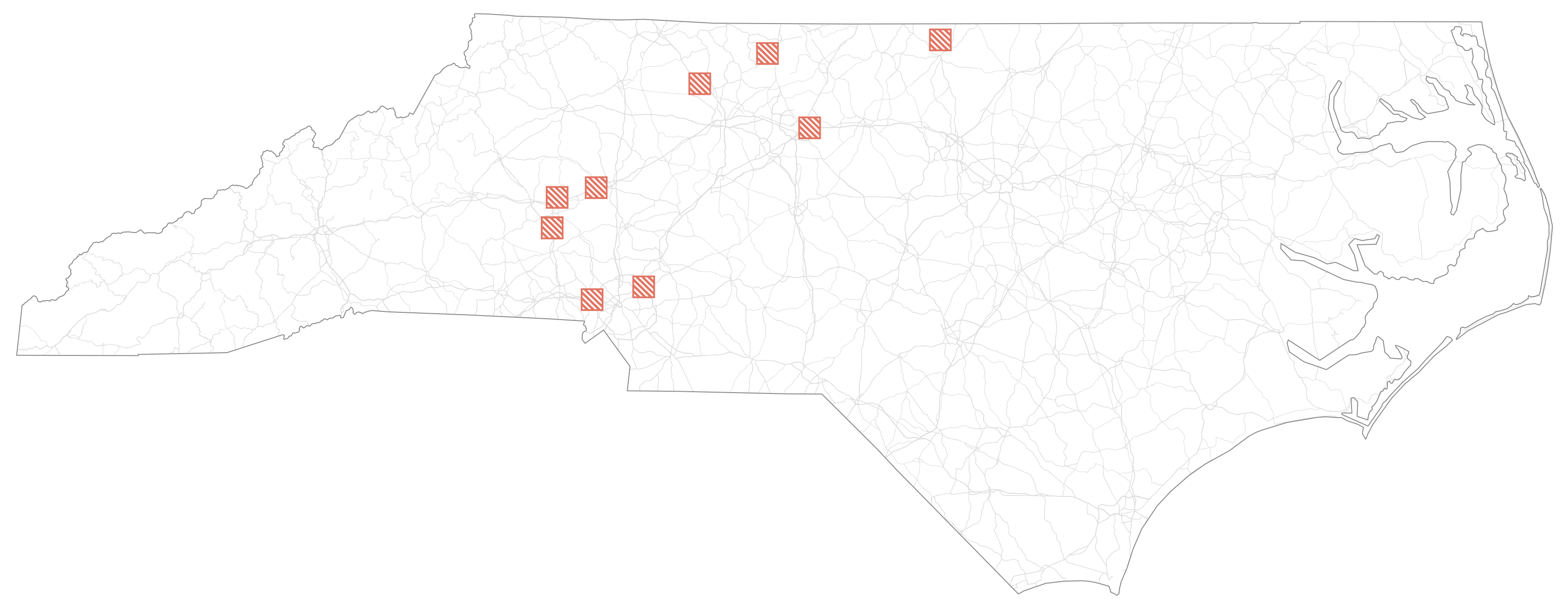
All told, the Carolinas has projects requiring a combined 400 MW under construction and another 2.7 gigawatts for planned projects, McWilliams said. That’s nearly double the current energy needs in the Carolinas.
Another company examining growth, Datacentermap.com, tracks thousands of facilities and offers energy capacity statistics on some sites. But company founder Sune Christesen, who provided the Observer with the firm’s data, cautioned that the company wasn’t confident about the stage of development each center was in as changes are hard to track.
When the Observer set out to verify Datacentermap.com data, most companies on its list responded, but not all shared basic information.
For instance, Microsoft refused to confirm the project status of the data centers planned or under construction near Hickory, Maiden and Roxboro near Durham, despite having posts about the ones in the Hickory and Maiden markets on its website.
Other local projects also have been shrouded in secrecy.
Residents frustrated with data center approval
On Nov. 7, 2022, just over the state line from Charlotte, York County Council members in South Carolina unanimously approved a seemingly routine 27-item consent agenda. It included a plan little noticed at the time: the first step for the county selling 173 acres in the Lake Wylie area.
A week later, the board held a special meeting for second approval on what it now said was an economic development deal dubbed “Project Cobra.” The meeting lasted all of two minutes.
The council unanimously approved the sale the following week, with no mention of what “Project Cobra” entailed.
That picture began to get clearer seven months later. In June 2023, York officials said the project and a related incentives deal involved a whopping billion-dollar investment for a new data center — the largest economic investment in county history.
As is common in such development work, the name of the company still was not publicly revealed. But the Observer’s sister paper, The Herald in Rock Hill, soon sussed out that a Kansas data center firm called QTS was behind the deal.
A September 2023 county agenda officially disclosed that “Project Cobra” was for QTS, and the council unanimously approved the data center incentives deal.
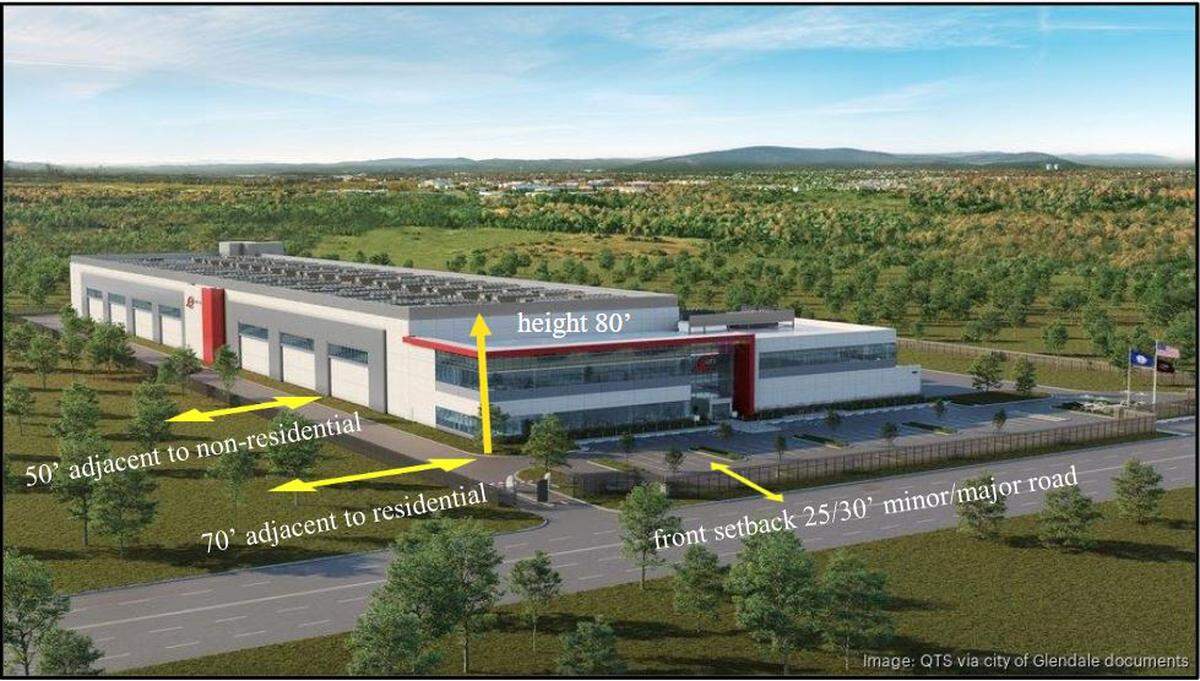
QTS is investing $1 billion to build a nearly 5.3 million-square-foot data center campus on 400 acres in the Lake Wylie area. County leaders later approved allowing the campus to be built 80 feet high, 20 feet taller than other industrial or commercial properties.
But QTS said it does not release expected megawatts totals of its data centers.
More than three years after the county first referenced “Project Cobra,” and over two years after York County revealed who was behind the project, QTS held an informal community meet-and-greet Nov. 4 in Lake Wylie.
“This has been secretive like I’ve never seen,” one of the residents said, as a group of people huddled around QTS Development Program Manager Ryan Wehmann, bombarding him with questions.
Stacy Armstrong agreed. “We could not win because we didn’t know it was coming,” said Armstrong, whose Wedgefield Drive home borders the data center construction site.
Armstrong carried an inch-plus-thick notebook of documents and illustrations from research she’d done on the QTS plans, along with questions about potential risks from light pollution, noise levels and electric bill hikes.
“And the more we ask, the less scientific data we get,” Armstrong said. “ I have a ton of questions. I have less answers.”
She was about to undertake a major house renovation, but no more. Now, she’s planning to move.
Power demand impact
Public sector and nonprofit organizations are tuning in to the implications of this tech-sector boom.
In August, Gov. Josh Stein created the North Carolina Energy Policy Task Force, noting the need to power data centers amid the emergence of AI, among other trends, prompted new questions about how to “maintain an adequate, reliable, affordable, and clean electricity supply”.
And in October, the North Carolina Utilities Commission hosted a conference to study how to fairly and efficiently manage the growing electricity demand.
Key concerns included whether the power grid can handle the new demand, whether existing customers will have to pay more and what energy companies would do if they put resources into a big expansion only for the project to fall through.
The Carolinas risk power outages during winter storms in the mornings and evenings, said Stony Martin, manager of reliability, models and studies at the Southeastern Electric Reliability Corp. The nonprofit is a watchdog for the electric grid in the southeastern and central U.S.
Martin said at the conference that “the risk will only get worse” with expected demand from major energy customers like data centers.
Duke Energy is aware of the concerns.
The Charlotte-based utility giant assesses each high-demand proposal to determine if it’s feasible with the existing power grid, if it would require updates and whether the location is feasible, Duke Energy spokesman Garrett Poorman said.
Duke Energy holds these customers to minimum billing requirements and other terms to ensure they “pay their fair share,” Poorman said.
And for the first time, Duke Energy published a report this year tracking forecasted growth from major energy users like data centers.
It counted 35 large-electric-load projects in the advanced planning stages in the Carolinas. From January 2024 to last spring, the number of projects didn’t change, but the report stated their forecasted energy needs grew by 50%.
While the report doesn’t specify how many are data centers, it’s clear that their growth is transforming the Carolinas.
“It’s not the same market that existed to serve local demand anymore,” Cushman & Wakefield’s McWilliams said. “It’s really growing into a regional player, and potentially has the opportunity to grow into a global player as well.”
A data center ‘evolution’ in the Carolinas
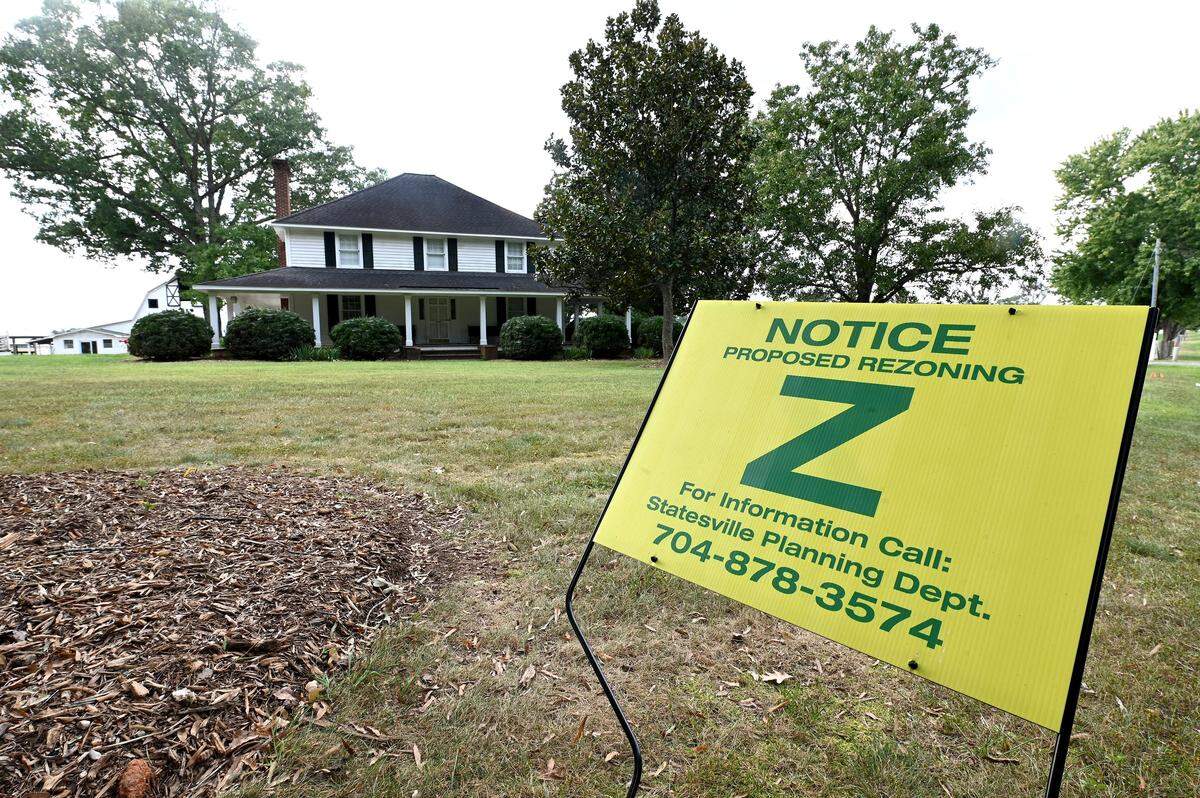
North Carolina and South Carolina have become an industry focal point as operators seek alternatives to “Data Center Alley” Virginia and, more recently, Atlanta, experts say.
“It was only a matter of time before the Carolinas began to experience the surge in activity seen over the past year,” Cushman & Wakefield’s latest annual report said. “Centrally located on the East Coast, the region boasts strong power infrastructure, robust fiber connectivity and favorable deal economics.”
The Charlotte area stands at the core of the Carolinas’ boom, McWilliams said.
Most of the current construction activity covers hyperscale sites by major tech companies. Hyperscale data centers are large-scale facilities that can rapidly handle massive computing power and data storage, typically consuming more than 50 MW annually.
But there’s a shift underway in the Charlotte region. It features more wholesale colocation sites by providers like Digital Realty.
Many colocation centers in the Carolinas, with an average facility size under 5 MW, are not equipped to meet the heavy demands of hyperscalers that now average 73 MW, according to Cushman & Wakefield’s report. “This market is at the beginning of its evolution,” the report stated, “and will soon host a growing hyperscale presence.”

Duke Energy and data centers
As the sector keeps growing, and residents keep pressing for more information, power utilities really are the only ones with the answers, according to CBRE. The commercial real estate services firm tracks data center growth within leasable space, but not the big, owner-operated facilities.
That brought us back to Duke Energy.
Data center developers trying to locate here sign contracts with Duke Energy committing to pay for certain amounts of energy before they launch. Duke Energy does not make the details of those agreements public, including the company that signed.
At the conference, both Sierra Club climate and energy advisor Jeremy Fisher and the Data Center Coalition’s director of energy policy Lucas Fykes, told utilities commissioners that they want to see more transparency in data center development planning.
“By the time we’re looking at a small number of customers that have the potential to consume more than 20% of the utility’s energy consumption, we need to start ... wondering what the implications are for other customers,” Fisher said.
Duke Energy ensures that data centers pay the “full cost of the infrastructure required to serve them, so those costs aren’t passed on to residential customers,” Poorman told the Observer.
Not everyone’s convinced.
Speaking at the utilities conference, Fisher said existing energy customers bear the brunt of the risk of rising electricity costs as data centers plan to move in.
More data center worries
It’s crucial to manage data center development to prevent transferring costs to other customers and to avoid worsening climate impact, said Jimenez, a senior attorney at the Southern Environmental Law Center.
In northern Virginia, data centers already are being blamed for higher utility bills.
Fisher cited a 2024 Virginia legislature study, which concluded that data center energy demands would likely increase costs for the typical Dominion Energy customer by $14 to $37 a month by 2040. Dominion is proposing a new rate class for utility customers that use more than 25 MW.
Poorman told the Observer that comparing North Carolina and Virginia’s electricity systems is “apples to oranges” because they are regulated differently, which presents key differences in how resources are planned and rates are set.
In North Carolina, the Power Bill Reduction Act became law in July. It allows Duke Energy to charge customers for new power plants, such as gas and nuclear, before construction is complete to keep up with growing energy needs, including from data centers.
Stein had vetoed the bill, which was overridden by state lawmakers. The governor cited a bill analysis by N.C. State University researchers that showed it could cost North Carolina ratepayers up to $23 billion through 2050 due to higher fuel costs, the News & Observer reported.
Duke Energy has argued the changes will allow it to lower the price paid by customers for new generation facilities over a project’s lifetime by decreasing financing costs, and that legislators have cited an overall cost savings of as much as $15 billion.
Other concerns about hyperscale data centers in communities around Charlotte and the rest of the country include:
- Water consumption: Data centers require lots of water to cool their systems. A single center can consume up to 5 million gallons a day, or enough daily drinking water for 50,000 households or farms, according to a University of Tulsa in Oklahoma report.
- Land use and visual impact: These facilities are typically large, utilitarian buildings surrounded by security fences that cover large plots of land that some critics say could be better used.
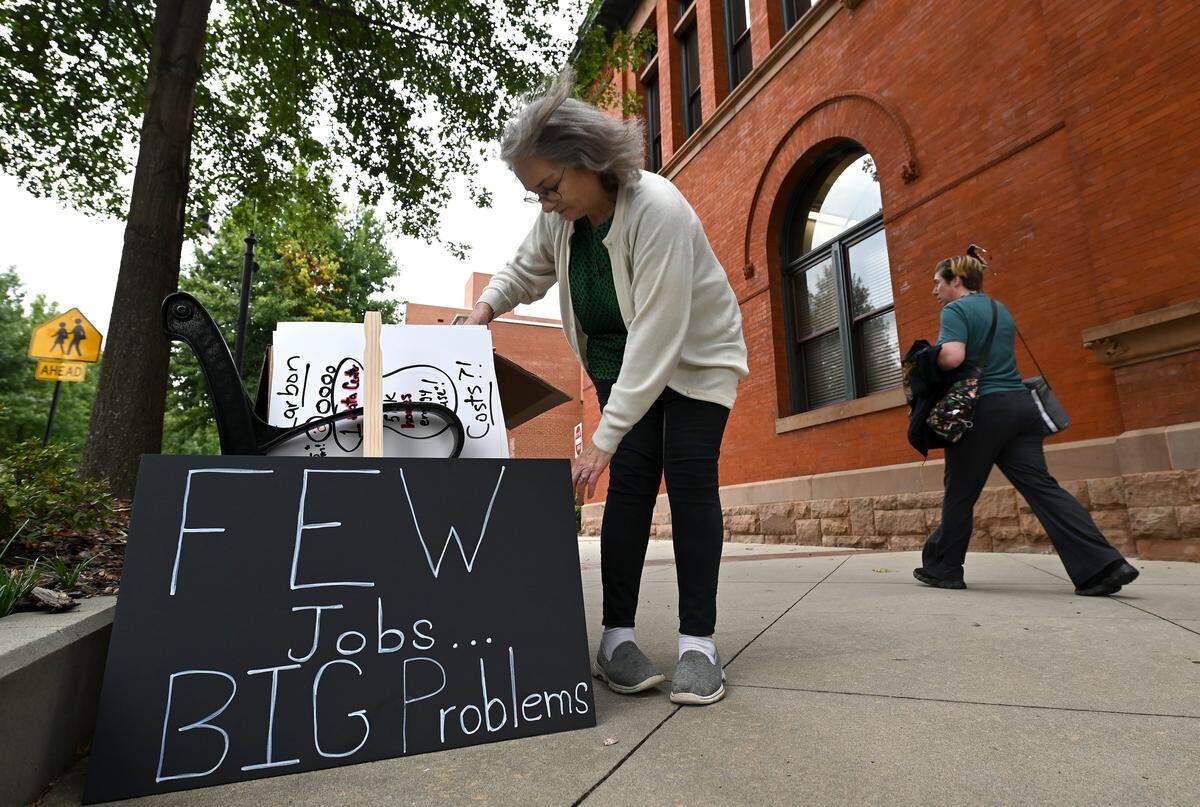
- Limited job creation: While data center construction provides many jobs, the long-term workforce is often small, typically several dozen or so.
‘What Matthews is all about’
While some Charlotte-area communities have embraced new centers, others, like Statesville and Mooresville, remain resistant.
Back in Matthews, neighbors were adamant they wanted nothing to do with a data center. Such a development isn’t as good a fit for the town as several hundred homes would be, resident Jim Dedmon said at the October meeting.
“You’re helping improve the town with families, not data centers,” he said. “You’re building community. That’s what Matthews is all about.”
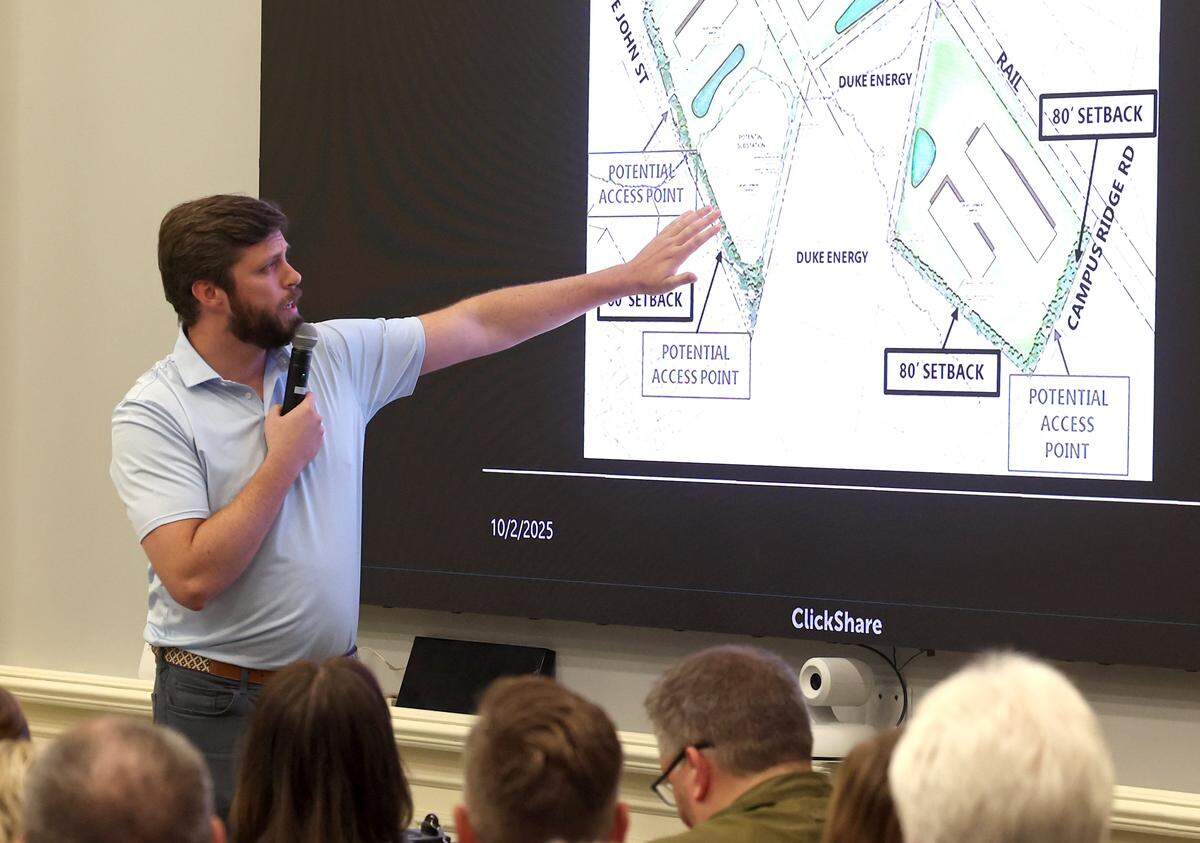
Six days after that meeting, developers Engineered Land Solutions and Crosland Southeast withdrew the rezoning request for the project.
Matthews residents celebrated the news. Developers withdrew the request due to “overwhelming public distaste” for it, Mayor John Higdon said, and he doubted they’d resubmit it.
But despite all the unanswered questions and concerns enveloping similar projects, experts say one thing remains certain: more data centers are coming to the Carolinas.
NC Reality Check reflects the Charlotte Observer’s commitment to holding those in power to account, shining a light on public issues that affect our local readers and illuminating the stories that set the Charlotte area and North Carolina apart. Have a suggestion for a future story? Email realitycheck@charlotteobserver.com
This story was originally published December 2, 2025 at 5:00 AM.