Cancer research company settles in to new home at Charlotte’s Pearl District
Driven by a mission to bring life-changing treatments to cancer and inflammatory disease patients, Tract Bio’s researchers feel right at home at The Pearl district in uptown Charlotte.
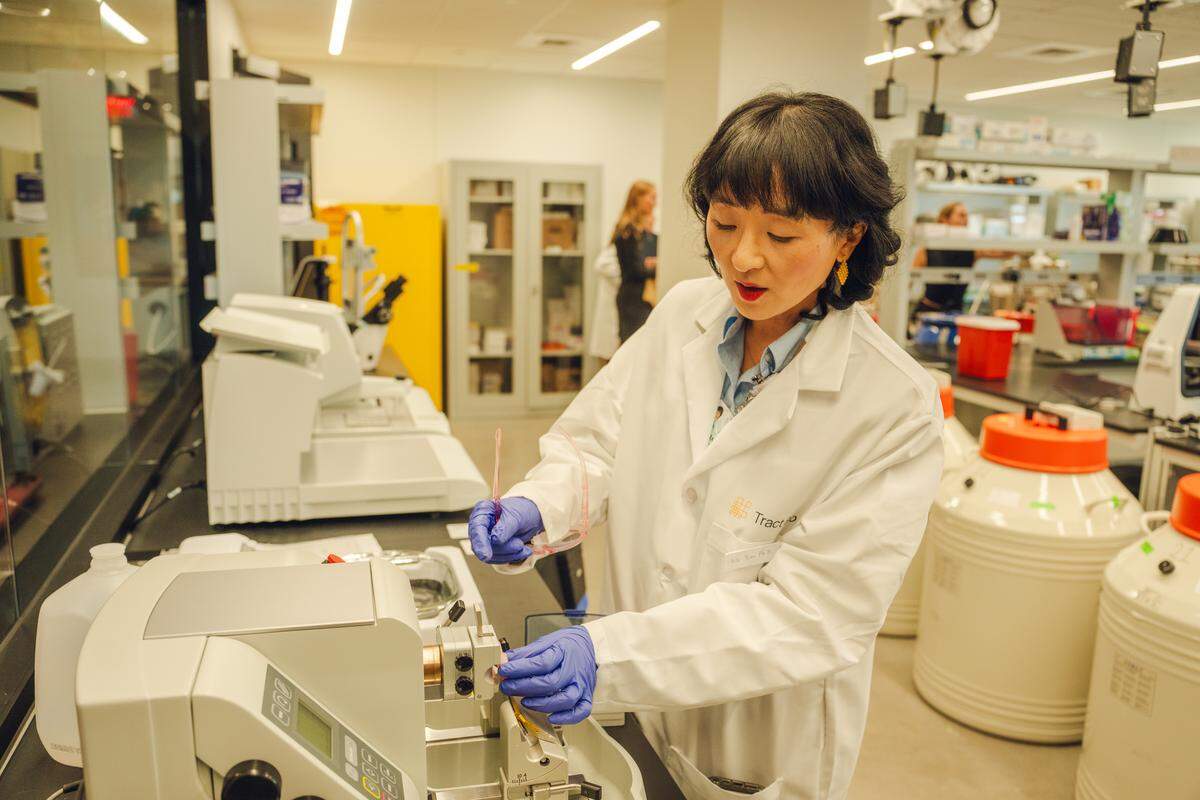
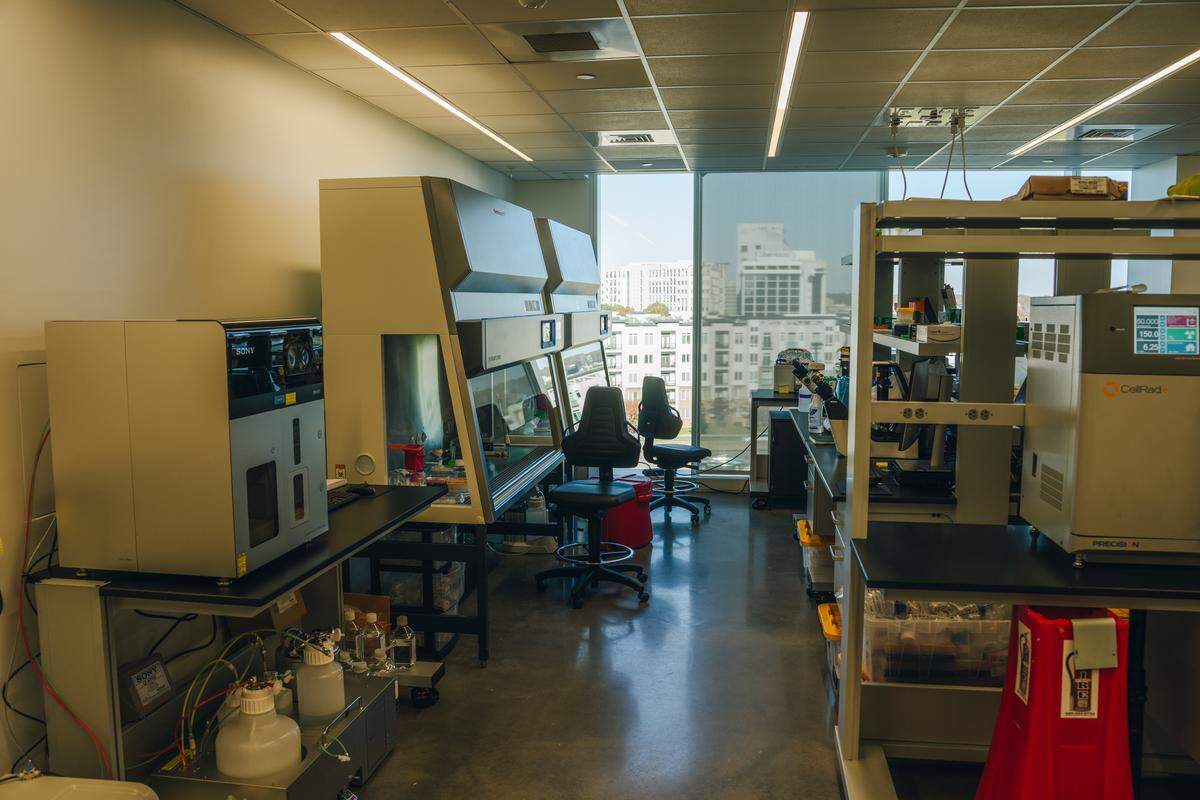
In mid-November, Tract opened its new laboratory at Connect Labs by Wexford in The Pearl.
“We use the phrase, ‘cure the incurable’ because we believe we have the potential to do that,” Tract CEO Richard Russell said.
The 4,000 square-foot space includes four lab areas and three offices. For a decade, Tract’s biology labs were based in Houston. After raising additional capital and expanding discovery efforts, the company needed more space. The relocation to Charlotte, including new lab equipment, cost an estimated $3 million.
Connect Labs leases flexible lab and office space designed to help new companies grow quickly in major fields like life sciences, technology, and energy. These spaces are set up to help local researchers and entrepreneurs speed up their discoveries and bring new products to the market faster.
“The addition of Tract Bio exemplifies the pioneering spirit and collaborative energy that define this ecosystem,” stated Craig Scharton, director of Connect Labs Charlotte
While remaining in Houston was an option for Tract, Charlotte-based board members Ian Banwell and Charlie Izard suggested the city and The Pearl. Though the district was still under construction during their visit earlier this year, Tract was impressed with the setup and the potential offered by the new medical school and other STEM initiatives.
Real estate company Wexford partnered with Atrium Health to build The Pearl, a $1.5 billion innovative district and home for Wake Forest University School of Medicine Charlotte, the city’s first four-year medical school. Plans also include retail, offices, apartments, a parking structure and an outdoor plaza.
“There are not many places in the country where you have that confluence of academia, an integrated healthcare delivery system and a (company) doing the kind of work that we’re doing,” Russell said.
Banwell praised the work of Advocate Health CEO Gene Woods, the management teams and other Pearl leaders for their work to make the project a reality.
“For us as a company and for our community, it’s just very exciting for us to be a part of a dream that’s happening in real time in Charlotte,” Banwell said.
“This isn’t about the financial reward as much as it’s about the opportunity to solve some of the world’s most brutal diseases,” Izard added.
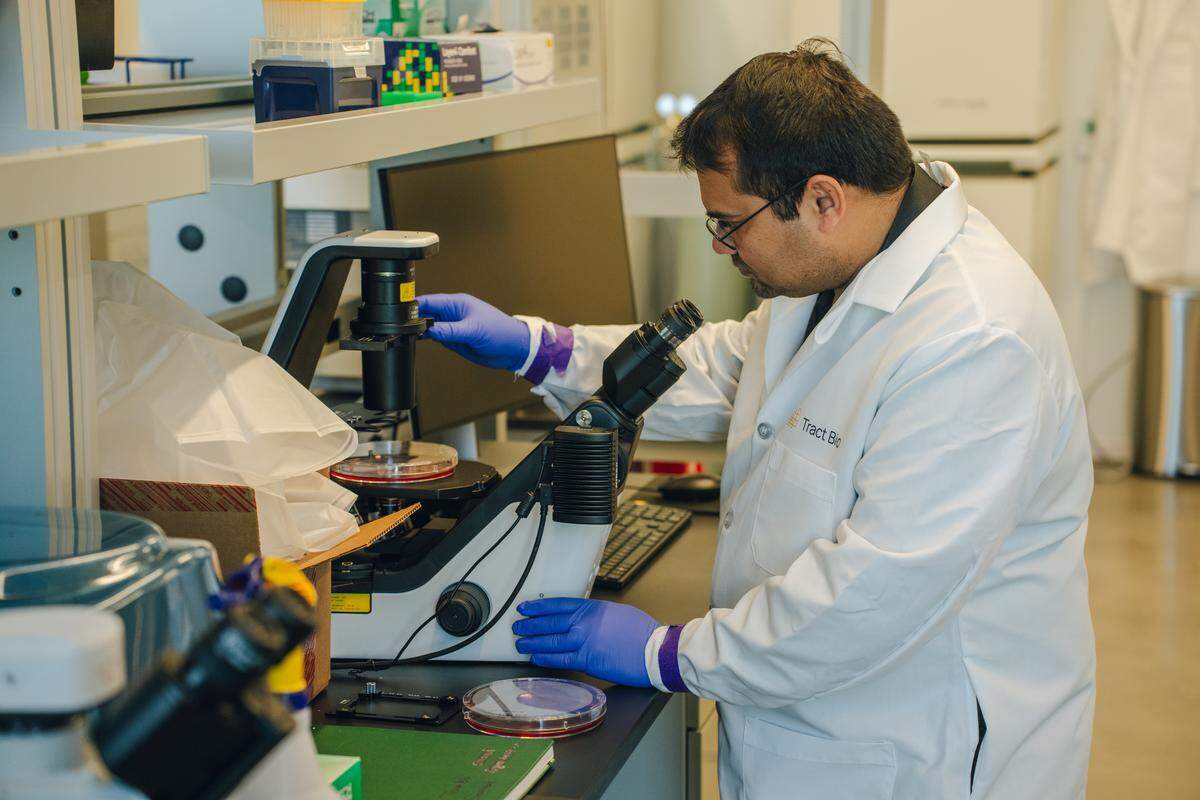
On the right ‘Tract’
The company is focused on stem cell cloning technology, which allows researchers to isolate single cells from samples like tumor biopsies in cases that have failed first- or second-line chemotherapy.
“That’s really significant because these cells are still viable, and they’re not killed by the initial round of drug treatment that the patient receives,” Russell said. “Because of that, these tumors can reoccur or just continue to grow, and they’re considered treatment resistant.”
The move to Charlotte gives the company the infrastructure for its research and development, and connects it with other biotech groups in the area.
Tract Bio works to develop novel therapies for cancer and inflammatory diseases. It is advancing two platforms to enhance the treatment of common cancers like leukemia, lung and ovarian, and chronic inflammatory diseases including COPD and Crohn’s.
One platform uses targeted drugs to concentrate treatment on disease sites.
And the lab’s cloning platform called “stemECHO” is another advanced technology that allows scientists to copy specific harmful stem cells causing a person’s illness. This makes it possible to create treatments that directly target and remove the source of the disease.
Tract’s technology also includes drug targeting, what Russell described as the process of growing cells in colonies. This allows the company to design drugs to selectively kill them. Using stemECHO, Tract has already identified a novel combination drug, TP-101, developed to target the disease-associated stem cells that drive cancer.
Home at The Pearl
The Pearl opened in June to much public fanfare.
It was built in the Brooklyn neighborhood, which was home to Charlotte’s largest Black community with businesses, schools, and churches before city leaders decimated it in the late 1960s in the name of urban renewal. Pearl Street Park remains a landmark.
The city of Charlotte and Mecklenburg County were also involved in the development.
The Charlotte campus anchors the 14-story Howard R. Levine Center for Education building, which was funded by Levine’s foundation, and it will also house the university’s School of Business, the new Wake Forest School of Professional Studies, and the Carolina College of Health Science, which will provide nursing and other professional training.
Along with the move, Tract co-founders Dr. Frank McKeon and Dr. Wa Xian became professors of cancer biology at the medical school.
Tract’s grand opening at The Pearl is set for early next year.

Banking on Charlotte
Tract was pleased with how quickly everything came together.
“You just don’t pick up a lab in January and be here in September,” Izard said.
About 10 people work in the lab, and several more will join in the upcoming months. In about two years, Tract may have 20 employees as the company expands its research.
Tract may create other businesses under its umbrella for therapeutics, Izard said. This may include cloning for normal, healthy cells and opportunities in regenerative medicine and therapeutic diagnostics, where Tract can grow disease cells and screen them against approved drugs.
The founders sold their houses in Houston and moved to Charlotte during the summer. The move is already paying off, Russell said.
Tract is already seeing a major advantage over their former location in Houston, despite Houston being a larger medical hub. The critical difference is speed.
For example, a recent discovery showed promise against an aggressive brain cancer called glioblastoma. Access to the necessary tissue samples for follow-up testing now takes only weeks, compared to months in Houston, significantly speeding up the process of turning discoveries into new therapies.
Wake Forest School of Medicine in Charlotte was the deciding factor in establishing their new operations here, despite Houston being a national cancer research hub. The integration of their company’s founders as professors at the school is expected to enhance collaboration and recruiting efforts.
While the company focuses on cancer, it is also heavily involved in areas like regenerative medicine and inflammatory diseases.
The board members built their careers in the area, and helping bring the company to Charlotte is not just a business decision but a personal one.
“We sort of felt there’s an obligation to give back to the city also, which is one of the motivators to bring that to Charlotte,” Izard said. “Not only is it the right place for us, but we have a loyalty to the city.”
After graduating from college, Banwell was hired by Hugh McColl, the former CEO of Bank of America, who was a central figure in Charlotte’s development. Banwell was previously the chief investment officer for the bank.
“(McColl) had a dream for what our city was going to be, and what’s so cool now is it seems like Gene Woods has a vision of what our city will be, and it’s pretty amazing to watch him run with it,” Banwell said.
With over 30 years of experience in the industry, Russell said he believes The Pearl rivals major national medical centers. ”What matters really is that you have the right expertise coming together, and the can-do attitude,” Russell said.
Charlotte is also proving to be a magnet for talent. The company saw a single job posting generate 400 applicants within 24 hours recently.
“There’s a halo effect of being in Charlotte too,” Russell added. “People want to be in Charlotte. “
Tract also hopes The Pearl’s leaders use its presence to create or recruit similar businesses. “This would be wonderful for us and the city and for our scientific co-founders to have others to collaborate with,” Izard said.
This story was originally published December 4, 2025 at 5:15 AM.