A spate of uptown Charlotte office towers get new owners and uses. We mapped them
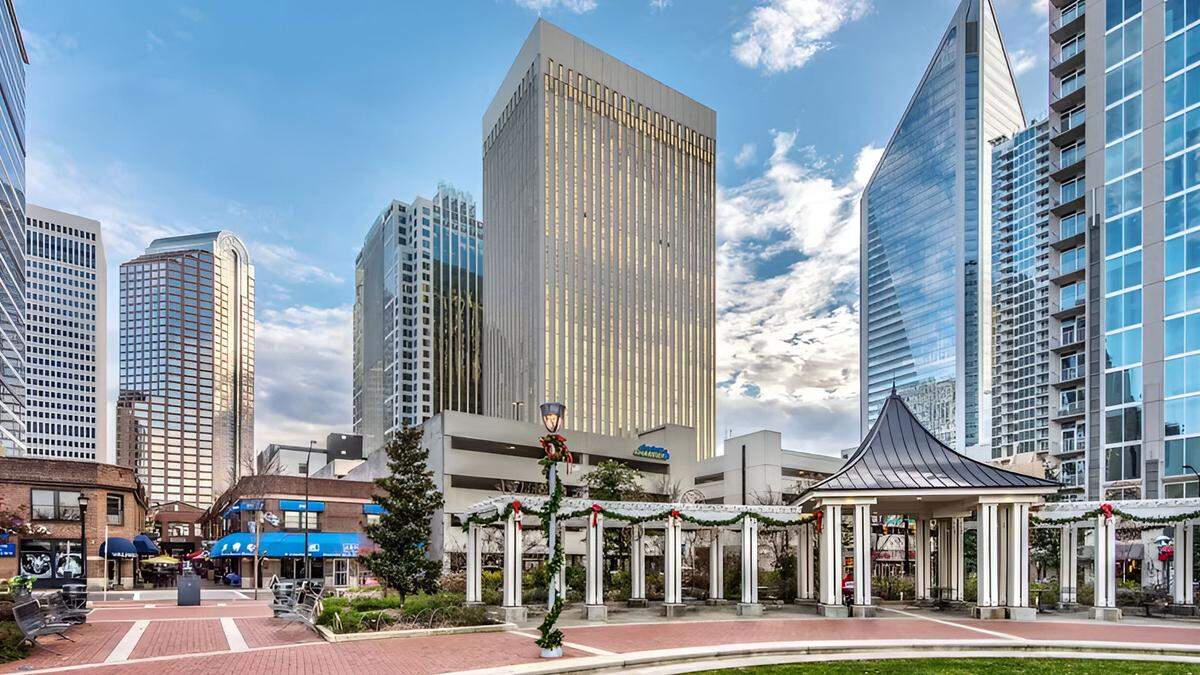
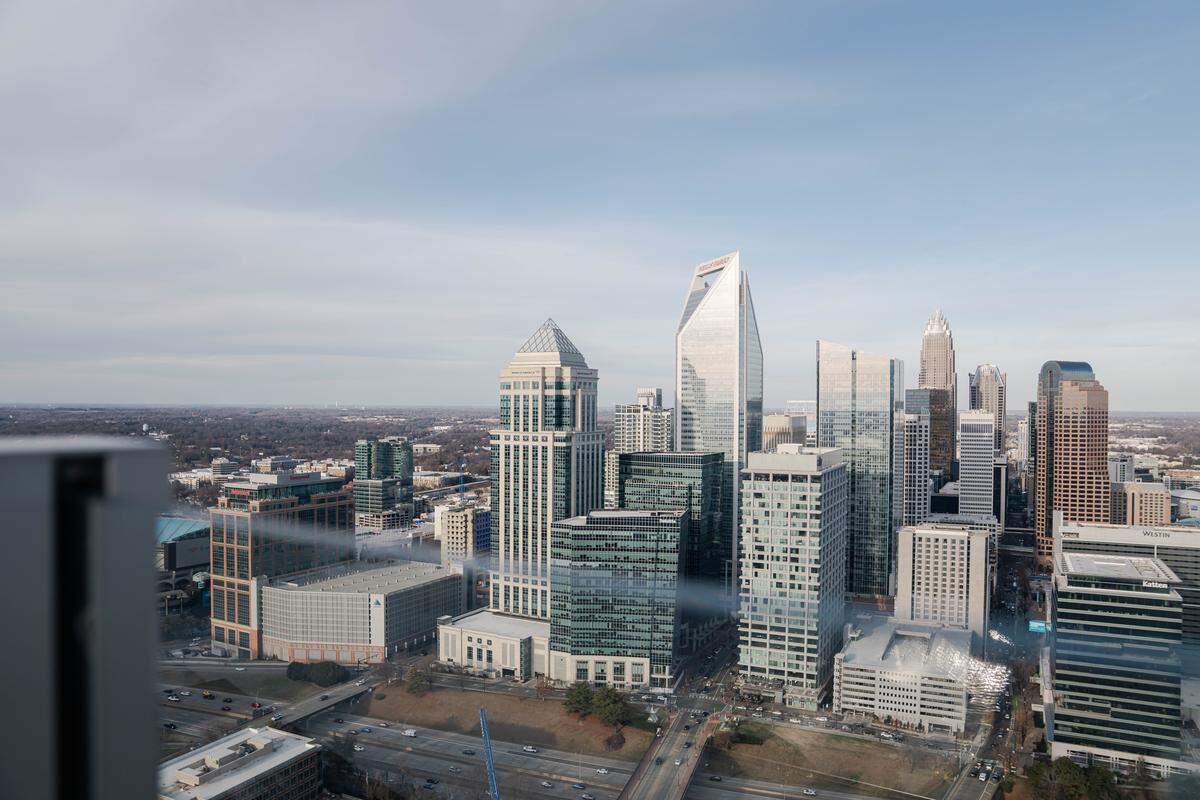
The recent purchase of uptown’s former Two Wells Fargo tower and its upcoming renovations is a continued sign that office spaces in Charlotte, and nationally, are shifting toward mixed uses.
The tower at 301 S. Tryon St. was purchased by Singerman Real Estate LLC and Riverside Investment & Development for $36.5 million.
The Chicago-based duo intend to add residential and hospitality components to the 3.4-acre complex, which already includes two office buildings, a glass atrium, plaza and parking garage.
Transforming strictly office spaces into mixed-used products is one path to viability, according to Tony Scacco, president of Riverside. Not just for the property owner but for the surrounding environment.
Meanwhile, commercial-only business districts are fading.
“COVID taught everybody a lesson … If there’s less office utilization, the retail doesn’t work,” Scacco said. “If the retail doesn’t work, you’ve got dark storefronts and a less inviting place to walk. That affects the office demand, the office depopulates and it all becomes a circle of negative outcomes.”
It’s all an ecosystem, Scacco said. It’s why Riverside has shifted from developing traditional 50-story office-only towers, he said, into buildings with homes, restaurants, retail and a cubicle or two.
A prime example of the shift is South End’s Queensbridge Collective, which was Riverside’s first development project in Charlotte.
The two-tower project at the former locations of Midnight Diner and Uptown Cabaret has the homes, a combined 713 units once completed; the office space, at over 400,000 square feet; and the food with Guard and Grace, the Denver-based Michelin-recommended steakhouse, and Night Swim Coffee.
It’s an “18-hour hub,” Scacco said. And that’s the vision for 301. S. Tryon.
Office renovations and conversions in Charlotte
Post-COVID, office towers have to either entice people to come back to the cubicle or change uses.
Both moves have actively occurred in Charlotte.
Property owners are upfitting the buildings themselves with food markets, golf simulators and gym options. Or they’re selling the properties at discounted rates, letting the new owners worry about what’s next for the building.
Some examples of the former include One Independence, One South and 550 South.
On the latter, at least six Charlotte office towers have sold for less than their previous sale price over the last year:
- The former Wachovia Center at 400 S. Tryon St. was purchased for $36 million last year, down from the $133.5 million cost in 2018.
- Charlotte Plaza at 201 South College sold for $70 million last year, down from $160 million in 2015.
- 525 N. Tryon was bought for $24 million last year, down from $60 million in 2014.
- The former Ally Center at 440 South Church Street sold for $75.750 million last year, down from $108.7 million in 2014.
- The Wake Forest University Charlotte Center at 200 N. College St. was purchased for $32.9 million in 2024, down from $72.5 million in 2013.
- And the Johnston Building at 212 S. Tryon St., which sold for $19.3 million in 2024, down from $35.2 million in 2019.
The former Ally Center and 525 N. Tryon is undergoing renovations with new lobby spaces and amenities.
It’s unclear what the owners of 201 South College are planning. And as for the other three properties, housing is on the way.
That’s the plan for some other office buildings as well:
- The former Wachovia Center at 400 S. Tryon St. may be getting 399 apartments and 200 hotel rooms. The conversion includes more than 24,000 square of retail, most of which will be dedicated to a restaurant.
- The Johnston Building is becoming the Beckworth Hotel with 240 rooms and two restaurants.
- And the former Duke Energy headquarters at 526 S. Church St. is becoming the Brooklyn & Church development with 448 apartments and 55,000 square feet of retail.
What’s next for Charlotte’s uptown office space?
Riverside’s 301 S. Tryon St. may be joining the conversion list, if preliminary plans work out.
And others may join, if the layout of the building is right. Or they’ll stick to an office use with some added jazzy features.
It’s going to happen as new and existing investors continue to vibe with Charlotte’s outlook on growth.
For Riverside, Scacco said Charlotte’s business recruitment efforts and the city’s investment in transportation, sports and entertainment are keen factors investors and residents look toward.
.jpg "301 South Tryon_photo courtesy_SDX Studios (1).jpg")
With uptown being the center of the city’s investment and the need to make the office towers viable, adding homes and hotel rooms are next steps. Charlotte center city leaders agree.
After that, its more restaurants and grocery stores for a complete neighborhood feel, Scacco said.
“This idea of people living proximate to where they work, in a high-rise apartment context, is going to become more common,” Scacco said.