New life in Charlotte for old Wachovia Center tower: People will live there
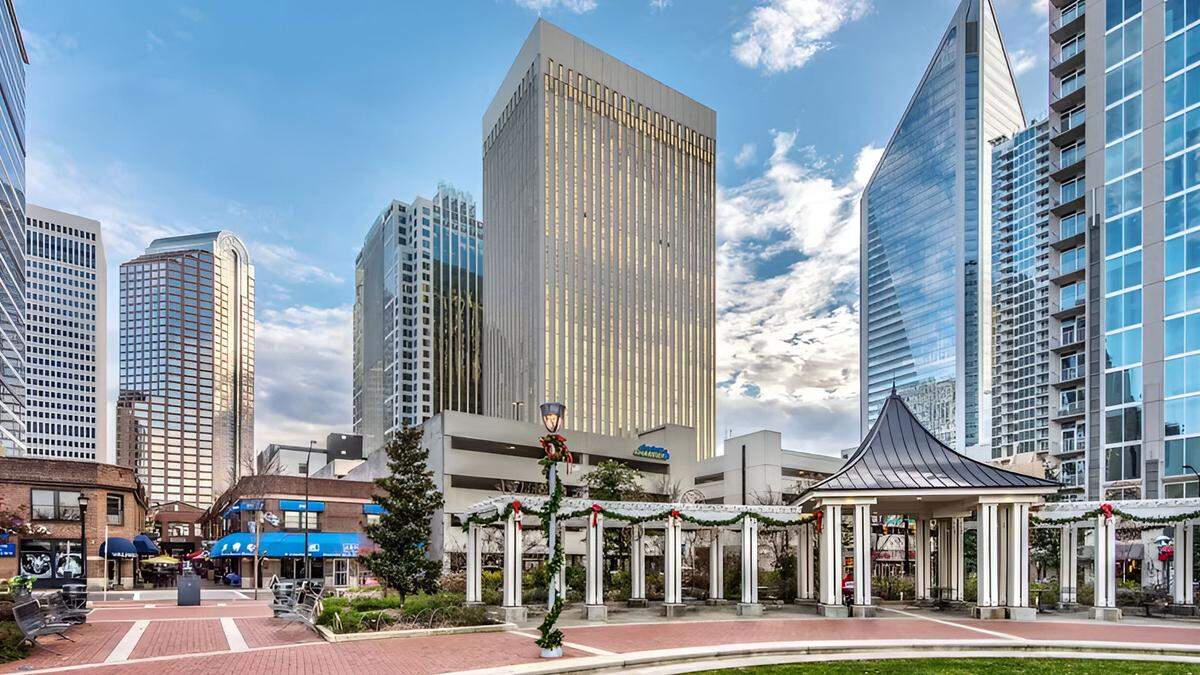
A 52-year-old uptown Charlotte office tower is getting a new life. Instead of catering to office workers, it’ll house residents and tourists.
The tower at 400 S. Tryon St., the former Wachovia Center, is being converted into apartments and a hotel, according to a land development construction plan permit filed with the city of Charlotte last week.
In the permit’s description, New York-based developer Spandrel Development plans to renovate the interior and add a car and pedestrian plaza.
The interior renovation includes converting the office cubicles into approximately 399 apartments and 200 hotel rooms. The conversion includes more than 24,000-square-feet of retail, most of which will be dedicated to a restaurant, according to the plans.
Spandrel did not respond to a request for comment.
The office-to-apartment conversion is part of the latest wave of older office buildings trying to compete for viability against newer buildings in Charlotte and on a national scale.
Out of 20 metro areas, Charlotte ranks 11th in office-to-apartment conversions, according to RentCafe, a real estate website. Approximately 1,649 units will come from office conversions.
Nationally, office-to-apartment conversions continue to increase.
At the beginning of this year, about 90,300 apartments were being converted from office space, up 28% from last year, RentCafe’s report continued.
Charlotte’s office vacancy rate
The conversions to residential space help lower the office vacancy rate, which in previous quarters reached alarming highs.
For the first quarter of the year, Charlotte’s office vacancy rate sat at just over 24%, according to a Cushman & Wakefield report. The agency includes suburban markets in its total.
Uptown towers have a rate of almost 25%, according to the report.
Occupancy rates are one factor in determining an office building’s worth and profitability. Decreased rates can lead to defaults on loans or the building selling at discounted rates.
Spandrel’s tower experienced both situations.
Spandrel purchased the tower at an auction for $36 million last year, after the previous owners defaulted on the property’s loan and the building went into foreclosure. At the time it was about 23% occupied, the Charlotte Business Journal previously reported.
The $36 million is well under the previous purchase price of $133.5 million made by Tryon Property Group LP in 2018.
And Spandrel’s tower isn’t the only building seeing the effects of low vacancy rates.
Charlotte Plaza at 201 South College sold last August for $70 million, a 56% decrease in its previous purchase price. That loan matured in 2023. As of August, the building was about 32% occupied.
Last May, 525 N. Tryon sold for $24 million, a significant markdown from the almost $100 million county appraisal value and the $60 million the previous owner paid for the site a decade ago. That building was about 46% occupied.
What’s next for Charlotte’s office market?
Charlotte’s office vacancy rate isn’t alarming, especially with the increased number of corporate relocations and job creation in the region.
In March alone, four companies said they’d bring over 2,500 jobs to the city in the financial services, tech manufacturing and aviation fields. On Tuesday, Japanese bank SMBC Group said it would be bringing 2,000 jobs to Charlotte after committing to making the city its second U.S. headquarters next to New York City.
And Charlotte continues to lead the 25 largest U.S.office markets in office job growth, according to a March National Office Report from real estate research firm Yardi Matrix. The city’s been the leader in that area for almost a year.
Charlotte knows one of the ways to save office buildings is through conversion or renovation.
An estimated $2 billion will be invested in modernizing and converting office spaces in center city, according to Charlotte Center City Partners, a nonprofit focused on promoting growth in Charlotte’s core.
That includes the $250 million conversion of Duke Energy’s former headquarters into the Brooklyn & Church development, which will add 448 apartments and 55,000 square feet of retail at 526 S. Church St.
And the investment includes renovations of older office spaces, such as $15 million in changes coming to 525 N. Tryon St. and $20 million in changes at 440 S. Church St.
It’s unclear how much the conversion of for 400 S. Tryon St. will cost. But at the discounted purchase price, Spandrel has plenty to spend on giving the old tower a new feel.