Charlotte’s center city set to see $4.4B in development, from offices to housing
With corporate relocations, new housing and a push for improved mobility infrastructure, Charlotte’s center city leaders are looking to keep the area’s transformational momentum going in 2026 from business-centric to a destination district.
That includes $4.4 billion in public and private investment in new and revitalized development this year.
Charlotte Center City Partners on Thursday released their annual look at uptown, midtown and South End’s growth in its State of the Center City report. Center City Partners is a nonprofit focused on promoting growth in Charlotte’s core.
And similar to last year, one of the focuses will be on revitalizing and converting older buildings into modern office spaces, apartments and hotels.
About $2 billion will be invested in modernizing and converting spaces in center city, according to the report. And that money is spread across about 20 projects.
That includes the $250 million conversion of Duke Energy’s former headquarters into the Brooklyn & Church development, which will add 448 apartments and 55,000 square feet of retail at 526 S. Church St.
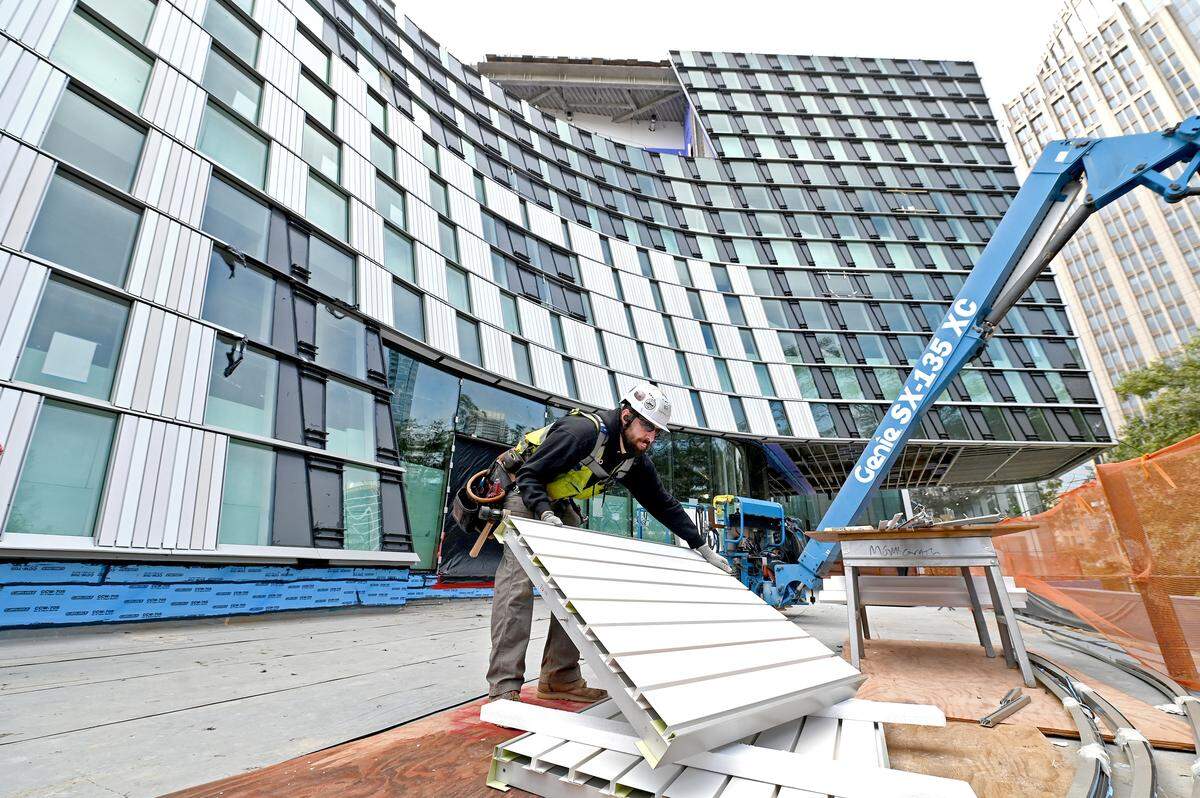
There’s the renovation of older office spaces, with $15 million in changes coming to 525 N. Tryon St. and $20 million in changes at 440 S. Church St.
There are also fun changes coming with upgrades to Bank of America Stadium and the Spectrum Center, the redevelopment of the Main Library and The Levine Museum of the New South’s move to South End.
“The best urban places in the world are complete places,” said James LaBar, senior vice president of economic development for Center City. “There’s sections of our center city that are just business district. Now, they’re going to become hospitality centers. They’re going to become neighborhoods. … They’ll have every urban use.”
New developments in Charlotte’s city center
Besides revitalizing old spaces, new buildings are also coming.
There’s about $2.4 billion in development either underway or expected to break ground next year.
That includes almost 4,870 apartments, 1,246,000 square feet of office space, 257,045 square feet of retail and about 1,500 hotel rooms in uptown and South End.
Looking at a timeline of developments by decade, the 5-year span of the 2020s has already seen higher levels of construction, both completed and underway, in office, hotel and residential spaces.
Charlotte office space and workforce increases
While center city is working to be more than a business district, it’s still Charlotte’s office core.
And for a while, office vacancy was a major concern. However, with corporate relocations and job creation, Charlotte’s office market is hitting a positive stride.
Charlotte leads the 25 largest office markets in office job growth, according to a January National Office Report from real estate research firm Yardi Matrix. And that’s been a trend since mid-2025.
Uptown and South End are seeing folks returning to the office at about 94% of pre-pandemic levels.
And last year, at least 3,100 new jobs were announced, all with office locations in central city from expanding or new companies including Coinbase and Assetmark.
With the increase in workforce, office construction is returning slowly. One of the main new office spaces under construction is the second tower of the Queensbridge Collective project. And as of December, the tower, which is set to be completed by 2028, is already about 90% pre-leased.
The goal is to have office construction increase, said Mike Smith, president and CEO of Charlotte Center City Partners. With 157 people moving to Charlotte a day, “employers want to be where the talent is,” Smith said. “And employers can only do it if you create the development.”
New districts in Charlotte’s city center
Part of the new development, both residential and office, includes three prominent districts currently under construction.
That’s The Pearl, The Iron District and the North Tryon Tech Hub.
Companies are already moving into The Pearl, the city’s $1.5 billion new medical tech and healthcare innovation district.
The same goes for the Tech Hub, with the opening of UNC Charlotte’s Co-Lab. The Tech Hub will be a place where startups, established businesses and students can collaborate on innovation work sectors including AI, fintech and cybersecurity.
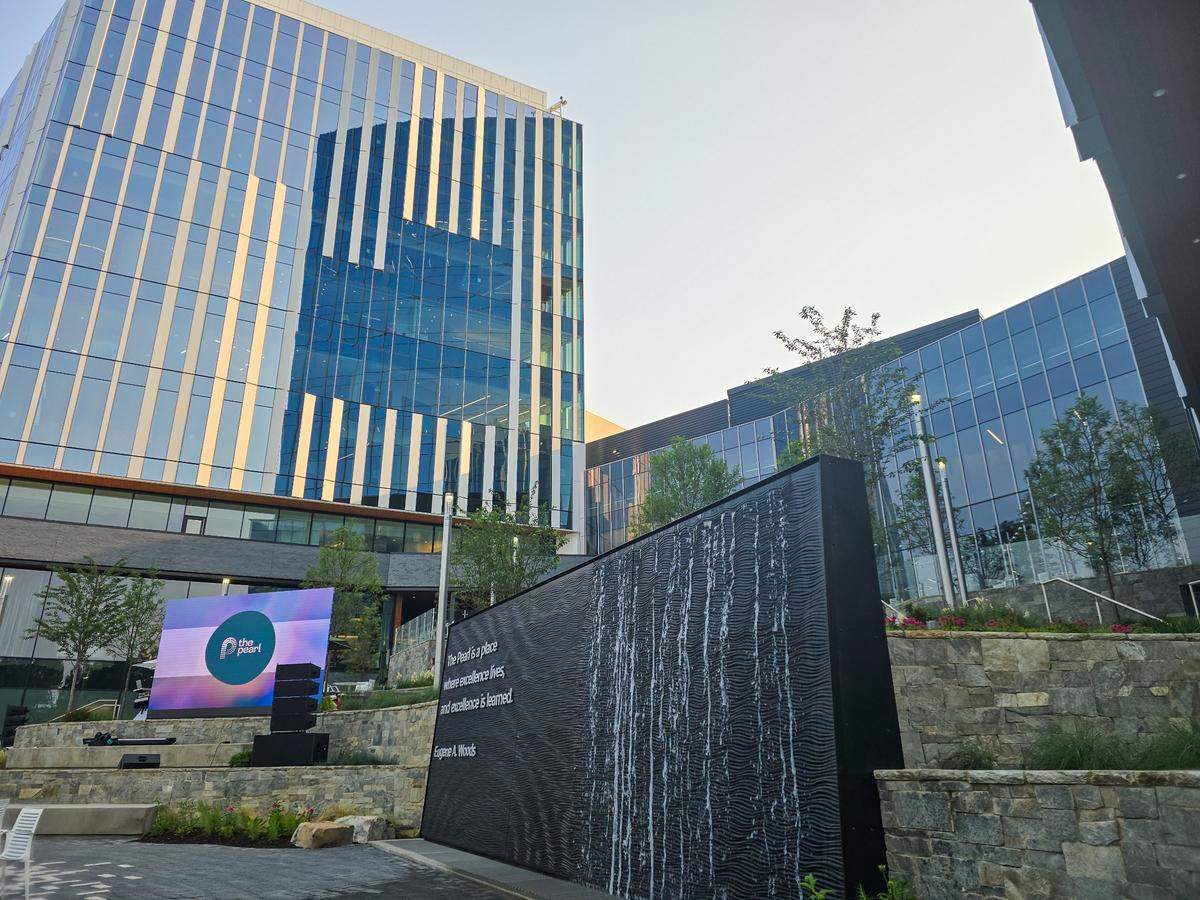
And construction may start soon on The Iron District, which sits on the former Charlotte Pipe & Foundry Company site in uptown and South End.
The initial phase calls for 500 residential units, a 150-room hotel, 100,000 square feet of retail space, 150,000 square feet of Class A office space and over 1,200 parking spaces.
Transportation in central city Charlotte
LaBar and Smith agree that the next major focus for central city will be transportation.
In November, voters approved a tax referendum for mobility that will generate more than $25 billion over 30 years.
Central city will be the hub for some of the road, bus and transit improvements, Smith said.
Projects like the Red Line commuter rail to the Lake Norman area and the west-to-east Silver Line light rail will all run through central city.
“You build these to move people from neighborhoods to jobs, but the infrastructure serves so much more,” Smith said. “It serves for hospitality. It serves for leisure and just connecting neighborhoods.”
Other highlights from the Charlotte report:
- Uptown, midtown and South End represent 1% of Charlotte. It generates $62 billion, or 34% of Mecklenburg County’s gross domestic product.
- Uptown saw the largest number of visitors on May 31, when Metallica came to town for its M72 World Tour, featuring Pantera and Suicidal Tendencies. That day, 243,200 people filled uptown.
- About 91% of office buildings constructed since 2000 are leased.
- More than 42,000 people call center city home, a 180% increase since 2010.