Big data center near Charlotte draws barrage of questions for QTS. Here are answers
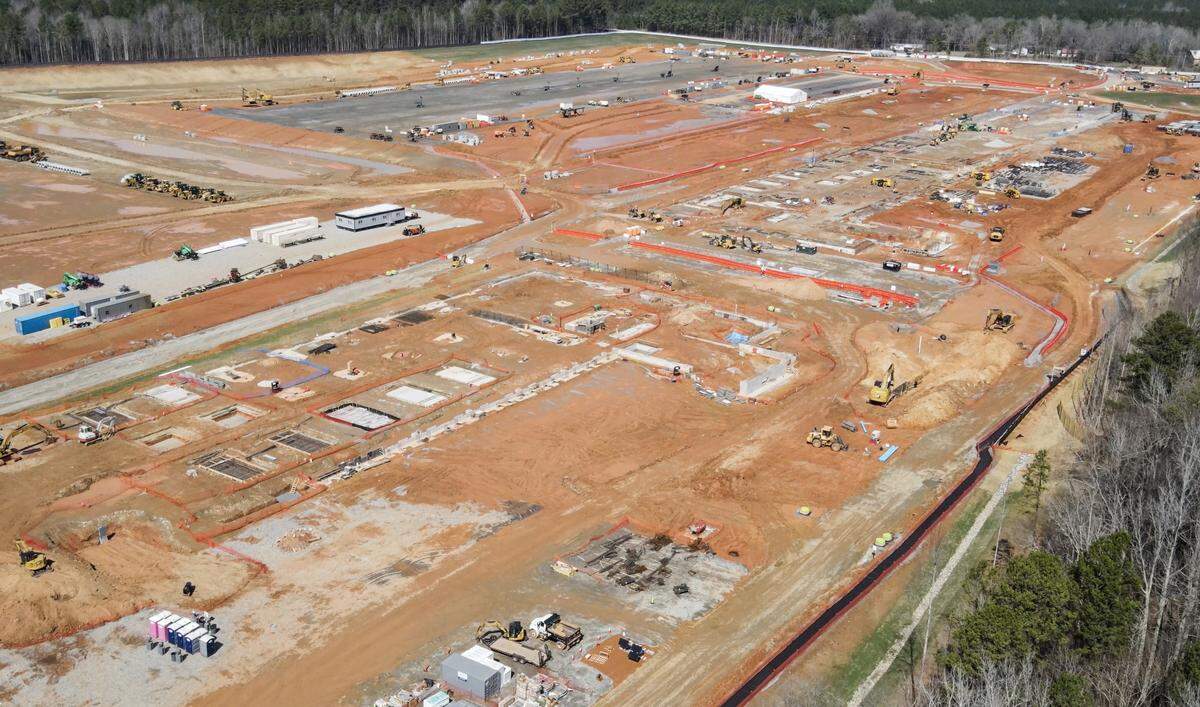
A few miles from the Lake Wylie, S.C., site where QTS is pouring $8 billion into a massive new data center campus, about 60 residents sat quietly listening but for a few murmurs to hear a panel of company officials answer a a flood of questions about the project.
The project, now nearly three years into development, has become a lightning rod for the Charlotte region’s debate over technology growth, economic incentives and environmental sustainability.
The accelerated demand for artificial intelligence is driving the hyperscale data center rise for more complex computing and apps like ChatGPT and Gemini. And the Charlotte region is becoming a rising development hub.
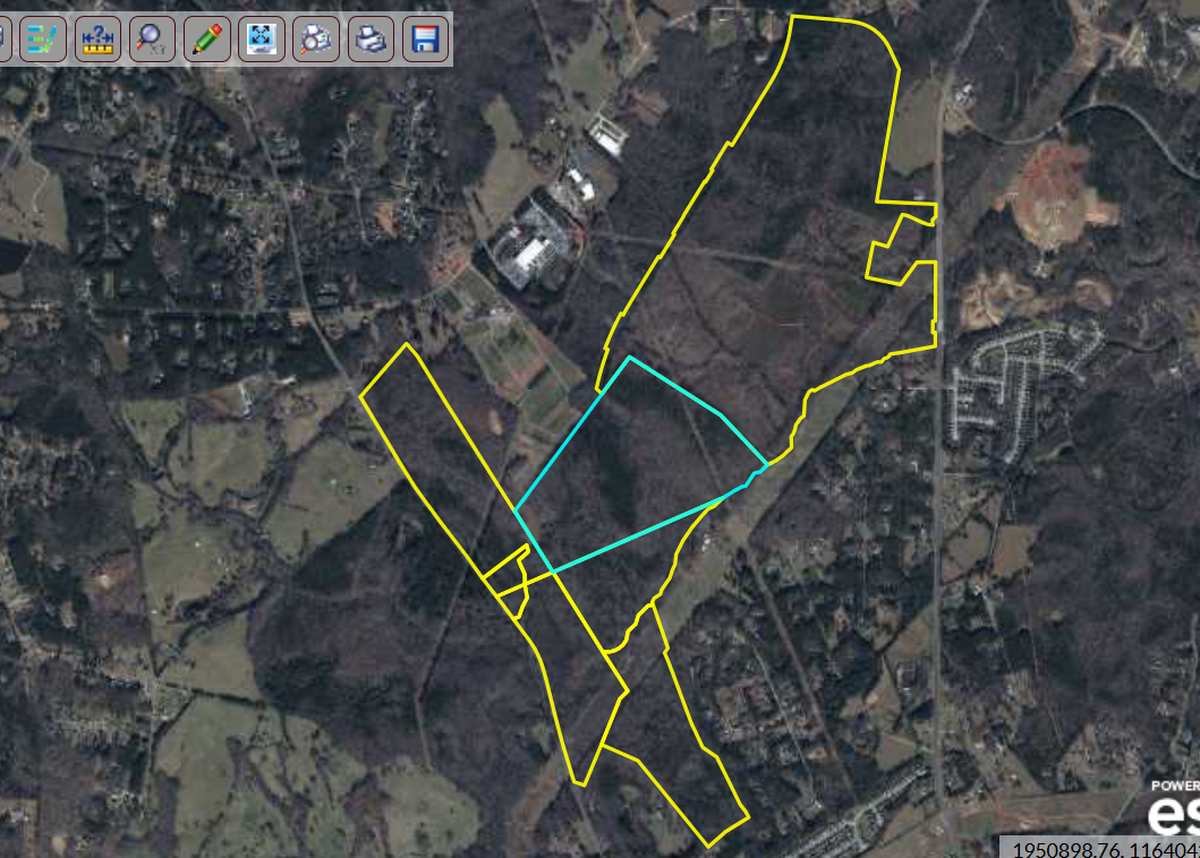
Melissa Widener of Clover, S.C., who works for a data center company, came to learn how the QTS data centers on nearly 800 acres off Hands Mill Highway in York County will affect the local economy and daily life of residents.
Widener submitted a handful of questions ahead of QTS’s third public meeting on Tuesday night at Oakridge Elementary School in Lake Wylie.
The seven-person panel made up of QTS and Central Electric Power Cooperative officials spent 90 minutes answering 56 questions. York Electric Cooperative is the retail supplier for QTS, which purchases power through Central Electric Cooperative. Duke Energy will do most of the transmission line upgrades.
“I think there are its benefits and its detriments,” Widener said. Most of her questions were answered, she said, including that the 800-acre project under construction will use a closed-loop cooling system for its nine buildings spanning 5.3 million square feet. “So they’re not going to be depleting the groundwater, especially in the midst of the drought.”
While the QTS project was approved “without resistance” in 2023, the atmosphere has shifted.
In Mooresville and Matthews, for example, multibillion-dollar proposals were withdrawn last fall following fierce community backlash. Rowan County is among a growing list of cities and counties with data center moratoriums statewide following community pushback.
And Charlotte City Council is on the brink of pausing accepting or approving data center projects to provide time for impact studies and possibly regulations.
%20(1).png "image (1) (1).png")
About the QTS data center deal in York County
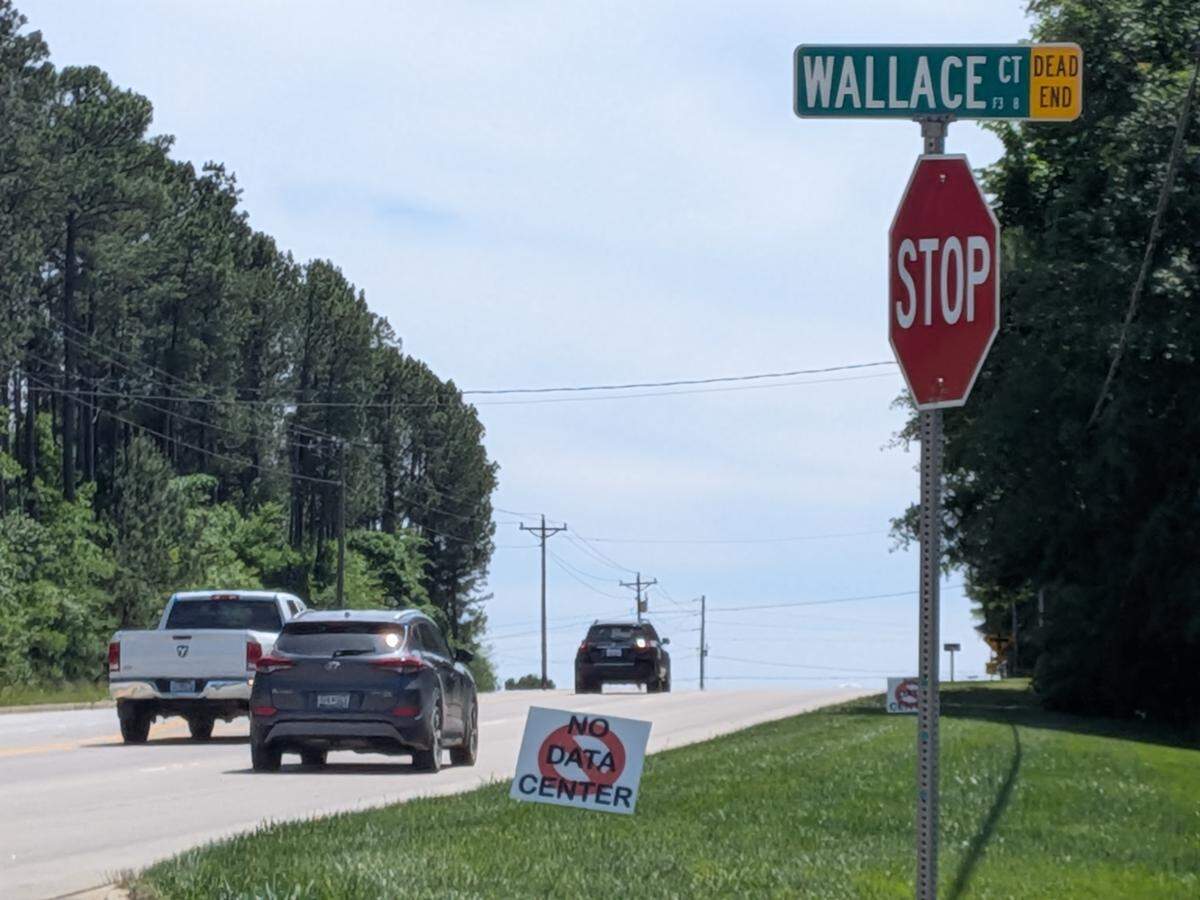
In York County, the approval process itself — conducted largely behind the scenes — has sparked opposition by way of petitions and road signage. Under the codename “Project Cobra, Kansas-based QTS Data Centers purchased over 360 acres along Hands Mill Highway in York County in 2023.
Since then, the project has grown in multiple ways, including QTS making eight times the initial investment. Last year, county council approved allowing taller data centers.
QTS also nearly doubled the property size buying another 400 acres for $26 million.
Here are 15 questions and answers from Monday’s meeting, edited for brevity and sorted by category:
Data Center visibility and community
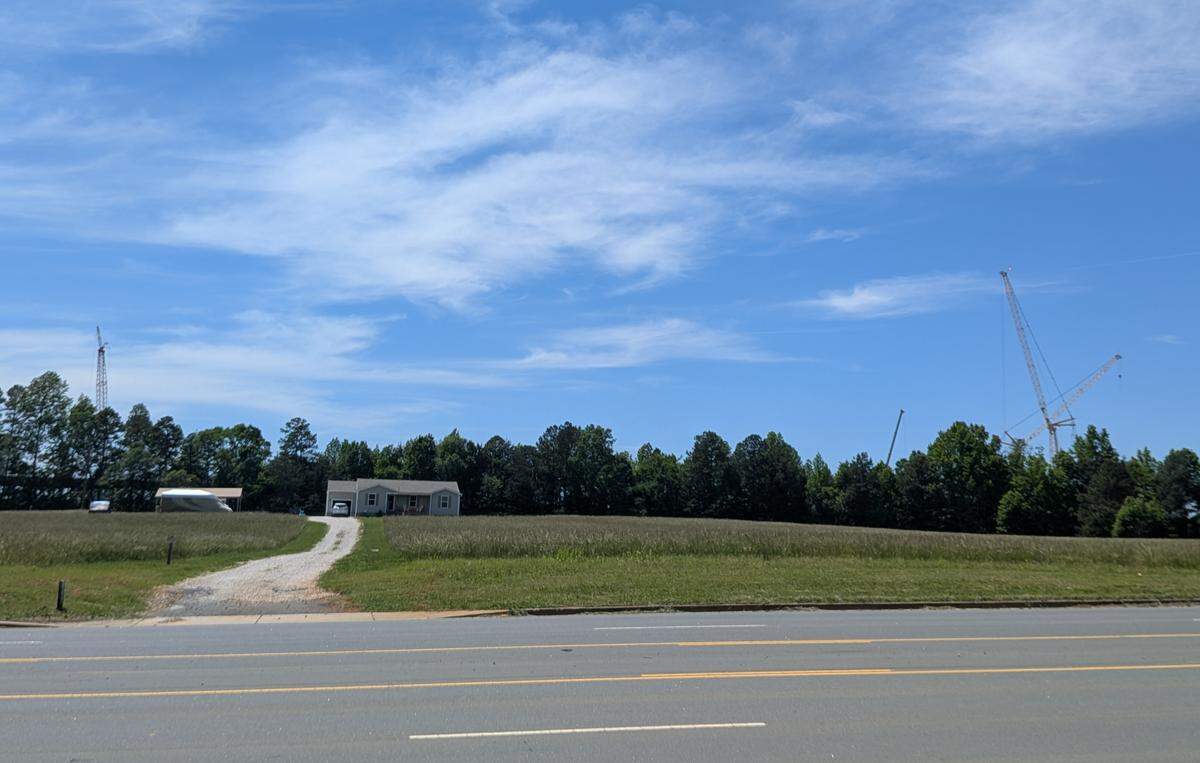
What will the data center look like, and what steps will QTS take to protect the neighborhood views?
We brought in an in-house design team, more like an urban planner. It should fit the neighborhood or the community that it is built in — David McCall, Brand Evangelist at QTS Data Centers, Georgia
What does the data center sound like?
The official answer is about 45 to 55 decibels. That’s not loud at all. State officials come and check and test on that regularly. We want to be as quiet a neighbor as we possibly can. — McCall (For comparison, a household refrigerator operates at about 55 decibels, according to Yale Environmental Health & Safety chart.)
How long will construction take?
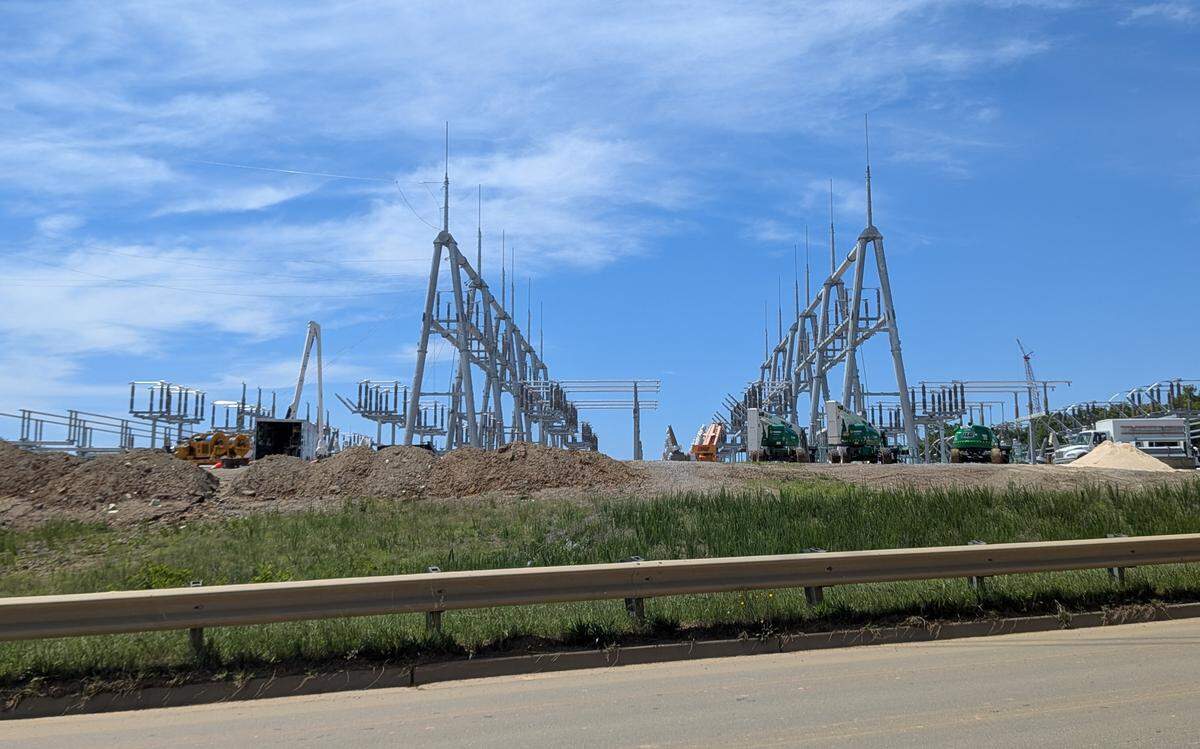
Some of the structure has gone up over the first two buildings. We expect to break ground on the other two buildings in the first phase this year. The rest of the five buildings don’t have a timeline. — Nathan Stover, QTS project manager in development ·
How will this project strengthen the local economy?
For every $1 billion in investment, around $5 million is going straight to the school district and $2 million is going straight to York County. We will be the top three taxpayer in our county. — Jose Burns, QTS Economic Development Program Manager (At the $8 billion investment, that’s $40 million to the schools and $16 million to the county.)
Was there any formal community needs assessment showing residents wanted this type of development?
This property has been industrially zoned since the ’80s. We are sitting with county partners to make sure that where we’re going, we’re wanted. We want to make sure that we understand the community needs. We want to make sure that we hear from you and address our responsibility. — Burns
QTS data center impact on water in SC
How much water will this data center use?
Our buildings are designed to use a closed-loop system. It does not continuously consume water. After the initial fill, that water will stay in there for the life cycle of the system. On average, our standard building uses 50,000 gallons of water a month, equivalent to four households. The initial charge of that system is 600,000, which is equivalent to an Olympic-sized pool — Ken Houwers, QTS sustainability analyst, Arizona
Where will the initial water supply come from, the municipal water supply or groundwater?
The initial fill will come from county water and sewer. — Tiffany Waddell, QTS pre-development project manager, Atlanta
SC data center energy and infrastructure
Who pays for the upgrades to energy infrastructure?
We have already paid for the infrastructure cost for this project that allows these guys to start building construction. It also accounts for the (energy) load that we projected that we use, so we won’t leave the community hanging with building an infrastructure. — Cisha Adams, QTS director of utility engagement for the Southeast
What’s the projected peak load MW of this facility, and what percentage of our local capacity does that represent during summer peak demand?
Due to privacy, we do not share our load information. — Chris Ware, Senior Vice President of Engineering and Engineering Services at Central
How is QTS’s electrical contract with York Electric Co-op structured?
There are a lot of financial protections to ensure that they are paying their fair costs. — Cole Price, executive vice president of member services for Central Electric Power Cooperative Inc.
Will this impact our energy costs as residents?
Sure power costs are going up, and there’s no denying that we’re all feeling it. But it has nothing to do with the data center here at QTS. The co-ops have adopted a large data center rate to ensure that costs borne by or caused by at large data centers like QTS were not put on the backs of the rural communities. That’s our commitment to the communities that we serve. — Price
Will diesel generators be used? How will the emissions impact air quality and health?
There will be diesel generators at the data center site. They only run in case of emergency, except for testing to make sure they’re operating safely and effectively. — McCall
How many generators will be installed? Will they all be tested on the same day?
It will not all be on this same day. It will be done in batches. — McCall. Karen DiMaggio, QTS vice president of community engagement, stepped in to say, there is an average of 60 generators per building.
The future of data centers in the Charlotte region
What happens if data centers become obsolete or are no longer needed in the future?
Every single one of you have in your hand right now a remote control to a data setup. It’s your phone. Are you gonna stop using data? Are we going to stop using energy? The data center is the sky for the cloud. Are we going to stop using data and infrastructure? I don’t think it will ever be obsolete. We will innovate as materials get better, but as long as you keep living in a modern life and keep evolving, there will always be a place of infrastructure like this. — McCall
Will failure to build data centers in the US result in the lack of competitiveness?
To be part of the modern world, you have to have energy sovereignty and data sovereignty. We want to be able to control our own destiny with where we use, where we consume and how we use data. It impacts our daily lives, so I think it’s spectacularly important. — McCall
.png "image (3).png")