Secret tunnels and sunset rose granite: The history behind an iconic Charlotte building
READ MORE
Uptown Remodel
Charlotte’s iconic towers in uptown are aiming to make a comeback post pandemic with new renovations to bring workers back to the office.
Expand All
New owners of old office towers in Charlotte make $42 million bet on getting workers back
Secret tunnels and sunset rose granite: The history behind an iconic Charlotte building
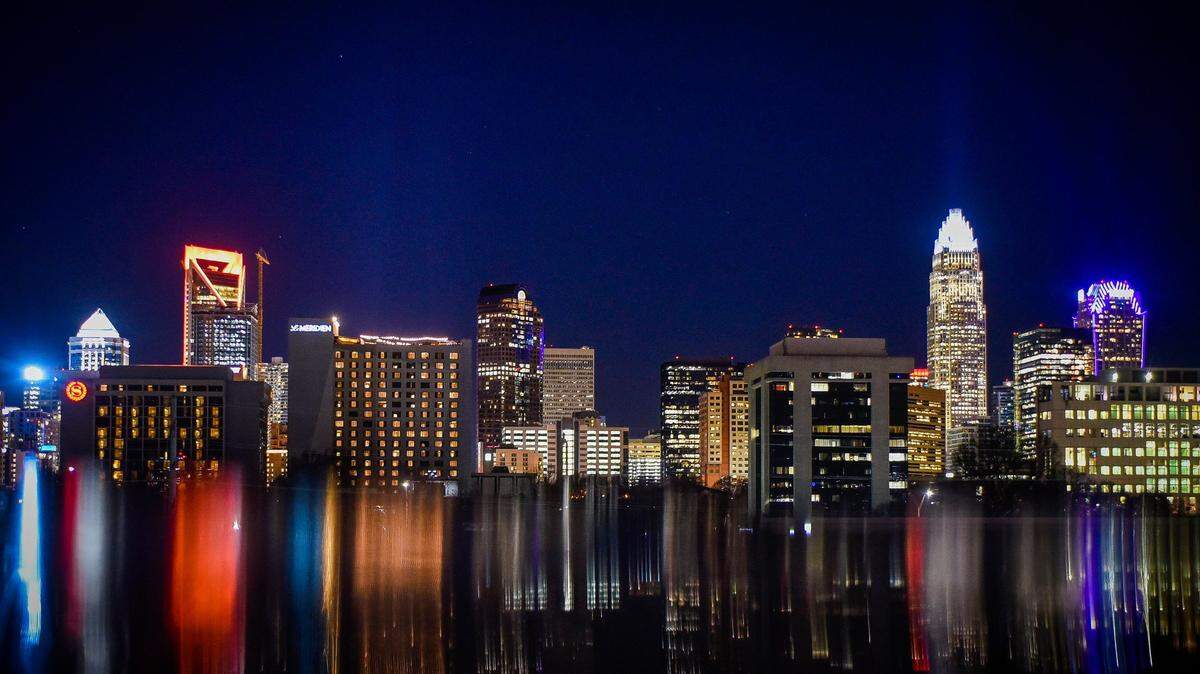
A closer look at 4 towers that helped Charlotte’s skyline continue to evolve
Inside uptown’s journey back to life: Major deals signal economic health
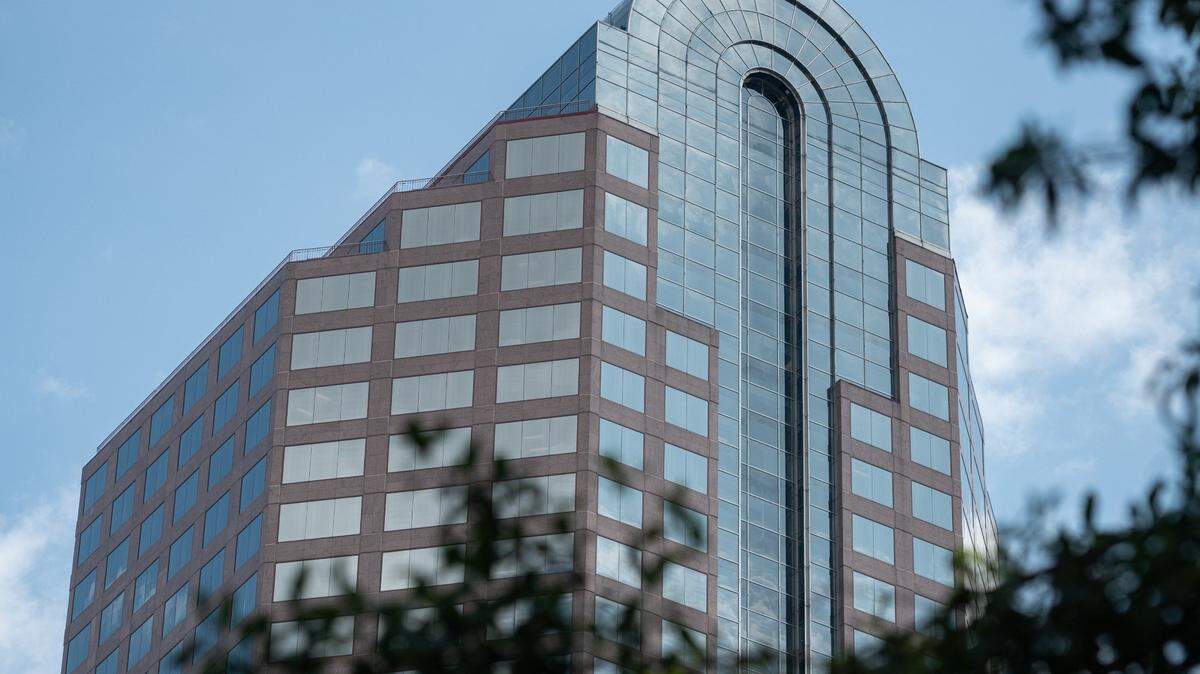
When One First Union Center opened in early 1988, it stood as the tallest building in Charlotte. In fact, at 42 stories, or 590 feet, it was the tallest building between Atlanta and Philadelphia.
The tower — now named One Wells Fargo Center — also quickly became one of Charlotte’s most iconic buildings. Its jukebox-like design stands out even to this day among several new towers.
The office tower on College Street was designed during the Postmodernism architectural movement, said David Pitser, a partner and director of property management at Childress Klein. The firm developed the building alongside Dallas, Texas-based architecture firm JPJ. The building design also gives a nod to the Art Deco style of the early 1900s.
The Postmodernism movement produced buildings with more intricately detailed exteriors, and were typically clad in stone with decorative tops, arches or domes.
So was it intended to be designed to look like a jukebox?
The answer is no. Pitser doubled checked that fact with Fred Klein, founding partner of Childress Klein. The architects and Klein wanted the building to become one of Charlotte’s most iconic towers.
“While the look may remind people of the classic Wurlitzer jukebox, that style is also reminiscent of classic tube radios which were in turn designed to mimic the iconic towers from the Art Deco era built in New York City and elsewhere in the early 1900s,” Pitser wrote in an email to The Charlotte Observer.
One Wells Fargo is one of three uptown office towers, each dating back decades and each with relatively newer landlords, undergoing multi-million renovations. In the jukebox building’s case, the new owner invested $10 million in the space last year, with plans for a top floor amenity space and new outdoor plaza on the street level.
With all the attention on these buildings, here’s a look at the history of this tower.
Fun facts about One Wells Fargo Center
Pitser, who has worked at the building as property manager since the 1980s, can easily rattle off facts about the building.
The exterior is made of glass and sunset rose granite, giving the building its distinctive, almost pink-like color.
The building has a private, underground tunnel connecting to the office tower across College Street. The secure tunnel was used to carry sensitive, bank-related items back and forth, Pitser said.
In the early 2000s, the building became the first in the United States to use a new elevator technology that more efficiently whisked groups of people to the floors they were headed to.
When the building opened in January 1988, the 50,000 square foot Childress Klein YMCA was its first tenant. It wasn’t until later that spring that the anchor tenant, First Union (now Wells Fargo), moved in.
Klein originally intended for the building to be 32 stories, Pitser said. But as First Union grew thanks to its former CEO Ed Crutchfield, the bank expanded its real estate needs.
On the lower floors, the building has a wider footprint compared to the upper floors. That’s because First Union wanted a space that could accommodate all of its operations — mail center, data center, check sorting and other back of house stuff that today is usually housed in more suburban locations, Pitser said.
And while most bank trading floors were in New York City and Chicago, First Union brought one to the building’s 8th floor. “That was a unique feature in uptown at the time,” Pitser said.
Materials used in building
It took 70,000 cubic yards of concrete weighing 283 million pounds to build the tower, according to Pitser. There are 5,500 tons of reinforcing bar embedded in the concrete, which is roughly the same as 13 Boeing 747s full of passengers.
The building also has 8,600 granite panels. Some pieces weigh as much as 22,000 pounds each. They were quarried in Texas and Minnesota, Pitser said.
Besides earning the jukebox nickname, the building’s barrel-vaulted top stands out because many towers in Charlotte are flat-roofed.
One last note: the building has space at the top where a lot of mechanical equipment is held.
This story was originally published November 22, 2022 at 5:50 AM.