Apartment tower plans near Dilworth move forward. Historic landmark fate remains unsettled
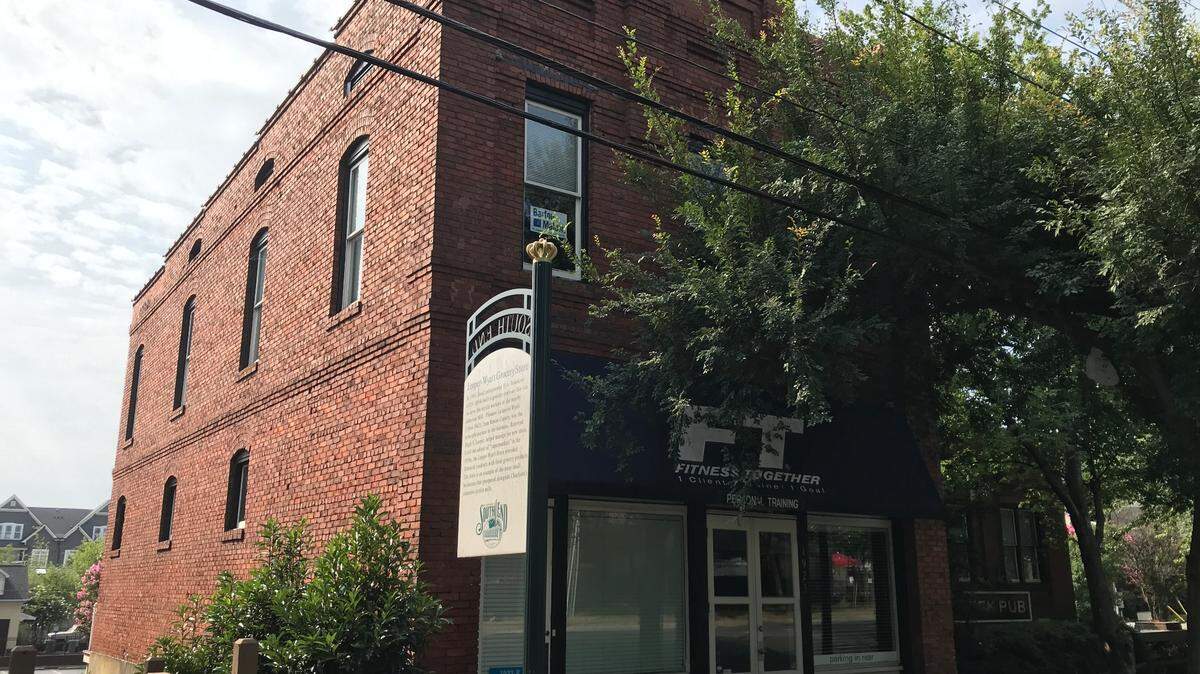
A Nashville developer is gearing up to start construction this year of a high-rise apartment tower at the edge of South End and Dilworth.
What that means for a century-old historic landmark building on the property is not clear yet.
Southern Land Company developed a plan last year to move the Leeper & Wyatt building —a longtime former grocery store — from its South Boulevard property to a nearby vacant lot.
The lot is owned by Charlotte-based Clearwater Development Partners, which has worked alongside Southern Land on trying to save the building.
Preliminary plans filed with the city last June show Clearwater was exploring options to adaptively reuse the building for commercial purposes. But the plan has run into hurdles due to cost and risk associated with the move, according to Clearwater.
The Leeper & Wyatt building has faced the prospect of being torn down since December 2021 when the previous property owner filed a demolition application with the local landmarks commission.
In a letter, the owner said the cost of renovations was not feasible given escalating land values and limited control over parking for a renovated project. The property owner was under contract at the time to sell to Southern Land.
The Leeper & Wyatt building is one of about 370 locally designated historic landmarks in the region.
The building is one example of how older, sometimes historic properties can be lost to the growth and development across the region.
Issues with a building move
Moving the Leeper & Wyatt building required approval from the Charlotte Historic District Commission and the Charlotte-Mecklenburg Historic Landmarks Commission.
It involved structural evaluations to make sure the early 20th century building could withstand the short move.
But late last year, Clearwater, a small development firm, told Southern Land it had limited capacity for the move. It was challenging to determine costs related to moving the building and potentially having to restore it after the move, Clearwater founder Andrew Rowe told The Charlotte Observer.
Rowe and Southern Land agreed there could be others who could come in and help with the move, Rowe said.
Clearwater has not fully bowed out of being involved in the move but was open to see if others could come assist. Where the building could go or whether it could end up on Clearwater’s site is not clear.
“There’s certainly other property owners and developers and organizations around that might be able to come up with a more viable option for saving that building,” Rowe said.
Nashville developer’s plans
Southern Land announced two years ago that it would build a high-rise apartment tower at the corner of Tremont Avenue and South Boulevard. The building will include 300 units.
It also will be home to a newly-expanded Tyber Creek Pub, which will close during construction.
Southern Land expects to break ground sometime between July and September, company spokeswoman Jenna Lefever told the Observer in an email.
The developer purchased two additional parcels next to Tyber Creek for the project.
History of Leeper & Wyatt building
One of those parcels includes the Leeper & Wyatt building.
The historic landmark was built around 1903 by New South entrepreneur D.A. Tompkins. It’s the oldest surviving retail brick commercial building in Dilworth’s first business district, according to the Charlotte-Mecklenburg Historic Landmarks Commission.
It served Charlotte as a grocery store for more than 50 years.
Southern Land approached Clearwater Development Partners around a year ago about moving the building to Clearwater’s site, Rowe said.
That property is a block behind the Leeper & Wyatt building, at the corner of Cleveland and East Worthington avenues. The vacant lot is less than an acre.
Prior to the building relocation idea, Clearwater had begun taking the property through a rezoning to make it a mixed-use site. That rezoning is still pending as Rowe wanted to learn more about the new zoning rule book adopted last year called the Unified Development Ordinance.
Clearwater left open the option of including the Leeper & Wyatt building on its rezoned site after Southern Land approached the company, Rowe said.
Rowe lives in Dilworth and runs his business locally. He believes developers and others should be making efforts to preserve older buildings in the neighborhood.
He commended Southern Land for not demolishing the building and making efforts to preserve it.
The challenge of moving a historic building
Moving a historic building is complicated.
The building would need to be moved on a mostly level terrain to ensure a safe journey. Rowe’s site has a slight drop-off, meaning heand others would have to address that before the move.
If the building becomes damaged during the move, Clearwater could have to repair cracks under standards set by the local historic commission.
Plus, the site the building would go to is small. It only would have room for that building plus one smaller one. It becomes a greater risk for a small development when that project is tied mostly to one building, Rowe said.
“One could theoretically lose a lot of money,” Rowe said.
If the building was going to a site with bigger buildings and a mixture of uses, any added costs could be absorbed by the developer. That becomes harder for a smaller developer like Rowe.
“I have nothing else I can do because I’m only one lot,” he said.
What’s next
Southern Land has saved other buildings, including two early 20th century buildings that were part of a mixed-use development in Denver.
Southern Land is still evaluating options when it comes to a potential relocation of the Leeper & Wyatt building, Lefever wrote in her email. But no decisions have been made yet.
This story was originally published March 10, 2023 at 6:30 AM.